
Alamo
-
Posts
97 -
Joined
-
Last visited
Content Type
Profiles
Forums
Downloads
Gallery
Store
Everything posted by Alamo
-
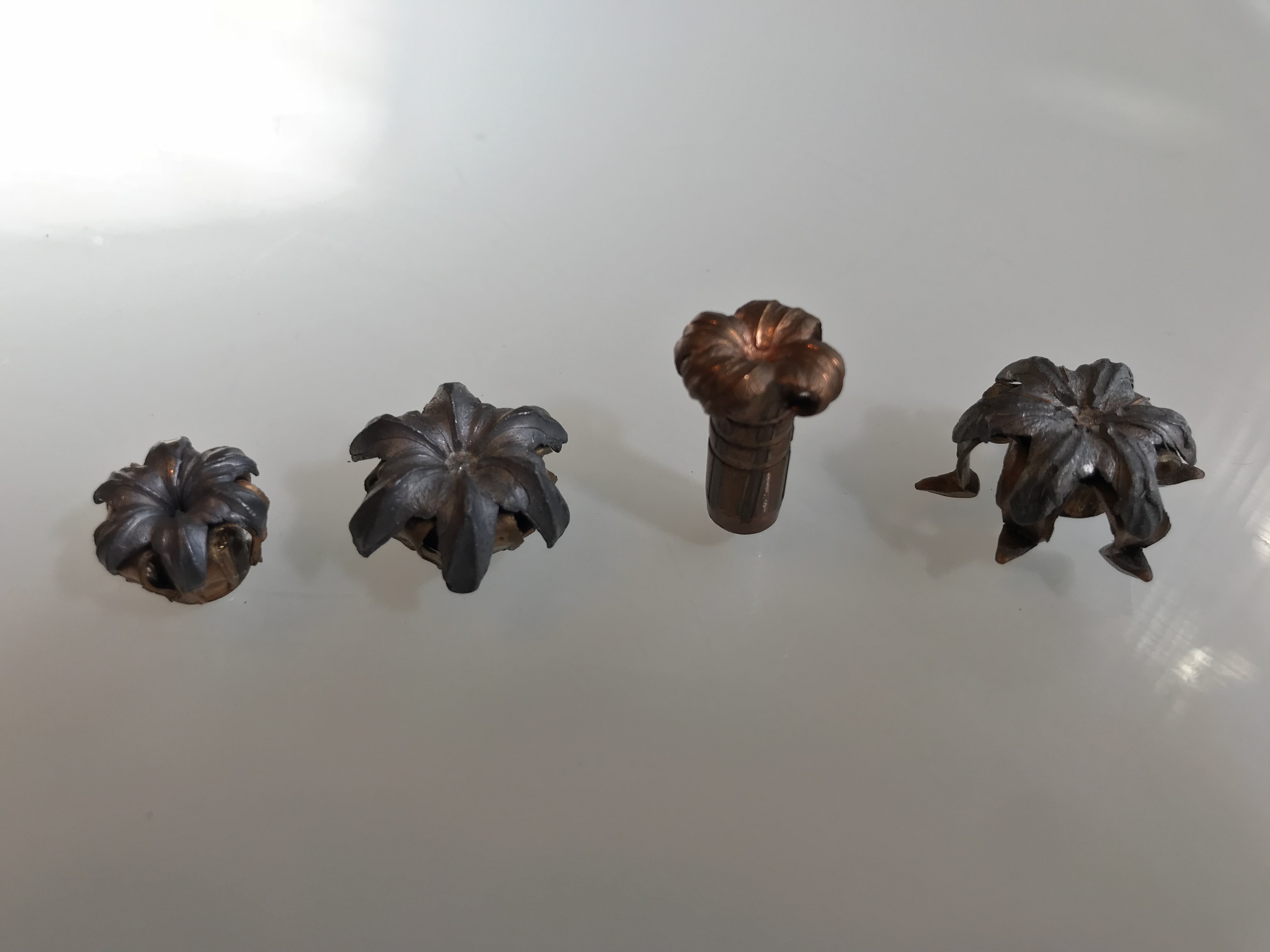
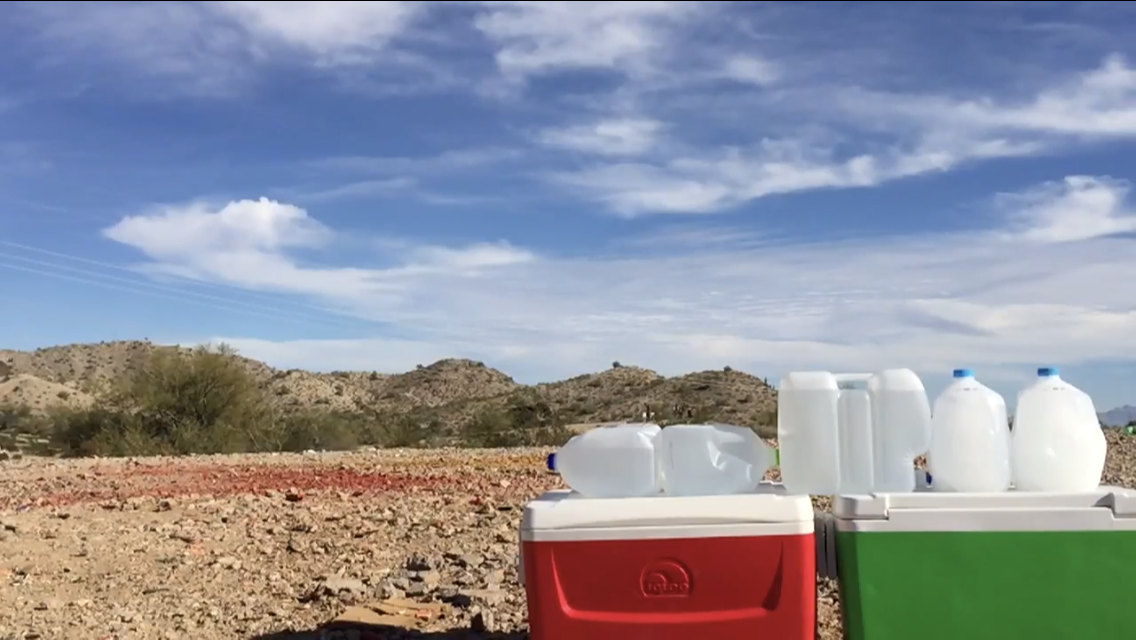
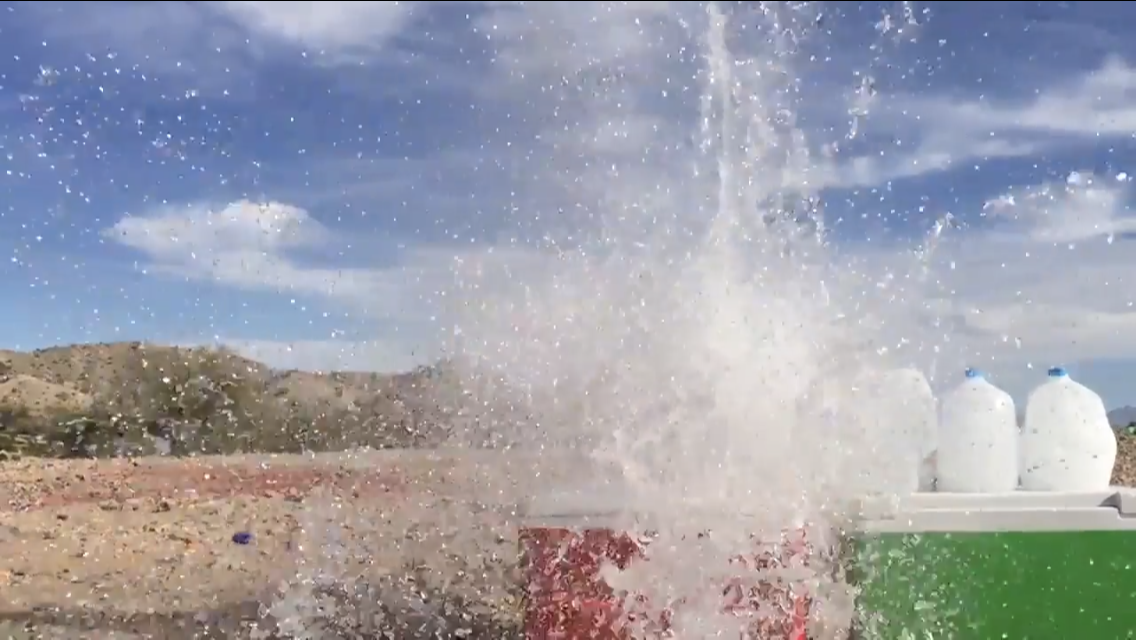
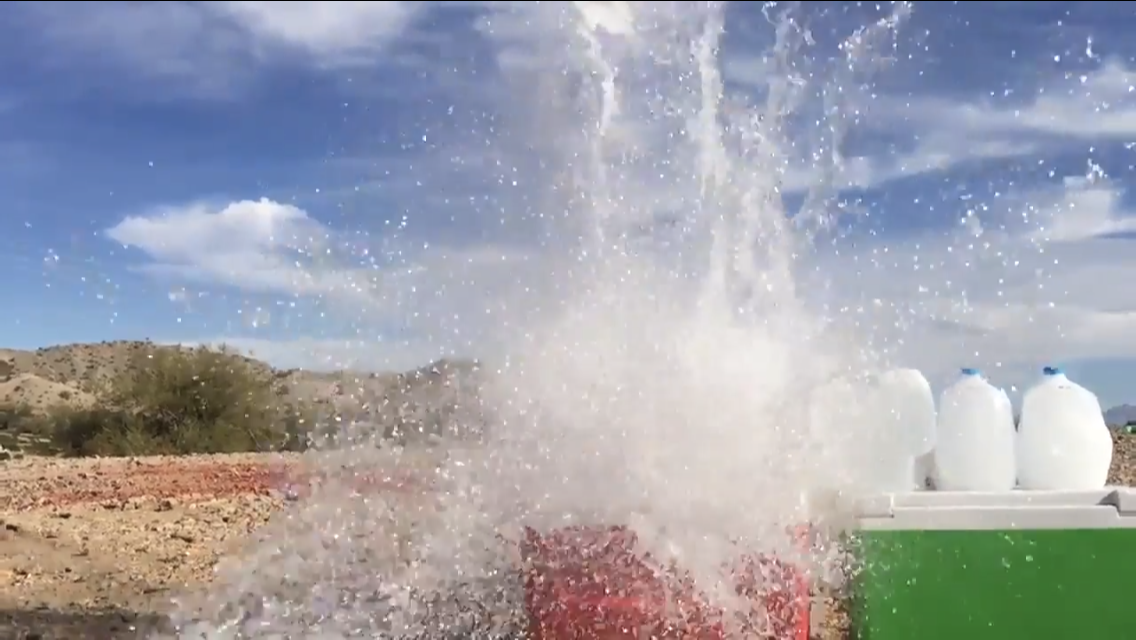
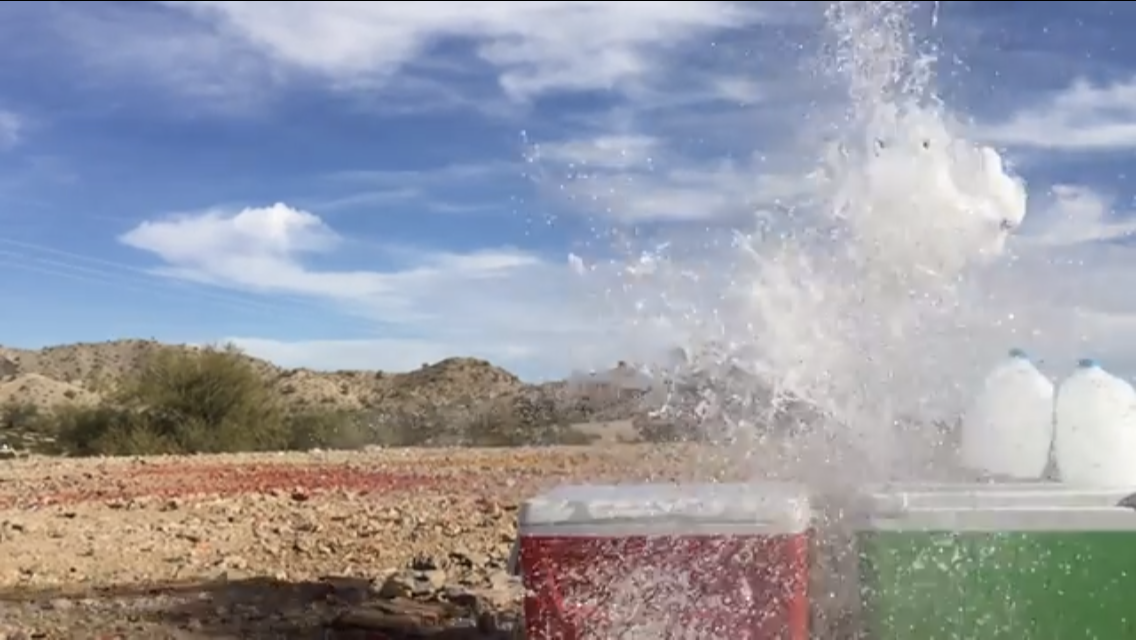
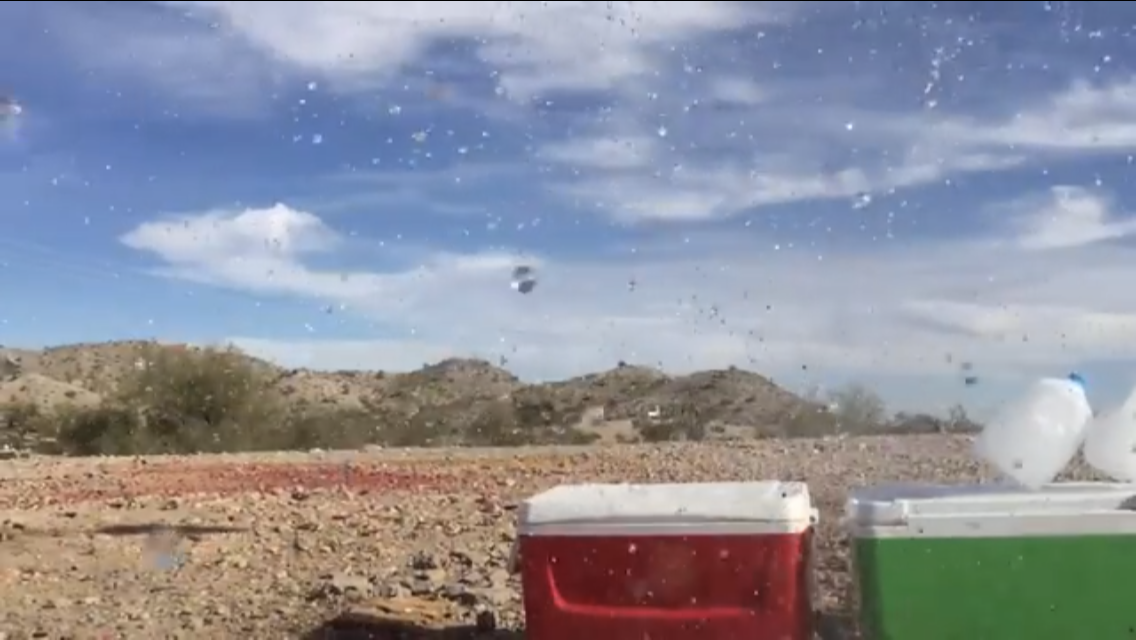
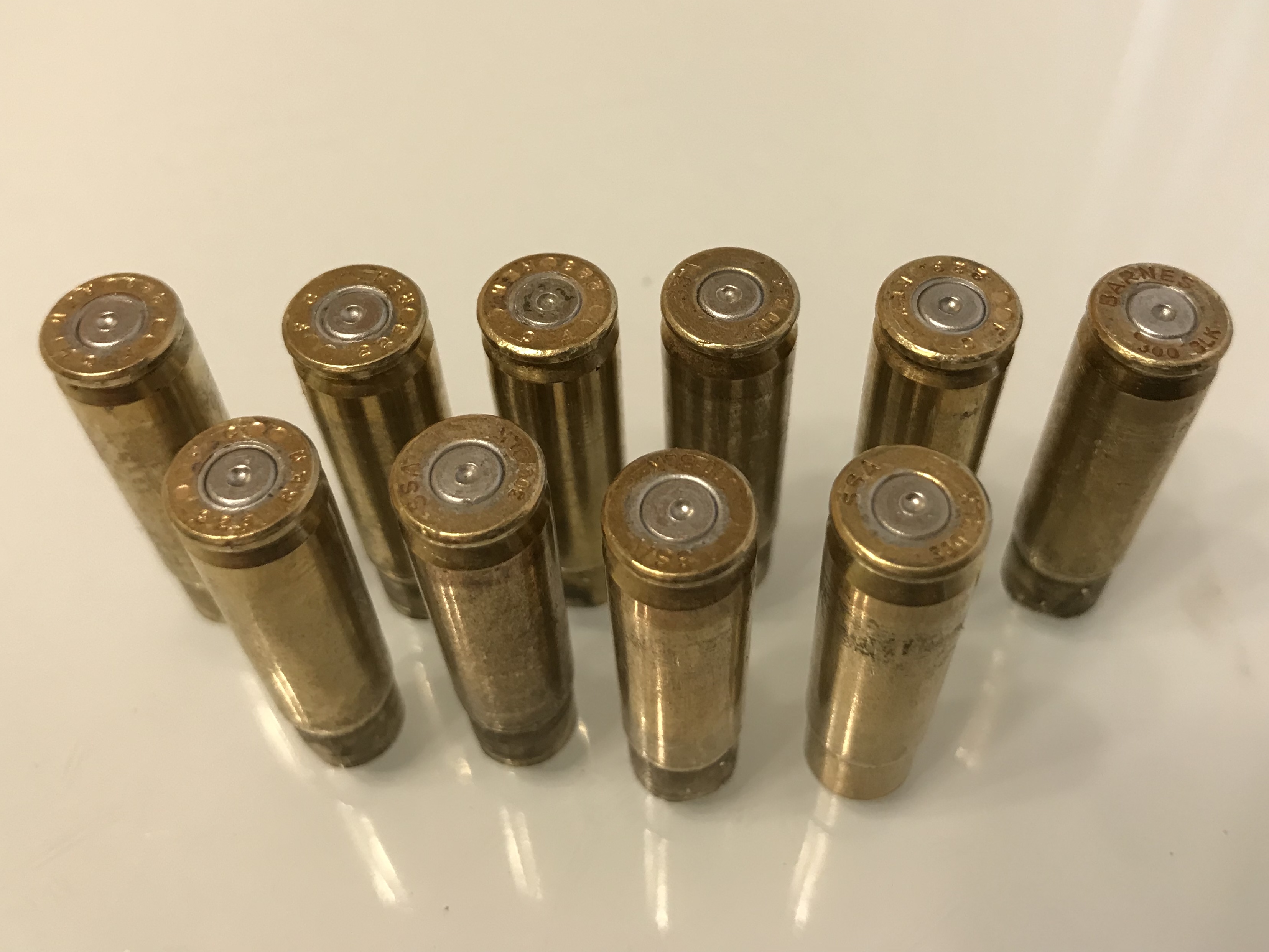
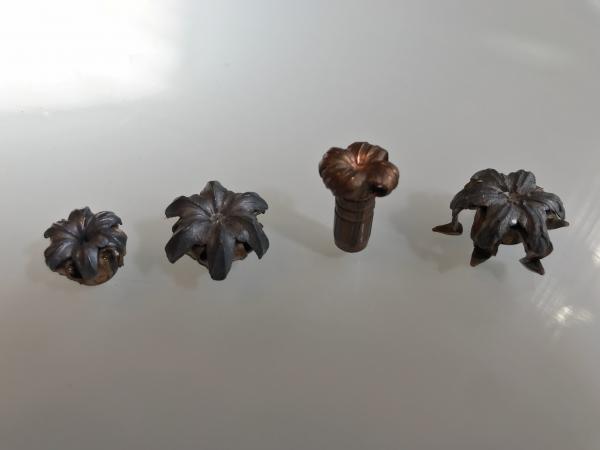
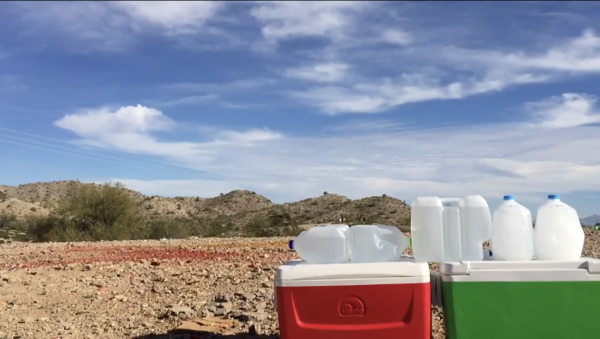
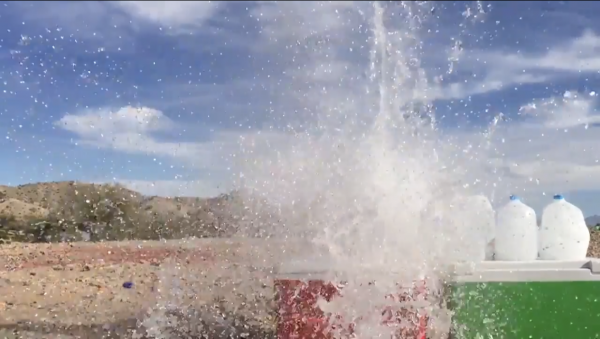
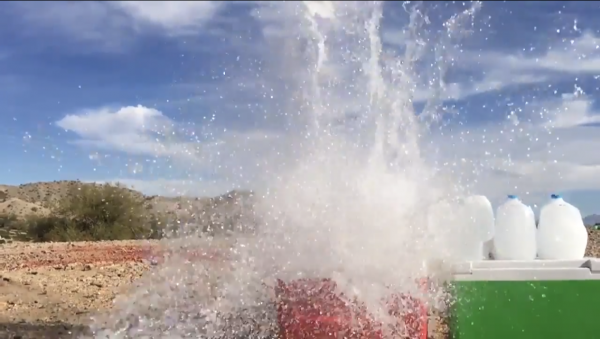
I’m definitely down for catching one of these things to see exactly what it’s doing. Need to save up some water jugs, should have something back in the next couple of weeks or so. Here’s some from my caught collection... from left to right: 9mm 147 gr Federal Hydra-Shok Tactical, .45 230 gr Federal Hydra-Shok Tactical, .308 168 gr Barnes TTSX, .45 230 gr Winchester Ranger Talon. Also some pics from when I caught the Barnes... shot immediately after with a Hornady Amax, but that bullet went bye bye... you can see it in the upper right corner of the 2nd to last picture.
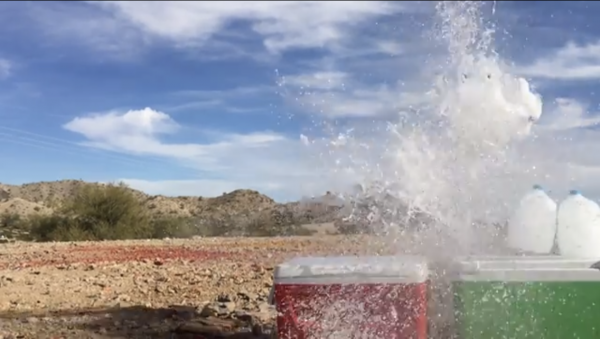
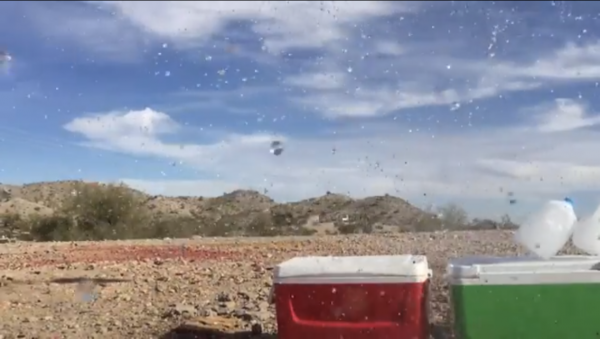
-
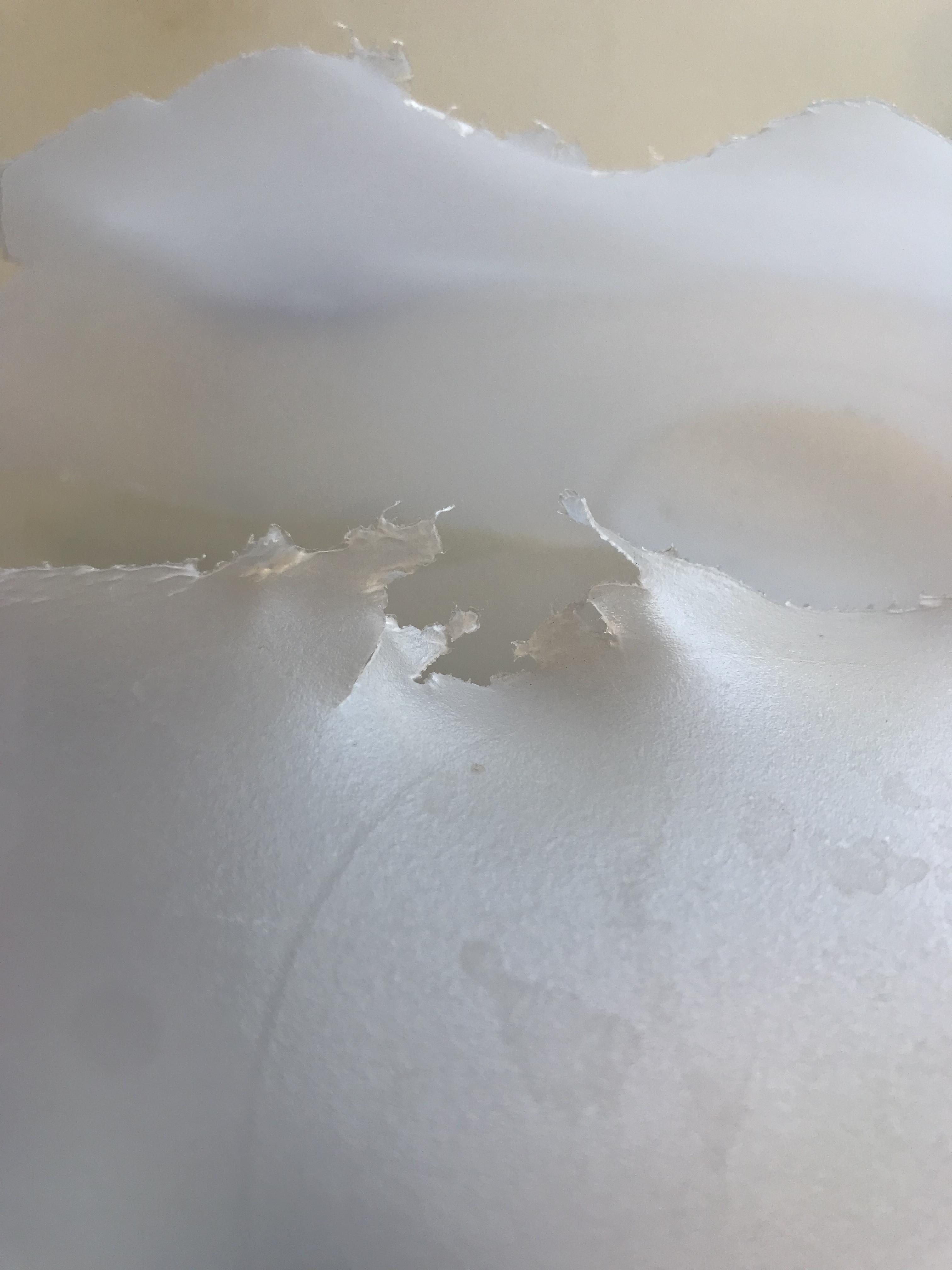
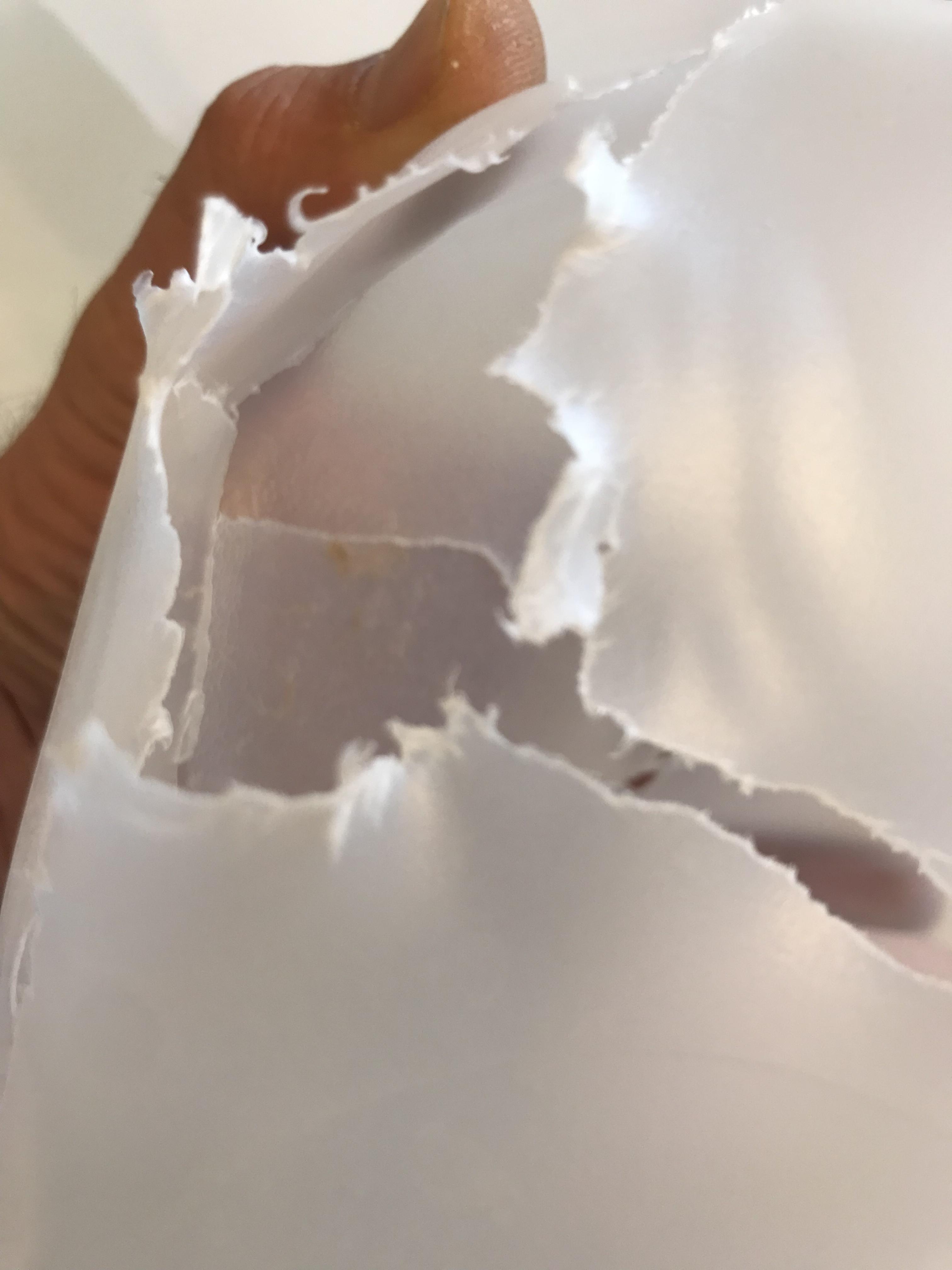
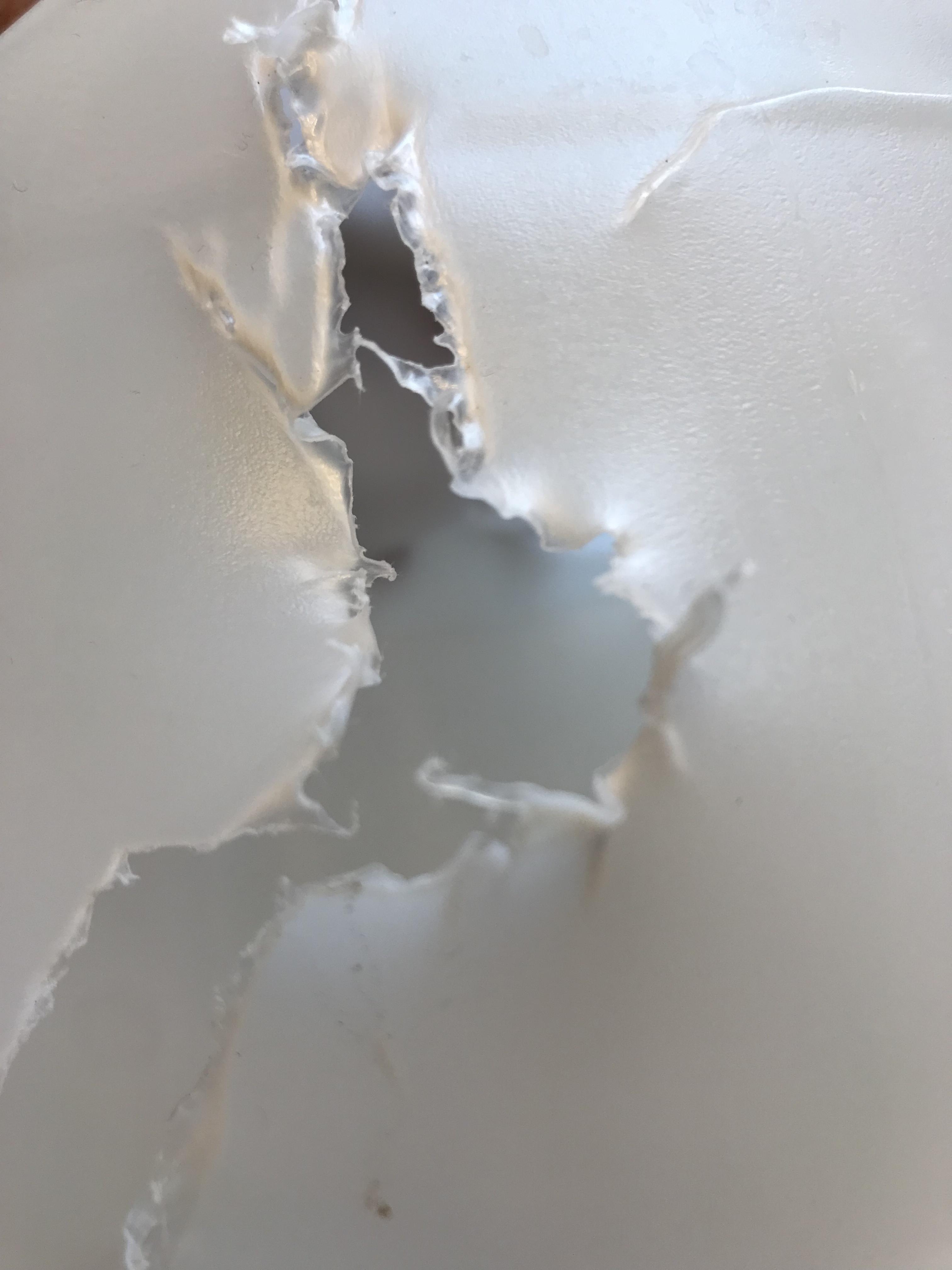
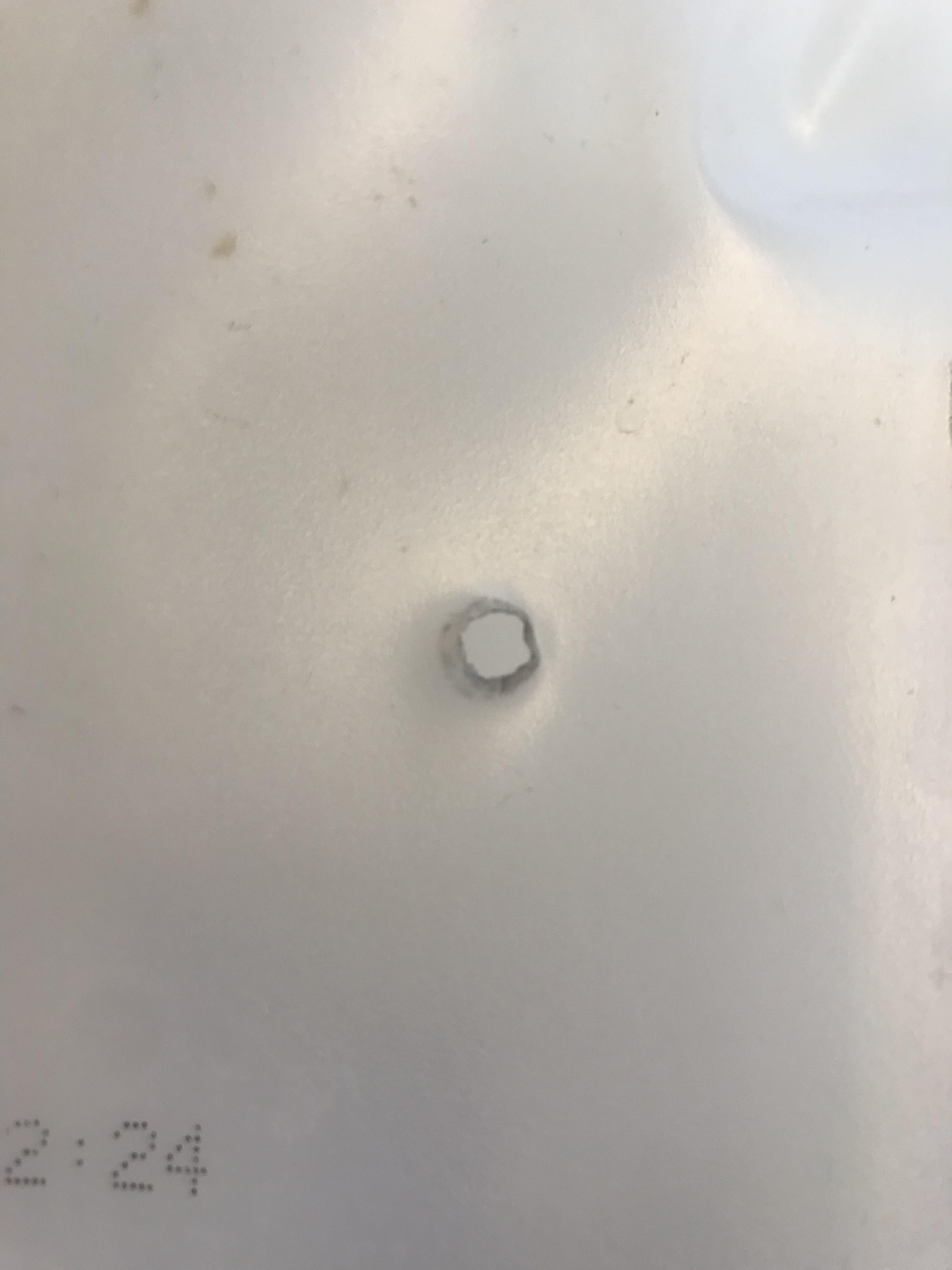
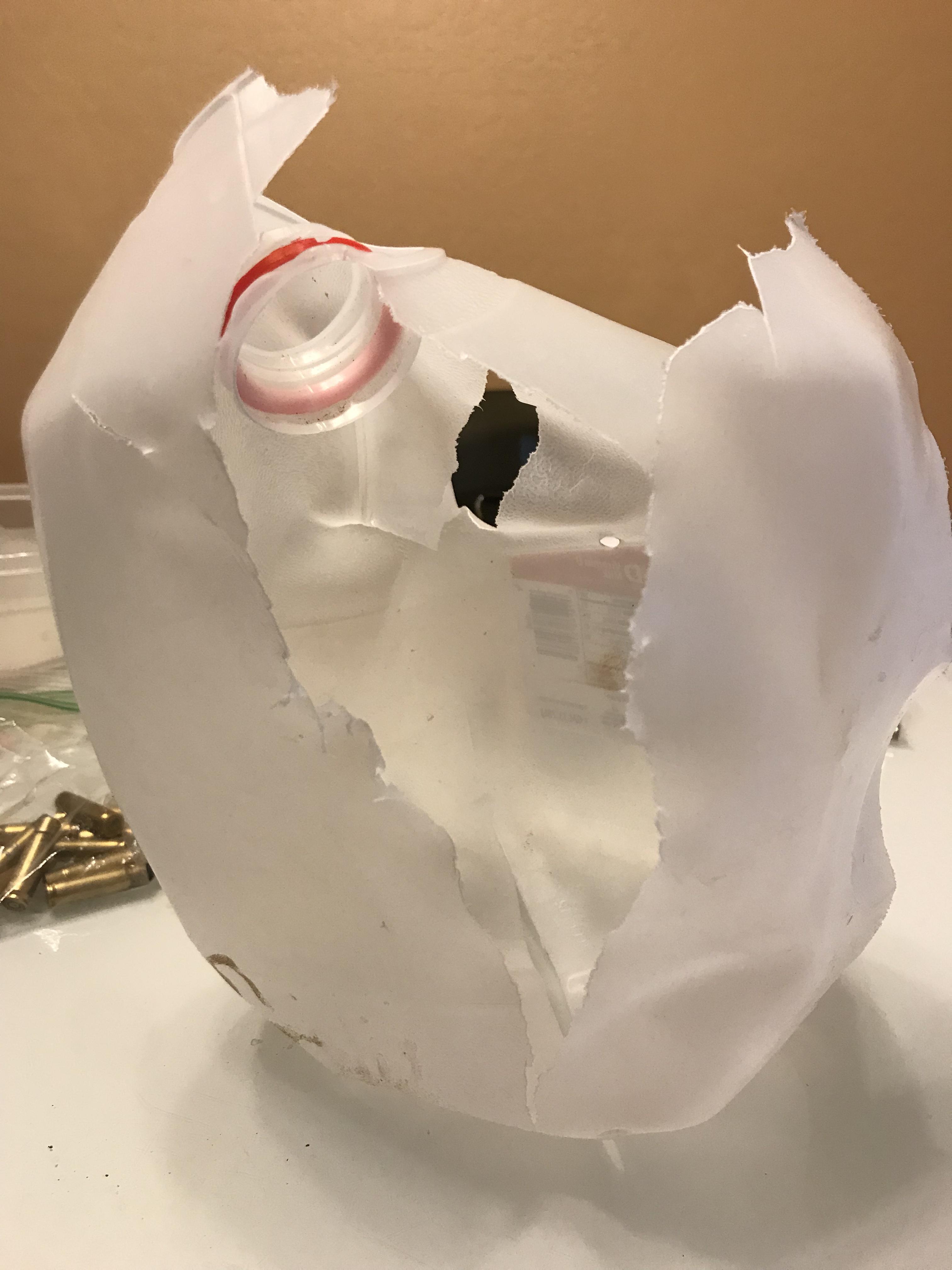
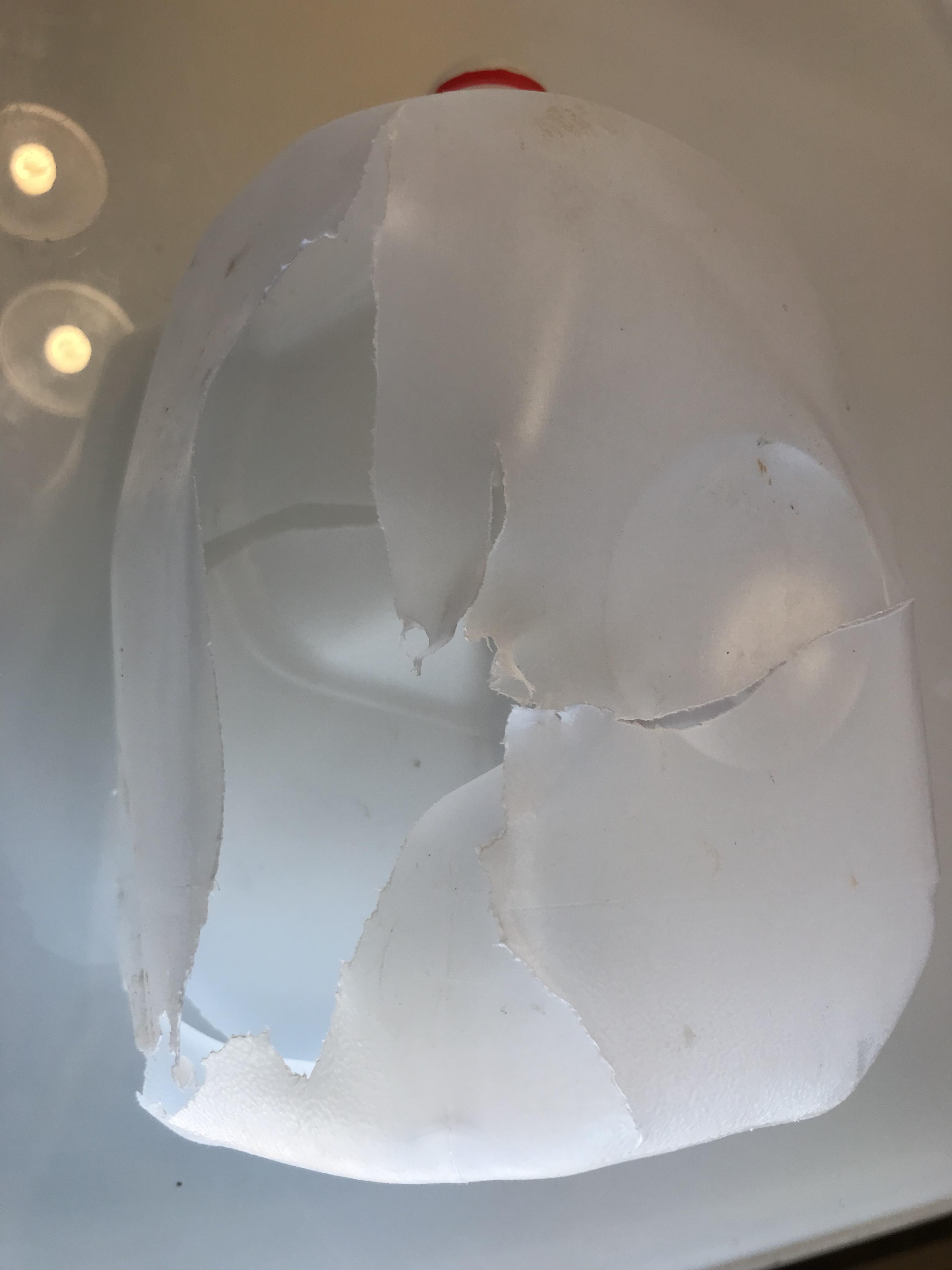
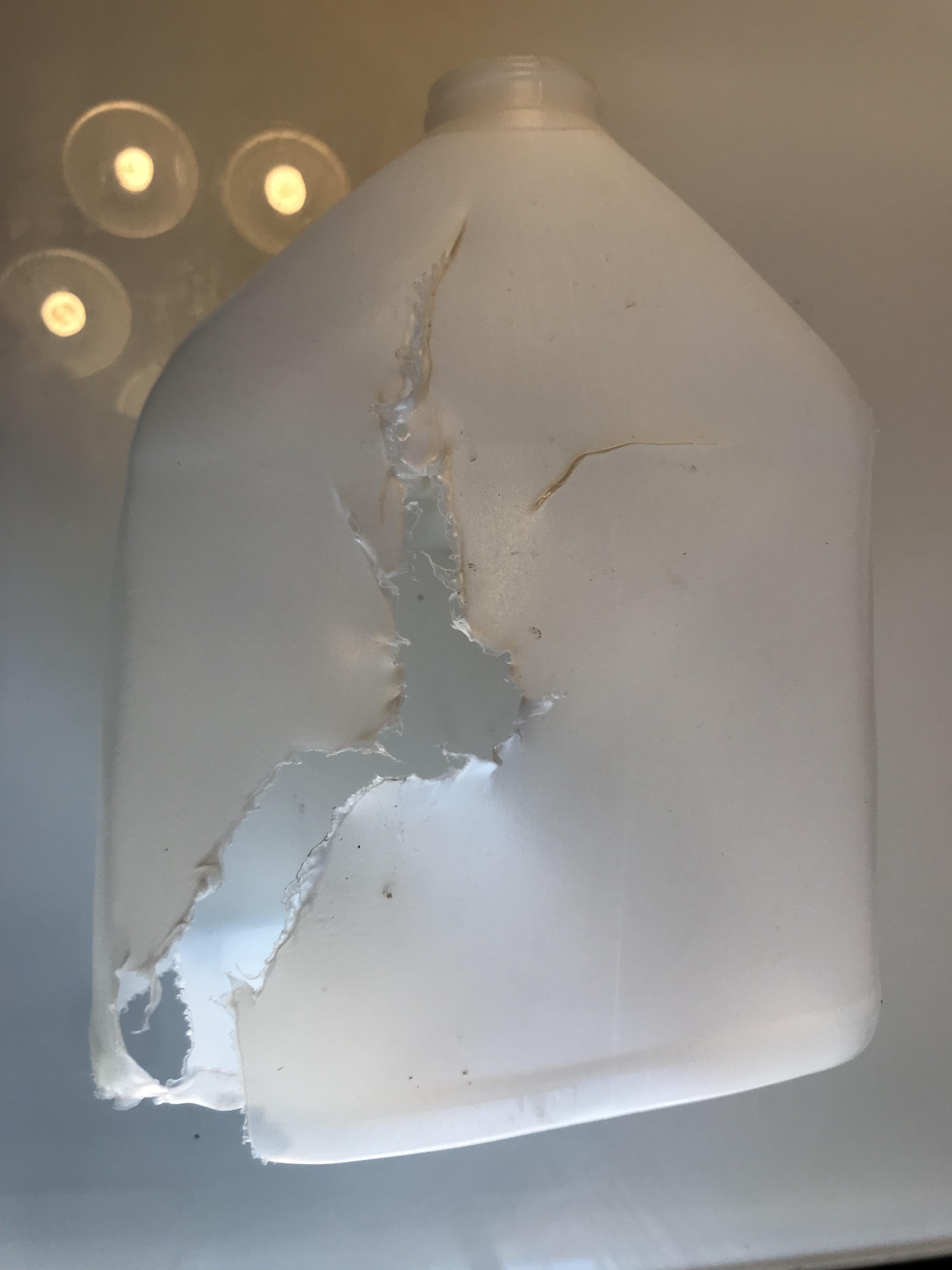
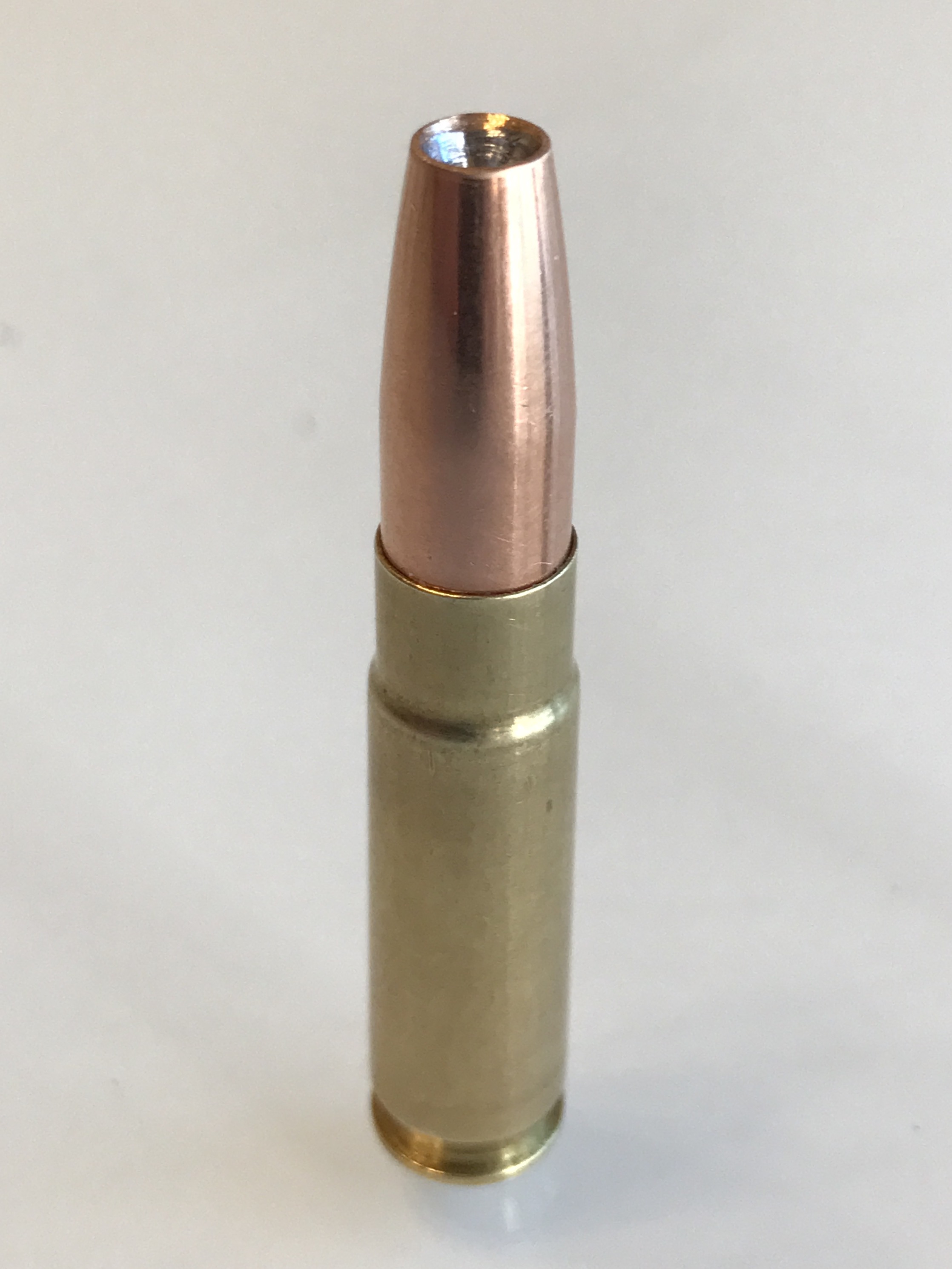
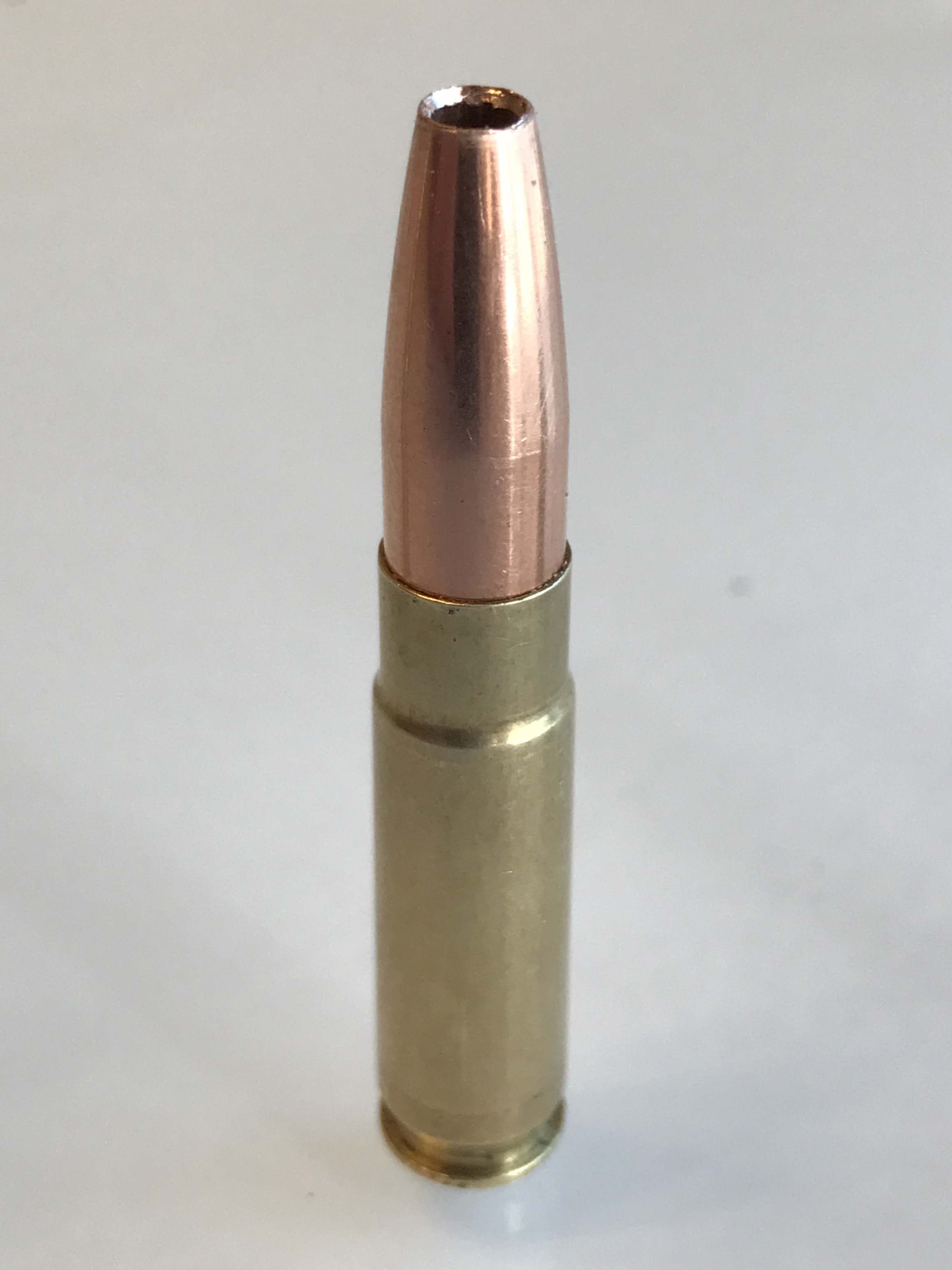
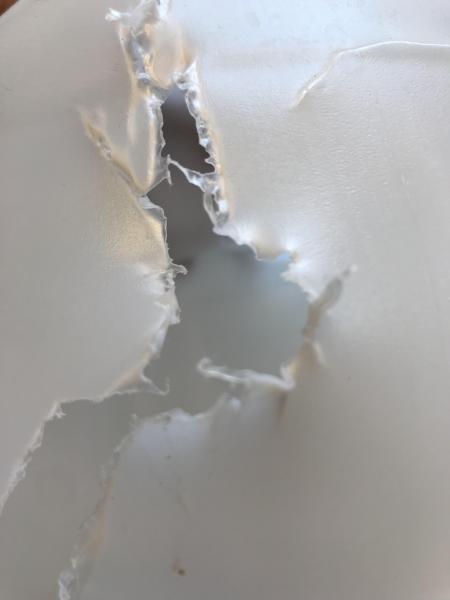
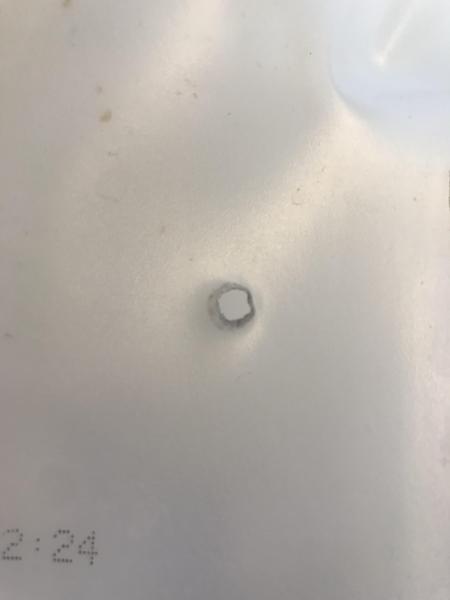
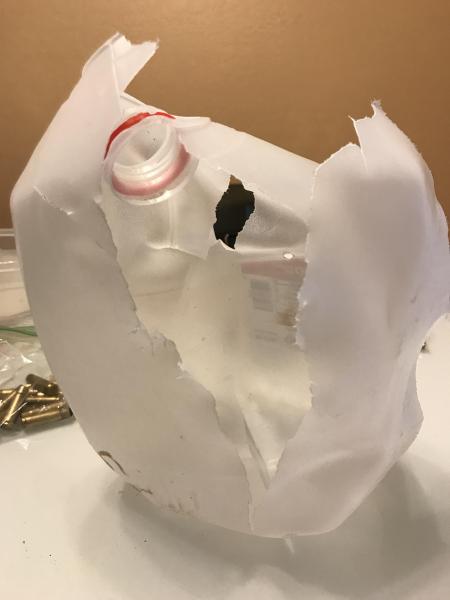
Some close ups of the exit damage of the modified hollow points. You can see, distinct and separate from the long rips caused by the hydrostatic shockwave, the jagged circular holes punched as the projectile exits the back of the jug. These holes form a “permanent” cavity where the material is totally missing as opposed to the rips, which can be pushed back together to make the jug (somewhat) whole again. Contrast to the exit hole from the unmodified version.
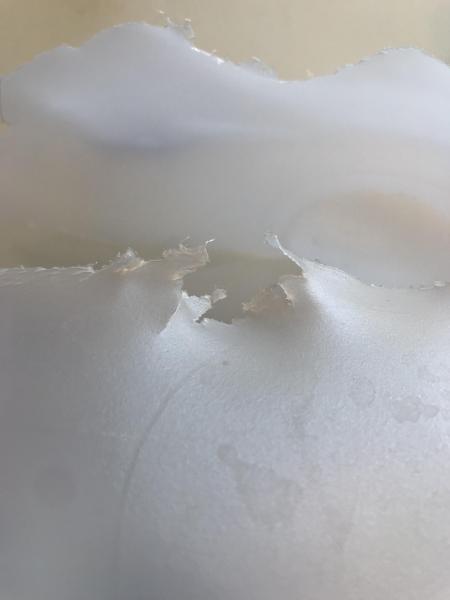
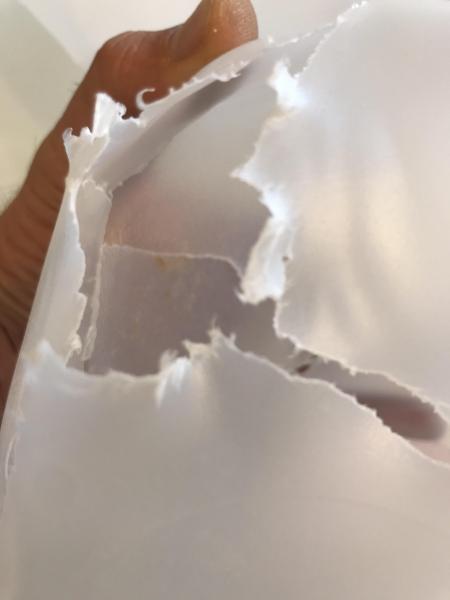
-
After condensing all the BS and back and forth sniping about irrelevant topics in those threads on the Accurate Shooter forum... I think this is the most reliable takeaway: Brass (or any metal for that matter) springs back in the opposite direction that it was last worked. That sounds about right to me anyways. I have a buddy that’s an engineer that used to work for US Steel, will see if I can get him to give an authoritative confirmation on it.
-
Thinking along the same lines, let us know what you end up getting and how you like it.
-
I think the improved SD on the modified version came from making the projectiles more consistent in length (from the factory, the batch I have varies as much as 0.025”)
-
Roger that
-
One thing I notice is that it sure likes to put bullets through the same hole... and when it doesn’t, I get the feeling it’s probably (definitely) because of something I did. I’m thinking that, if you strapped it to a concrete sled, it would make one ragged hole at 300 yards... at 400 yards you might start to see a little space between the holes ... it definitely shoots much better than I can . Once I catch up to it though, then we shall see what we shall see. Also working on bettering my reloads, there’s probably some vertical dispersion there that I can tighten up. Shot both 168 gr Hornady Amax and HPBT Match this session.
-
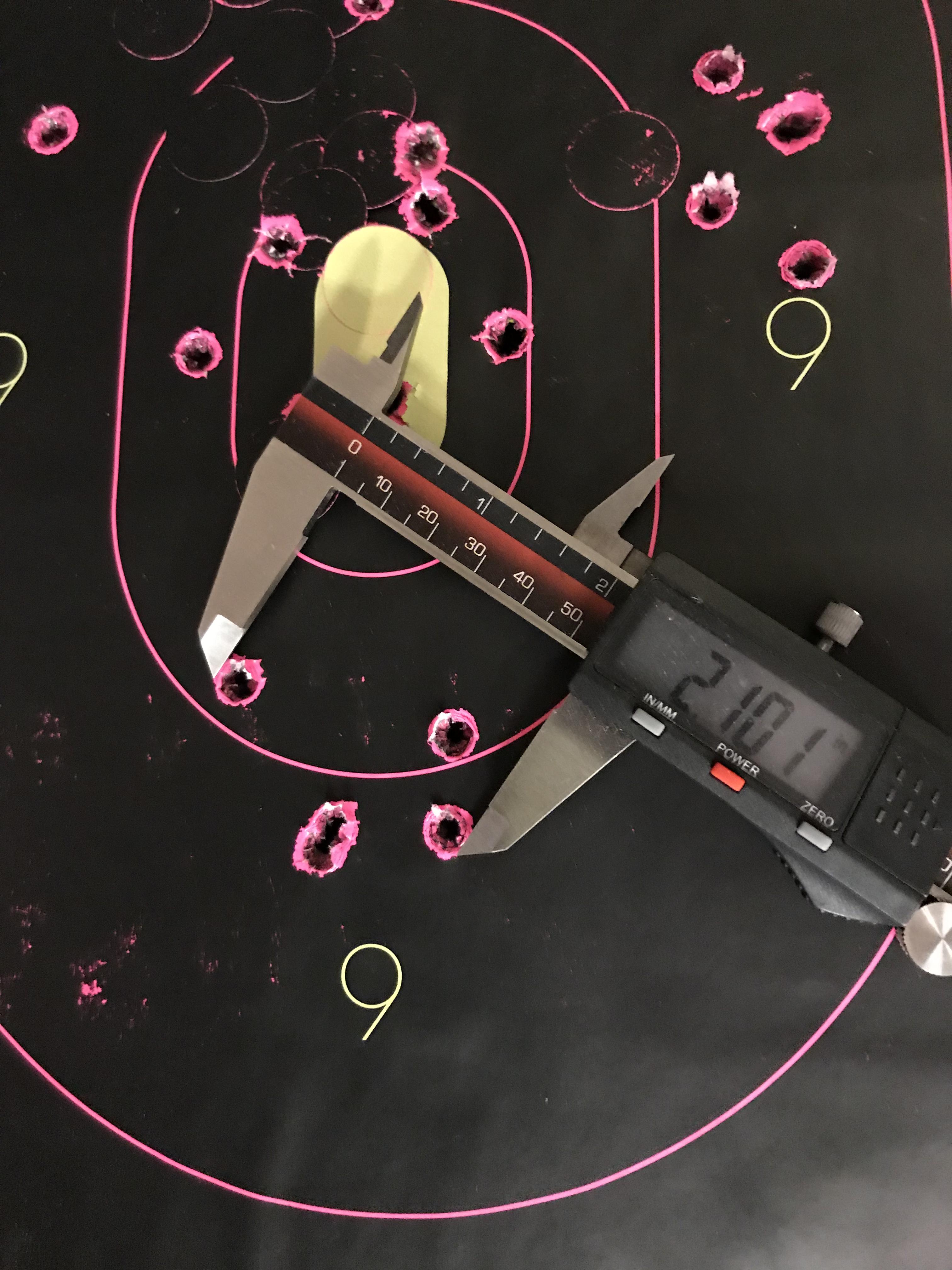
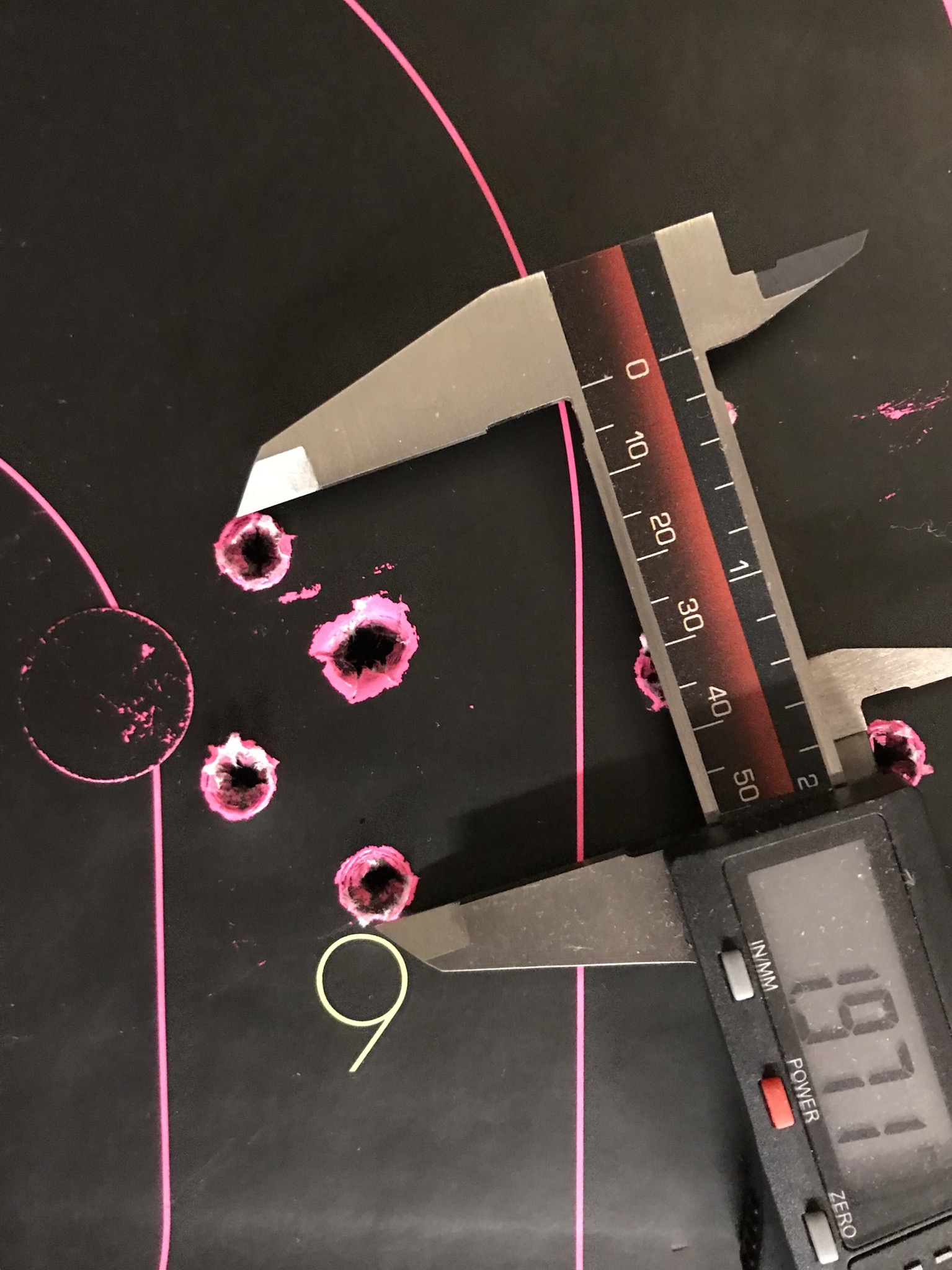
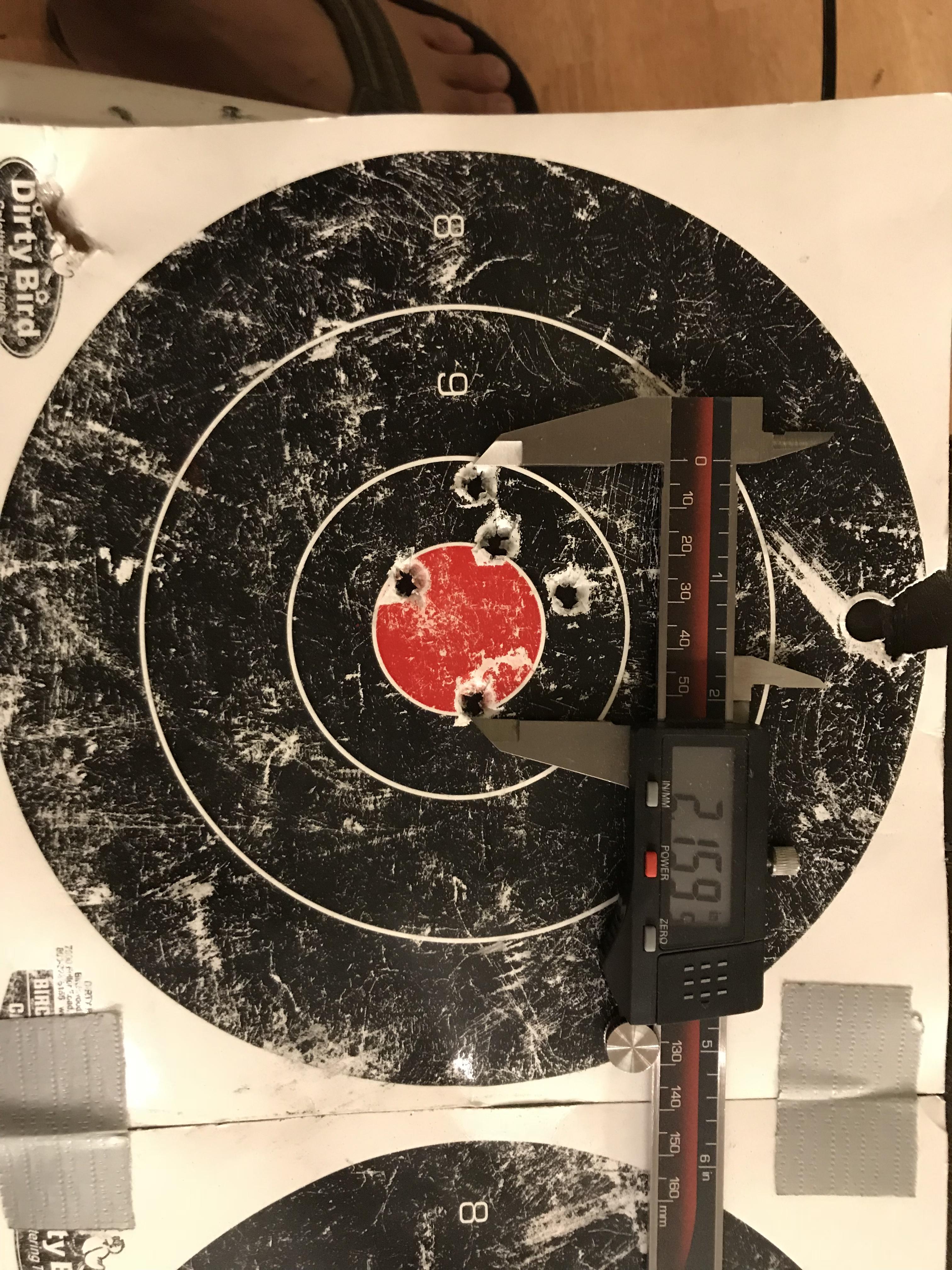
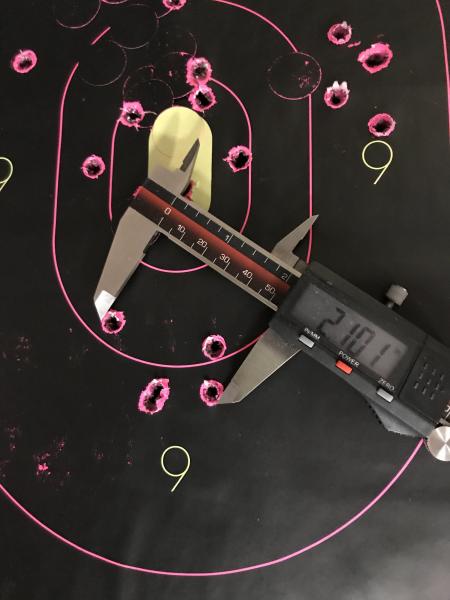
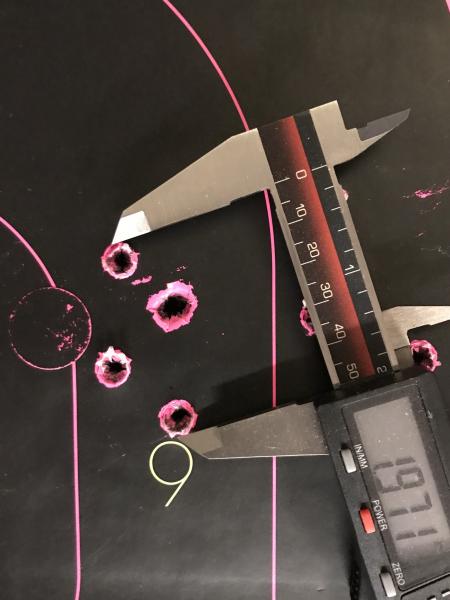
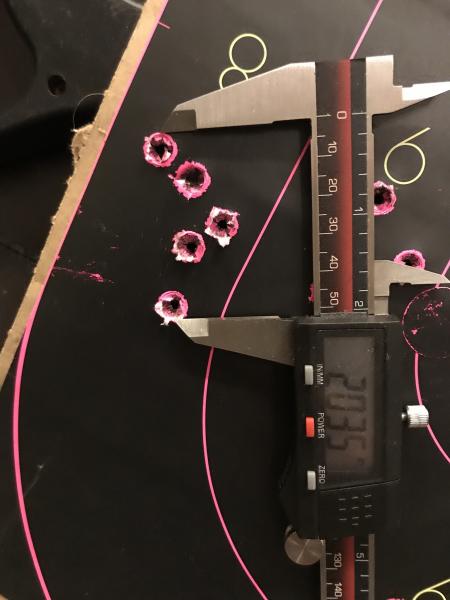
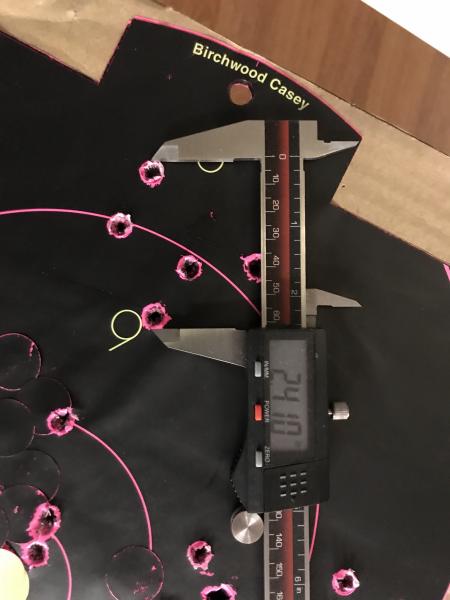
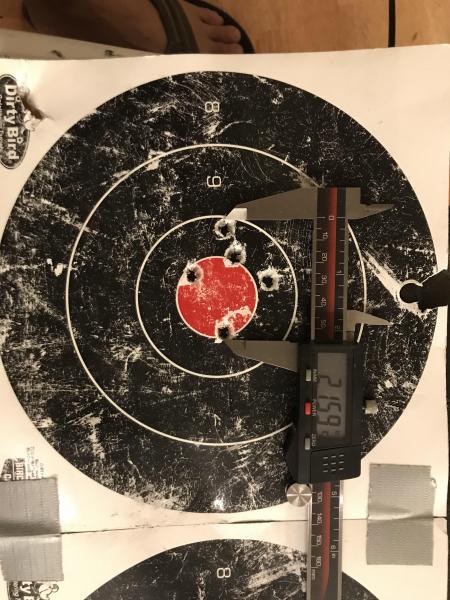
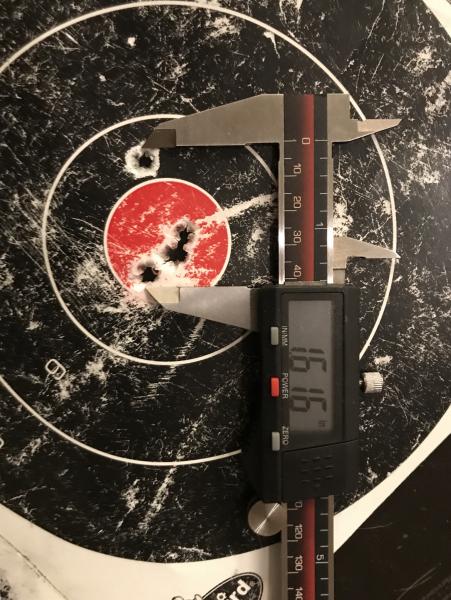
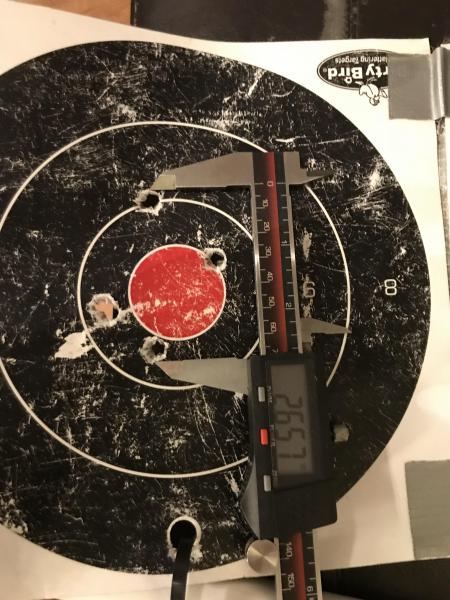
Shot today at about 200 yards (giant steps, I gotta get me a real range finder one of these days) ... 5 shot groups around a single POA. Not too shabby... a few so-so groups... a couple I’m real pleased with. One group I looked through the scope and got real excited about... so of course I ended up pulling the last shot
-
I have the JP fire control system in it... I haven’t owned any real expensive big name trigger systems, so I don’t have a lot to compare it to, but I like it a lot. Crisp break, real short reset, their “speed” hammer doesn’t shift the gun much at all when you pull the trigger, no problems so far with light strikes. I only have 1 lower for both my tactical and long range uppers... but if I were to build one strictly for precision work, I’d probably put one of the Geiselle 2 stage jobs on it... or Elftmann, I hear they’re also pretty good... ever hear anything good/ bad/ indifferent about them?
-
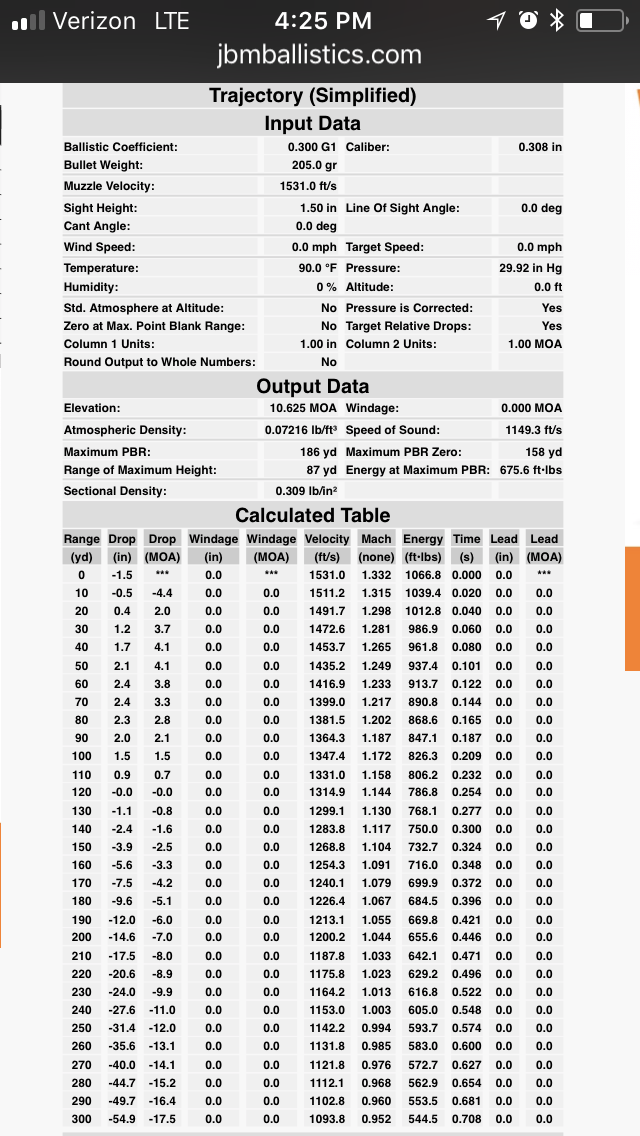
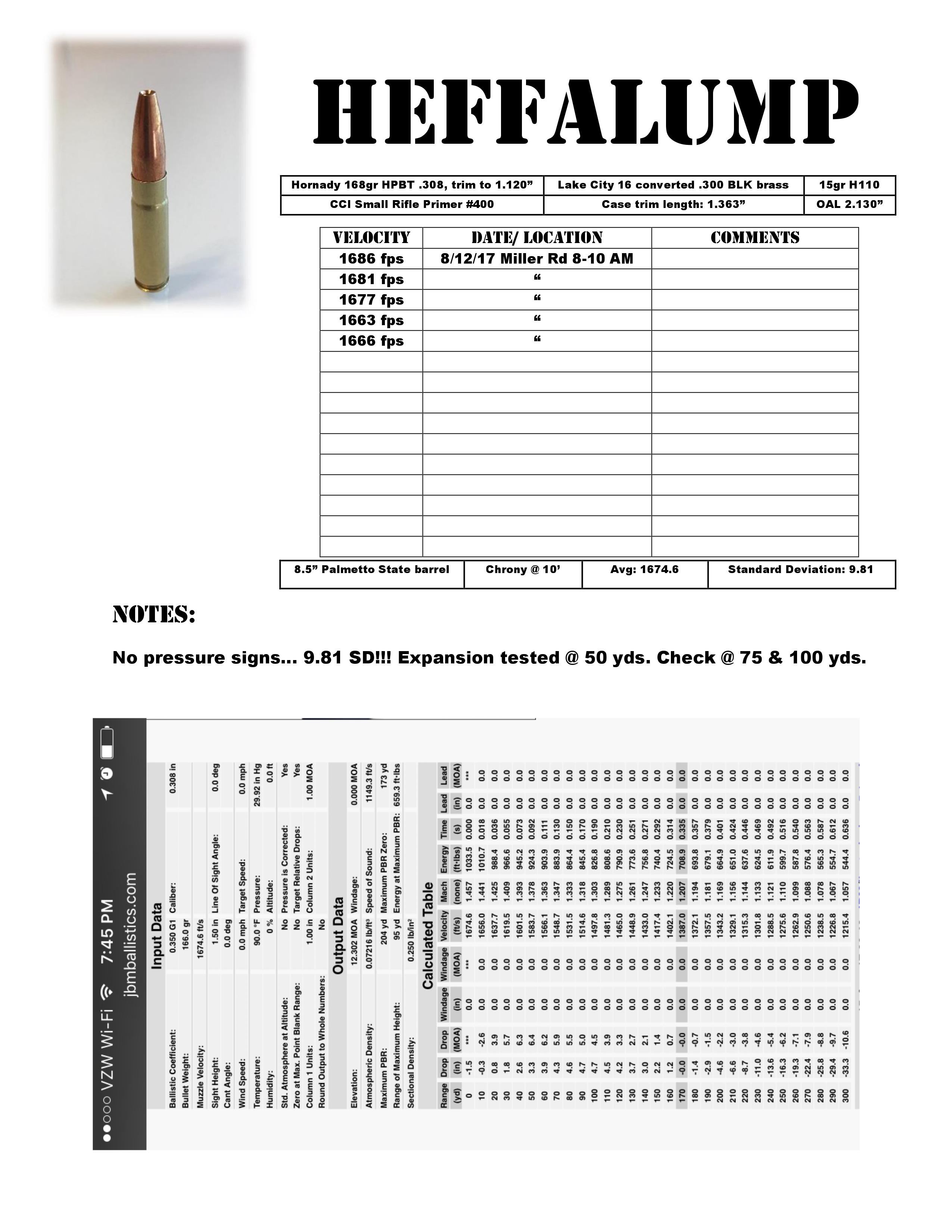
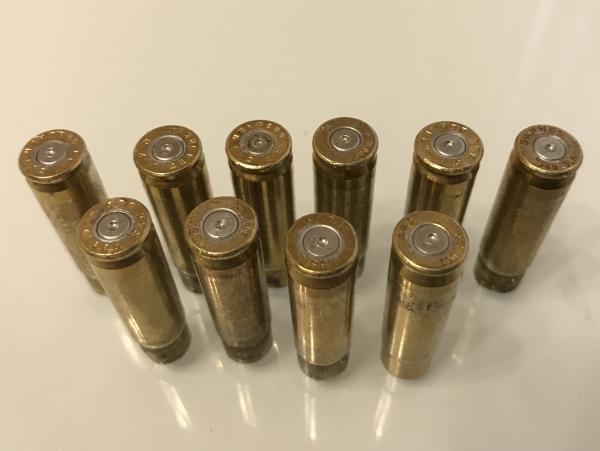
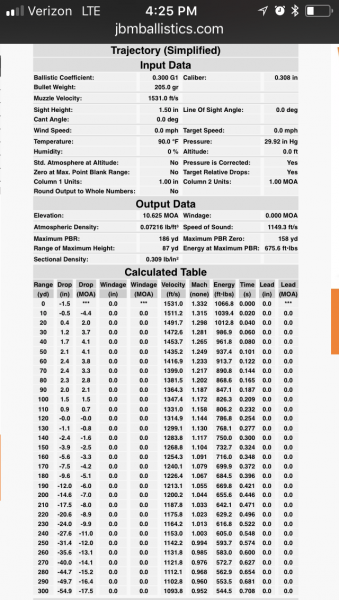
As promised... the tale of the tape: Long Eared Galoots Shot them though my PSA upper 8.5” barrel 1-8” twist. Powder is H110, primer CCI #450. Temp approx 90 F. 10gr OAL 2.260 1183 1251 1236 1181 1260 No pressure Does not engage LSHO SD 37.69 Avg 1222.2 11gr OAL 2.260 1322 1346 1339 1324 1279 No pressure LSHO engages sporadically SD 26.06 Avg 1322 12gr OAL 2.260 1454 1435 1424 1454 1372 No pressure LSHO good SD 33.73 Avg 1427.8 POUS’s (modified hollow points) OAL 2.150 13 gr 1534 1541 1517 1520 1544 Mild flattening Some slight cratering SD 12.19 Avg 1531.2 Jug obliterated at 50 yds... next expansion testing at 75 & 100 yds. I think I will just download the powder for lower velocity to simulate 75 & 100 yds. Judging from the chrony results, each 1 gr of powder increases velocity 100 fps. Looking at the ballistics table, 11 gr should give a velocity at the muzzle approximating 13 gr velocity at 100 yds.
-
Found this thread discussing the issue, they stay on the topic of brass elasticity over time, and discuss the mechanisms... then they go off on a tangent and argue about incidents of bullets sticking in the necks and what the reason is exactly. http://forum.accurateshooter.com/threads/neck-tension-changes-with-time.3792938/page-3 What’s a .22 Dasher? And who is this James Phillips guy? “A while back James Phillips set out to build a rifle for the Annual Hickory, NC Ground Hog Shoot. Working with Mike Bryant, he ended up with a rifle that was more than just a first-rate varmint-slayer. His Bryant-smithed 22 Dasher turned out to be one of the most accurate rifles ever made. Competing in registered IBS 600-yard matches in the fall of 2004, James set three IBS world records with the gun, earning top marks for both Score (55-5X) and Group (1.174"). Veteran long-range shooters tell us that a gun that can group in 1.25" at 300 yards should be competitive. Well, James beat that--at double the distance. James' amazing 1.174" 600-yard group works out to 0.19 MOA. To do that at more than one-third of a mile is a major achievement.” http://www.6mmbr.com/gunweek030.html
-
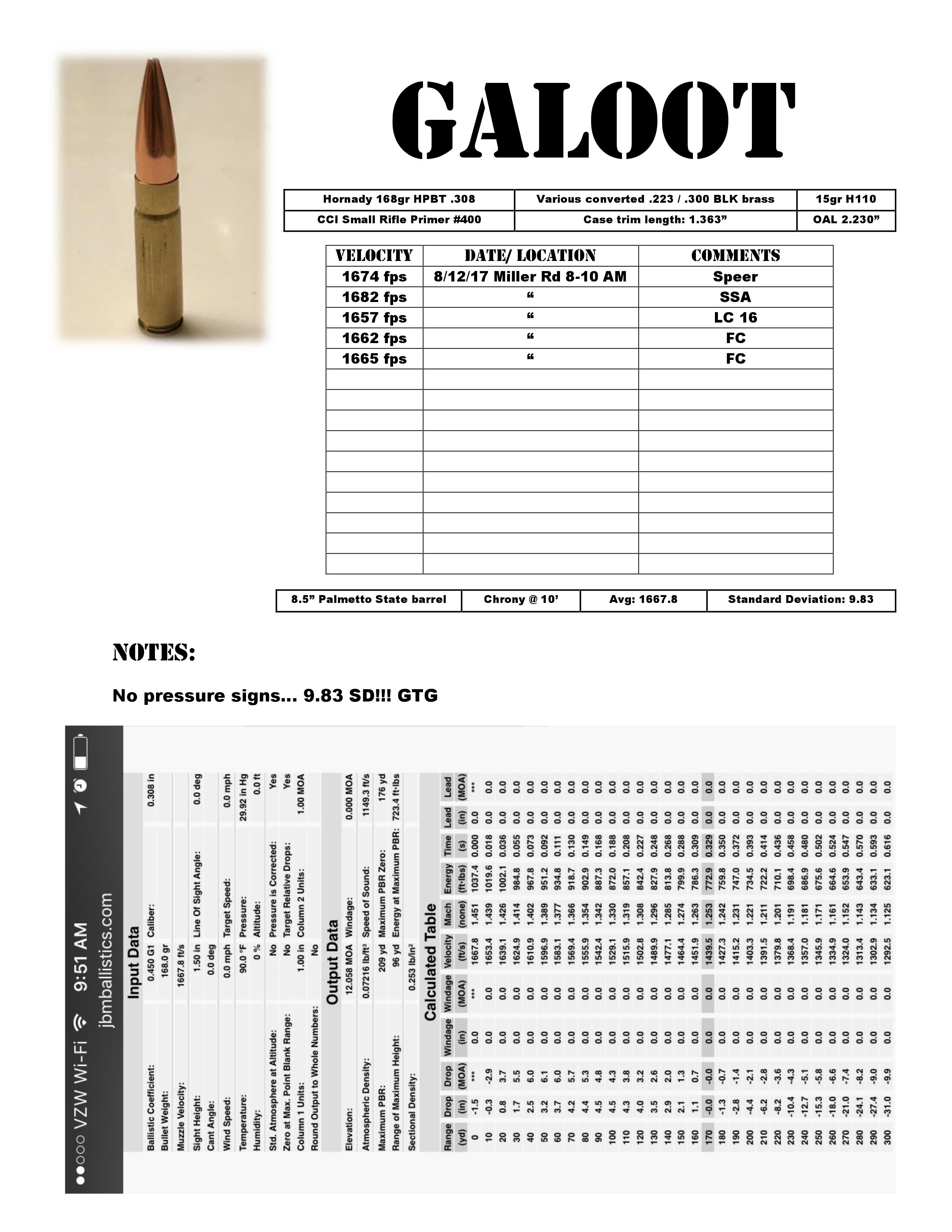
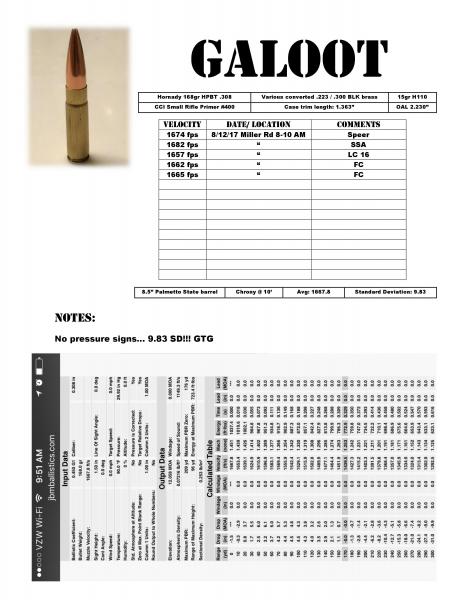
Here’s the data from the unmodified book load version of the 168 gr, I call it the “Galoot”. The numbers are essentially the same as the Heffalump. I think I will call the unmodified 208 gr version the “Long Eared Galoot”.
-
I think I might try to catch me a Heffalump on the next outing... will post up with some pics if I am successful.
-
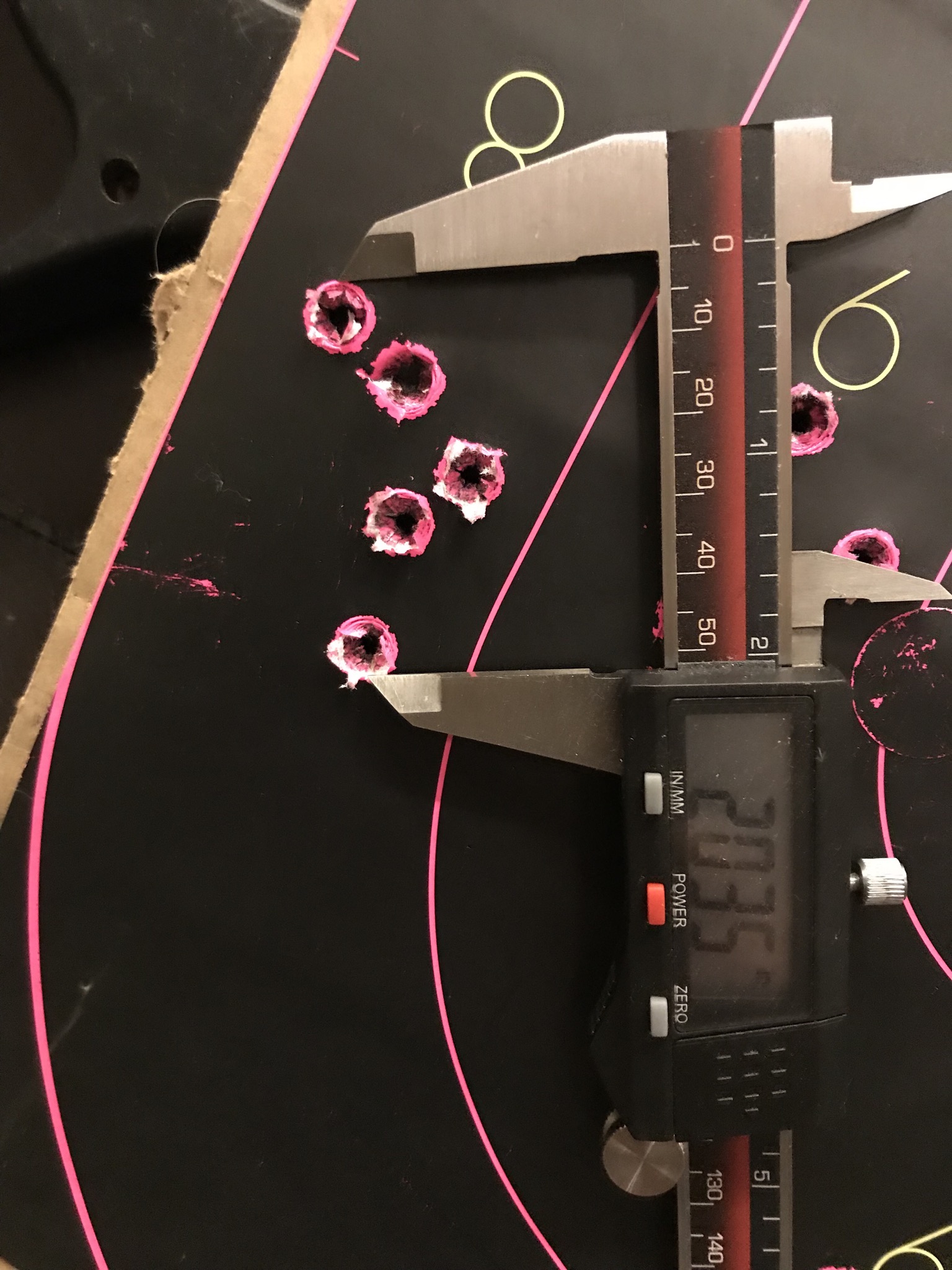
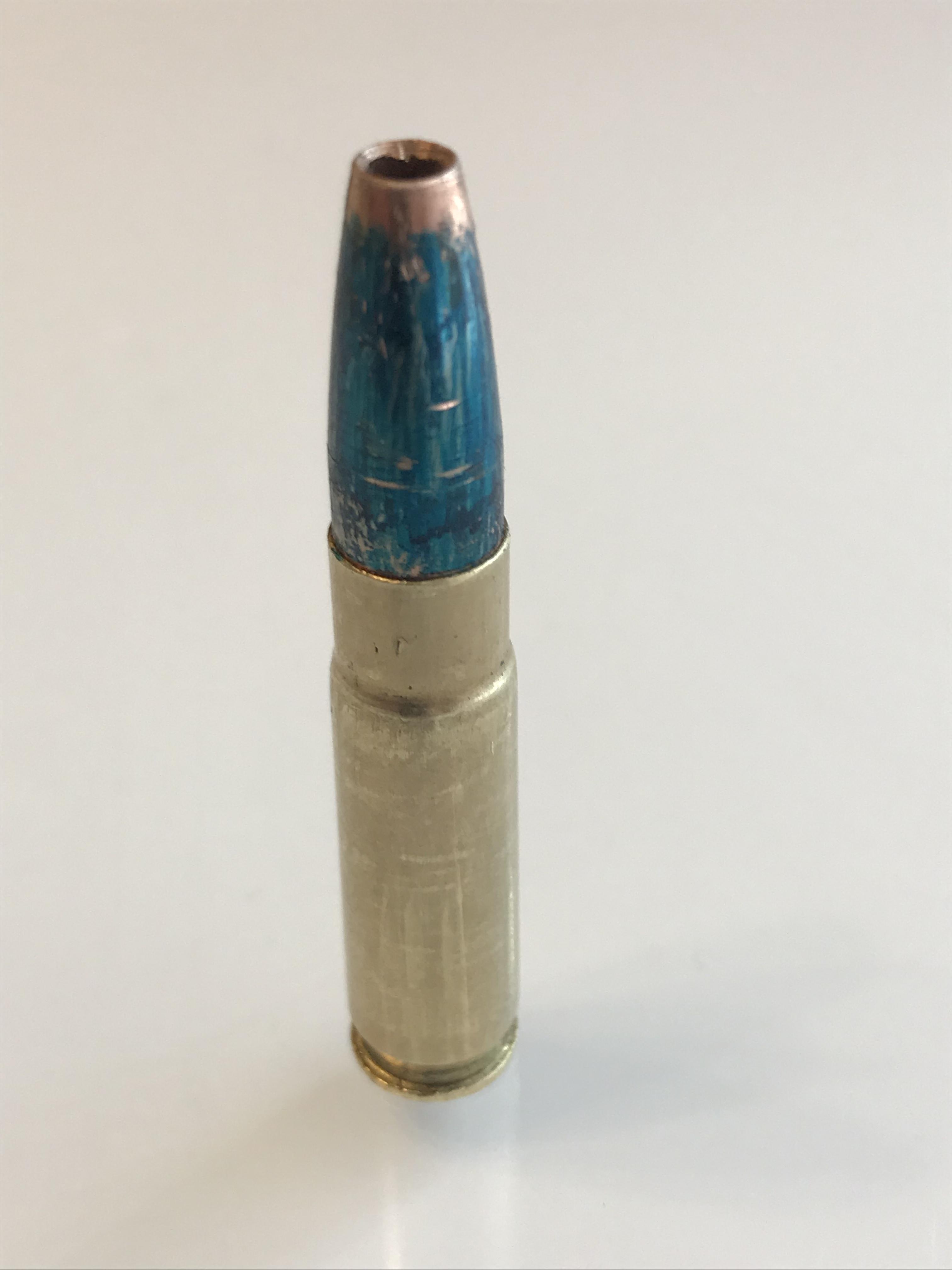
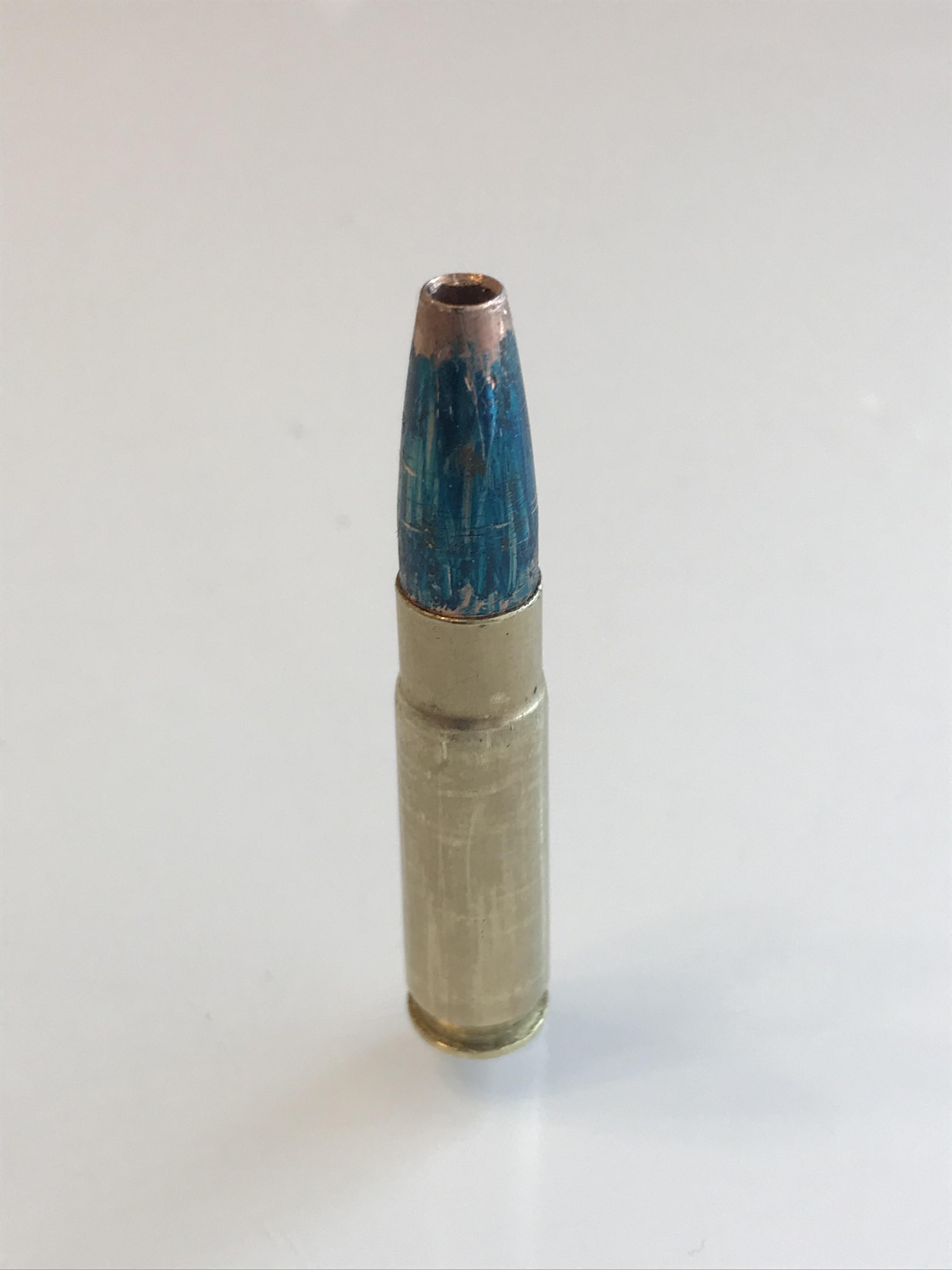
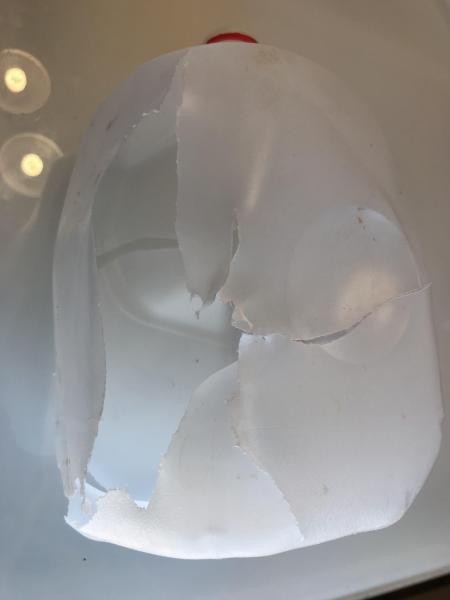
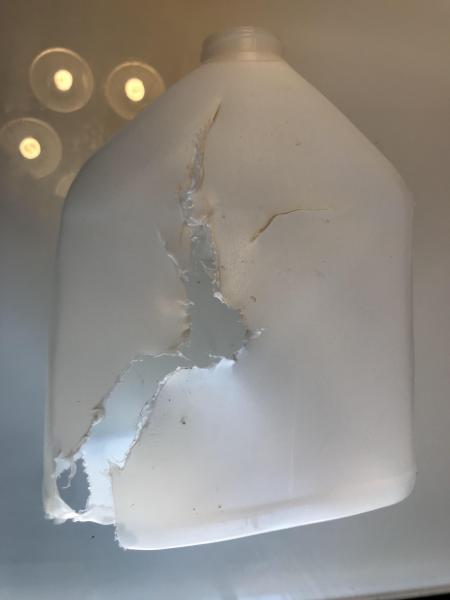
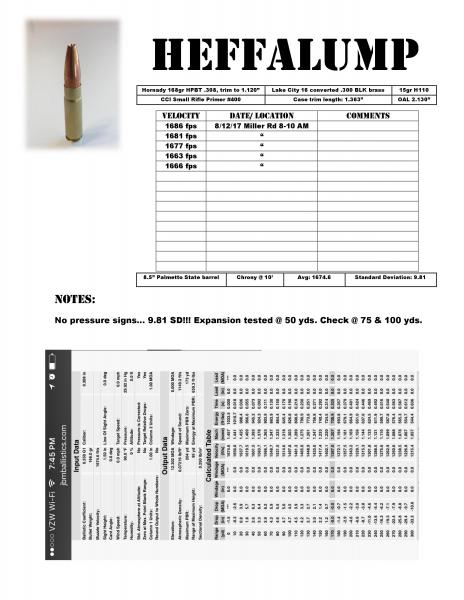
Here are the results from when I created the 168 gr version. I’m pretty pleased with them so far. SD is good, hoping to keep it down and even improve as sample size increases. Ballistics chart is for a zero of about 13 yds... 4.7” high at 100 yds ands 4.6” low at 200 still retaining 665 ft lbs of energy at that distance, though I wouldn’t expect any kind of expansion. Expansion is pictured at 50 and 75 yds... expanded diameter difference is apparent from exit hole.
-
I had noticed the phenomenon when pulling bullets...didn’t have a fancy force gauge to tell me exactly how much the difference was, but it was noticeable... which caused me to do an internet search which turned up that article.
-
“... time of loading is another key variable.” “James Phillips discovered that time is a critical factor in neck tension. James loaded two sets of 22 Dasher brass. Each had been sized with the SAME bushing, however the first group was sized two weeks before loading, whereas the second group was neck-sized just the day before. James noticed immediately that the bullet seating effort was not the same for both sets of cases — not even close.” “Using a K&M Arbor press equipped with the optional Bullet-Seating Force Gauge, James determined that much more force was required to seat bullets in the cases which had been neck-sized two weeks before. The dial read-out of seating force for the “older” cases was in the 60s, while the seating force for the recently-neck-sized cases was in the 20s. (These numbers loosely correspond to the amount of force required to seat the bullet). Conclusion? In the two weeks that had elapsed since neck-sizing, the necks continued to get tighter and stiffen.” http://bulletin.accurateshooter.com/2010/02/neck-tension-bullet-seating-and-the-time-factor/
-
I think the 1.3” version is ready to move on to stage 2 testing . Going out this Sunday, will have some results for both the unmodified and experimental versions .
-
So I am reading that brass that has just been reworked is softer than brass that has been sitting for a while after... so this leads me to several questions: 1. Is it better to resize and seat during the same time period or better to resize and wait before seating? 2. Would seating after the brass has been sitting for a while create more neck tension or would seating the bullets work the brass, making it soft again? 3. Would seating the bullets, then waiting a while for before shooting result in more neck tension? (I’ve noticed freshly seated bullets are much easier to pull) 4. Is it better in general to wait a certain amount of time before shooting reloads to allow the brass to settle first? 5. Obviously, inconsistencies will result from shooting batches of bullets made at different times even if all other characteristics are the same... how long before the brass settles down and time elapsed since working ceases to be a factor?
-
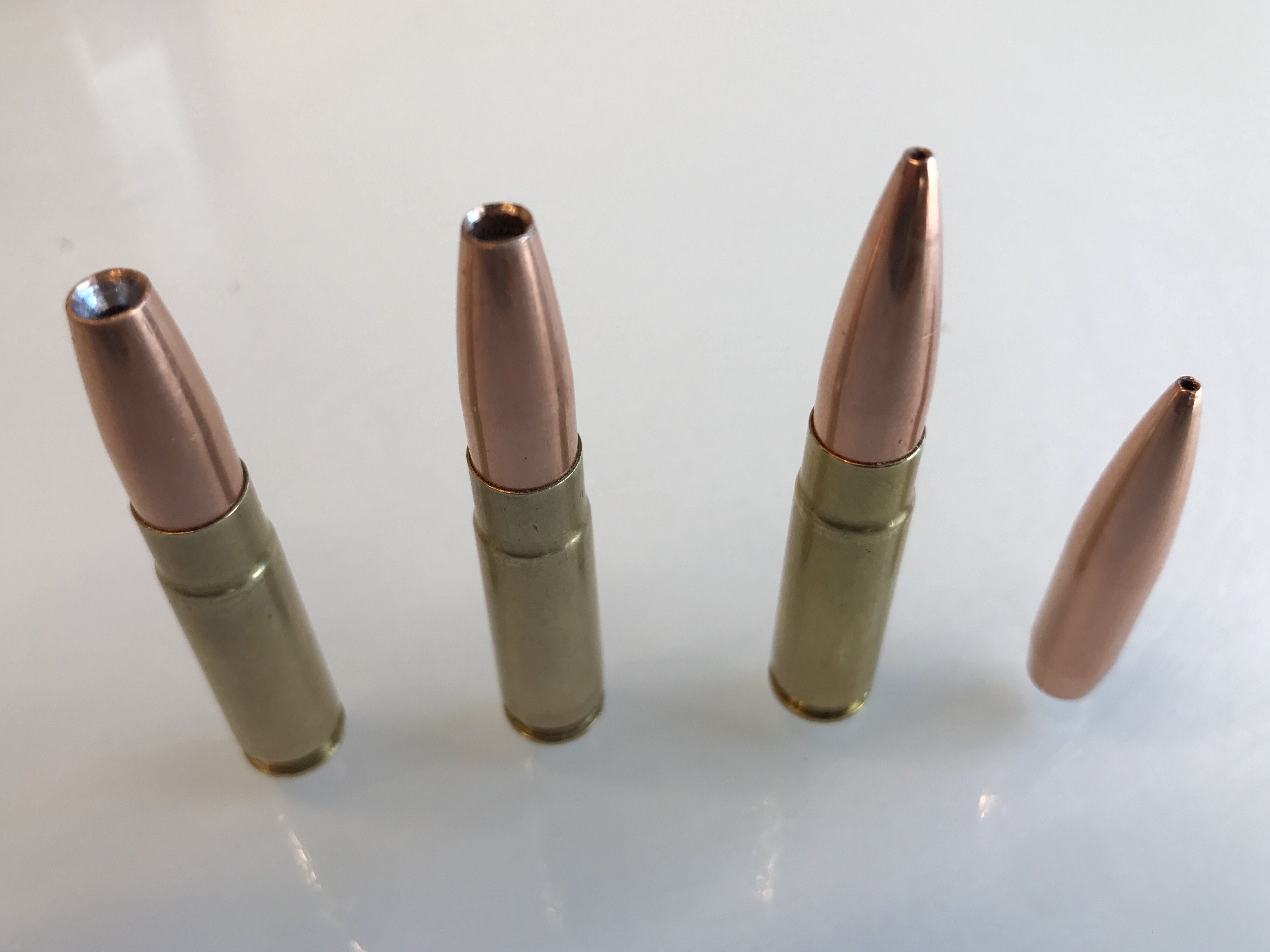
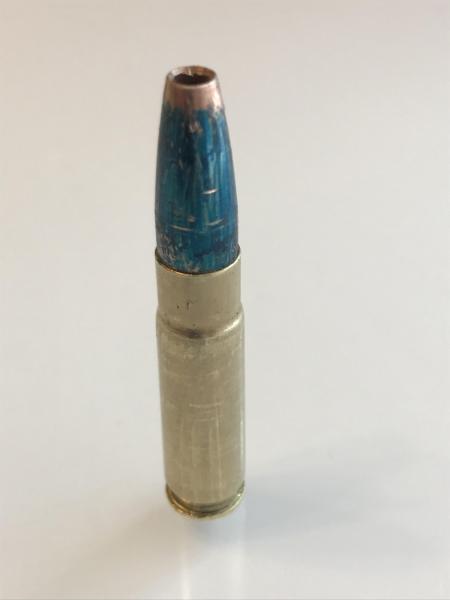
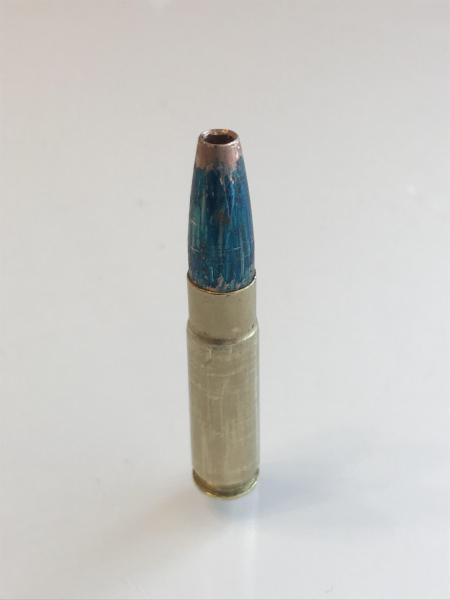
Made some dummy rounds to test how they feed from a magazine. The 1.3” feed fine... but the mouth on the 1.2” is a little wide and tends to get caught up on the ramp, so I am pulling those. I also tried seating the 1.3” as far back as 2.050” OAL and they still feed with no problems. No contact with the lands even at 2.150” OAL when using the bolt catch to feed from the mag. I am getting some concentric circular marks on the ogive... perhaps from the feed ramp?
-
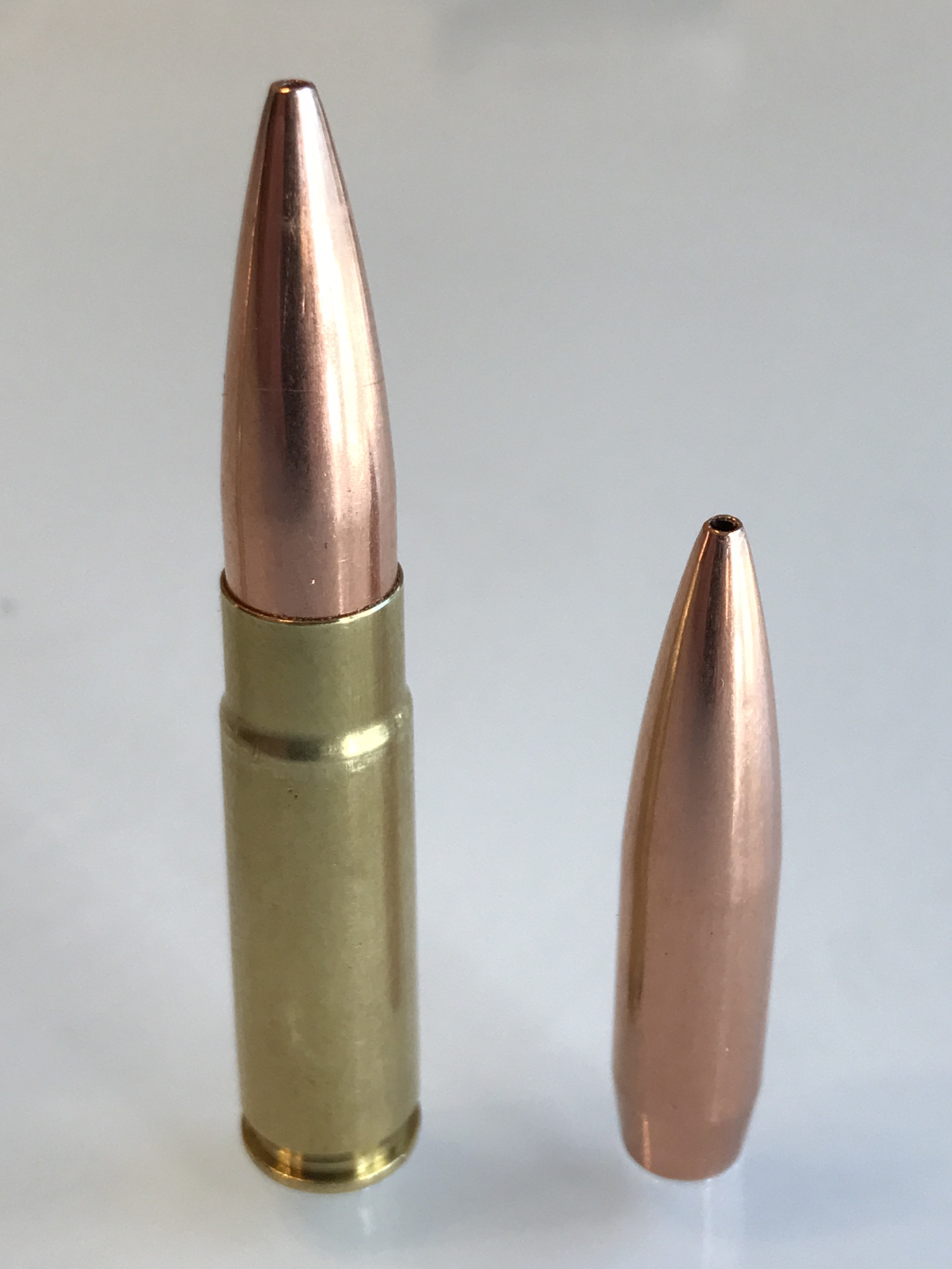
I think the projectile variance theory has a lot of merit. Just going off the bullets I have on my table right now, Hornady .308 208 gr HPBT Match: 1.485"; 1.474"; 1.481"; 1.489"; 1.475" I've measured some as high as 1.495" and as low as 1.469". What you can do is set aside all the ones over your desired OAL and arrange them in order of length. Start with the shortest one, (requiring the least adjustment) adjust the die a little farther down until that one reaches desired OAL, then move to the next shortest and so on, first seating at the same setting as the last one, then adjusting a little further down each time. The reason the die seats to various lengths is because the seat plug contacts a point on the ogive (a much more reliable measure) rather than at the tip. Check the cutaway view on this page and you'll see what I mean. https://www.huntingtons.com/store/product.php?productid=18050
-
Trimmed weight (+/- 0.1) is 205 for the 1.3" and 202.5 for the 1.2". Wanted to seat them as long as possible to help them feed better with less jostling in the magazine so I started out with the 1.3's seated to 2.250... performed the Redneck Chamber Test and determined that was too long. Moved back to 2.175 and that chambered, but I could feel it was right up on there. Moved back to 2.150 and tested all the rounds to ensure function. 1.2's are seated to 2.050 which follows the same profile, also tested all these as well.
-
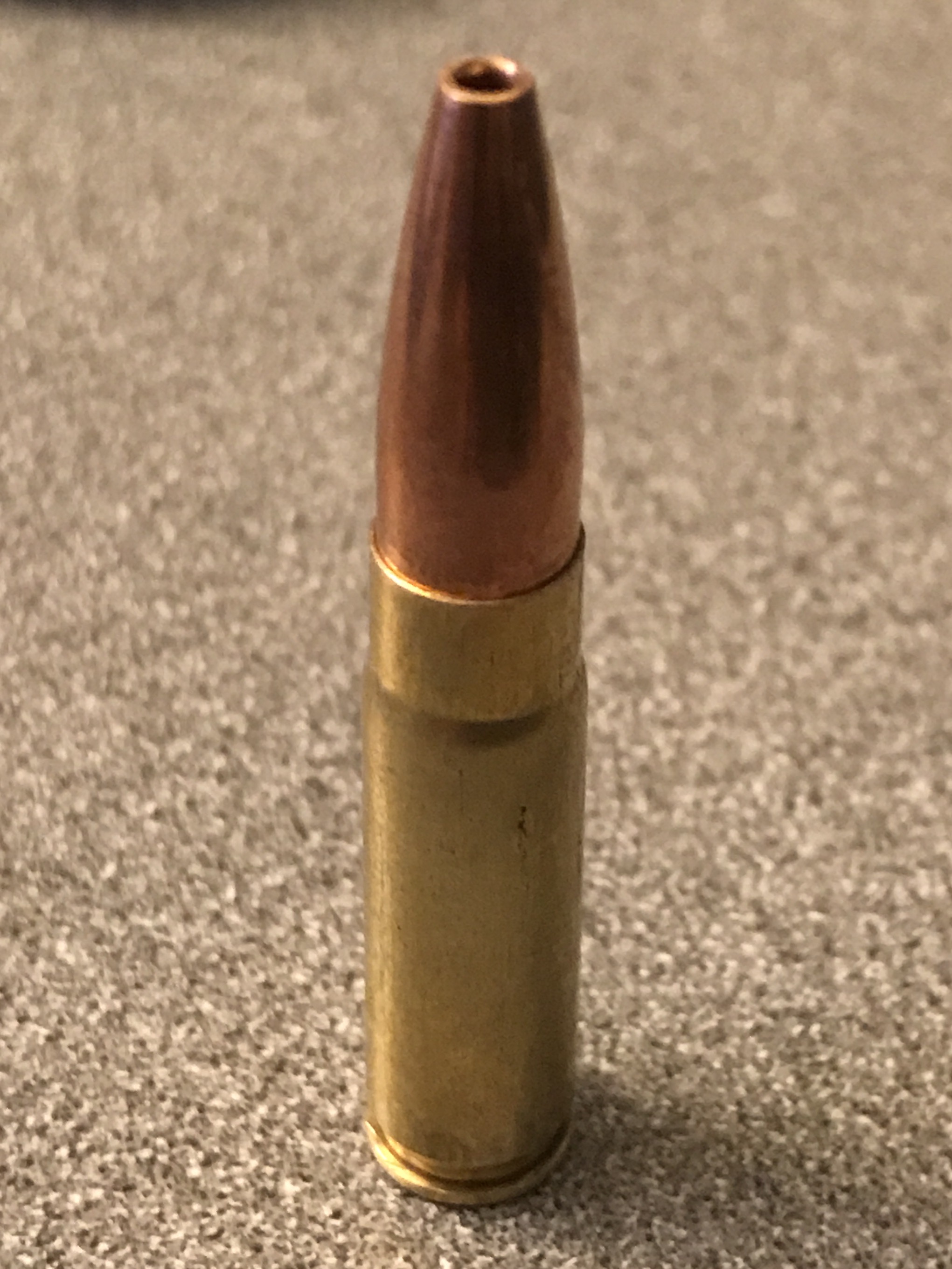
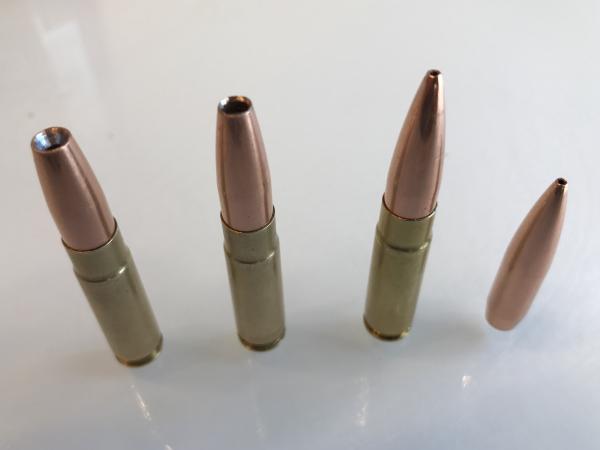
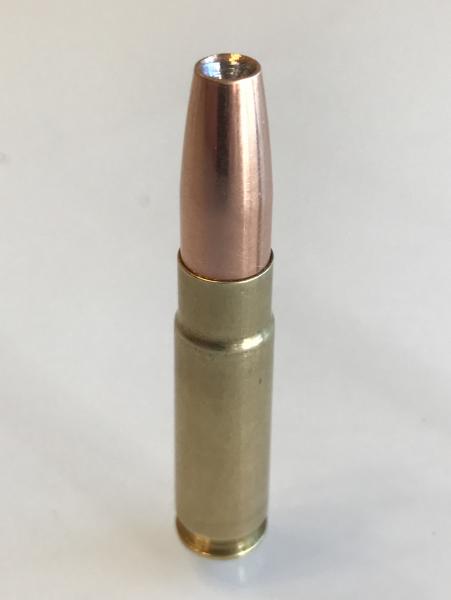
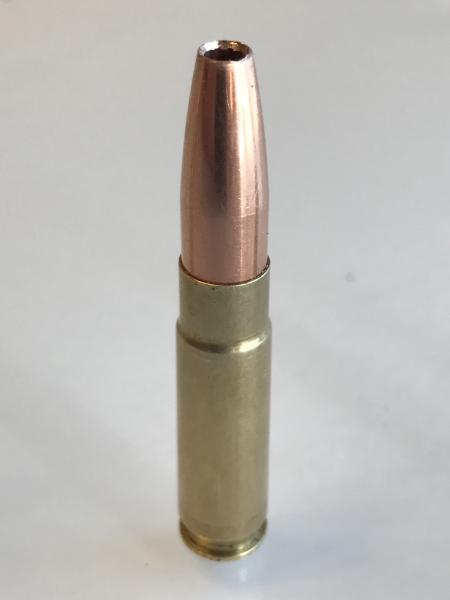
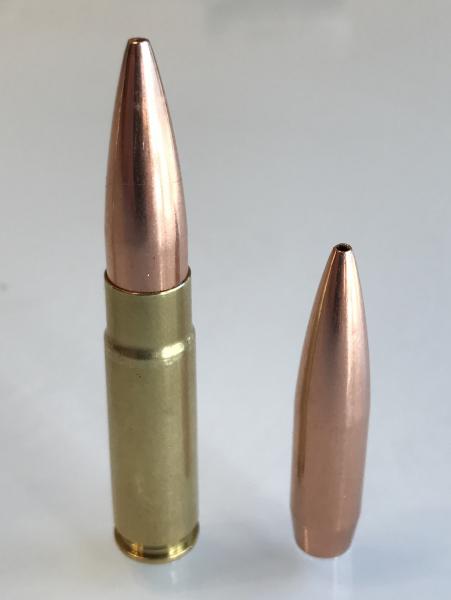
Loaded some of the Hornady 208 gr HPBT's in .300 BLK. I don't shoot suppressed, so don't care particularly about subsonic loads other than from an academic standpoint to figure out how many grains of powder it takes in my specific gun in case I do want to do the "pew-pew" in the future. Loaded some with 10, 11 and 12 grains of H110. Anybody else loading these for max velocity? According to my calculations it would take 16+ grains of H110 to make a compressed load with this projectile. Hodgdon load data lists max load as 15.6 gr for the 180 gr SPR SP, but doesn't list a max for the 208 gr since it's a subsonic load. I figure maybe 14 grains or so is about right for max on the 208 gr. http://www.hodgdonreloading.com/data/rifle Made 10 each of experimental hollow points by trimming down to 1.3" and 1.2". Will see how low I can go velocitywise and still get expansion. My aim is to have the top 1/3 of the bullet fragment to deliver a lot of initial energy on impact while the big heavy base continues on afterwards to ensure adequate penetration.
-
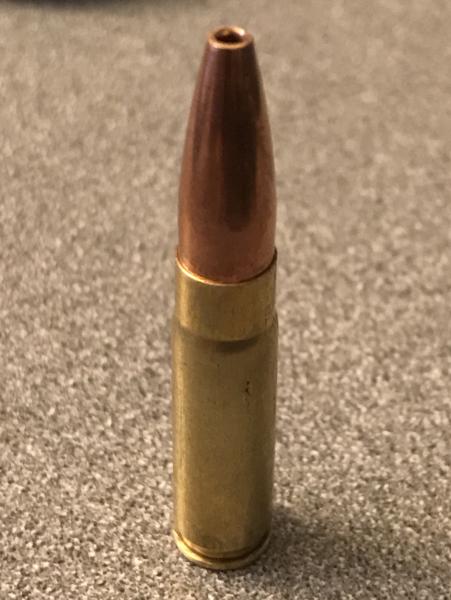
Funny you should say that The upper I'm using in the pics is a .300 BLK pistol upper. I use the test on it when creating my own heavier for caliber expanding ammunition (Maker is the only manu I know that has any decent ones, and they want too much for them). I'm currently experimenting using Hornady HPBTs and shaving various lengths off the top. I imagine with these longer projectiles, if I cut enough off and seated it out far enough, it might end up contacting the lands, which should show up using that test. Here's one version I've designed for medium range, I call it the "Heffalump". It's made from a Hornady 168 gr HPBT with 1/10" off the top. It exhibits full expansion at 50 yds and partial at 75. I have a longer range version with 1/8" off, that I'm thinking will work out to 100+... but it's still untested at the moment. Will eventually work up versions with 195 & 208 gr HPBTs, but haven't gotten around to it.
-
My Van Halen got "borrowed" by the eldest daughter and I haven't been able to get it back since. Least she's got good taste in music ... the youngest one listens to this ga-ga-ra-ra-ra stuff they play on the radio these days.
-
Skynyrd was in the wash