
moroeder
-
Posts
8 -
Joined
-
Last visited
moroeder's Achievements

Newbie (1/14)
-
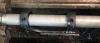
The lap was charged, charging is forcing the grit to get stuck in the soft material using a hard steel roller and rotated at 15 rpm so there was no slurry to drip from the process. The lapping compound was the typical Clover valve lapping paste so it held tight to the lap. Notice the spiral grooves in the lap would hold extra paste and the swarf bi-product. After a few passes I would wipe the lap clean and reapply and recharge the lap. Frequent clearing of spent abrasive and aluminum is a must because the aluminum will take on some of the lapping compound because it is softer than the grey iron. The ideal lap would have been a softer material like lead, or sand mold cast aluminum. The mount was made from pressure die cast aluminum assuming a 6061 alloy with a T6 heat treat which makes the aluminum structure stronger and no porosity, A sand cast soft 300 series alloy aluminum round bar turned to the correct dimention would have even worked better. As far as the lapping compound around a lathe, just be careful and don't get the compound where it doesn't belong. Another reason to use a lapping paste and not the common slurry sometime ised in production lapping.
-
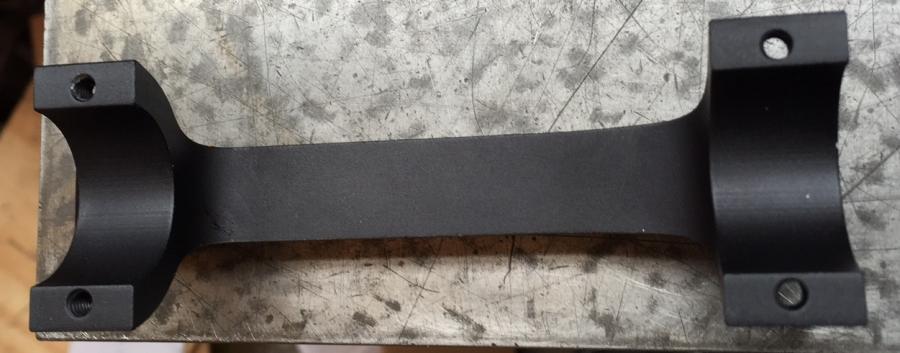
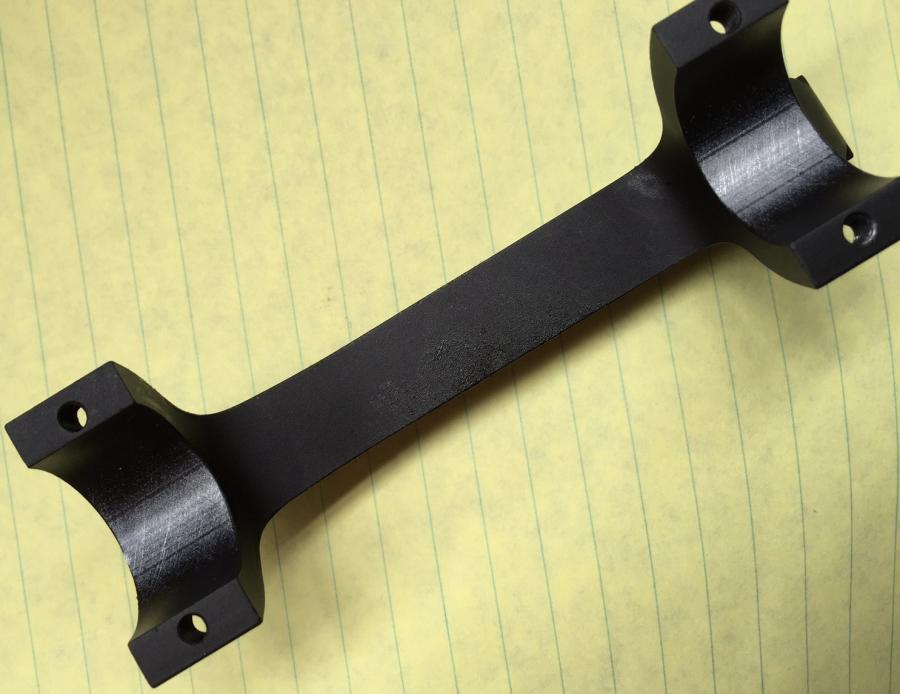
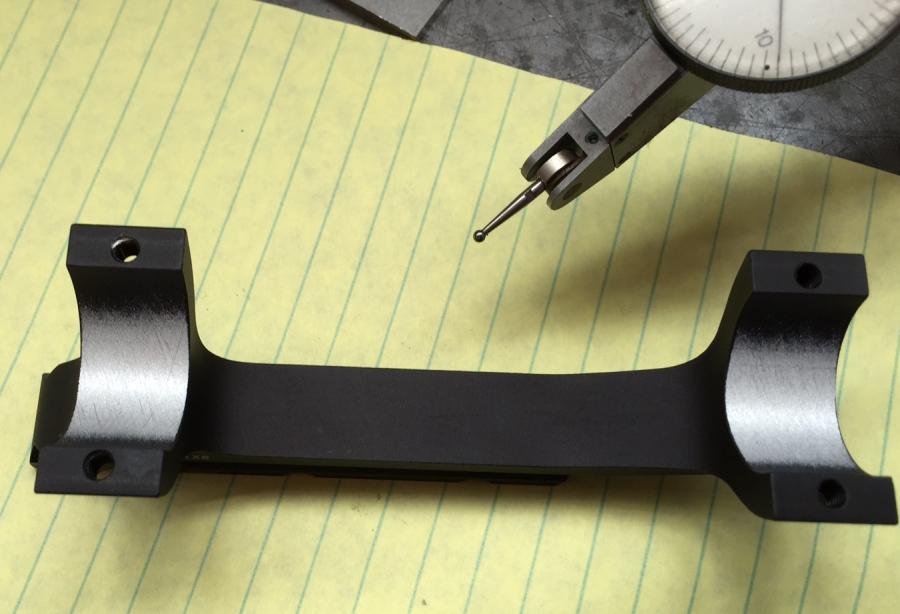
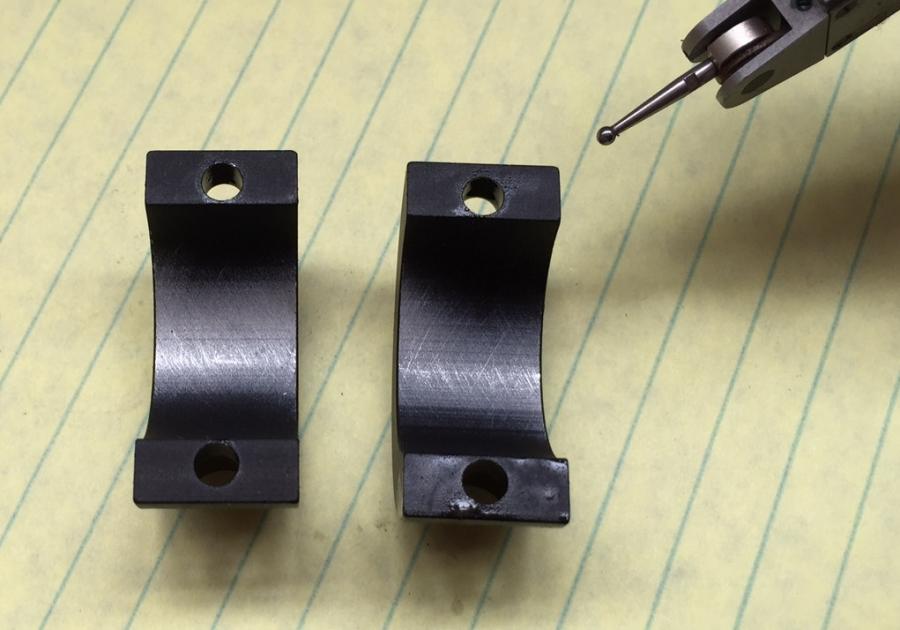
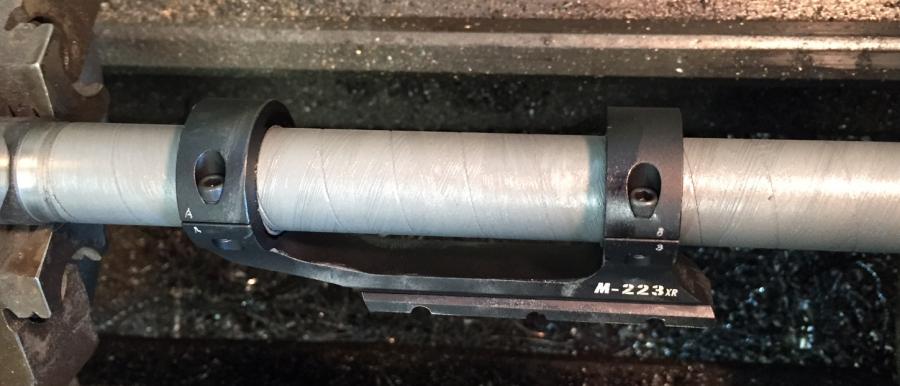
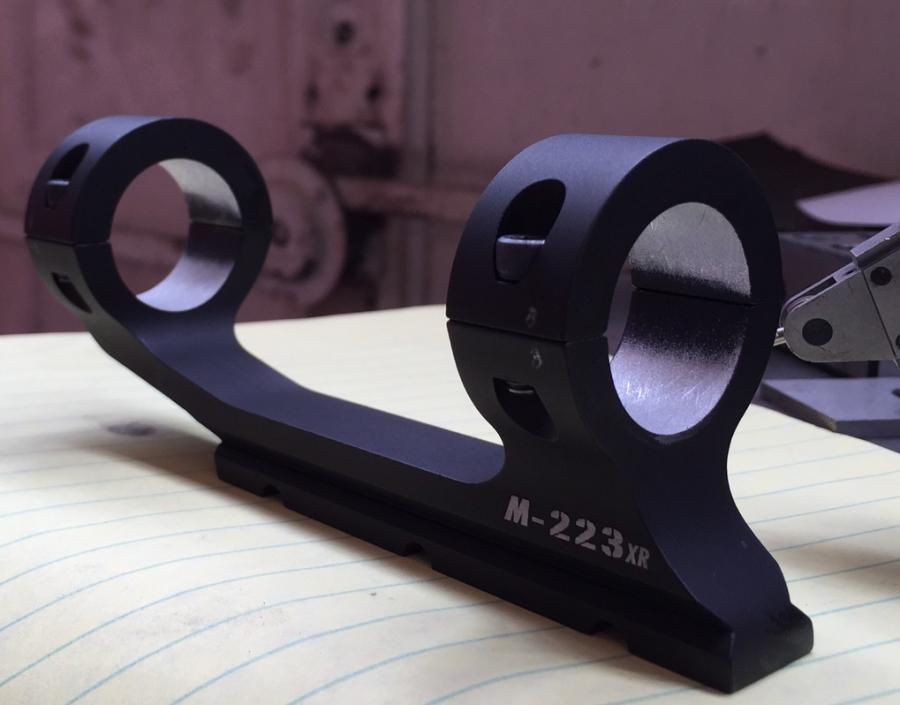
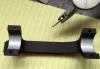
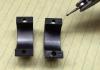
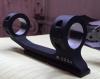
I've recently discussed the M223 and the M308 one piece mount with a real Nikon engineer that knew what end of the scope to look through! I had been told the one piece 223 and the 308 mounts were the same except the labeling. He confirmed it and we discussed the virtues of the M308 scope which I am mounting on my 20" DPMS. Even though the box says mfg in the Phillipines he said the glass is Japanese. As you may know Burris started making their scopes in the Phillipines, not positive of all their scopes but the majority seem to be. Anyway, what I really wanted to convey to you is the conformal errors that are in the stock un-lapped mount. I lapped in the M223 XR (extreme range) 20 MOA mount and thought some of you would appreciate seeing how much out of round the mount is and why it's critical to lap it in. I measured the body diameter of the M-308 scope and made a gray cast iron lap to its dimension. The tube was pretty good and measured from .9995"-.9985" so I made the lap .9995" knowing the aluminum base would pick up some of the aluminum oxide 60 grit lapping compound. It did and by finishing the process the lap measured .9988" in diameter all the way down its 9" length. There is a photo attached of the mount on the lap as I used a lathe to rotate the lap and move the mount left to right. I then reversed the lathe rotation to protect myself from a bias imposed by doing the job by hand. I first lapped the caps singularly by hand to about 60% clean up same as the base, then put them together. Evenly tightening the caps as the lapping process proceeded rendered the final product as you can see in the pic. The attached photos will give you a pretty good idea what a new mount looks like as I progressed to a stopping point. Notice the last pic still shows some original annodizing left in the bore. The reasoning for stopping there was due to the fact the split line dimension across the arc (cord) was measured at 1.019". The bright areas measure right in at the target dimension, same as the scope tube. Haven't mounted it yet but I now know the original off the shelf mount could give me/ you some issues! Checking the slope rendered a 21.18 MOA after lapping, so that should work OK since the original mount that was once provided with the M308 scope was a 20 MOA.
-
Model: RFLRG2SASS, As I work my way through the factory build I will be taking notes to share with anyone that is keeping data on different components from different companies. I purchased the GENII SASS because I needed a more reliable .308 within budget constraints. Here are some findings, 1. BCG 13-3/4 oz. 2. Buffer 5-1/2 oz, 5-5/16" long, nylon bump pad, internal weight, spring shoulder 1-9/16" behind buffer face. 3. Buffer Spring 12-5/8" free length, 38 coils, .080" wire diameter (unknown wire material), 15/16" OD 4. Buffer tube depth 9-5/8" Observations of BCG, bolt spline teeth are rounded and smoother than GENI, double ejection pins, polymer extractor spring, cam pin is turned 90 degrees from older design, unimpressive machining finish on firing pin and cam pin. Carrier has real forward assist rack that works, short gas tube is inserted into an integral machined gas receiver head. Charging handle has an extended release claw so scope clearance is good. More comments to come as I take time to evaluate each section. Early impression, not as light as hoped. I know they tell you what the weight is but until you handle it, feel the balance you don't really know how you will like it. Trigger pull can probably be improved but better than standard, the two stage mentioned is longer free travel before final short stroke release. I think I can get use to the rifle after about fifty more rounds. Shot three different loads with no issues, last five rapid fire, no issues and was able to stay on 6" target at 65 yards at about 3 rounds per second, Leupold 2-7X must be torqued down to 65 inch pounds on rail, 26 on tube clamps. All the above information is provided from an inexpierenced .308 user/ mechanical engineer that appreciates good machinery.
-
I love my new DPMS LR.308 GENII SASS, twenty rounds on a cold day with two different loads it acted just like I expected, excellent. This is my backup for the original .308 my son put together for me as a Christmas present (my first post.) Because of my planned hog hunting for next month and the issues I was having with the first bastard .308 I bit the bullet and purchased the full DPMS unit. The bastard .308 that I was having trouble with the failure to feed properly i.e., bolt closing on cartridge too early has been re-engineered by adding the flat wound spring from Tubb, replacing the bastard BCG with an authentic DPMS GEN I BCG and I modified the gas block so I could adjust how much gas entered the tube. The new spring and new BCG didn't help, about 25% reduction of gas flow made it work fine! Cycled perfect with two different loads. However did I say bastard? Since I'm new to the LR, AR and all the aftermarket manifestations, I don't know what I have! Sure would be nice for someone that's been through the mill to list, I mean write a book on how to properly build a bastard .308 rifle with proven success. It would sure be nice to be able to pick and choose different parts and combine them into a fully functional weapon. My son's only build from "on sale" parts from Palmetto was a 5.56 and worked like a charm from the get go! Now he and I both know the .308's are a totally different bag of tricks!
-
Going hunting in Texas in Feb. with a friend that lives there. What's the problem with sending my AR down in parts/ different shipments/ no ammo via. UPS or FED-X?
-
Thanks for the input. I watched the YouTube on the flat wound spring and found it very interesting. At a 16# load when carrier locked open vs the 22# normal .308 carbine spring I think I will go for the flat spring first. That should slow down the carrier a tad bit and hopefully allow the cartridge to enter the chamber before contact. Then I'm going to modify my gas block so I can tune the amount of gas going down the tube if needed. Unforgiven, I'm just west of Indy about thirteen miles outside the loop. Far enough to be safer from the AK's but they are spreading out like a fungus. Now that heroine is cheaper and more available than oxycontin the druggies are expanding their market reach. So as any good citizen, I'm prepared as I can be and ready to protect person and property from any uninvited guests.
-
Hello from Indiana, Started hunting at the age of eight with my father as a great role model. Hunted until I was sixteen then started hunting girls instead of real game. I'm not positive but game over girls would have served me better. Didn't really learn how to aim my gun and keep the safety on untill I was ready to bag a trophy so there was too much time wasted in the field! Now retired and have decided to put some of my firearms back to work but mostly on problem animals like feral hogs and radical Islamists. The hogs are a lot easier to identify but I will keep my eyes open for any problem animal and I believe my .308 will satisfy my requirements. Not having an AR platform weapon my son introduced me to the AR15 he had built up from some sale items from Palmetto. Nothing against the .223 since I have a couple old school .223's (I even have one .225) but I reserve those for smaller animals. Always enjoyed the 30-06 I have more than the 30-30 or the .243 but once I fired an AR10 I was hooked! So for Christmas my son built me a bastard LR.308. he hadn't done his homework on the AR10 platform so he ended up with a bag of issues that I'm quietly working my way through. Still having issues with the assembly and will list them at the end of this intro and if anyone can help, please feel free to comment. Going to Texas next month for a couple of days of hog hunting on a relatives ranch outside San Antonio and want to take my .308 but still having issues. When I first received it the bolt to feed well engagement did not synchronise properly so I lightly feathered the flanks of the bolt spline teeth that were interfering. That gave me some relief but still had failure to feed and failure to eject issues on different loads. Changed out the BCG to a real DPMS to match the barrel and it does better but still has a failure to feed issue even on different loads. The bolt is moving in faster than the cartridge can be fed into the chamber. A bolt tooth will engage the cartridge above the extractor groove right on the 36 degree taper. That naturally locks the round in the chamber and places two dents in the case just below the 20 degree taper, caused by the feed well teeth. So where am I now? Don't know exactly what to do so I ordered a complete DPMS GenII SASS and should have it next week to hunt hogs with. Hopefully that rifle will operate properly! I don't have an adjustable gas block to see if I'm over gassing the carrier and causing the buffer to bounce off the bottom of the buffer tube. I'm not even positive of the spring or the buffer being correct. Buffer tube is 7" deep, spring 11" with .076" round wire and If I remember correctly the buffer is 3-1/4" long and the weight was close to what I found the DPMS buffer weight was supposed to be. I'm sure I have enough gas since the BCG locks open after last round, so what would you do? My next guess is to change out the buffer and spring or to change out to an adjustable gas block or both. Would like to do one at a time. Would one of the newer hydraulic buffers be a better change out than going to an OEM DPMS spring and buffer? I could put some prussian blue on the nylon tip of the buffer I have and see if it is bottoming out, I think the collapsed spring height is less than the buffer but not positive at this point. Anyway, I'm glad there is a forum for the .308 since it is an exceptional caliber. Hopefully I didn't overkill my intro with questions (I have tried to find answers in the forum.) Being a retired mechanical engineer and still designing special machinery in my shop I can do some work on my personal arms but would prefer doing what's correct and not wasteing megabucks on minibuck problem solving! Thanks for your time, if you got this far.
-
Google it I believe. Sometimes when your having a mental fit links from other sites seem to just interweave themselves.