Phantom30
-
Posts
101 -
Joined
-
Last visited
Content Type
Profiles
Forums
Downloads
Gallery
Store
Everything posted by Phantom30
-
The AAC Breakout 2.0 51T Compensator, https://www.advanced-armament.com/BRAKEOUT-20-51T-Compensator_p_650.html is a flash hider, muzzle break and compensator combination. Have one it works plus it adapts other attachments
-
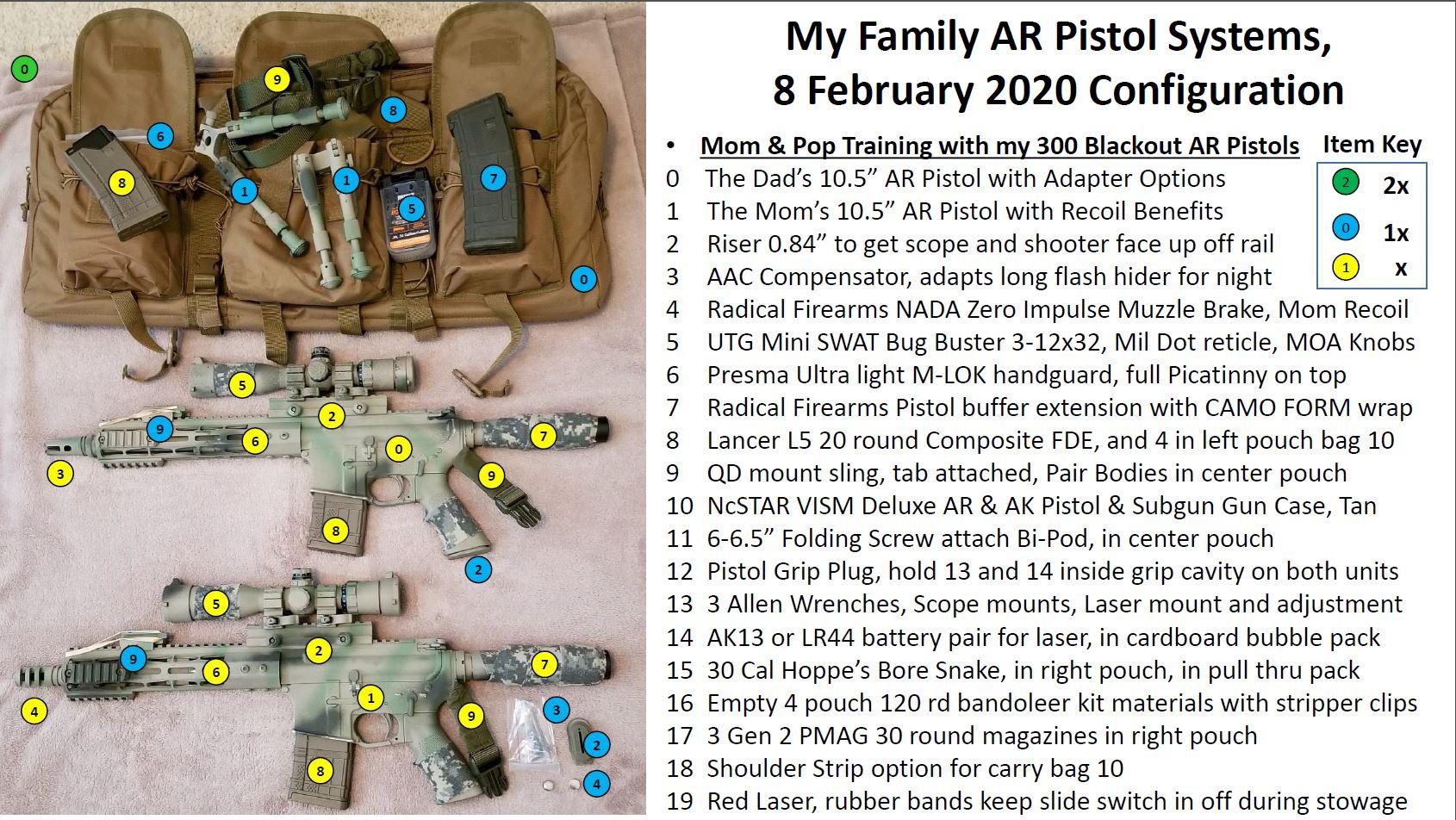
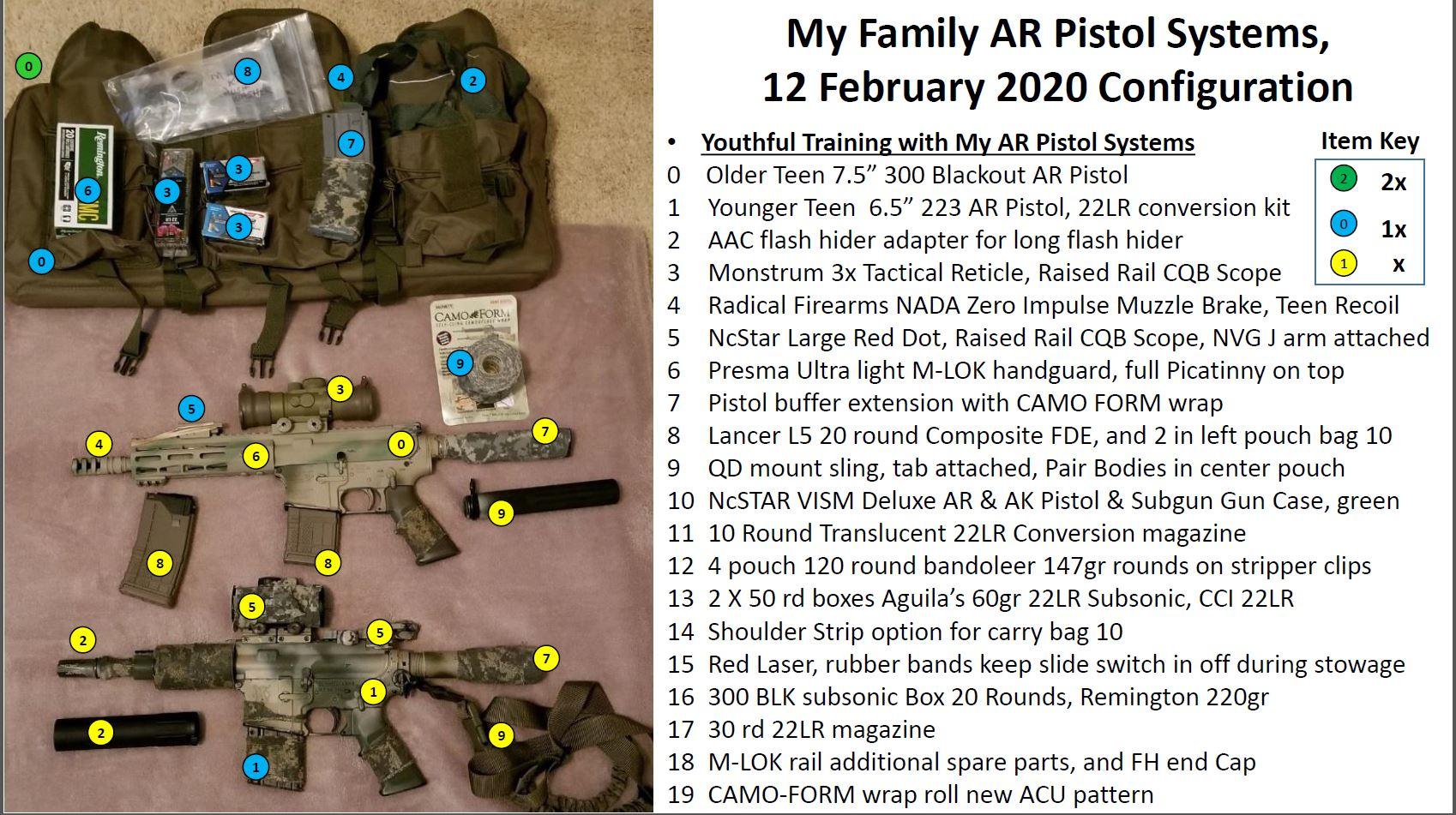
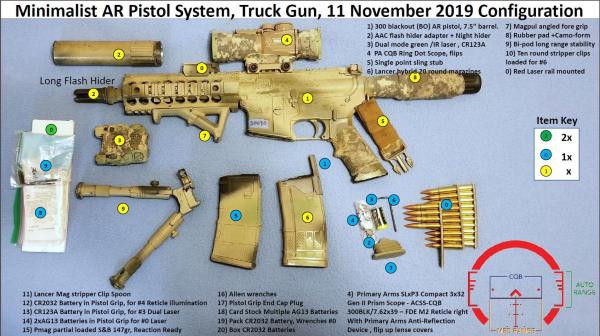
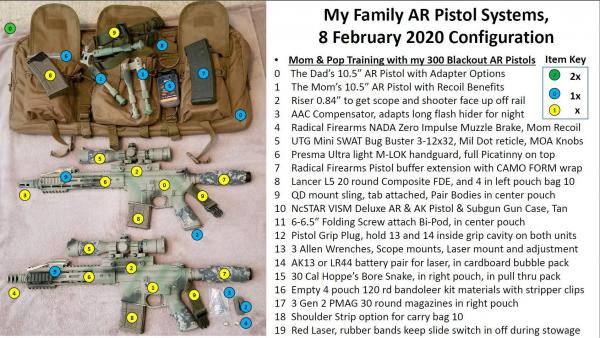
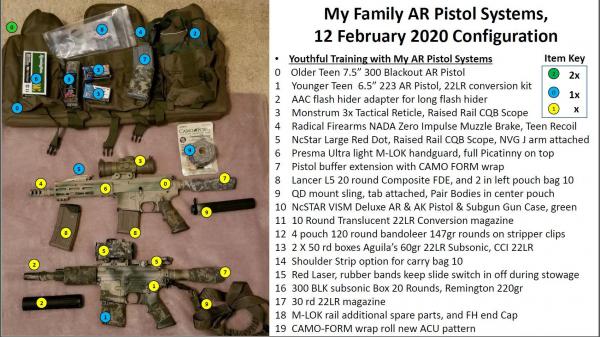
Haven't posted in awhile so here is a family of builds most in 300 AAC blackout
-
They are nice. I have one just like that only the FP bolt hole has been jetted out some. These things are caliber dependent like all other non-standard designs in this class AR frame. so look at the end of the Prime Punch thread if you are building a 6.5CM. If not then enjoy, it looks and really is nice.
-
Davidson Defense bolt is working fine in the 24" rifle. Although I don't know if it would punch primers as the Toolcraft NiB 308W BCG did in the 22" rifle with the same hotter ammo lot. The 24" rifle now has the benefit of the nice Toolcraft NiB carrier from the damaged BCG instead of the old KAK carrier. Eventually the 24" Toolcraft carrier with Davidson Defense bolt BCG will be replaced by another Toolcraft 6.5 CM specific dual ejector BCG when the funds are available. This exercise has highlighted the fact that 6.5CM has caliber unique issues and has the potential for problems when using a standard AR-10 308W BCG. Therefore, it is obvious that if a company like Toolcraft has developed, produced and distributed a 6.5CM specific BCG then any 6.5CM AR builder should consider that fact and go with the BCG designed specifically for that caliber rifle. Both single and dual ejector models are available but since the caliber is reported to have potential ejection issues, then way not just go with the dual ejector and be done with it. The Toolcraft dual ejector design is different then other dual ejectors and I would suspect, if you may, that they did it right.
-
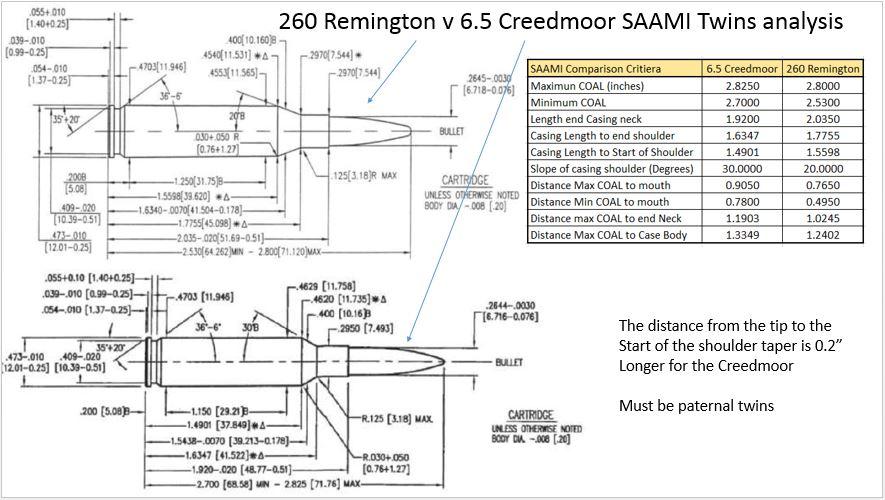
don't know much about a 260 Rem other that the public SAAMI
-
above "cold" should be "could" and "spherically" should be "specifically", too slow on edit again
-
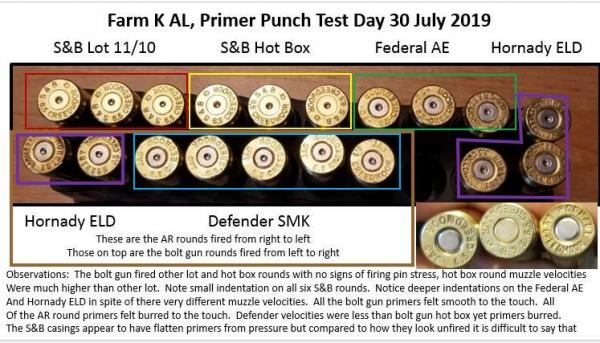
The one time test and data was sent to Hornady in July 2018. Never said break. The dents would probably have a minor effect on ballistics since the spin rate is so high and the mass of the plastic low. On the other hand where the tips were lead the deformation effected the mass distribution and dramatically demonstrated the effect. Granted those tips should not be used in an AR format but the effect changed concentricity and opened up accuracy. The point of the Lead tip test is to demonstrate that the forces encountered during chambering where significant. Copper OTM or HP although a much harder material still cold produce a flyer on occasion. Your vast experience with 260 Remington is not the same as the chambering issues with a Creedmoor. Recommending a Toolcraft BCG is a good thing but for a Creedmoor since it has been reported to have ejection and primer punch issues, the recommendation should include the high pressure 6.5 CM specific versions, single or dual ejector. In the velocity measurement chart it was noted that the post burn thru shot primers were all burred, on either brand of ammo used. This would indicate that the burn thru jetted the FP hole in the bolt face making it unsafe. The image of the primers fired using the new bolt installation shows a nice small strike pockets. Both ammo lots were tested with the new BCG, one fired hot lot ammo primer did show a slight ridge. No chronograph was allowed during this verification exercise so you couldn't attribute a velocity to that casing. Lessons learned here is that vendors advertise their BCGs will work in Creedmoor ARs, I am sure that's true but to be fully truthful the BCG should be the type spherically designed for the Creedmoor AR.
-

need opinions on 6.5 Creedmoor barrel lenght
Phantom30 replied to Magwa's topic in General Discussion
Barrel parts is White Oak Armament (WOA) can't believe this thread has gone on this long with out somebody say you need to get your gas tubes there plus blocks etc. https://www.whiteoakarmament.com/shop/upper-parts-248/barrel-group.html I have found the in a 6.5CM you might consider the Toolcraft dual ejector 6.5CM specific BCG, it has the smaller FP diameter The ACC break is good have one on my 300WM and the interface to less noise works well. -
Thanks SS the bolt change recommendation solved the problems. Switched from the 308W Toolcraft single ejector NIB BCG to the Toolcraft 6.5CM small tip FP 0.065" instead of 0.077" plus dual ejector. Plus thoroughly clean chamber more often with 308W AR brushes and mop. All is now well, shooting sub-MOA with my cheapest parts I can find DIY built rifle.
-
GR "That's a singular issue, with a singular user here, and singular use of the cheapest parts he can find to build a gun. That's all that is... " Interesting assessment thanks for the help. You really are near a desert border
-
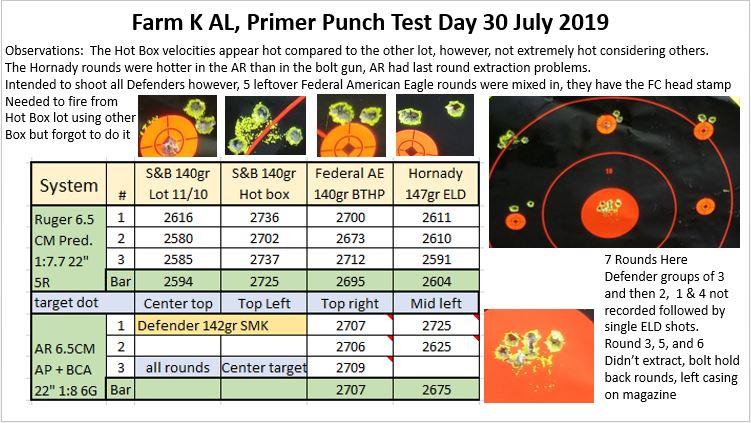
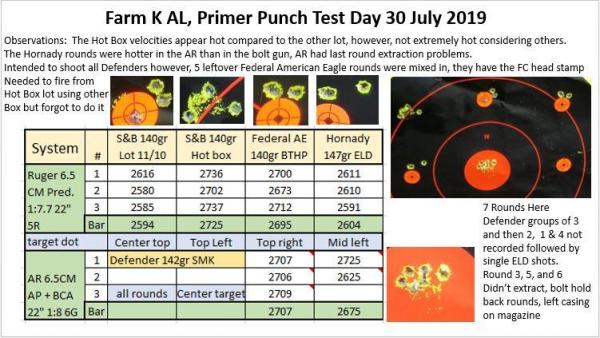
That rifle fired some of the round count in previous lots in the total S&B count. Not involved in the lot 16/78 count under consideration. The BCG in this rifle is a Toolcraft NiB, with standard 0.077" FP tip, single ejector. Barrel is a 22" bear creek Arsenal (BCA) SS straight fluted 1:8 twist, 6 grove 6.5 Creedmoor chamber with their standard barrel extension. The receivers are AP, gas system is WOA standard rifle length AR-10 gas tube with large match block. JP recoil eliminator break. Recoil system AP. The SAAMI standard nominal velocity for 140gr 6.5 CM is 2690 + 90 FPS, even the so called hot box was well within the manufactures standard. The COAL on the Defender rounds was 2.805, Hornady ELD 2.805, S&B FMJ was 2.740, SAAMI Mean average pressure limit is 62kpsi. The standards do not discriminate between bolt guns and gas guns so they should be equally capable of firing factory ammunition.
-
The Davidson Defense bolt is in a KAK carrier in the 24" gas gun not involved here. Any switch in BCG's would have happened prior to the purchase of the 16/78 lot in question, so the round count stands.
-
No the head spacing has not been verified or compared Yes probably next step now, is to get the tool craft Creedmoor bolt, as shooterrex and survival shop have recommended
-
392heminut The last three of my posts go together, the muzzle velocities are choreographed and the casings have a direct one to one correlation. willbird This thread is not about caliber to caliber performance but about the specific function of my 22" Creedmoor AR and the effects of ammunition. chambering and the BCG It has been purported that the culprit is the factory ammunition lot being more energetic than normal lots. In this case that has been shown to be relevant, but it still doesn't answer why this rifle has started to eat primers verses the bolt gun firing the same ammunition. Why does the bolt gun primers remain normal and the AR is leaving the primes raised and burred using multiple brands of ammo boxes shared between the two types of rifles. Why has this BCG started to fail to eject the last round in a stack? Has the primer burn thru effected the ejector, which by the way does appear scorched on the outer side.
-
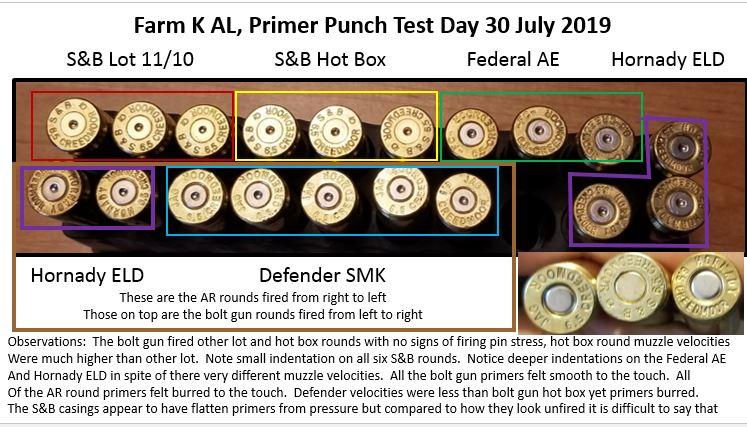
The evidence from the small samples above does show an increase in muzzle velocity between lots 11/10 and 16/78. However, the difference didn't cause punched primers in the bolt gun. All of the bolt gun primers felt smooth. The near same velocities in the AR all caused flowing primer strikes on two different brands of rounds and all post strike primers felt burred to the touch. Something other than ammunition lot muzzles velocities is happening here, which is the point in the origin of this thread.
-
The primers for the above test shots
-
Bolt gun, AR and ammo comparisons
-
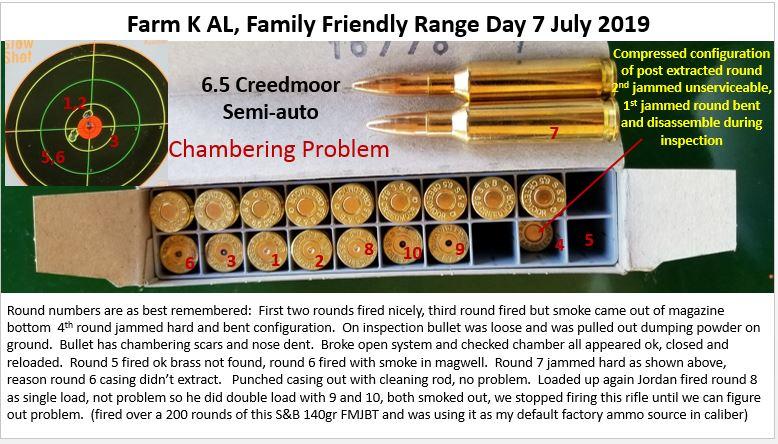
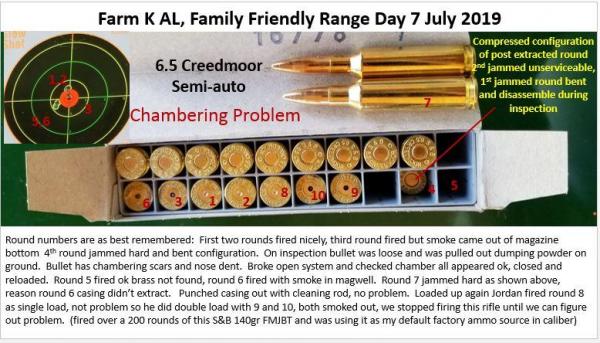
The picture below is the range record for the "Hot Box" event. The lot number is visible on the lid as previously reported. The raised non-punched rounds are also displayed for comparison on the 1st entry on this thread. I can provide bolt face photos if desired. They do have a rolled lip pin strike that sticks up slightly. The round count of over 200 applies to this specific barrel, many others have been fired in other rifles.
-
Fowler Analog Caliper
-
Ammo Lots Two Cases: 25 boxes of 20 Lot marked 11/22 and 16/78 Cases were divided with a friend, reduces my count to 12 boxes per case Purchased from BX lot 16/78 (2 Boxes) Purchased from store Lot 11/10 (5 Boxes) 20 round Boxes containing fired casing retained for reloading By Lot number inside lid: 16/82 2 boxes, 11/22 11 Boxes, 11/10 3 boxes, 16/78 3 boxes Hot Box is an another 16/78, half box remaining live Boxes remaining live rounds 16/78 4 Boxes, 11/10 2 Boxes 4 boxes of assumed lot 16/78 have been fired but evidence not retained 1 Box of assumed lot 11/12 have been fired but evidence not retained Survival Shop: Accessible Firing Pin diameter measurements for comparison, HP FP? Toolcraft NiB firing Pin tip shaft 0.077” dia. Second step 0.103” dia., Third step 0.153” dia. KAK Double Ejector Pin tip shaft 0.078” dia. Second step 0.103” dia., Third step 0.154” dia. JAPO coated BCG Pin tip shaft 0.079” dia. Second step 0.103” dia., Third step 0.154” dia.
-
Survival shop: Great thanks. I'll have to measure the pin this morning. I now have a large pile of large primer brass to work with so buying the small primer cases is great for the future, but is there a recommended tougher primer that will work in the S&B brass? Toolcraft stuff appears quality. Had a KAK double ejector bolt and it was a miserable fit in the AP receivers, so I replaced it with a Davidson bolt.
-
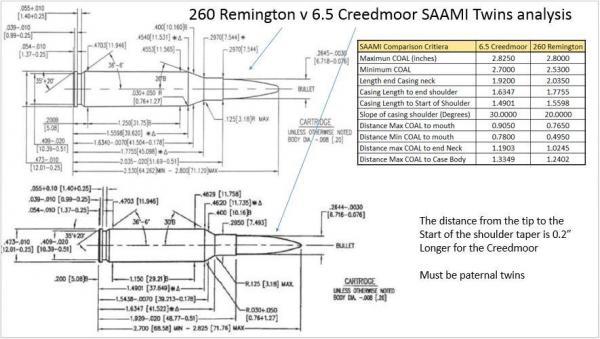
Well lets try this in reverse order. You are shooting 260 Remington not Creedmoor in 6.5 or 6mm. The differences in the from of the rounds are much different as shown in the SAAMI data. My short range experience applies to the experiments with tip deformation, meaning I have not tried to examine the effects at long ranges. Why, because if it shows up at short range it only stands to reason that it will be worse at longer ranges. The context for short range had nothing to do with overall experience, only the data at hand. Phantom30 is one of my combat call signs Yes BCA barrels are cheap, and you are correct in that relationship between the Creedmoor caliber and the barrel extension is one of the factors I am concerned about. But that would apply to most any barrel using those design components. Crimp, yes strong crimp is necessary for auto feeder ammo, I have hand loaded nothing in this discussion other then the few dummy rounds. Wasn't concern much about the retention, just wanted to be able to slam ELD into the breech and recover them to examine the tip effects. Using bolt hold back force is just a way to get it fed. All the rounds used in the examination were factory rounds, Their were more than eight different brands or types. Yes SP type bullets are not recommended for AR class rifles. Why because you screw the tips up when you chamber them, i.e. Hornady White Tail. So I confirmed the obvious. But that's what you do to establish a baseline case. Hot loads in this case would have to be a factory error, since the S&B 140gr FMJ rounds are all factory loads. In a PRS evaluation of Creedmoor rounds the S&B round standard deviation on muzzle velocity was measured under ten feet per second. If you want I can look up the article for you. They remarked how consistent they where compared to the other factory loads. They also remarked that other factors involved made them not as accurate as some other brands used in their test, but they didn't specify the factors that caused it. Now my Primer punch, Yes it is four punches out of eight rounds all from the same box. Lot data not confirmed, but was assumed on my part to be all the same since they were all purchased in a single 500 round case. My bad as I said before I'll have to confirm the lots, from the few boxes that are left.
-
Nice article: "At the end of the day, it really depends on personal preference". No Science there. I am talking about a mechanical phenomenon where tips are being dented because of the nature of the Creedmoor round design and its relationship to a barrel extension which was designed for another caliber. The table in the SAAMI comparison shows that the 260 Max COAL bullet exposure from the neck is Shorter than the 6.5 Min COAL exposure. There is a lot more 6.5 sticking out before the casing hits anything than with the 260. This also is true of the 6mm. Survival shop: The BCG is a NiB Tool Kraft don't know if that means a non-standard firing pin or not. In my original write up there were pin measuremenst but no diameters so I'll have to check it.
-
-
Thanks for the advise. Like I mentioned earlier I believe that bullet tip issues are a Creedmoor problem. I have not noticed any problems with M1A or FALs in 308W. Most of the accuracy responses I have gotten here have been about other calibers. No one that I know of here has discussed their accuracy experience with a Creedmoor. I got into this fur ball because I had primer punch issues. I still have to positively confirm the same lot numbers in the same case of ammo. And I have to Chrono the S&B rounds and confirm the 142 and 147 grs for comparison at 1600. Since I have extended my stay here I might be able to work that in. So until I have that data CU.. Thanks again for being helpful I was asked earlier about my barrels and I timed out on my edit to here is the full response OK for Creedmoor types there are 22" and 24" 6.5 Creedmoor barrels which were purchased from Primary Arms made by Bear Creek Arsenal, fluted SS, 1:8 twist, 6G, rifle length gas system. The 24" 6mm Creedmoor was made by Apache Arms, from Excalibur 5R 1:7 blank, it also has a DMPS 308 barrel extension, rifle +2 gas system. These 3 are the AR barrels. Bolts guns are Ruger Precision 6mm Creedmoor, Ruger Predator 6mm Creedmoor and Ruger Predator 6.5 Creedmoor.