
survivalshop
-
Posts
11,250 -
Joined
-
Last visited
Content Type
Profiles
Forums
Downloads
Gallery
Store
Everything posted by survivalshop
-
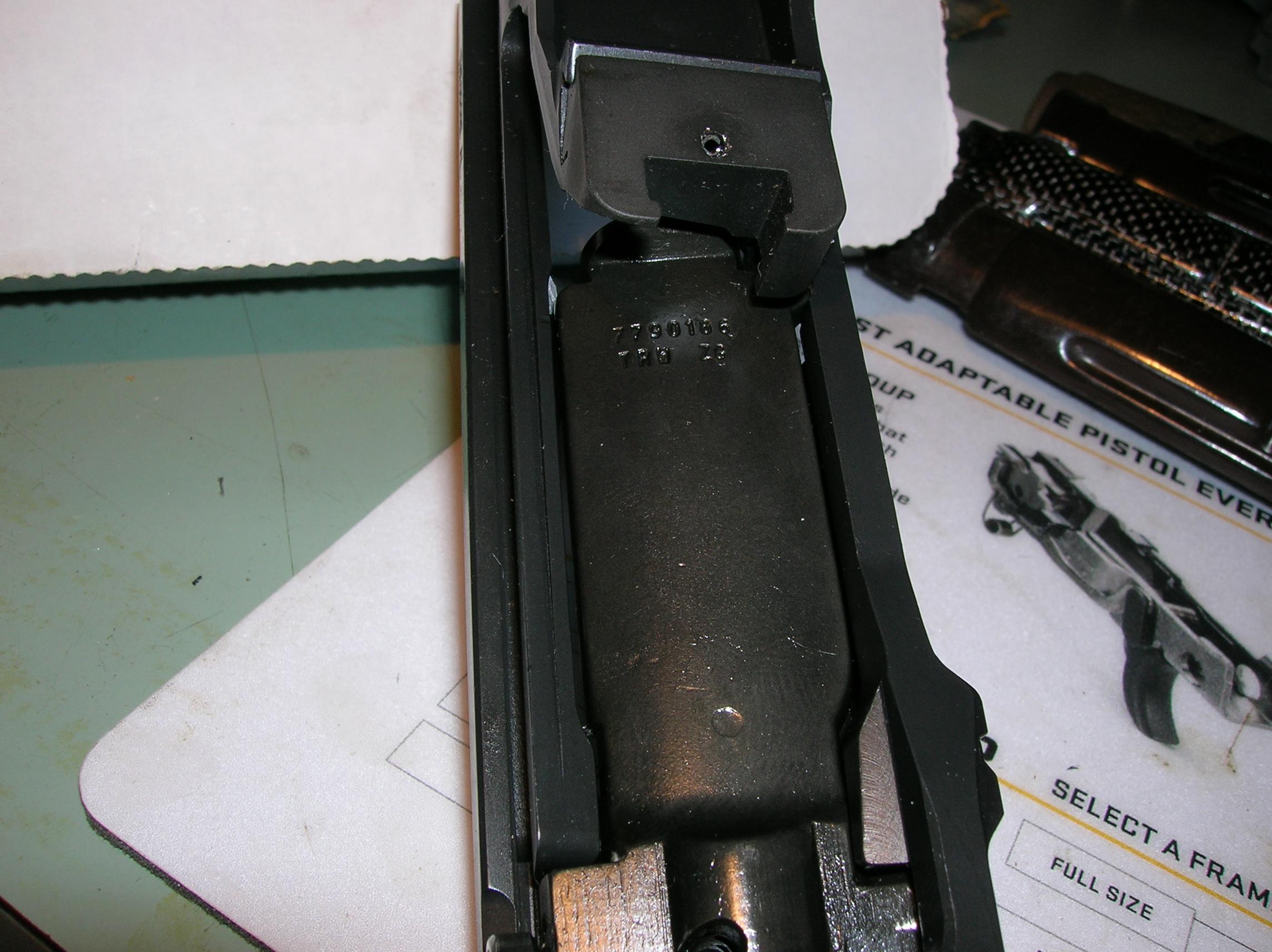
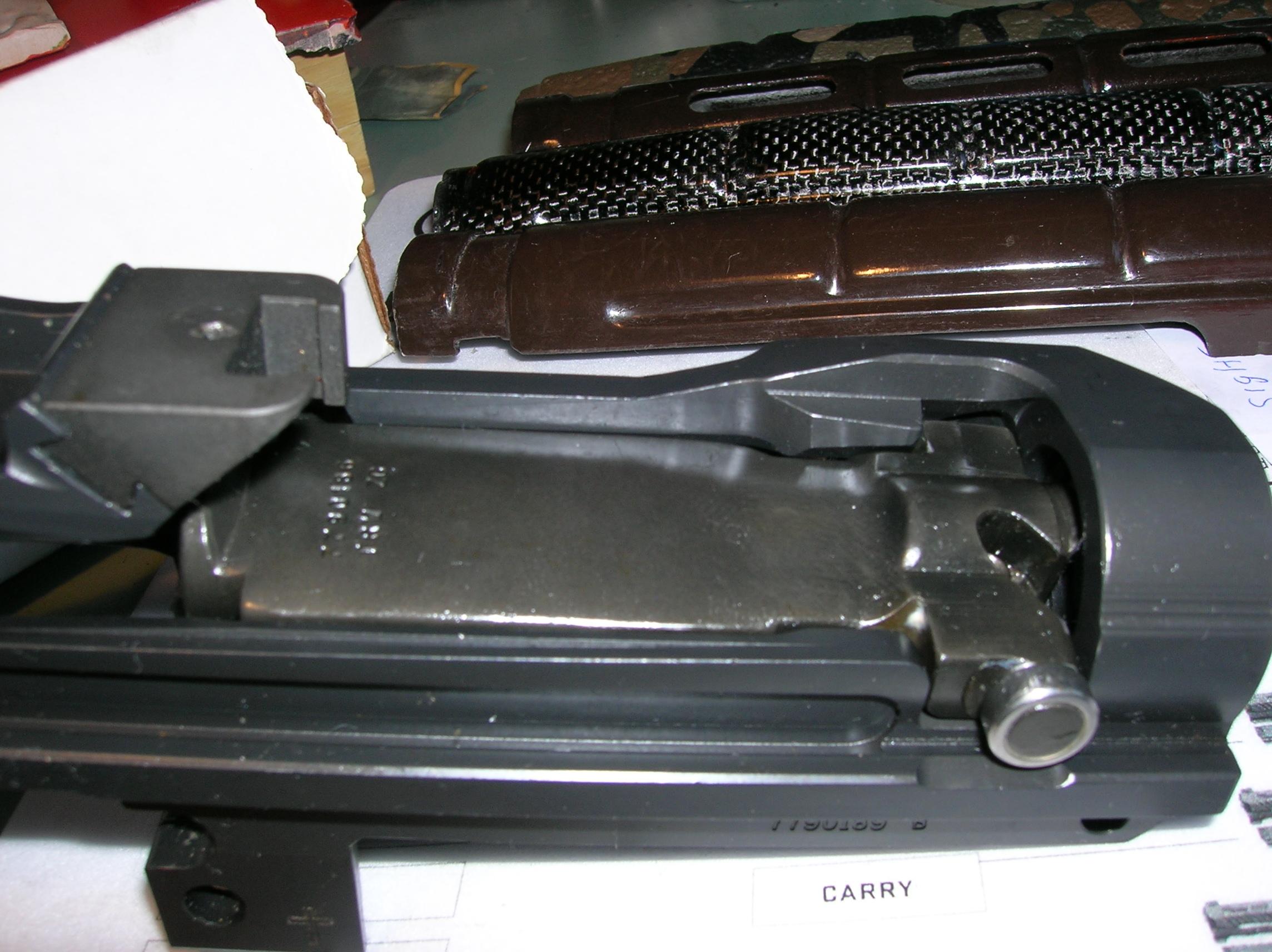
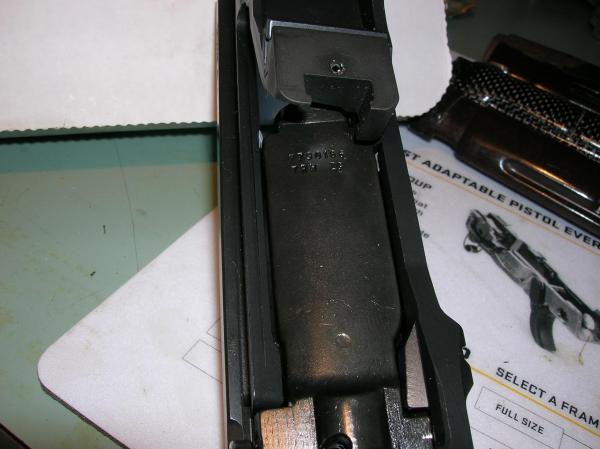
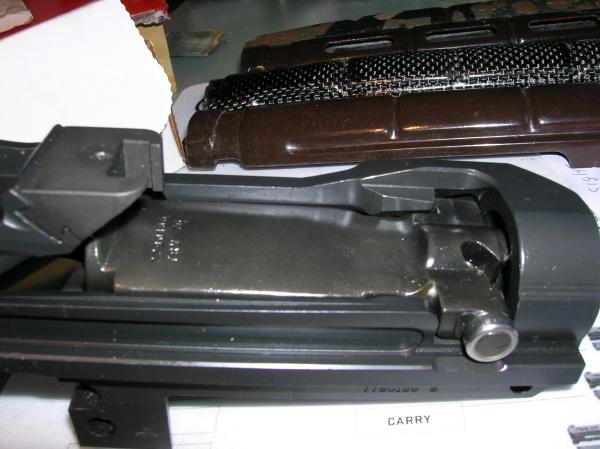
Finally got a photo of the TRW Bolt in the GWLA receiver .
-

First AR10 Build. Help me choose a handguard
survivalshop replied to Greenwell Armory's topic in .308AR Parts
That Gas Block looks like it will not be an issue with most FF Hand Guards , looks plenty low enough . Aero with an Aero Upper works . -
You also have to remember that adding weight to a system designed for a specific weight system/Spring , may also cause issues , no matter what you read on the internet, keep that in mind . All you need is the correct spring to get your Buffer system to the original DPMS spec's . Nothing wrong with changing to the AR 10 system , but why , when all you need is a Spring .If you want this used known to function Spring I have , PM me with your address & I will send it to you to try , if it works out your issue , keep it or send it back when you get the correct one . I'll even send the Buffer with it .They are stock DPMS Buffer system from a DPMS Carbine LR 308 Lower . Also note that you may have multiple issues that cause failure to feed , but you do have an Spec Buffer Spring which we have seen here to cause all kinds of issues , so you need to straighten it out one way or the other first . I also noticed you were sanding the Gas Rings on the Bolt , I would not do that , they will wear & break in all by a higher round count , as will the Bolt Carrier Group . Was the Aero Upper assembled or did you assemble it ? On a New Build , built with an Adj. Gas Block , you should always have it wide open ( like a non-add one ) for break in of the action , then adj. to your liking after the Action smooths out . I don't use them at all , the only one I have is on my Piston system AR 15 & the Piston system came that way .
-
Ya I didn't look at that as close as I should have , I just copied & pasted from another thread here , also notice the length of the spring ( I have a used one that is 11 1/4" long & still worked fine when replaced with a Tubb's Flat wire spring ) & coil count , but some can measure the Coils differently & spec's by retailers can be misprinted , like Midway ! I edited it with a " ? " The DPMS Buffer system is designed to use a 2.5" long Buffer , 11.5" Spring ( or close to that ) with 29 coils & a AR 15 Receiver Extension . The system works when these components are correct , As has been posted .
-
From Mrraley, Some specs that ArmaLite puts out... RECEIVER EXTENSION TUBES •.223 / .308 rifle length 9-11/16” (inside depth) •.223 carbine length 6-15/16” (inside depth) •.308 carbine length 7-5/8” (inside depth) BUFFER SPRINGS •.308 buffer spring rifle and carbine length 14-1/8” •.223 buffer spring rifle length 13-1/2” max – 11-3/4” min •.223 buffer spring carbine length 11-1/4” max – 10-1/16” min BUFFERS •.223 rifle length 5-7/8” – weight 5.2 oz •.308 rifle length 5-3/16” – weight 5.4 oz •.223 carbine length 3-1/8” – weight 3.0 oz •.308 carbine length 3-1/4” – weight 5.4 oz And DPMS The following specs are DPMS parts that will allow an aftermarket AR-15 carbine buttstock with a commercial receiver extension/buffer tube, internal dimensions - 7" x 1", to be used on a DPMS LR-308: DPMS LR-308 Carbine Buffer Spring - Midway #: 813595 DPMS #: 308-CS-10A Relaxed Length - 11 3/8" Compressed Length - 3 1/4" 28 coils (inclusive of both ends) spring rate - ≈10lbs/in (tested over 2" travel from rest on buffer retainer pin) DPMS LR-308 Carbine Buffer - Midway #: 232006 DPMS #: 308-CS-10B Length - 2.938" ( ? ) Should be 2.5" Flange Diameter - 0.969" Barrel Diameter - 0.686" weight - 3.808 oz. DocLarsen
-
I'm going to see if I can copy one of those strap on types out there , made with Carbon Fiber , of course . I need one for the Camo USGI Fiberglass Stock I have & don't want to drill holes in it . If that is made of Kydex , that stuff is easy to manipulate with a heat gun.
-
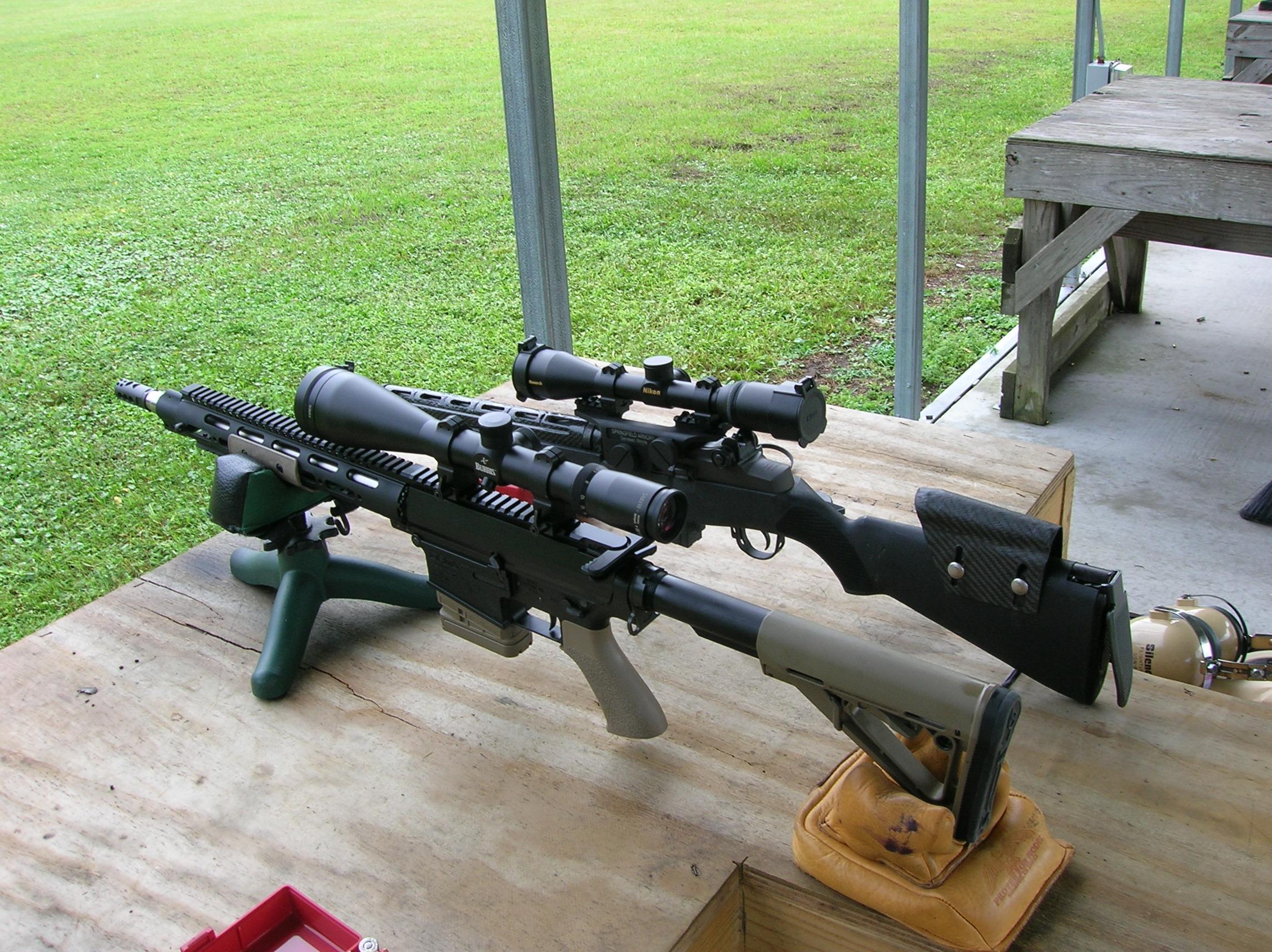
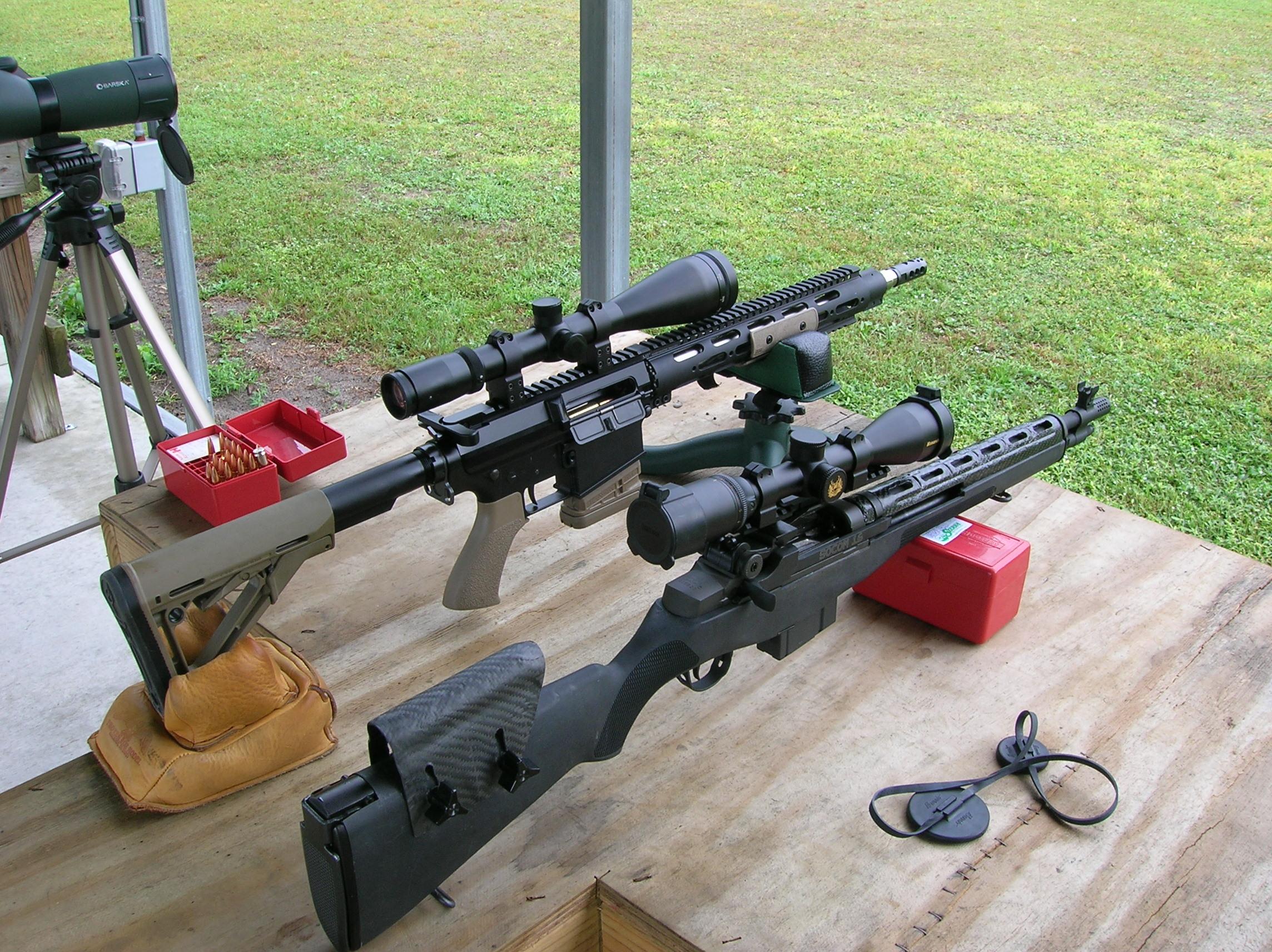
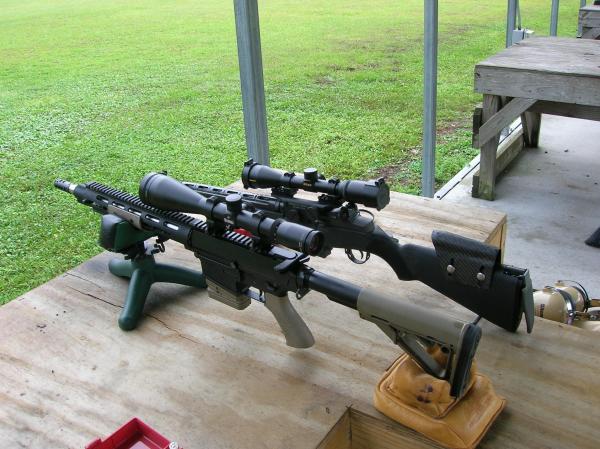
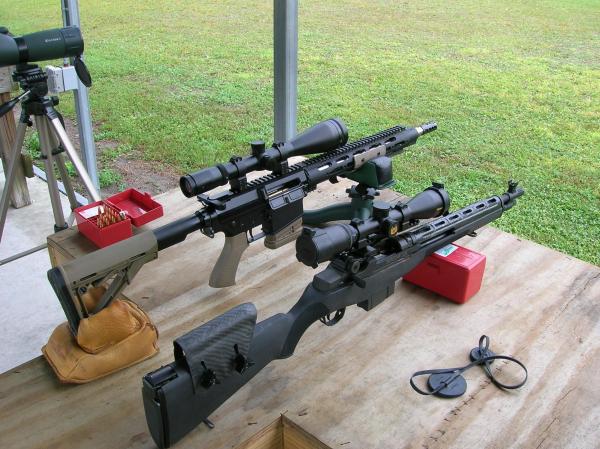
Playing with some more Carbon Fiber , this time a Prototype Check Riser , good & solid & works great .I took both the SAI Plastic Stock & the USGI Fiber glass Stock & The FG shoots about 8" lower then the altered Plastic SAI Stock , but I like the feel of the FG , it felt more comfortable , could be that the forward part is wider or maybe the whole Stock . Took the 16" 308AR along for the ride , it didn't disappoint .
-
Length & spring tension are both important & I'm no spring expert by a long shot , but the coil count will mean something because of the coil material diameter. Also I'm sure there is a mathematical equation for length/diameter/spring material thickness to make proper spring tension . And Spring spec's are set for these AR's , & there individual Buffer systems .
-
Spring seems short should be 11.5" , I have a DPMS 308Carbine Spring & its well used & is 11 1/4" & has 29 coils . Buffer is OK for a DPMS based 308 Carbine . Brownells has the Spring you need . https://www.brownells.com/rifle-parts/receiver-parts/recoil-parts/recoil-springs/308-ar-buffer-springs-prod42988.aspx
-
You can get a Tubb's flat wire spring for AR 308 & it also works for Carbine or Rifle length systems . Its not the Buffer systems fault , its the ( as 98 posted ) sellers fault , purchase components from those who actually sell DPMS parts & you won't go wrong , as you would if purchasing Armalite components , from someone that sells Armalite parts . Brownells sells DPMS Parts & if you look at the reviews for the Springs it has answered what length & what they work in. https://www.brownells.com/rifle-parts/receiver-parts/recoil-parts/recoil-springs/308-ar-buffer-springs-prod42988.aspx Question 7/24/2017 What is the overall length and coil count of this spring? zmeier from Michigan Answer This Question Answer 7/25/2017 The spring is 11.5" long. For the coil count, please give us a call. That's not a statistic I have notes on. Customer Care from Brownells
-
This has to be an inside job & they were heading to Shitgago , just what that poop hole needed was more guns on the street . Good they found them , looks like Ruger's , 400 of them going to Texas . https://www.nbcnews.com/news/us-news/about-400-guns-stolen-ups-facility-tennessee-n915791
-
There may be , but I have never heard of Mag Feed Lip Spec's , we used to tweak the early DPMS Mags all the time to get them to the correct angle to feed properly (DPMS was the only source at the time ). DPMS would replace them if they had issues , maybe they had a bad run from a supplier , but that was long ago ,seems like . I think there is a tool to Tweak the Feed lips of Metal Mags some where . With Magpul coming out with there LR Mags for SAR25/DPMS , bending or tweeting feed lips went out the window , so to speak . If you have a Mag that feeds well , try to copy that feed angle with the one not feeding so well .Trial & error type thing , just remember that by changing the feed lip , it could open them up too much & cause other issues . Also look at how far the Mag sits in the Mag well inserted in the Lower & how tight is the Mag Catch , AR 15 Mag Catches can be too short & cause issues with not enough tension on the Catch . Some times sanding & de-burring them helps , as with cleaning & light lubrication .
-
This is kinda long , but interesting http://www.targetshooter.co.uk/?p=1471
-
These are DPMS Buffer & Spring spec's from a DPMS Carbine 308 with a 7 " AR 15 Receiver Extension . This is from a real DPMS Buffer system & works flawlessly . Buffer length- 2.5" Buffer weight - 3.5 oz. ( anything really near that is OK , because I'm not sure how accurate any scale is , this is mine 3.3 oz. ) Buffer Spring length - 11 1/4 - 11 1/2" or some where near that , the one I have measured has got thousands of rounds through it & it measures a touch over 11 1/4" Coil count should be around 29 This will work with a AR 15 Receiver extension ( Buffer Tube 7" ) There is DPMS Receiver Extensions & then there is Armalite Receiver Extensions , two different ways of making it happen , if you have a AR 15 Receiver Extension use the 308 DPMS components or those to their spec's & it will work , there are tens of thousands of them out there working just fine , if the correct components are used . Order parts from retailers that have the component spec's or can look them up .Most confuse AR 10 & LR 308 as all AR 10 , they are not ! You spring seems short on Coils , which makes it a little short in length , most likely & will have reduced spring power . Don't be afraid to use a small amout of good synthetic Grease on the Bolt Lugs & Carrier Cam Pin for break in or general use . Very small amounts of grease , to help the components mate .
-
I don't see where your description of Receiver Extension inner depth ( Buffer Tube ) , is it 7" or 7 5/8" ? Also Buffer Spring length & coil count , Buffer length & weight . If BCG is locking back on last round fired in the Mag ., it doesn't sound like a Buffer system issue , but we still need to check it . It appears that the BCG is hanging up & the dropping of the Hammer on it is completing the Bolt locking into the Barrel extension . You say the Bolt locks properly with out the Extractor & Ejector installed , is that with a loaded round being chambered ? I have seen stiff or out of spec Extractors cause the same issue you are having . You say you removed an O-Ring , is there just O-Rings for an extractor spring or is there a double Spring set up like a DPMS LR308 system . Photo's of all this helps . I see no need to just change components to see if they work , lets see what you have to begin with .
-
Great, great, Grarand-son , that sounds better , that would be cool .
-
Keep the Chamber dry , oil it ,but swab out with a dry swab or patch . Oil can cause hydraulic lock on a case . Just making sure you are aware of it . I would like to see a fired case from that Chamber .
-
Photo of the rifle ? What stock system ? & as Edgecrusher posted , we need Buffer Spring total length , coil count , & was it designated as a 308 Buffer & Spring , also Buffer length & weight ? We see a lot of miss matched Buffer components that cause issues & its not always the Builders fault .
-
Welcome from the Sun Shine State . What part of Ohio you in , I was born & raised its the Cleveland area , 51 years & up til a year or so ago, used to gun hunt in Guernsey co.
-
OK, that Photo with the Gas Tube with in the Cam Pin cut looks fine . I also noticed the GB is off the Barrel Shoulder a bit . If the fired Case is stuck in the Chamber & not ejecting , are their pull marks on the Extractor grove on the Case ? You also say the Action works properly without a live round in the chamber ( a fired , unsized case with stick every time if you feed it back into the Chamber ) . It could be a tight Chamber , Rough Chamber or just a tight fitting of the Cam Pin to Upper Receiver fit ( needs more Lubricant or different type , maybe some grease on the Cam Pin & its Channel in the BC. The Buffer system is another matter , you will normally see FTE/FTF issues with most miss matched or incorrect Buffer systems .Fired cases jammed in the Chamber is not associated with the Buffer system , unless its locking the BCG movement & you say the Action is working with out a round in the Chamber . I would like to see some fired Brass , including the Bases. One thing at a time , seems you may have mutable issues . Thats not the fist stock system from them that we have seen issues with , if my memory serves me correctly .
-
Anyone ditch an AR-15 after picking up your AR-10?
survivalshop replied to Boondoggle's topic in General Discussion
If you ditch the AR 15 when you get a 308AR , don't even pick up an M14/M1A ? -
Gas tube looks a little long to me , maybe the angle of the Photo. Makes me wonder if the Gas Block needs to be off the Shoulder , like it was set up for a A2 Hand Guard with the front cap , that may make the Gas Block slightly blocked . Is the fired case getting stuck or a loaded round ? What does your fired Brass look like , photo's ? Heavy marks on a fired case can show a rough Chamber .
-
What ammo are you trying ? Was Head Space checked ?
-
I would suggest Full length sizing Cases or Small Base Sizing , FL at the very least . I use FL neck Bushing Redding Die now a days . You may have Chambering issues with just Neck sizing .
-
While this is interesting reading , Glen writes that he doesn't believe in tumbling live ammo , for reasons that they may be set off & that tumbling will pulverize the Powder & can make it act different or dangerous , that is just not true , I read a Post in another Forum many years ago (ARFCOM ) where a guy tumbled different Powders in loaded ammo in a Tumble & did it for different lengths of time ( Hours ) & then pulled the Bullets & took screen shots of the Powder under a Microscope & the Powder & the photo's before & after ,showed no change that could be perceived . RELOADING, RELOADING CORNER RELOADERS CORNER: CARTRIDGE CASES: THE OUTSIDE, PART 1 SEPTEMBER 20, 2018 GLEN ZEDIKER7 COMMENTS Lubrication is absolute essential in the reloading process, Here are a few ideas on which and how. READ MORE Glen Zediker What’s the most important thing in case resizing? Case lube! Overlook it or under-do it once and you’ll know why! A stuck-case remover is one of my very least favorite tools… I have long used and recommended petroleum-based case lubes. More: I prefer those that are applied by hand, literally with the fingers, because I think it’s a better assurance that the right amount, to all the right places, will get laid down. I will quickly concede, though, that they are messy and slower than other methods. This is my favorite case lube. I took advice from Sgt. Norris after complaining how hard it was to get a good sizing pass on a Lake City .308. Sure enough. This made it easy. Been using it ever since. It’s not really wax. Use it like shoe polish: rub a little on your fingers and then rub it onto the case with a “gimme money” motion. Spray-on-type lubes are very often used and recommended, especially by high-volume loaders because a good many cases can be treated and then even stored before use, so say the claims. I strongly suggest taking steps to prevent the lube from finding its way inside the case. A thin piece of cardboard placed atop the standing cases works well for this. There’s worry otherwise that the lube might affect the propellant. That does depend on the formulation, but I prefer the “no-chance” approach. I’m a “slow-down” sort of loader. That doesn’t mean I don’t want to save time or be as efficient as I can be, but I’ve just not found the speed advantage to spray-ons to overcome their performance. Sprays are not quite as “slick” as rub-ons. Lanolin-based and wax-based alternatives also have their following. As do water-based lubes. The wax lubes indeed work and also clean up (off) easily, as does lanolin. I’ve not been a follower, though, because I find many to be more difficult to apply evenly and, one more time, just not quite as slick at petro-based products. Some of the wax-based lubes also make claim to “apply-now, use later.” I’m not sure what the appeal of that is, but there it is for those it appeals to. There are also a number of “proprietary” formulations out there now. I have not tried them all. Hornady pretty well has it covered: one for every opinion! Try them all! But I will wager you’ll like petro best… That’s the one in the bottle. Hornady claims their spray lube doesn’t contaminate powder, and that makes it applying it more straightforward. A tip I picked up umpteen years ago by the man who got me started loading was to get an ink stamp pad (office-supply store variety) to apply roll-on type lubes. Indeed, that works way better than the industry pads I’ve tried. Back to petroleum lubes: aside from providing smoother feel in sizing, which I have to believe also indicates “better” lubrication qualities, these don’t build up as much within tooling. I take apart my sizing die every now and again and swab it out, like I would a rifle chamber. For best results, no matter which lube type you’re using, an even (thin) coating gives best results. With a good petro lube, it doesn’t take much. If you see any denting (usually in the case shoulder area), that resulted from hydraulic pressure and is a sign there was too much lube (too thick a coat). No worries, though: shoot the case and they’ll iron back out. Just use less lube next time! Lubing the case neck inside is debated, but I favor it. However! Only very sparingly! That is why I really like the finger-applied lubes: just a little “wipe” across the case mouth eliminates the “gaunch” noice from the expander. I don’t use the graphite-applicators (the bin-and-brush types) because I haven’t noticed a whopping lot of difference in neck sizing with or without it. For best sizing results, I prefer the “rub-on” lubes. This one is from Forster. Never any worries about too much, too little, or complete coverage. And, by the way, lube a case each pass through the die. This is important when setting up a sizing die where you might make a few passes with the same case. Don’t risk it! Stuck cases are total mood killer. Clean the lube off the cases! There will be some now who will just roll their eyes, but I use denatured alcohol and a bath towel pour some on the towel, but the cases on the towel, fold the towel over the cases, and roll them around. Fast and simple! That works for petro-based. Others need more attention: just rub it away, or use detergent. I do not recommend using a tumbler-type cleaner on loaded ammo! Sho, there is a (slight) chance that a bullet tip might detonate a primer, but that’s not why. Why is because the propellant gets pulverized, and that, no doubt, will change its burn characteristic. This is what I use to clean loaded rounds, along with the towel it’s sitting on. Lay out the towel, put down the rounds, pour some alcohol, fold the towel over the cases, and roll them around. Then hang the towel to dry for another use. Zero residue. The reason to clean off the lube is because it lubricates, and that’s a bad thing on a live round. The case is supposed to stick tightly to the chamber when it expands under pressure. Any slip increases bolt thrust. I once saw a fellow douse a loaded 30-round magazineright down the middle with WD-40, to “make sure the bullets fed…” NO NO NO. Oil on a cartridge doubles bolt thrust! Case lube is not a case cleaner! Make sure the cases are clean prior to sizing. They don’t have to gleam, just be free from dirt and gritty dust. If you’re seeing a applicator pad, for instance, getting a dirty spot on it, well there’s your clue. We’ll talk about that next time. Check out the selection from Midsouth HERE This article is adapted from Glen’s books, Handloading For Competitionand Top-Grade Ammo, available at Midsouth HERE. For more information about other books by Glen, visit ZedikerPublishing.com