
Lane
-
Posts
1,042 -
Joined
-
Last visited
Content Type
Profiles
Forums
Downloads
Gallery
Store
Everything posted by Lane
-
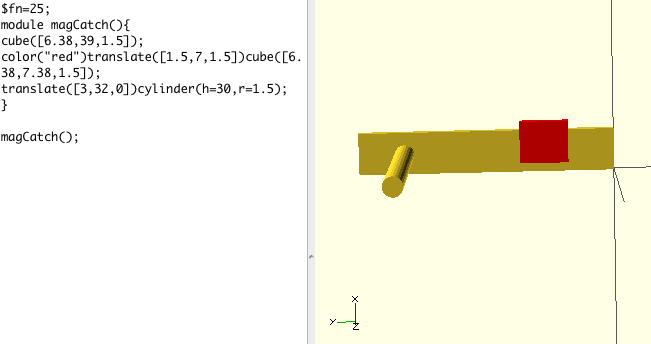
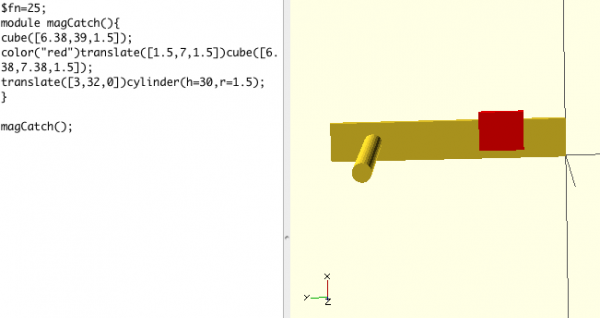
I don't think it's that bad in this case. I'll admit; I will need to read through this entire thread again to try and get a handle on where you are with this 80%. Looks like it's not milled yet, so you might want to save task in terms of flexibility. What were your plans for that? A jig? Blueprints of some sort? I mentioned some time back; there is a way forward with a modified magazine catch if that is really your only issue here. It's not a perfect solution; but I think it's much better than modifying every magazine you have (or want to use). From what I can see, the lower will need a minor "enhancement" as well to make it possible to install. The maximum spread I saw across the mag catch height was ~0.060" (from memory); which is a bit more than a dime in thickness. Hell; if you want the simple solution? JB Weld to thicken the top, and some way to grind it back down flat (a metal file would be fine). Same amount of adjustment needs to be done to the bottom of the catch (not even the whole profile) if the magazine catch slot in the magazine doesn't fit. Then you would need an access port where it plugs into the upper; on the left side so you can install it. That would also require a bit of filing. I don't think you need anywhere near that full 0.060" though, so in both cases it's a very tiny adjustment. Here is a rough CAD sketch of the maximum deviation listed. As I mentioned; I still need to re-read all this thread to figure out how far off each of your lowers is. A modified catch for you would look a lot less extreme from what I can tell (red part shifted down, smaller amount of modification needed).
-
That explains it. I wasn't half as worried about which way the went in; only that they were too short. Carry on.
-
It's an unfinished 80% lower; they are just holding the two parts together for fit; and haven't been installed in a formal sense. What really confuses me is those hexagonal bumps on the other side (and it looks like pins are going to be short as well). I don't think this should totally dissuade you from building 80% lowers. It really depends on the upper you wanted to begin with though. There are some Armalite style 80% lowers available; but then the compatible uppers are much fewer. I'll admit; I love 80% builds myself. If you pick either an upper or a lower to start with; it shouldn't be too difficult to figure out which other components will work. As you can tell from this measurement poll; it's not hard to get a whole bunch of numbers from people who have a few of these things around.
-
Lane's: jtallen83 inspired 21.750" 300 AAC Blackouts
Lane replied to Lane's topic in 300 AAC Blackout
INCOMING! Well not quite yet... I got an email today from Compass Lake Engineering; and they want more money for shipping. The barrels are both complete and ready to ship. I can't really complain about the added cost, considering their custom fabrication price was only $125. I had to go make a deposit once I saw that; but I should be able to call them back in the morning, pay for additional shipping costs; and get both custom barrels heading this way. That means I'll have lots of new projects running sometime next week. And I already had a lot of projects on the table; so I'm going to have to get serious about buttoning things up around here. I honestly haven't even begun to break down the order of operations on these 300 Blackout builds. Chamber casting seems like a logical first step. Headspace check; and making some ammo. I've got powder and projectiles in spades for these new builds; and a small handful of factory loads... -
I'm still crushing through reloading data on these new powders with 7.62x39. Both of them were on my compromise powder list, for this particular reason. I think the large vs. small primer issue in 7.62x39 may be a part of the complications in these matters (brass can have either one); and some people specify magnums especially for H110. There is also the variation in projectile size to consider; and who knows what else yet. Some speculation that I might be BETTER off with heavy projectiles in one or both powders. Of course most people messing around with this just stick to 123-125 grains. I've seen the anecdote a few times around here; that "300 Blackout is hard". Pretty sure this trumps "hard" in almost every category. In terms of compatibility, simulation, accuracy, etc. I will still be buying one 4198, and Accurate 1680 to compare in the long run (probably next week at this rate). Today was my first time visiting this particular shop where I found any powders on my list. I used to live out that way; and I really wish I still did in terms of access. They have an actual gunsmith (working and laughing along with everyone else); and at least a half dozen employees. They are all very friendly and knowledgable. I saw a few other customers run through the store; and you have to wait in line... Because every employee knows the customer and has to get an update on things. It's truly a fun place to go. And it's chocked full of things I can't even begin to describe. I didn't even ask about all the pistol grips attached to ARs on display. But they have other things nobody else displays too. I even saw a pentagonal magazine mount (filled with 5 ten round magazines). Sure you have to rotate 72 degrees on each reload; but that's still better than the 180 degree duct tape flip. There was of course the anal probe at the end when they had to take my information because I bought powder. It was worse than the other place; in that, it happens in secret. It also looks like the same spreadsheet printed on paper. Funny thing is it both spreadsheets appear to be printed intentionally small, so that any writing is nearly illegible to begin with. The other places lets you fill it out yourself, and you can pretty much guarantee everyone writes too messy to read in that case. The real question is; WTF would the police even do if you bought 24 pounds of powder at a time? What does that kind of call even look like? Do they come at 4AM with spotlights? Do they stop by at dinner time and ask about what calibers you enjoy shooting? This is either a mandate from the SAFE act, or a protective compliance measure for the shop. There was supposed to be a state-wide database of all ammo sales; but it was deemed to complicated for the police to implement, and completely unfunded. I'm not worried about it (yet), but it's amusing to me given the current situation. I believe this shop is in a county where the sheriff has, since it's inception; declined to enforce any part of the SAFE act. There are plenty of counties where this is the case; and they may all have non-compliance compatible gun shops. It was furthermore apparent to me, that they are moving 10; maybe even 100 times the amount of powder that my local shop does. They even offered to order anything and have it in stock within a few days (the other shop orders every few months). Gun friends...
-
Thanks for the rundown. I don't want you to give up your secret on this; but I do have two questions to ask. Are you just topping off the load with wheat germ? Or, are you a true voodoo practitioner (duplex/triplex loading)? Took a long drive for no good reason today; other than to get the F out of the house. I picked up H110 and IMR4227. H110 especially seems like some kind of quiet riot in the 7.62x39. A lot of people say be VERY careful; and others reporting success without providing load data. Furthermore; I'm almost out of 303 caliber projectiles, so whatever I discover here is likely going to drive my next purchase. Saw only 174 grain locally; which don't have any published load data... But I came across more than a few SKS boards where people talked about shooting up into 220 grain projectiles; and 174s should work with H110. I'm certainly going to tread lightly in this area to begin with. Yes; I'm aware of the simulation ability with H110, but I would like to collect more anecdotal data before I experiment on my own. I saw more than one report of blowing a firing pin out the back of an SKS; which doesn't seem all that easy to do. I'll have to inspect the SKS construction more closely when I feel like getting dirty again...
-
And one more thing... I recently read, and realized. You can buy a stupid long; fat, barrel blank, and then machine any kind of flash suppressor, compensator, sword, or other solution; into that solid mass. Laws only regulate THREADED devices. I can drill or machine holes in the sides of my long, 0.900"-0.940" barrels anytime I want.
-
I don't know how many of you can relate; but... My thoughts on barrel movement directly relate to a toy introduced in 1965. The Spirograph. I have no experience with the newer versions; but the original was so simple, and yet very informative at the same time. Internal combustion engines relate similarly in principal; as does the Wankel rotary. None of the research I've read so far directly looks at barrel movement in 2D space; much less 3D in real time. Just look at the hit spread on any fast shots, or longer distance... Do you think that is all human error, wind, and charge weight distribution? It still usually looks like a scattered circle around the POA adjusted for any large deviations in other errors. There are many. This load tuning is still all about increasing the zero crossings on bullet exit across any variations of charge, case, barrel, projectile, fouling, etc. And then YOU; the human. Just like atoms in the universe. The accuracy of any given load range will constrict like a pupil in the eye; and open up to draw the well known atomic spin graphs I know everyone has seen somewhere in life. Do note, there are many different patterns based on those other variables at play in both cases (for rifles; read: vibration, damping, charge accuracy, bullet consistency, neck size, etc.). This is the simplest of them all; but it stretches far and wide as I'm sure you all know. That's why I love 300 Blackout (and 7.62x39). And so it goes...

-
You are mostly right. I just get squeamish when the cost of hazmat and shipping combined is more than the cost of a single pound. Paying $25 for a pound and then $30 more to ship it seems a bit wasteful. Don't get me wrong; sometimes I do pay that much. I had to buy something even more dangerous; that package was $25 for the product, and $125 for the extra special shipping. I wasn't home when they dropped it off; but my guess is the box was strapped in to the passenger seat of the delivery truck. Yeah; I'm going to need to look over all my powder needs; and buy a few. You like H110 and AA1680; I've been leaning towards both Hodgdon and IMR 4198; AA1680, and some other lesser compatible powders. What do you run for powders in .308 Win and 5.56 (I've got CFE 223 and 8208 XBR for those)? I've also got 50 Beowulf dies here; but no load data came with them. Just wishing to expand my horizons if I'm going to pay hazmat anyway. There are a few other shops that sell reloading supplies around here; but they are far enough away it's not worth a special trip. If I find myself in those areas for another reason, I will see what's available. I do love buying locally; the one shop keeps a list of who you are (name and address), and how much you buy. For the authorities; LOL.
-
Sadly this CFE BLK is not in the list of powders that one can simulate. Yes, this is stage two; once I have a variety of powders that DO have simulation ability. I forgot what stage three is...? Kept trying to buy a pound of either one locally... Never in stock; I wish it were that easy. Those hazmat and shipping charges add up when you don't have a specific eight pound buy in mind.
-
This is proposition #1. I need powders that both; run across bounds, and also simulate in a computer. This is why I love this comparison platform choice. I can run AR-15 hardware (good standardization), with 30 caliber action. No need to worry about why some tard screwed up my buffer, or barrel gas port; or what else even matters anymore?! It's all a rainbow of stupid. Yep; this is why I NEED to buy a stupid new analytical balance scale. Also, why I'm designing a whole new interface for the RCBS Chargemaster to interface with a, (or any?); real precision scale. People buy MULTIPLE Chargemasters because they want to load for pistols, rifles, and big friggin guns. Too annoying to fart around with the settings to make it work right nine ways to Sunday... I want to fix that and shoot dimes into oblivion across a wide range of options (read; everything in my collection of ARs). Your help is the only reason I'm traveling down this road @98Z5V
-
Here is a short list for those keeping score. If there is a question mark; it is because I don't know if there is a fractional load nearby that might converge. With a period I am relatively certain it is a usable node with some tuning (two "confirmed", four more not sure). 22.6 or 22.7 grains (22.7 is my guess here)? Near 23.0 (maybe; +/-.1 grain appeared to be much worse, looks like it might be circling the drain)? Near 23.3/23.4 (looks promising)? Near 23.6. Near 23.9 (looks promising)? Near 24.3/24.4. I may do some more unconventional scatter plot ladder loads. Loading each single cartridge with 0.02 grain increments and shoot them all at the same target. In that case I would be looking for any one or more that did hit the bulls eye to explore further. If all I see is a scatter I can move on without wasting too much time on nothing. I've read all sorts of anecdotes over the past few months about OBT theory; and generally finding more nodes in other places. There is even the rare report of loads that don't look special at 100 yards but actually converge at longer distances. Just trying explore this as closely as I can early on. I may have to chase charge these weights around a bit once I start modifying rifles. Does anyone believe they will be exactly the same after lapping the upper receiver? I have a huge bottle of Loctite 609, but I've read it's a real pain to get back out; I guess I'll consider that a one way street. It also specifies working well UP TO a gap thickness of 0.005"; so I'll be curious to see what my gap is when I have things apart. Or; maybe I should try some cut shims first... No harm done there. Also planning to shoot some without a handguard installed; to see how that effects the accuracy of known good loads (does it detune the resonance?). A couple of other things happened today. I bumped back my cartridge overall length a bit more. That seems to have cured the backwards gassing over the cases; I think those early loads might have been a bit too tight in the lands. I also tried using regular 5.56x45 MagPuls; which seem to work just fine for short stacks. Do still wonder if my scales deviated on the last two 23.6 grain loads; or if there was magazine interference from loading five instead of three. It could of course just be a hair on the wrong side of the node/charge weight, and need to be tuned a bit one way or the other. I also let my barrel get pretty warm this last time, so there may be some issue there. That kind of thing is a lot less of a problem when shooting in the winter... Had two cases that were difficult to extract today; so I think I'm going to table the idea of neck only sizing for now. I should probably inspect my bolt, and barrel extension for any signs of wear from "abuse". Some people talk about using the .308" neck sizer in the reloading die; then cramming in the standard .310", .311", .312" projectiles in for a tighter fit. I haven't even been crimping these first loads, so I'm not sure about those differences in terms of accuracy or repeatability. After this next round of reload tests, I think I'll be ready to take it out to a range and see how it goes. I mentioned a while back; the local 1,000 yard range would only be available to me if I start shooting competitively. Even if I totally suck; it's worth the time just to be able to shoot longer distances. I also still have one private landowner to ask about using some extensive facilities. There are a few indoor rifle ranges not too far away; one at least is cost effective and could be interesting to visit moving forward. Might as well do all this same tuning for .223 and .308 before I make that trip though.
-
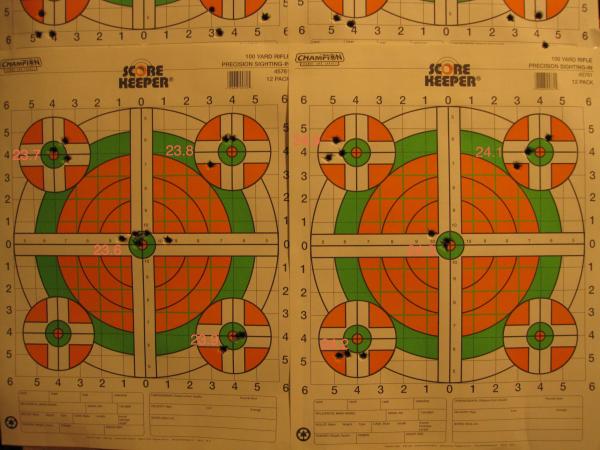
Looks like I will be shooting the low end of the ladder loads again sometime. My performance there wasn't quite up to par, and there are a few things I want to look closer at. Not drinking coffee certainly seems to have been helpful in terms of shooting accuracy. Definitely going to keep that up moving forward. The only one I'm questioning here is the 23.6. The first three were all pretty close; but then shots four and five went left and right respectively. That may work itself out when I redo those light ladder loads though.
-
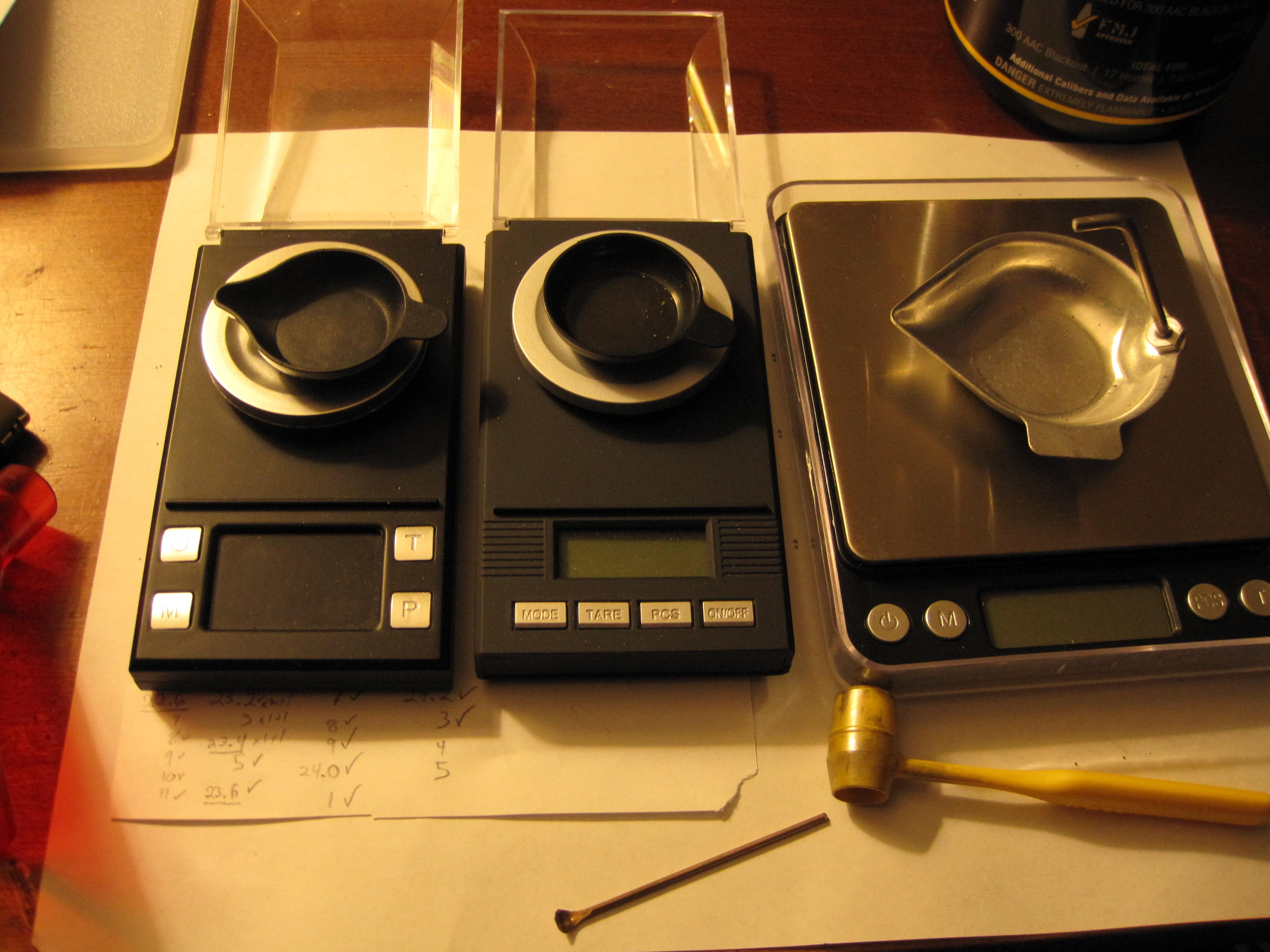
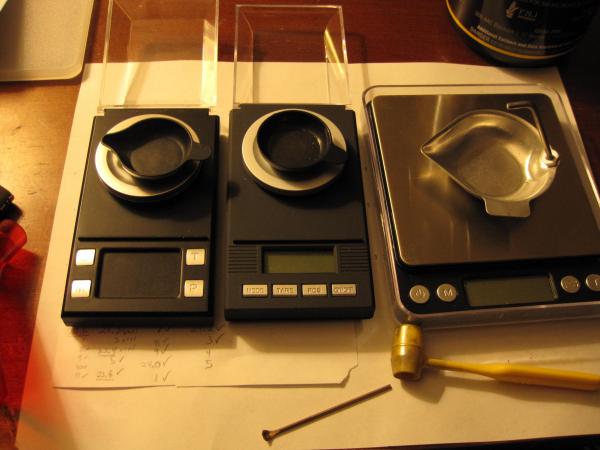
I have the 23.6+0.1 charge in my next batch of ladder loads. I didn't see a good group in the -0.1 grain load; but the -0.2 looked Ok. Could still be my meatbag error, but the spread didn't look right at first glance. 23.0 grains is also questionable in terms of seeking with much smaller increments. Yes; this idea of laddering 0.1 grain loads totally sucks. Quite frankly it has taken a lot of the fun out of shooting for me in the short term. It is just that I know these initial investments will pay strong dividends no matter what the outcome. The weighing of charges is the most annoying part; makes me long for an automated powder charging system, but I've already got a good start on that. This last set of loads were weighed out on three separate scales, in order; and then backwards. I actually have a few more scales I could add or subtract, but I'm simply aiming for repeatability and verification at the moment. This idea was born out of the 300 Blackout load data requirements. There are a few powders (for both 300 AAC and 7.62x39) that have a 0.9-1.2 grain spread between starting and max load. Those might even require 0.05 grain or better charge accuracy to nail down a dragon slayer load. This node business is still strongly in question in my mind. Long's OBT theory points to incredibly small nodes, an exit time calculated to the microsecond; only obtainable with roughly +/-0.015 grain load accuracy. There aren't more than two of those in any given cartridge load spread. The more standard ladder load seeks the Kolbe calculated node; which is much wider in scope. More like +/-0.15 grain in that case. My initial observations indicate that those two might not even hit the same point of aim. If you look at the broad array of experience in this area (scientists and practitioners); there might actually be something like seven nodes of value; and they might each be well suited for specific ranges; some much tighter in charge weight than others of course... This is all still experimental and theoretical at this point. I can shoot this same powder (CFE BLK) in 300 Blackout; but can't simulate it in QuickLOAD for either cartridge. Best I can do is collect data across an array of loads, projectiles, cartridges, and barrels; THEN compare to results with other powders that I can simulate later on. I'm actually glad things turned out this way... I don't have to worry about the complex numbers and measurements early on; instead I can focus on perfecting my reloading and methodology. I didn't photograph my brass yet, but there are certainly some things to address in that department now. I know everyone says you can't neck only size for an AR; but I'm pretty sure this is an exception. Too much gas is going backwards; I need a fat neck and case to take accurate measurements (shots). This may also be a result of not buying a barrel with a match specific chamber. Many variables to explore here. Not sure I want to pay for custom reloading dies; I could probably turn tools to lap what I have if I really think it through... The idea of horizontal and vertical stringing seems rather weak in my mind. Maybe it was easier to see, measure, or explain in decades past; but I'm still convinced it's all about circles and arcs drawn with these small load deviations (and really any load). A quality breakfast and steady shooting through this next box will provide some more useful data. I'm still 100% sold on a scale capable of 0.0001 gram accuracy (0.1mg). I know it's not the norm for reloading (and many say totally unnecessary); but I beg to differ in a number of ways. Quite simply; having solid repeatability is helpful. Figuring out whether launching at the zero point in barrel movement is even a viable option; could only be achievable through extreme charge weight accuracy. This gun is going to be torn apart this week; right after I shoot every load I can dream up in the mean time. Chamber casting, upper lapping, you name it... Hardly even mentioned... This thing needs a new trigger stat! I fired it a few times on a different lower when I first assembled it; and I think I'm going back right quick. My .22lr lower has something like 2,000 rounds through it. I regularly fire it at 5 rounds per second for fun; that trigger is amazing. This lower's trigger is still gritty and not ready for prime time. Unfortunately I can't just throw this lower on the .22lr either; because it's just going to get nasty if I do. Careful break in will happen; (I don't do trigger jobs, they get worn in to the hammer with care). If I can shoot a load that looks anything like 23.6 all day, I'll be happy. Unfortunately I'm still seeking something with at LEAST an order of magnitude better accuracy out of the gate (before I start taking scientific measurements). Pretty much any upgrade should get me there; but a combination of factors will certainly be evaluated. If you read all of this you probably deserve some kind of award.
-
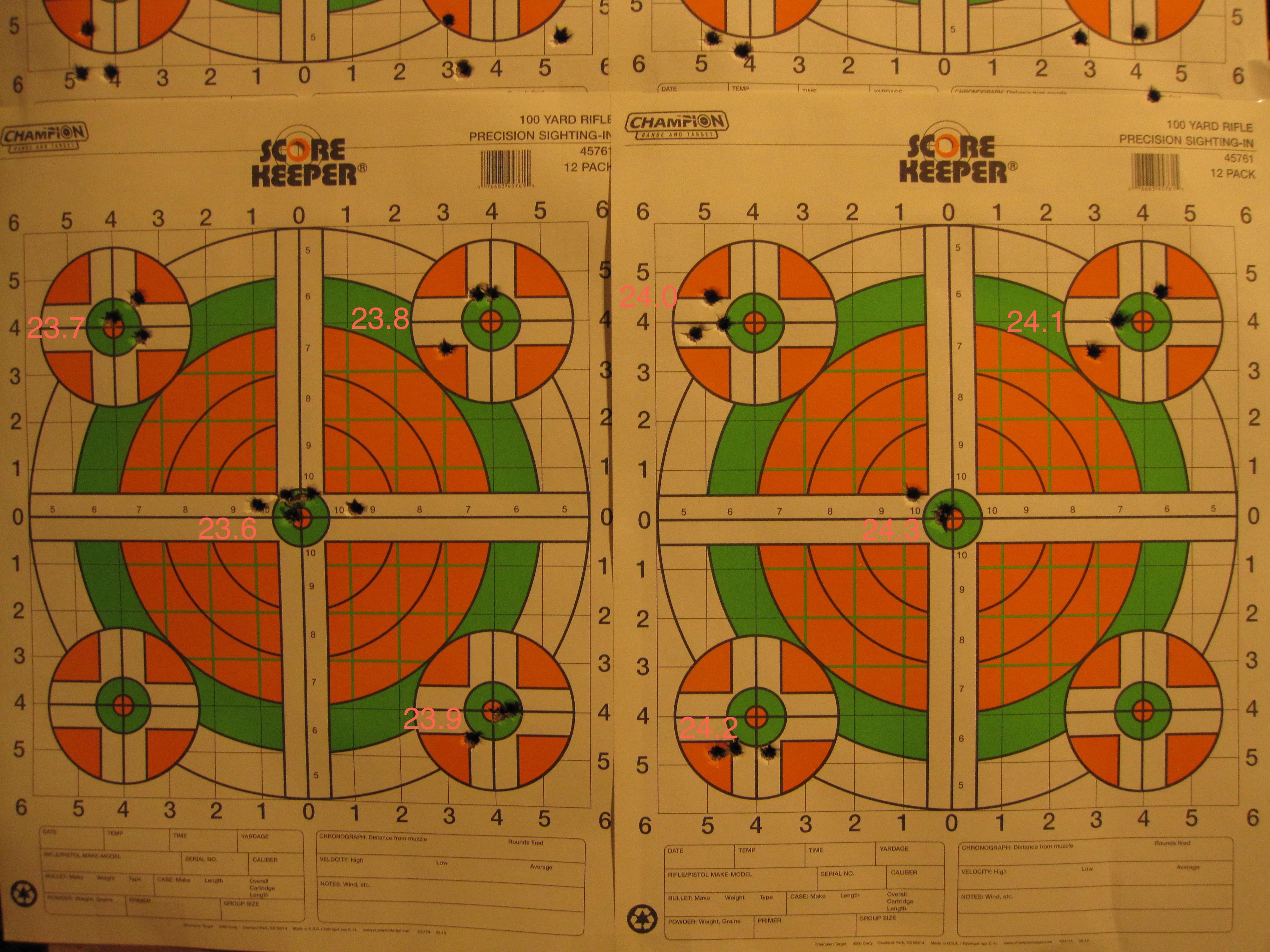
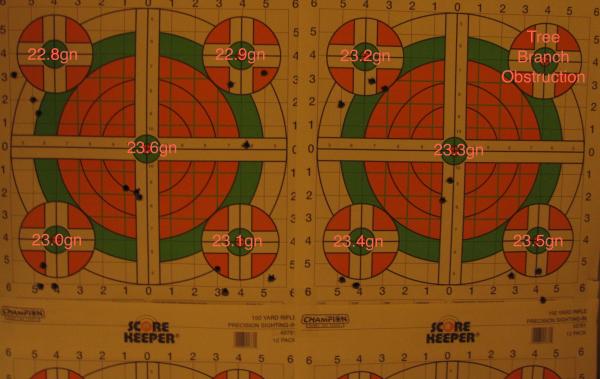
I wasn't really in the mood to shoot today; but the weather was too nice not to. I monitored the wind for a while in the afternoon into the evening and shot half of my ladder loads in two sessions. I know for a fact that I wasn't geared up for it, I had a few lazy moments at the trigger. Overall though; I'm quite confident that what is depicted isn't a terrible picture of these loads in my barrel. My thought is that there is a serious rotational component that nobody else has entirely keyed in on. Yes; the vertical motion is much more pronounced than the horizontal, but it's still a spin game; not just a left to right/up and down motion in the barrel. Pretty sure the barrel just draws circles (or curves) with shot placement when firing "bad" loads. I did NOT adjust my scope from the last run; for a reason. The final load is dead center on the left target. I made five more of that particular load for tomorrow; but backed off the COAL by five thousandths for those. I'm not entirely sure I have my bullet seating depth correct for this barrel, and as such; I might have to do all of this again. There are also two loads that I only shot two rounds each of; and not three like the others. Those were what I thought to be good loads to begin with. The 23.4 does look like a possibility. Not sure why the 23.5 look so bad; but it could be all me there. The 23.6 happened later and is certainly a good load. I know for a fact that I slipped on the shot to the left of the group. If you are somehow confused; I did adjust my scope after shooting all this. Vertical by 2", and horizontal by 1/2" to the right. Tomorrow morning I'm going to take the @98Z5V prescription on this. I recall him mentioning that he didn't drink coffee before shooting ladder loads. I know I was shaky today; probably to much caffeine. Tomorrow morning is bacon, eggs, and a small loaf of fresh bread. Setup early; and the slowest shooting necessary for stupid accuracy. I still have a box of high end ladder loads, and the five 23.6 grains I think will work best (if the overall length doesn't get me). Next up is tearing this gun down to install the strain gage, and possibly lap the upper receiver. Pretty sure lapping will also change my accuracy slightly; thought it may not matter at all in the broad scheme of things.
-
You both seem to have different experience than I do. I thought it looked a lot like an Uzi in shape the first time I inspected the article. The second time I keyed in on everything else; it's almost a straight AR-15 stupid short pistol. No idea what the inside looks like (presumably very different); but this is pretty interesting all around. Someone more educated than myself could probably explain how to make this kind of thing. Is that a blowback design?
-
If that figure is at all true; this is awesome! The same thing happened in NY when the registration of assault weapons was mandated. We had the option to modify to meet compliance; but an insanely small number of people actually registered during the one year time span allowed. Not quite that small of a number; but it was still grossly different from the numbers projected. Where did they get pictures of people turning them in if there were only 37? Was it staged, or is there something else going on here? I feel for all the legal gun owners everywhere on this. I too would have made other plans; rather than see firearms be destroyed for no logical reason. Stay strong.
-
Nope. Been down that road once or twice. I appreciate the clarification.
-
If you tried this, and it works; I'm not even going to ask. I have been looking at those distances in my caliper for more than a day trying to figure out " how " this could be an issue. I know the angle of the magazine could mediate in that way. Also the feed lip angle on the mag (but that should be static with MagPul magazines).
-
Totally valid. My MagPul 10s work in everything I've ever built. Still curious about how to modify a mag catch to work in this way (as I think I understand it). Wouldn't the mag catch need to be thickened with a weld; and also the lower modified to fit?
-
Did I say something the wrong way?
-
Done the bolt catch cut and polish myself. Turns out I had a different issue in the long run that I didn't ferret out yet. Don't worry about finding that info; I saw it before and understood (fixed me up back then when I saw it). The mag catch cut and polish is what I still can't work out in my mind. This isn't quite as easy.
-
This whole thing has me spinning. I don't really want to redraw every blueprint myself; but this is a substantial part of .308 issues as a whole. Measuring out the uppers is unfortunately even more difficult; so this isn't a short term endeavor. I appreciate your candor in these matters Sir.
-
I thought a lot about these modifications and haven't settled on any one yet. That's why I didn't reply sooner... I still don't know what the best course of action is; but you're totally right about not modifying every magazine to fit. Thanks for all these numbers Sir. I've been quite curious about how these differences play out in the real world. I never thought any of the bolt catches should be different; but clearly I was over-simplifying this .308 lower dimensions game in my mind. I always assumed there were minor differences in the FCG location because of the upper configuration. A few of those other numbers listed in this thread strongly indicate otherwise. This looks like about a dozen blueprints now?
-
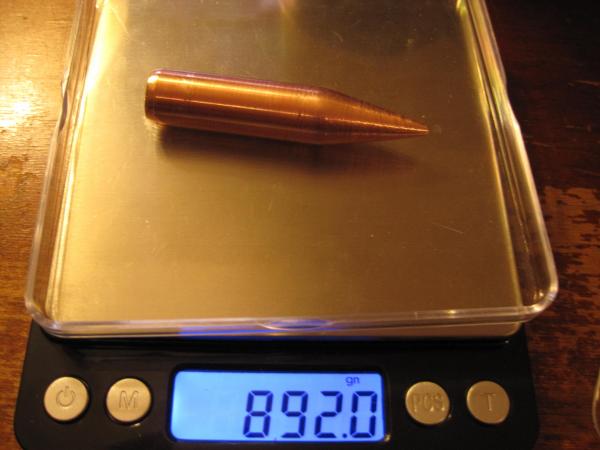
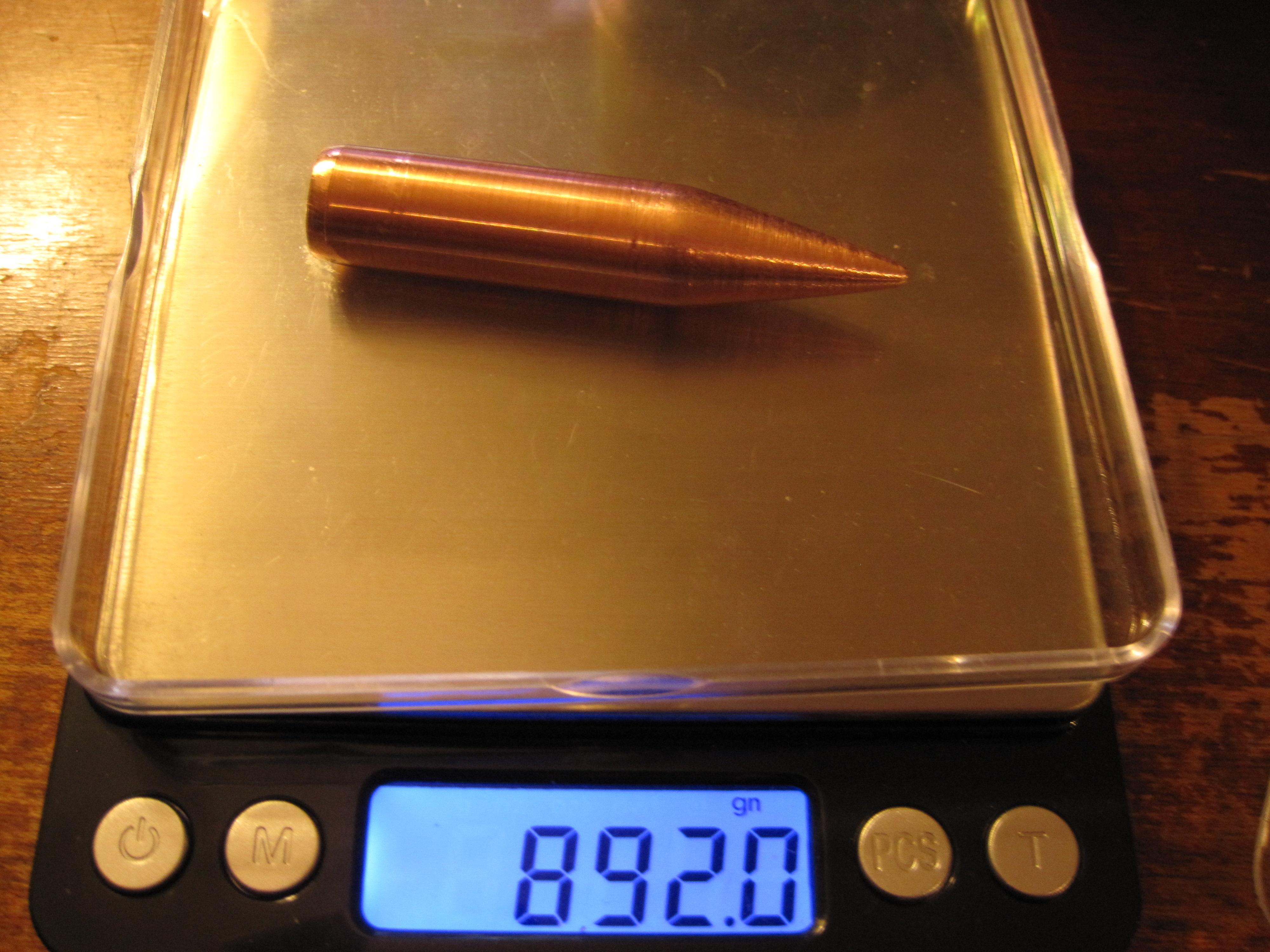
This monster took a LOT longer than I expected to fabricate. It's a 0.510" solid copper projectile paperweight. Probably has a terrible ballistic coefficient since the taper on the nose is all wrong; and I didn't boat tail it effectively. I also didn't think too hard about the finishing process, so it only weighs 892 grains. Fun project though, and I'll probably make another one a bit heavier when I get bored.