
Lane
-
Posts
1,042 -
Joined
-
Last visited
Content Type
Profiles
Forums
Downloads
Gallery
Store
Everything posted by Lane
-
https://kc9on.com/ham-radio/qrp-radios/chinese-qrp-kits-2/chinese-pixie/ There's some notes on the pixie kits. At the very end, he outlines the different filter components for other bands too. Quick read; but a good reference as well. Been playing with the antenna analyzer here. Something I have run into, is a loose antenna connector; way too many times. Especially when the radio has a heat sink near the antenna connector. The twist on shield can become loose over time; and SWR goes through the roof. Today it was on a dummy load. But one can't blindly trust anything; a loose connector might feel plenty tight by hand. I've read that an incandescent light bulb is a decent HF dummy load. It does transmit though; so don't be shocked if you make contacts that way. Trivially easy to assemble one with a ceramic light fixture and coax cable. I have long had one connected to my antenna switch for testing.
-
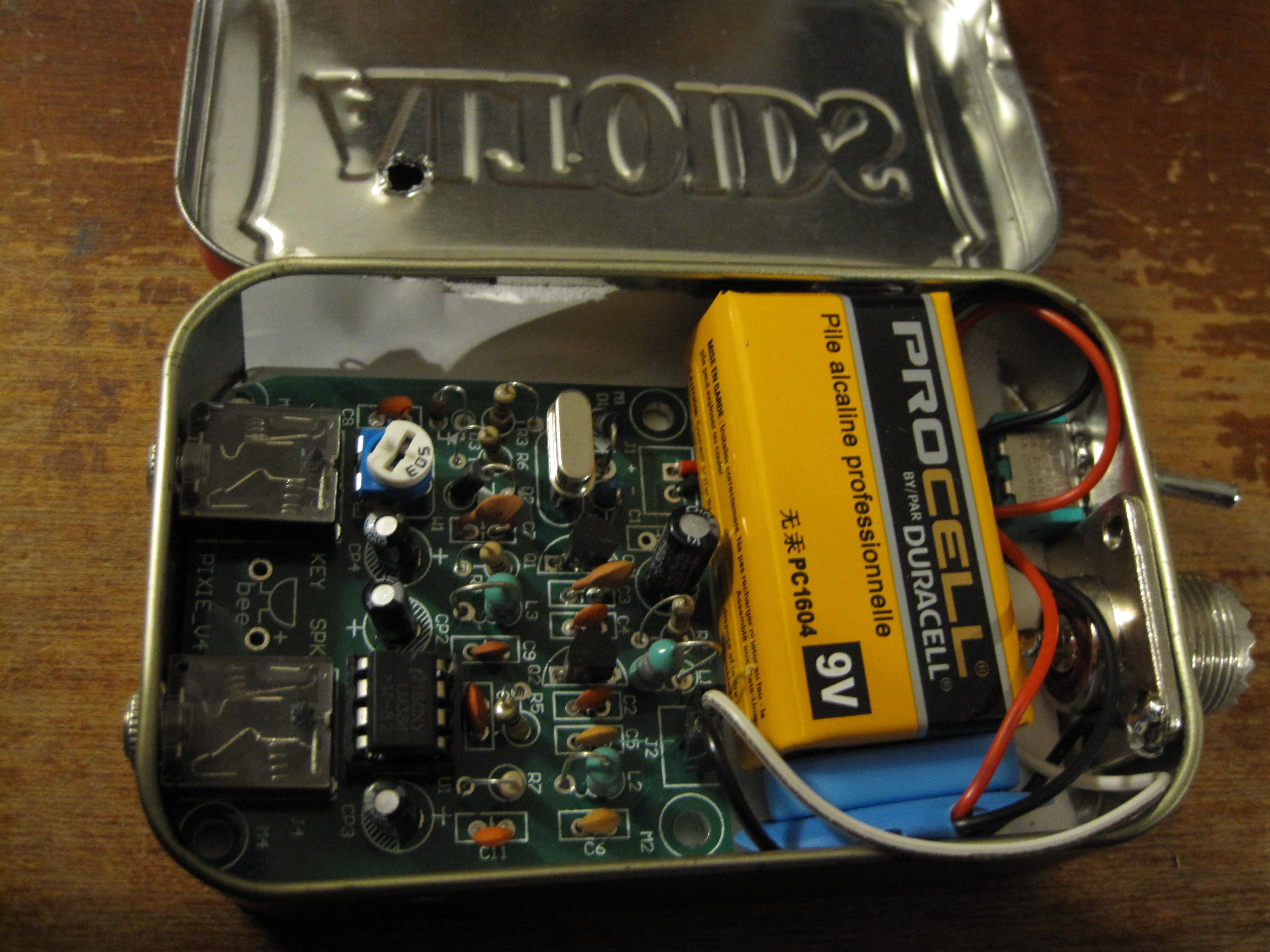
The little radio is known as a "Pixie Kit" or similar. There are a few variants out there with very minor upgrades, and perhaps a laser cut acrylic case. Amazon has some for around $10; but you can get them for half that from China if you have a patience. I've seen them designed for bands other than 40M too; though you'd have to hunt a bit more for those designs. When I first started trying to get my hands dirty in college, I was playing with "joule thief" circuits. It was a very simple and cheap design to mess with, but allowed me to experiment with a pretty wide array of inductors in the process. That of course evolved pretty quickly into things like coil guns, with stages triggered by SCRs as a quick way to dump high voltage capacitors into the coils. I was lucky enough to have a rock solid adjustable DC power supply as a child. Can't tell you how many things got blown up with that, but capacitors were some of the most fun. Charge them up good and full, and then rocket the voltage knob to the top and wait for the bang. Electrolytic capacitors would be the most spectacular, often leaving little more than the hookup leads to be found in any identifiable way. I thought it was a safety issue NOT to discharge big caps on CRTs with a screwdriver; that, or get the big bite when you brush against those terminals by accident? I never actually found an elmer for myself to be honest. But that doesn't stop me from self-guiding when I find the inspiration. There were a few people that showed interest when I went to field day locally; but it has not yet panned out. These days the local club doesn't even meet; in part because of state restrictions. No outdoor antennas installed here, so nothing to worry about. I've been running attic antennas almost exclusively, for both the stealth factor; and because my outdoor installs never performed any better than a carefully tuned indoor setup. I do occasionally launch a rope, and pull something into a tree for the experience of the matter. Generally speaking though; I try not to show off in that regard. As opposed to some of these people (https://www.google.com/search?q=ham+shack) whom you can probably spot from miles around with the size and number of antennas they typically have outside. That was what I meant about contesting in a previous message... Going up against people with a dozen or more radios, who are watching every band all the time, makes it tough to seriously compete. Perhaps it's the cold winters; but people around here get overly serious about contesting.
-
Pretty much on point there. There is a key input, and headphone output. The tuner is only one sided; a RIT in this case, and it doesn't tune very much at all. Pretty well locked to the crystal frequency in this design. The reason I pulled this out was because I found one on my desk that I partially built to allow for digital tuning with a bunch of external components. Generally speaking though; it's locked to the rock, and you just swap them out for frequency changes. Ended up pulling down all my antennas last night to start my indoor setup process all over again. Figured that I've learned quite a bit since I originally set up my HF equipment, and it's long past due for another run at the setup to see how much better I can do. Should have an idea in a few days as I get time to test each part of the reinstall. Glad to offer any help I can. I got my license because it seemed like a good idea given the terrain (living in the mountains). Strangely I had been buying up parts to build radios in the years leading up to getting a license, so I had some prior interest as well. I also do much better with hands on learning, and studied physics in college. Even then; I was buying electrical components to try to better understand the principals being presented in those classes. That way, I ended up with a more intuitive understanding of the fundamentals I was being tested on. In a pinch, I could relate those questions to my own experiments and experiences, instead of simply memorizing formulas, and punching the numbers into a calculator. I have a great time here on this forum; and a great deal of respect for the members here. I too built a well oiled 308 (or a few); and learned quite a bit keeping up with other peoples builds, and asking questions when I wasn't sure. But indeed; all work and no play makes Jack a dull boy... So get out there and have your fun! You deserve it, and thank you for your service.
-
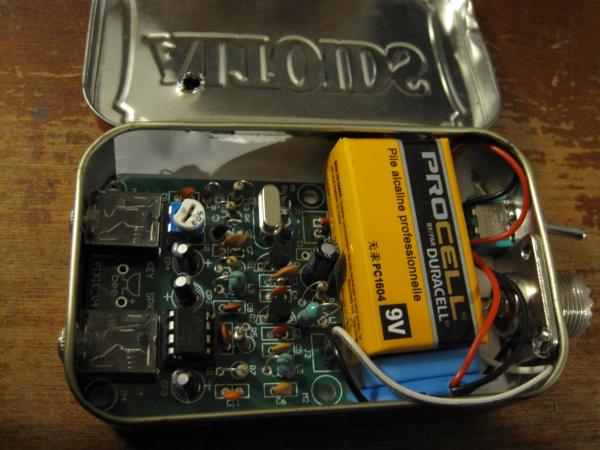
You don't absolutely need to spend a ton of money to get on HF and have a good time. This little gem costs only a few dollars as a do it yourself kit. Just solder all the included parts on the circuit board. I added a power switch, antenna connector, and socket for the crystal. By default they typically come with a crystal that requires an extra class license to transmit; but one can buy a whole pack of similar crystals, of which some are on the Generally accessable part of the band. With a simple long wire antenna, this fixed frequency transceiver can pick up dozens of discreet transmissions at once from far and wide. Not too difficult to distinguish from multiple transmissions in the pile up either, the tone frequencies vary enough that it possible to tune them in and out by ear.
-
I'm a whole lot younger than you. And yet; I'm retired too. Maybe you were in school when my uncle was at UB? Don't always find time to play with my radios; but when I do...
-
I figured as much; and did my best to give you an overview. It's an ever evolving hobby; and there are many things I wish to do down the road that I'm still slowly preparing for. These conversations have inspired me to re-visit my fan dipole installation upstairs. Some of the information in that stealth antenna document alone answered long standing questions I had about my indoor HF setup here. Also been considering larger loop antennas for a while too... Digital sure is a touchy discussion in the ham world. Plenty of purists just don't care. For myself, I found that many of the details were good practice for future planning. For example; digital hotspots are, for all intents and purposes; repeaters. Learning how to set one up, chose a local available frequency, determining their effective range, etc.; all apply to larger repeater installations as well. The learning curve was rather steep though; until everything is programmed correctly, that hardware is virtually useless. Hard to say what radio would be ideal for you at this point. The 7100 is probably lacking features in comparison to the 7300; with a very similar price tag. About the only addition might be the D-Star. There are so many other radio options in that price class; it might pay to shop around. Not sure if you have ham radio stores down there still or not. If I could have shopped around, and tried things; I certainly would have. I'll measure my fan dipole when I get the other legs connected again. Sounds like you have a similar sized space. They can be run in an inverted V shape, draping down from the peak. From what I've read; it seems indoor antennas will almost always be shorter than ideal to function correctly. You mentioned similar in the story about Tim Allen (needed to use an analyzer). And the stealth document says the same. Other things that interact with indoor antennas, make them appear electrically longer than they physically are. Also means that moving them could change those properties; which is something I certainly ran into when I was setting mine up. I learned early on that they didn't like to be messed with... I think the idea here is; pick a location, install the antenna, and then make it work by trimming. Moving it around at all is basically starting the whole process over, and if you already trimmed it too far; it's less fun to fix. I always start by installing; and then just listening anyway. You don't have to worry about SWR if you aren't transmitting. Any old coat hanger wire can be used to receive. Once, I'm happy with reception, I begin to consider transmitting. Did the same setting up VHF and UHF antennas indoors; not much reason to believe antennas that don't pick up anything, will be of much use when transmitting. You should probably be able to simulate that in different parts of your house with the UV5R. It's snowing again here. Maybe I should invest in a truck load of beer; for when that guy comes by with a sled.
-
I thought he was just trying to be helpful.
-
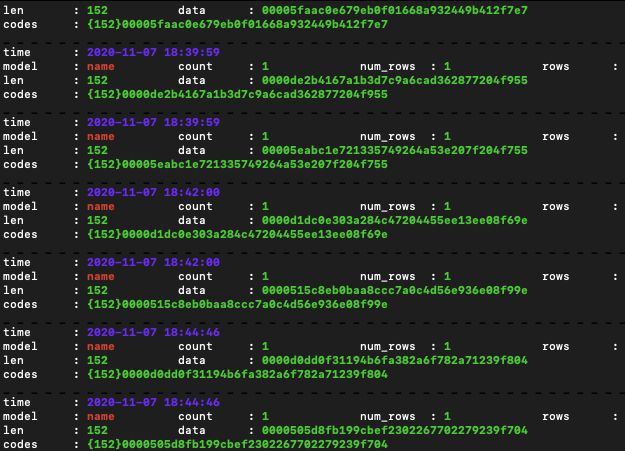
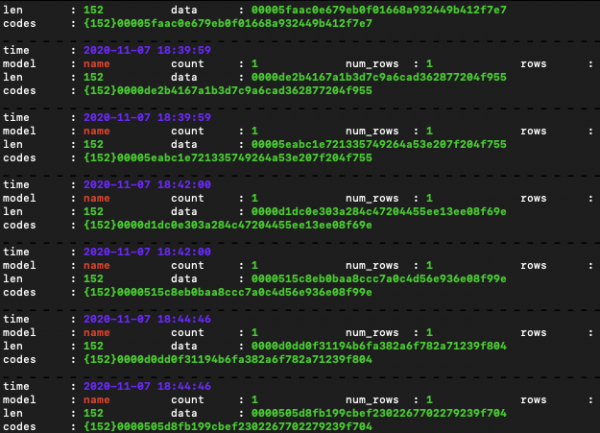
I assume those remote tests area lot like remote learning forced on kids these days? Zoom; and maybe some computer lockdown/test-taking software? Not my cup of tea, but it's presumably helpful for people who can't travel for one reason or another (and makes plenty of sense in Alaska). I haven't been doing much on the air lately. I posted a brief look at one of my current projects a little while back. Decoding the radio transmissions of a wireless power meter transmitter/receiver pair. In this case; I have a reasonably clear view of the decoded data, and the captured radio transmissions. Turns out the data is whitened; and I haven't cracked the keys for that yet. There are also transmitter serial numbers that are likely shoved into that keyspace as well. The receiver chip (and likely transmitter) are black blobs. While it may require monitoring the bus between the radio receiver chip, and the processor; I'm doing my best to avoid that, instead using math and pattern recognition to determine those variables best I'm able. I don't want to cheat if I don't have to; there is some level of pride in reverse engineering a black box from the outside alone. Being on the air is something I find much more satisfying in the winter months up here. Short days, and cold weather makes it easy to light a fire and turn on the radios for a while. All that equipment you don't know you need yet... You should just see pictures of people's ham shacks. You might not have any idea what you're getting into... Those guys are hoarders. I looked at the Icom 7100 long and hard. I have a vehicle mount style, ID-880 on my desk. It's almost exactly the size of a PC tower's CD ROM drive (so it's small), programs with CHIRP, and luckily runs off a standard computer power supply as well. While this one does not, many radios will require lead acid battery voltage to run; so 12v isn't enough, you need to go above 13.5v to power them on or use them. A 15v rail is not at all uncommon inside radio devices. My HF rig is a Patcomm (which requires 13.8v or so), and a super rare one at that. I was able to send it back to the designer for a tune up, and learned a whole lot more about it in the process. While the printed circuit boards were professionally made, this one guy hand soldered, and assembled each one on his bench; roughly at the speed orders were coming in for them. He only sold a few dozen. That's where things get interesting though. At some point, another ham mentioned to me that getting an extra class license is basically a proof that you can build your own HF transceiver. Certainly make antennas, read a circuit board, schematics, etc.... I took that to heart and started amassing component parts for my own HF build. A lot of older build schematics require transistors and maybe filters that can be difficult to find these days. In some cases there may not even be modern substitutions; so hunting down vintage surplus is a must. That too is a process that sees more attention in the winter time. Huddling up over a desk covered in solder blobs, and scraps of wire. Maybe lighting up a butane powered soldering iron if the power goes out... I've finished the display module and basic input controls board adapters. It has a programmable oscillator; and I took some other shortcuts to see early results. The design is ultimately is distillation of numerous other builds; with some of my own preferred features rolled in. One of the main goals was to have something modular; like a synth that could be modified by patching things in and out or swapping modules. Haven't been on the air in a while; but I guess my membership in a Florida based ham club might have recently been renewed. I'll probably start getting back on an extra class net that comes out of Florida since the weather just turned cold (20M HF); it's snowing right now up here actually... Also need to go "find" my digital hotspots; since their host gets a new IP after every power outage. I'm sure I have some software updates to do; and maybe there's some new features to explore in the digital world. I find that interesting because I can dial up any part of the world and sit in my cave with just an HT. No need to wait for the right atmospheric conditions. All that HF talk makes me want to go mess with my main antennas though. Wouldn't hurt to re-analyze everything and see what new gremlins have popped up since I've last been on the air. I do still turn on the HF from time to time to scan the bands while I'm cooking dinner. I may work towards remote control though, since the radio is in a good spot; but I spend a lot more time elsewhere. It would be rather trivial to remotely tune and operate (audio I/O, and PTT). Never done a contest yet; but I know about them. Going to a field day is a great introduction to that kind of mentality (though with COVID and all; it didn't happen here this year). Not to mention, really contesting requires serious dedication. If you're going for distance; you'll want almost every minute of the allotted time; which might be a whole weekend in front of the radio.
-
@RedRiverII http://www.arrl.org/find-an-amateur-radio-license-exam-session I just used Florida, and a date range through January as search terms. There are quite a few options depending on your tolerance for driving to a testing location. I noticed a few interesting location choices as well. An emergency ops center, public library, VE's house just to name a few... Found this just now at a whim and it has some more specifics on indoor antenna options. https://www.rsgbshop.org/acatalog/PDF/StealthAntennas_Sample.pdf
-
For me (on antennas); these were on my screen before I replied to @98Z5V Appreciated. I'll read anything useful... TM_11-666.pdf fm24-18.pdf
-
You answered all my questions here... Thank you. I was pretty sure there was a very good reason you didn't want to raise an arial. And all the illustrations I've seen, none recommended ground. Your mention of this makes me want to experiment though. I'm thinking one could do some interesting things on HF playing off of ideal terrain... This too is another reason why I have an attic antenna; when I don't have an HOA, or any other explicit zoning restrictions. Nobody's the wiser to what I do. I don't have any reason to advertise. I LOVE those army manuals in general. I've been reading them on and off since grade school. There are SO MANY, on such a wide variety of topics! Great illustrations, easy reading, and usually more informative than an encyclopedia by a long shot.
-
I've been meaning to ask about this...Those ground antennas. Were you running below 2MHz? I earlier suspected it was an operational thing (I read up on army manuals to be "more sure") . I suspected distance was a factor in that choice (and terrain). Not to mention hardware, technology, weight, etc. Now; I'm beginning to wonder, if the frequency was tuned to distance using ground antennas for their limitations?
-
I have been meaning to mention this too... You analyze anything you buy really. A broken or out of spec antenna can break your radio if you don't know what you're doing. Even when you buy something "ready made". I got a dummy load marked for a band or two. It was non-functional; just off the charts on the analyzer (and never worked "obviously"). Measure twice, cut once; isn't even close to enough in the ham world. Check everything... And keep checking until it's always right (this mostly applies to HF operation).
-
I'll throw in my vote for attic wire antenna. I've been through a few trials in that regard. My setup is generally an attic wire, dipole pair, on the third floor (in the ceiling); nearly as high as can be. Might not even need those baluns, and I tried fan dipoles before too (proved hard to tune for transmit). There is a mountain peak to the west that blocks almost everything. But I have a straight line of sight for N, S, and East. I've tried getting "better" work with antennas in taller trees; and it was not been better for me in reality. Sometimes the simple solution is the best (or is at least less effort). Guessing topography is why I got Germany and not Japan (also reasonably certain @Magwa being 2,000 miles west of me give him an advantage in hitting Japan direct). I'm sure the locals in Florida can give you a good idea of what you can expect in terms of HF. @98Z5V What is up with your ground antenna operation? I assume that includes some kind of tree wire as well? Not a pure ground wire antenna? I presume some of that was operation oriented in terms of what was allowed; some I'm extra curious there. Not sure if @RedRiverII can actually use a tree with an HOA; but hiding ground wires alone might actually work (perhaps not ideal)? @jtallen83 The home work didn't help me either. Just studied for the tests; licenses are valid for life if you remember to renew every decade or so.
-
Without trying (or looking it up): Alaska, Germany, Florida, California (and Japan on D-Star). All on the same band (except Japan) with a wire antenna (and balun:HF ). You'll have a different easy grouping given your latitude.
-
@RedRiverII Back a page, attachment on post: Posted Thursday at 09:44 AM I entered the first 24 or so from the repeaterbook search, and saved the CHIRP file for you so you didn't have to type it out yourself.
-
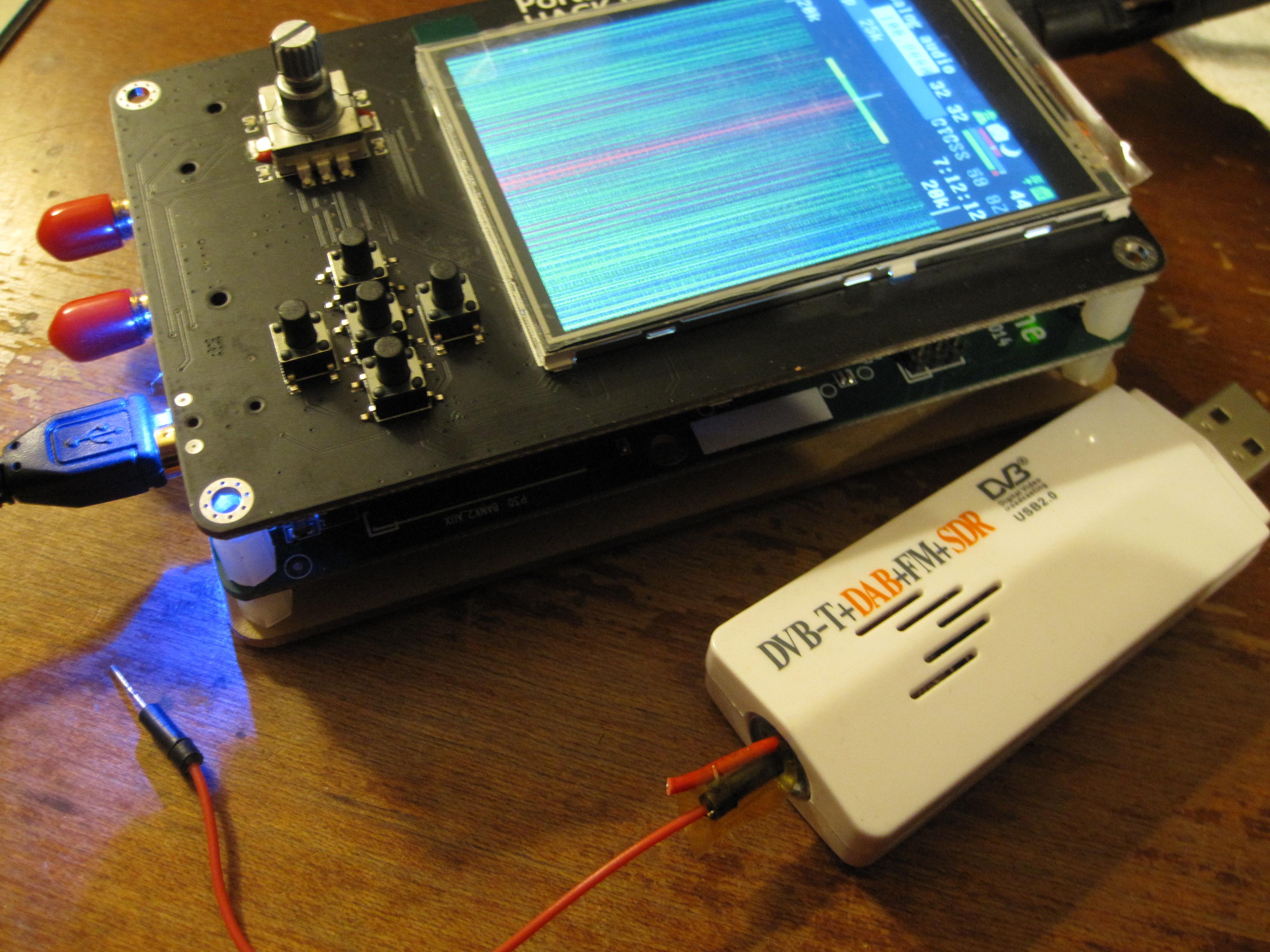
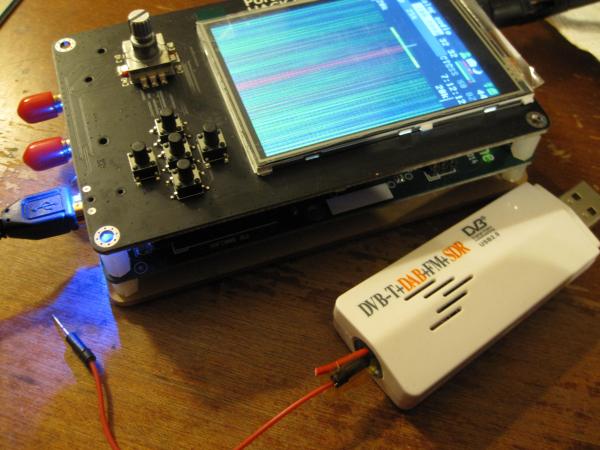
Figured I would add a few more pictures while I'm at it (inspiration?). Here is a peek at a reverse engineering project I messed with today. Using quite a few different SDRs; but the one with the screen isn't helpful at the given moment. I was finally able to compile decoder software on my computer to use the USB dongle (~$15) . I made an antenna from a wire stub quick; and tuned it with the software gain (to not pick up garbage). I can capture data from a 900MHz ISM device. Now...To decode that.
-
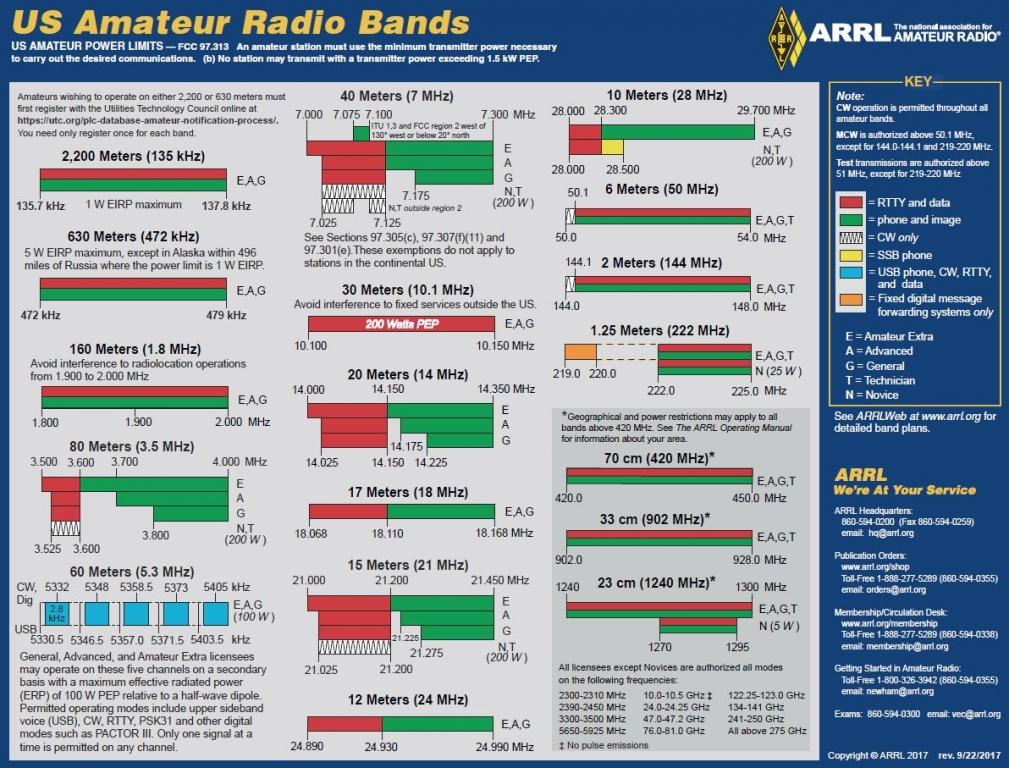
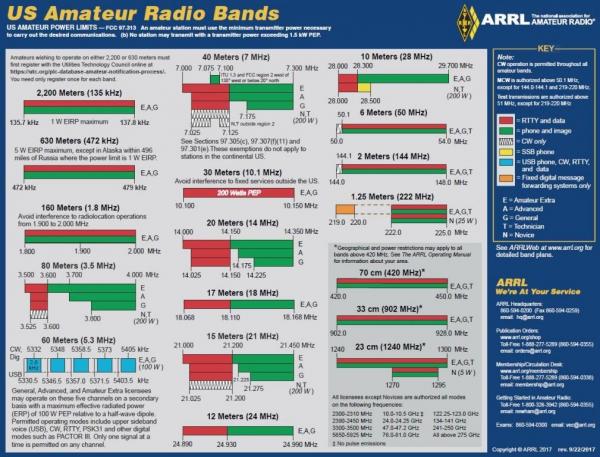
Yes. Having programmed the CHIRP data file for you; I can confirm you have quite a few within about 5 miles (some should be very close). Hopefully you can figure out how to copy and paste; or directly program your radio with it. There's a whole lot to discuss in terms of antenna options. For a tech; you could consider indoor antennas in a window if you want to enhance VHF/UHF work. Once you go general; the HF antennas can get quite large. Do you have one or more trees (can you hide a small wire)? Attic antennas can work really well if construction isn't problematic. Even a few too many pieces of sheet metal could make that a frustrating proposition though. I do love the idea of absurd outdoor installations like the flamingo. A flagpole is pretty low key if you can swing it (they really can not tell you no by law). HF antennas on top of a vehicle is pretty absurd; but you do what you need to do when you have an HOA. You've probably seen the band plan before; but it helps to remember what the limits are. I remember a few questions in that area. When you get situated on the 2m/70cm; you might be surprised how flexible it can be (especially down there). Quite frankly; despite passing tech and general the same day, I cut my teeth on VHF/UHF for years before even attempting HF. There is a TON of neat stuff you can do without ever touching the lower bands.
-
The HF antenna comments are an excellent point. Unlike the 70cm/2m handheld you have; those HF radios are unlikely to come with an antenna at all. So; that $1,000 radio is just the beginning. Depending on your level of interest, and level of skill; you might choose to make your own HF antennas to learn, and potentially save money. For the most part; you're likely to need an antenna for every HF band you want to work as well; so that can add to the expense. I also opted for an antenna tuner; since my HF radio didn't come with one built in... Have you noticed; this is could be an expensive hobby? For sure; working the world on 1 watt, 5 watts; or even 10 watts is a significant challenge to say the least (probably best suited as a long-term goal; and not something you'll be doing the second week of December). My guess is you'll start with only one or two HF bands, and workup from there as you gain more experience, and tolerance to spend more money. One thing that's interesting about Florida, is that there are a whole lot more used antennas available. Since people typically take then down for hurricanes; there are plenty that don't go back up for one reason or another.
-
Repeaterbook can be intimidating at first (there are so many bands and "features"). Here is a link to a specific search that might help out. https://www.repeaterbook.com/repeaters/prox_result.php?city=Boynton+Beach%2C+FL&lat=&long=&distance=50&Dunit=m&band1=14&band2=4&freq=&call=&features[]=FM&status_id=%&use=%&order=distance_calc%2C+state_id%2C+`call`+ASC It sorted by distance; so you shouldn't have too much trouble entering the first dozen or two, and uploading to your radio. There are a few that have VOIP flags listed; so those may not work without other hardware for you. I only searched for 2m and 70cm, so everything listed should do something on your current radio (assuming they aren't too far away); you might get only noise on the channels with VOIP though. They changed the general exam pretty recently (2019); so I'm not entirely up to speed on what they are testing in this current iteration. I took a practice test just now, and didn't do terrible (now over 5 years since I first took my general)... I have an HF radio; but it doesn't get used nearly as much as it should (I can regularly receive nets that broadcast from Florida via HF though). You are correct; starting price for a new HF radio is about $1,000; and almost nothing is available used below about $300. Almost modified my UV-5R file for you; until I realized it has most of the buttons reassigned, and some other customizations that might confuse you. Instead; I've attached a generic CHIRP data file with the first few entries from that RepeaterBook list from your area. That should save you some time; and allow you to listen to see what's going on around you while you continue to study. Hope that helps... Generic_CHIRP1.csv
-
Looks like you are a hair south of the southern group of hams I'm aquatinted with of in Florida. That said; those guys have been working on some really great blends of technology in the repeater world. I won't tease you on all the details yet... But don't worry; you'll love it. I tried to do this for you; but the website appears to be down at the moment... Get on repeaterbook somehow; and enter your zip code. Stretch out 50 miles our so, and start entering the closest analog repeaters you have access to into CHIRP. Pretty much need: Call letters in the Name field, frequency, and tone if it's needed. The offsets will be mostly copy and paste for VHF and UHF across the board (or bulk fill in later when you're ready to transmit). Feel free to post up a CHIRP data file here if you want some help. Once you get programmed for a wide range of actual repeaters; holding down the * key on the keypad for a second or two will start scanning mode. At that point; sit around and wait. Maybe try different sides of your house, or take it with you in the car. Just make sure; IF you have police or emergency frequencies in that list; that you either mark them accordingly; or better yet, disable transmit on those channels so you don't dumb thumb it (or try to reply on the air to a police call). You'll soon learn what you can hear in your area. And then made a determination who you want to contact. When I first got my license; I spent many hours with some semi-local old timers on the air over analog. We talked about all sorts of NY stuff... And those were great times. I'm guessing you'll also find frequencies you don't care for in the process too. Florida in general is very active in the ham world; but some people are just boring, or have differing interests. Once you get up and running, you can start looking for NETS to join (usually in the evening), and start working towards emergency communications. You'll learn a lot more once you start talking to people. Have fun! I'll try keep my ears open on channels down there, and see what's going on these days. Yep, you can contest, and get QSL cards, etc.... The real fun there is HF though (new radio required $$$)... They say you can work they whole globe on 5 watts; if you're patient enough.
-
It sounds like you ran into an issue with the programming cable drivers (and not actually CHIRP itself)? Long story there; but the Chinese copied chips used in USB to Serial converters some years back (that's the type of chip that makes the programming cable work). The original chips cost more $10 each; and those original chip developers got mad when someone undercut their market with clones. They made driver changes to try and block the clones from functioning; which can make installing a working drivers difficult. I believe the solution is to install an older driver, one which was release before that time; which does not deliberately disable the clone chips from functioning. I'm sure myself or others could point you in the right direction with a few more details. (Hopefully I didn't guess your computer operating system wrong)... Then; there is the questions of spurious emissions, over-powered, and out of spec Baofeng radios. The earlier where questionable when they were first released. The FCC did indeed threaten manufacturers and sellers of at least one of the UV-5R variant radios... https://docs.fcc.gov/public/attachments/DA-18-801A1.pdf The reasons why? The fact it could transmit on bands that it wasn't approved for, including those used by emergency services. It allowed the option of wide band transmissions in bands where only narrow band was allowed. And; it wasn't legally compliant with commercial land mobile, FRS, or GMRS either. So in short; it has too many feature; and was marketed illegally. Especially so to the general public without a ham license (people who wouldn't technically know better), and whom might try to use them in illegal ways. For the price of a case of beer; that Baofeng is the best buy in town. It goes above and beyond the call of duty, and doesn't babysit the user in terms of locking out parts of the radio spectrum that might become useful later on. I recall decades ago; that certain radio scanners were in high demand because they were easy to modify the frequency range (where new models were not). I totally understand your position; that $100, is easily money better applied to something like a name brand radio. When it comes to 20x that price, or 50x that price; it's a completely different discussion. That 7300 is a whole lot of radio you can't use without a general class license. On the other hand; it might be just the kick you need to pass that test. You can always listen while you're studying; and try to relate the study material to your radio's abilities. In term of antennas; I'm not sure how restricted you are. I'm NOT personally restricted whatsoever; and still use indoor antennas for convenience (even on HF), mostly due to the lengths of coax that would be required for me to setup outdoors. In places with a restriction; you might consider something like a flagpole (disguised antenna). Nobody can tell you that you can't fly the American Flag!
-
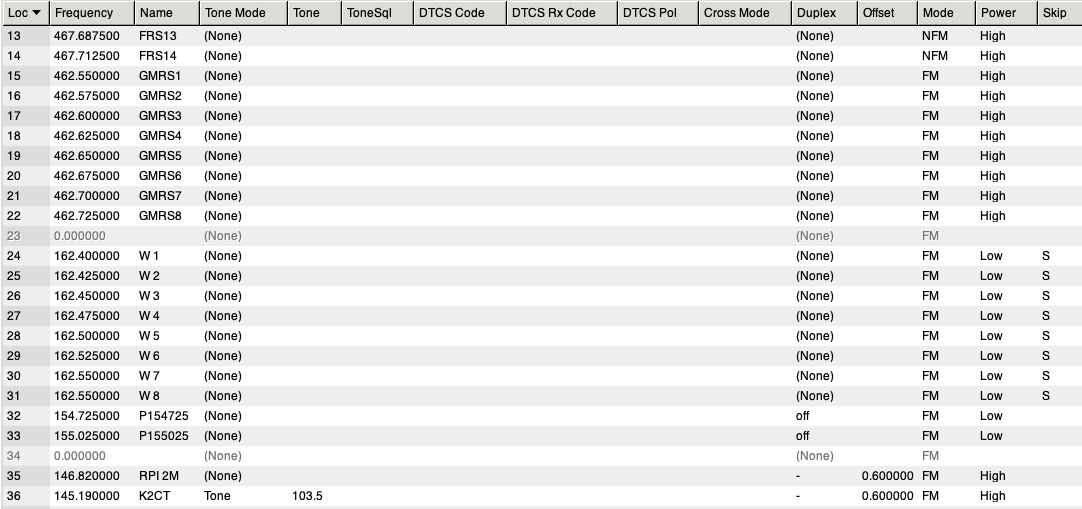
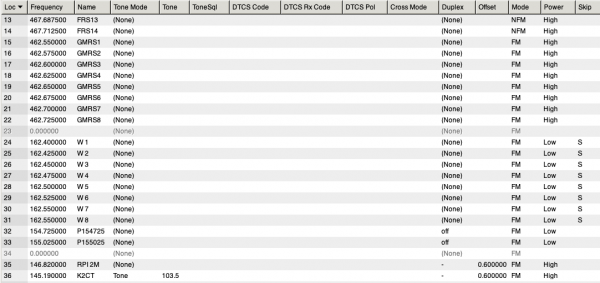
While that's quite a high price for a UV-5R; maybe you ended up with one of those "extra packs" with a bunch of mostly useless add-ons? I'm curious how you think programming a different radio will be easier? Beyond the rather expensive (proprietary) RT systems programming options; CHIRP is relatively universal. You mentioned the Kenwood D74A. Have you looked at the programming software for that radio? MCP-D74 memory control program (google image search will show you some screen shots); that honestly looks significantly more complicated than CHIRP. DMR radio programming is even more complicated still; but I doubt you'll find anything easier than CHIRP in the end. You should be able to fill in those required fields from an aggregate source like RepeaterBook (or ask for someone's CHIRP programming file as a sample to reference). I added a screenshot of mine in case you want to see. Most fields don't need to be filled in; I've included FRS, GMRS, Weather, Police (set not to allow transmit), and two local repeaters at the end). Also; many of the settings will repeat line after line (like Mode, and Offset, etc). It is considerably harder to program radios from the front panel, as you'll need to set each one of those entries in a different menu branch; instead of a single long line in a pseudo-spreadsheet. Another advantage of programming software is it usually allows Copy/Paste, so you don't have to type every line every time. Congrats on your license! And really; I'm not saying you should keep a $100 Baofeng (you should be able to find one for $35 with the programming cable)... But you'll still need those skills to program most any radio short of a classic vacuum tube based HF rig. Enjoy. Maybe you'll hear me on the air down in Florida one day.
-
I know... That pdf can be compressed or converted for use on slower devices like phones, and eInk tablets. It is nice to see original documents scanned. That "other" information wasn't linked for no reason at all. There needs to be at least some basis for jumping that deep into the gas system up front. Almost everything else matters before the gas system. The graphs on the pressure trace information page should provide a few clues about why that is. Look at this. The implementation of the internal microphones inside the LabRadar unit. Designed to listen to gunshots; it's really quite dumb... Any old cheap a$$ mic element can be tamed to work for a gun; but almost nothing works out of the box (without reducing the input gain). It's trivial to record the action of your own firearm. On the other hand. You might as well start recording the temperatures along the outside of the gas tube. And what about the twist due to temperature changes (that's a regular physics lab experiment one should have seen during primary education)? Int-Photos-2503420.pdf
-
LOL. I stepped away for a few minutes, and it tuns into that?!?! @##@$%^%&? ^^^^^^ There's another document mentioned at the end of that which I've not bothered to find yet: M. Werner, "Analysis of the Gas System of the M-16 Rifle," to be published as a Ballistic Research Laboratories Technical Note... There's quite a bit I could say after reading through report #1475; but I'll keep that to myself for now. Generally speaking (based on that research); I doubt anyone would be able to make up a useful calculator for port size, gas tube length, BCG weight, buffer weight, receiver extension depth, and spring constant; given the findings of that document. Variances for friction were so high; that even the researchers involved refused to validate their own approaches. In reality; trial and error appears to be the fastest way to those ends. One could probably make a more calculated effort on one particular firearm by taking some measurements of how the physical system is operating up front, to fill in some of those gaps. not sure that would be at all worthwhile without (at the very least), a PressureTrace on hand. https://www.shootingsoftware.com/pressure.htm