
Lane
-
Posts
1,042 -
Joined
-
Last visited
Content Type
Profiles
Forums
Downloads
Gallery
Store
Everything posted by Lane
-
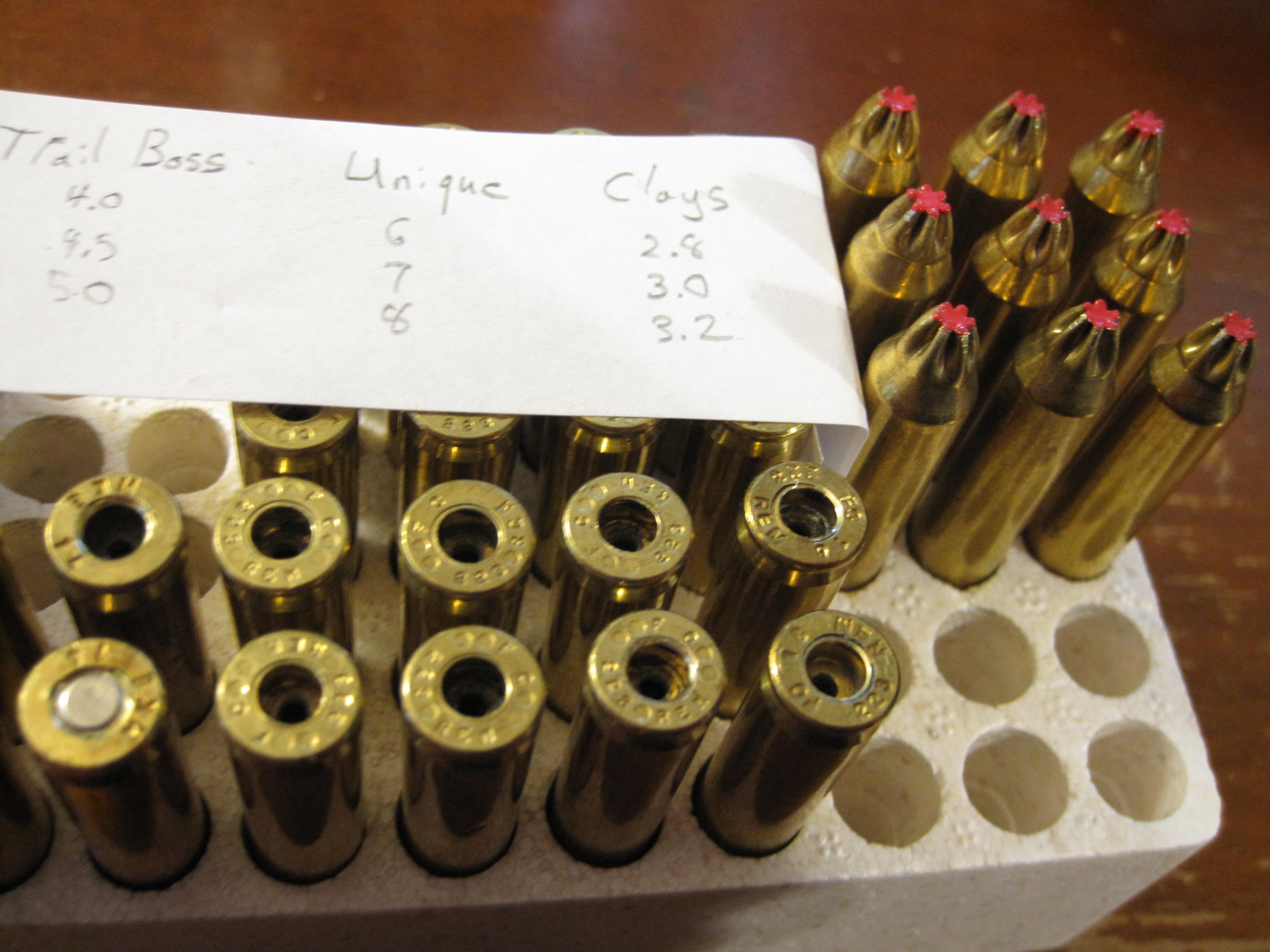
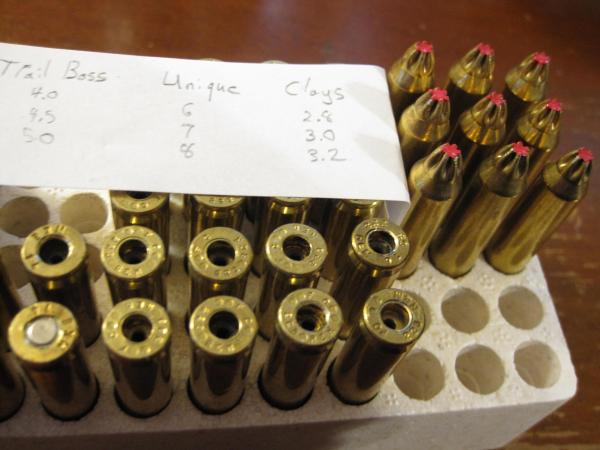
Disclaimer; there is a chance I have a bad container of Trail Boss. Those numbers just don't look right at all. It's cheap enough that I might as well double check. What other loads do you all like with Trail Boss? What if I have a whole lot of extra left over?
-
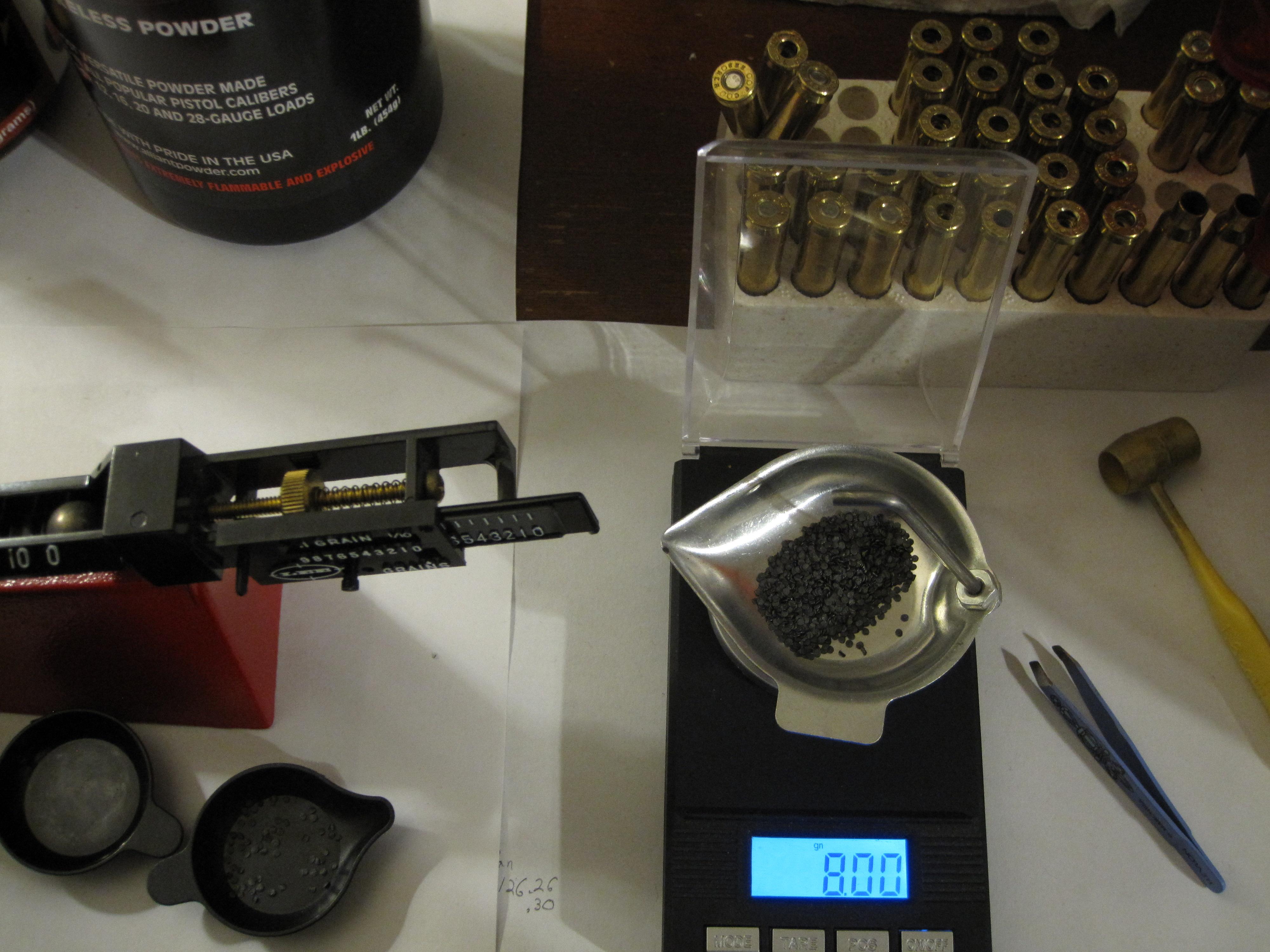
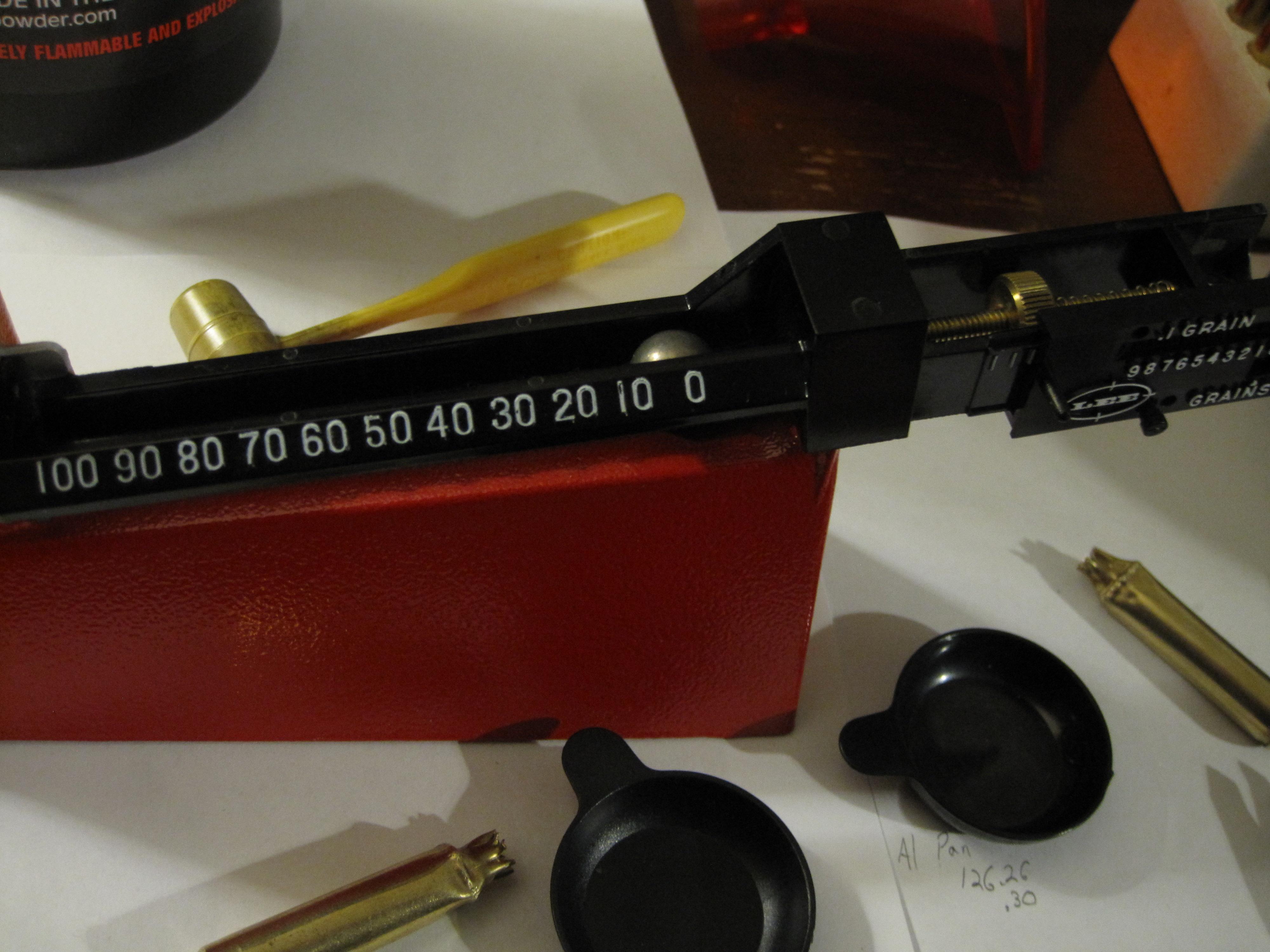
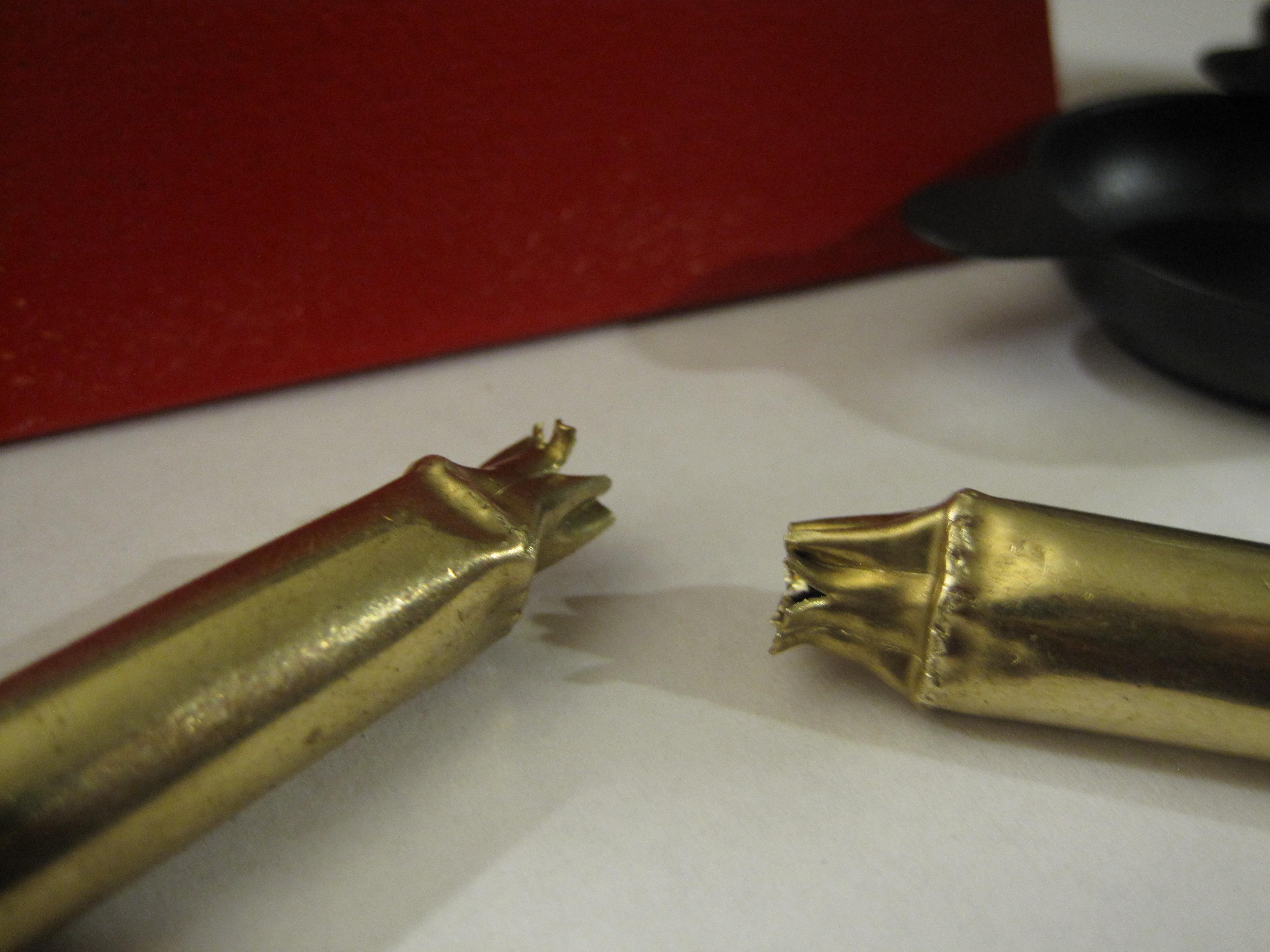
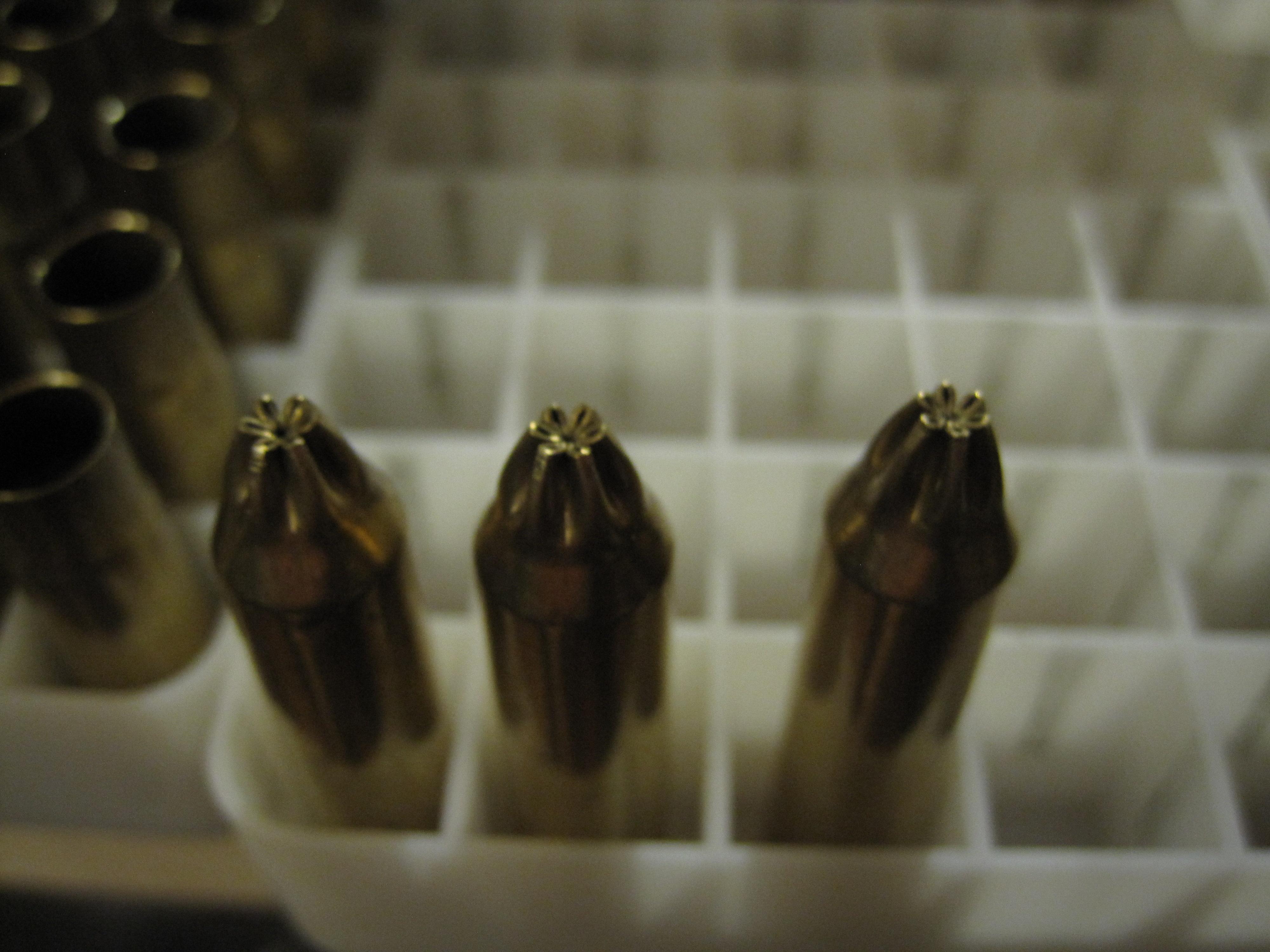
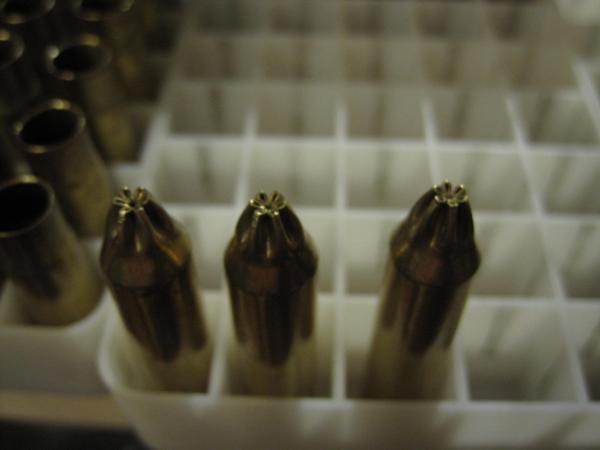
Minor update on making .223 blanks. Took me a while to find all the problems I introduced along the way (and errors in my own thinking). It's trivially easy to crush the case body such that the round will sit right in a case length gauge; but not chamber at all. When I finally figured this out; I took the decapping pin out of my full length resizing die, and fixed each one carefully. It was a lot worse than I expected; about as much effort as resizing a case that's already been fired. Short blanks don't always feed cleanly for me. Not sure if a magazine modification would help; or if I need to go after the feed ramps. Perhaps even changing my crimp method would allow for a smoother feed (more circle, less star?). I'll mess with that before I test another batch and see what I can find out. I'm sure by now I can find some actual garbage brass to use for that process. May as well add a rotation indicator to the top of each blank die; since they are apparently very sensitive adjustments. Seems like this was entirely too much effort for what is essentially a toy. But it does have some niche uses like throwing antenna up in a tree. My Clays rounds launched cans too slow for the Labradar to pick up, but I suspect the powder will work fine when I get the charge dialed in. Six grains Unique shot a can just above the speed of a standard M200 blank. I declined the 7, and 8 grain for now; but I've shot them before, and they seem "safe" enough with a bit more throw. Trailboss finally makes more sense to me; those cans never left the barrel, just a little puff of smoke which was nearly silent. Plenty of room left in the case, so I won't count the Trailboss out just yet. Probably not going to be the most cost effective option if it requires a case full of powder though.
-
Anybody have a working RCBS Ammomaster Chronograph?
Lane replied to Lane's topic in Gear & Accessories
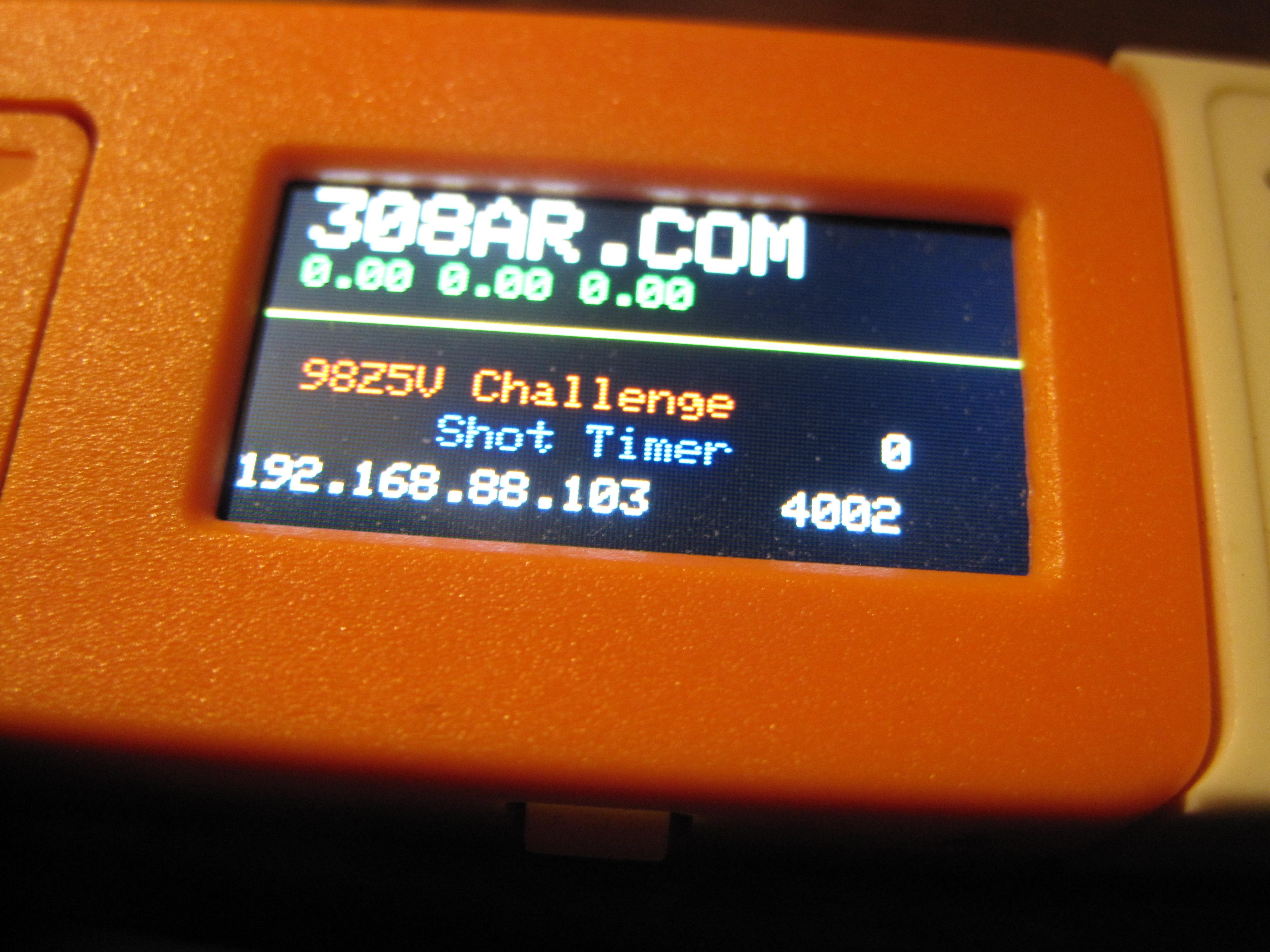
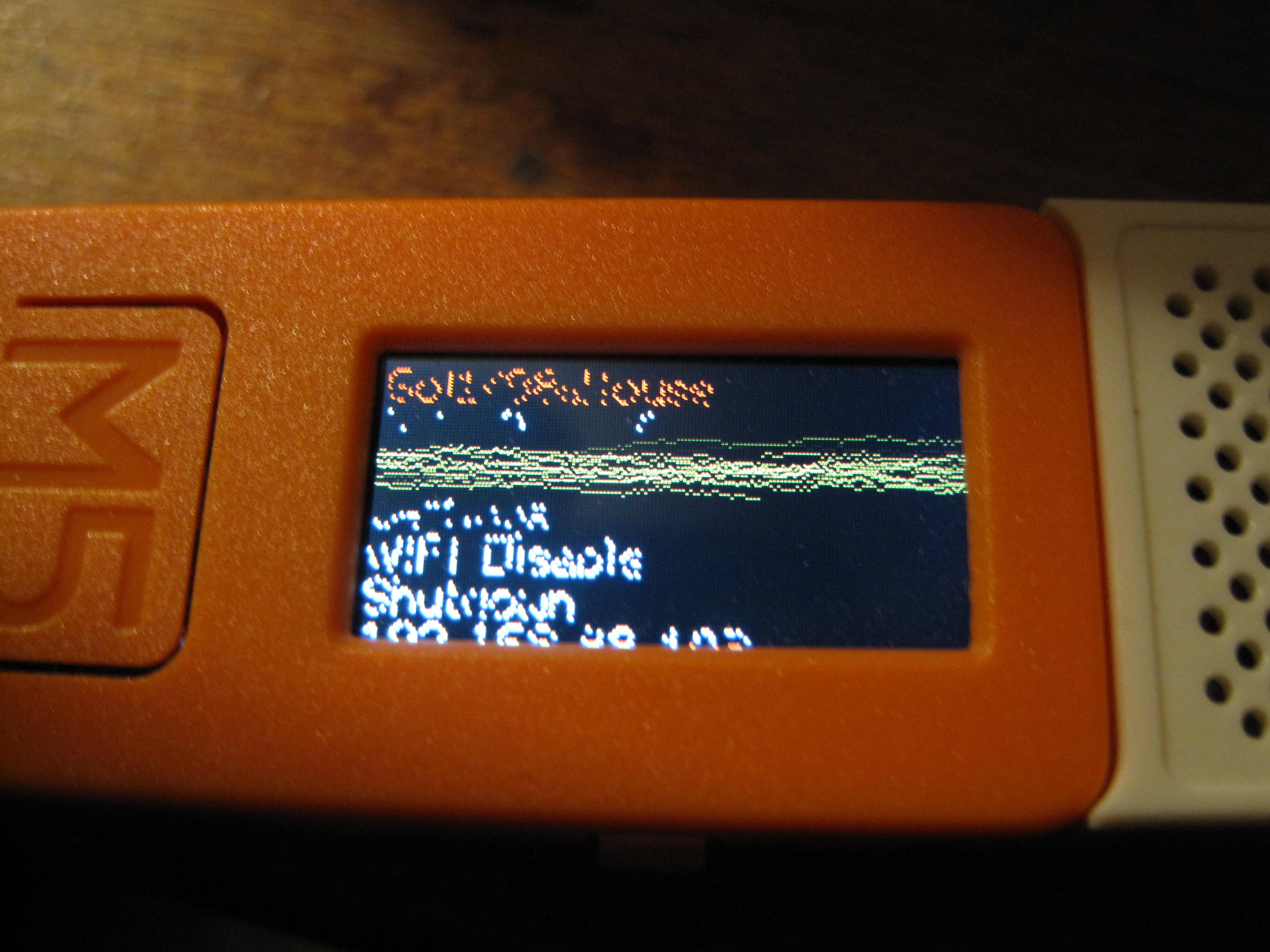
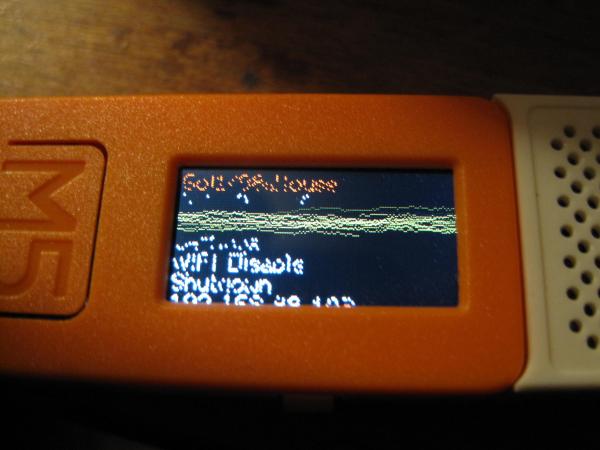
Sounds good to me. I'll start at the lower FPS number and see what kind of metrics I can hit with powders I have on hand. If the lower powder/cost/chamber pressure node works; the next one up is only going to sacrifice wear and reliability from what I can tell. Taking my time to work up slow in a number of areas. A shot timer / barrel flex measure unit just got flashed with the lastest firmware. I'm not at all sure how many libraries need an upgrade; but there will be a few more... Even the current software could measure those metrics over a 5-20 shot test with some tweaking. Some of those fresh ideas came from learning about the Labradar; so I've yet to write that new code. I presume updated libraries might also bear fruit in terms of timing issues I was earlier running into. Green numbers are angular measurements; the ones I want most... Shot timer already works; but needs a few updates for display on this new hardware still (long standing bug).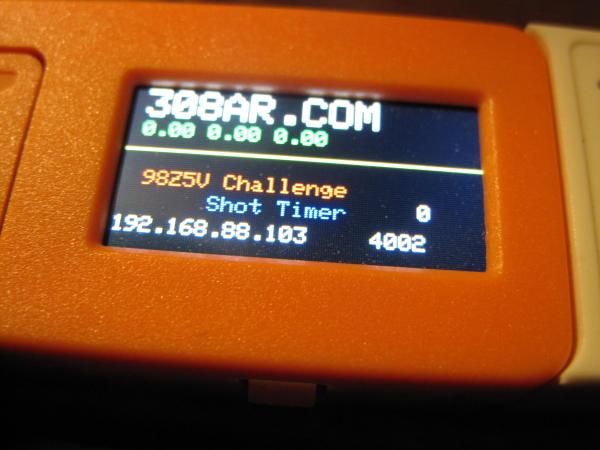
-
Anybody have a working RCBS Ammomaster Chronograph?
Lane replied to Lane's topic in Gear & Accessories
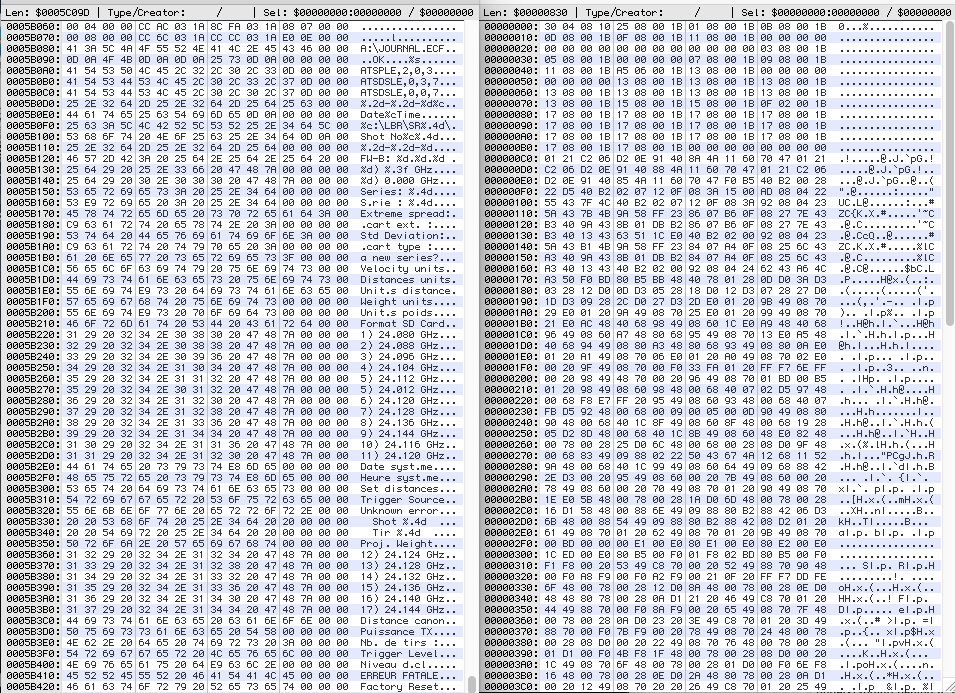
I ended up reading this over a few times to fully digest some of the finer points. There where just a few things it left out in terms of history; and that made me curious. I finally found this quick write up about the MK262 vs. MK262 mod 1 and it helped me fill in the gaps. https://www.ar15.com/ammo-oracle/history/mk262.html Realized I do have some of the Hornady 75 grain match projectiles; but none of the other options on hand. This listing on targetsports says 2725 FPS for the mod 1 ammo (https://www.targetsportsusa.com/black-hills-5-56mm-mk262-mod-1-ammo-mod-1-c-77-grain-otm-mp460556n9-p-110508.aspx); but 98Z5V says 2750 FPS. And higher... I think I remember reading hints about this in another thread around here. Those numbers are helpful; though I'm curious how close to the limit those are in terms of pressure. Is that 2780 riding a fine line? Have a few piles of once fired and freshly primed brass that I could get started with. While I'm rather range limited at the moment; I could at least try and hit the FPS number short term. Haven't killed the Labradar yet; but I did try to flash a custom modified firmware. It didn't take, but I also didn't try to change the version number, or otherwise force it in any way. That will be on my list the moment I see a new firmware update from them. I could try to mod the older update file, and flash that to see if I'm allowed to version swap. That's a decent option to "force" it to take an update if it does allow. Trying not to break it before I get some use out of it. I won't blame Canada. Quebec is indeed why it's confusing. As I was browsing the firmware binary for the latest update (pre-loaded); I realized it contains a fully french language translation in code. It also contains numerous features not accessable to the end user. There is likely a developer mode that may or may not be easily accessable. I tried booting the unit while holding various buttons; but nothing has changed yet. It does show up as NXP LPC on my computer; which is a brand and chip family. Just need to know exactly which model number still (and I haven't cracked open the case myself). Knowing chip number; I can buy a dev board and simulate the device externally as a means to safely develop updates on my own. Still rather impressed with the Labradar hardware overall; despite some unnecessary shortcomings in user interface. -
I forgot how long the clock runs... Which rule was that?
-
Anybody have a working RCBS Ammomaster Chronograph?
Lane replied to Lane's topic in Gear & Accessories
Another reason for min speed is using less powder. I'm not sure it's a different path to the same end (maybe the same path, and the same end)? 98 will probably stroll in at some point and expound about the minimum speed. I phrased a lot of my assumptions as questions, because I don't know for sure what he meant... And I don't wish to generalize in regards to something that's actually important. Open for discussion. -
Anybody have a working RCBS Ammomaster Chronograph?
Lane replied to Lane's topic in Gear & Accessories
The discussion about why a MagnetoSpeed is absolutely fine for load development is a valid one; and I welcome it. I've included the patent application for the MagentoSpeed, which does a decent job describing how it technically functions. I've got a solid Labradar update for later; but right off the bat, it looks like the data is the same as what MagnetoSpeed provides. There's apparently nothing magic about the data on the SD card in a Labradar. The only information shown is Ke and PF; but anyone can calculate those with Ke=(1/2m)v^2, and Pf=m*v(and likely formatted for ). I presume the initial speed is set based on the range at which you wish to use that particular load? And the minimum speed is a requirement based on the distance the projectile needs to stay at a supersonic speed? So something safely away from the transsonic range? For hunting loads it needs to be above a given speed (at distance) for proper projectile expansion; something which is likely to be a faster speed than simply supersonic? Just my guesses about the simplicity of a minimum speed requirement. You can always load up in charge until the desired result, or pressure signs. If you can't make the load work, then it's time for a different powder? Certainly curious to hear thoughts on load development. For clarity: one doesn't need to know the final speed of a load if it hits targets at a speed above the minimum? MagnetospeedPatentApp.pdf -
Anybody have a working RCBS Ammomaster Chronograph?
Lane replied to Lane's topic in Gear & Accessories
MagnetoSpeed does seem to be popular. If you only need FPS and ES, and SD it's a great choice. There were only a few minor things that turned me off that option. The change to barrel harmonics (while slight) was a large issue for me. I built a few rifles to look at that particular phenomenon specifically. Also, the relative simplicity of the device leads me to believe the MagnetoSpeed is something I could build myself in an afternoon. In fact; it's little more than an electric guitar pickup and a microcontroller. Probably wouldn't even need to sacrifice a guitar. Just run down to the store and grab some high power magnets, and run some coils up on the lathe. @98Z5V Did you get the V3 or the Sporter model? I've seen you mentioned having one; but not which model. The only further complaint I saw about the MagnetoSpeed; was the lack of time-stamp on data. My understanding is that would be virtually impossible without adding a Real Time Clock (RTC) hardware (chip or circuit board), since most low end microcontrollers don't contain that. The RTC also requires a backup battery (usually a Lithium coin cell). I messed around with the Labradar briefly around sun down. I must admit, that having already dug into the firmware details bailed me out on a few things. While I still view the unit overall favorably; it absolutely suffers from an engineer's take on what is acceptable in terms of User Experience in the field. There are a number of small things that are likely to be overly confusing for the average user. Every single one of those things could be fixed with a few hours work updating the firmware; something that hasn't happened in nearly two years for the Labradar. Shame. Full disclosure; it's not hard to learn to work around those nuances once understood. But I could see people getting really pissed off with all the fiddling around that's required to use it effectively. Nit-picky Technical Issues that would be really confusing if you didn't know why: When using the internal memory for storage; it won't store the full data set, only basic FPS data (so it's a real waste of ammo to use without a functional SD card). That in particular is mentioned in the user manual. There is no useful indication that the SD card is working; and it requires an old style, full size SD card (microSD in adapter didn't work for me, and the manual does say they probably won't). The internal storage also doesn't allow USB data transfer, so you can't even download that FPS only data file. Even using Bluetooth to access internal memory is overly complicated; since you have to view each individual shot record to "save" them to the tablet or phone... Otherwise you only see the shot string container with the number of shots (and none of the individual shot FPS measurements are inside). You still need a pencil and paper... The bluetooth connection absolutely does time-out regularly. You need to be a real ninja to get in; setup the device, and get back out (or just let the bluetooth time out). Don't expect to keep using the device over bluetooth after initial setup, and maybe arming. And quite frankly, you kind of need to use the bluetooth interface for setup of certain extreme configurations. For one test, I had to enter a projectile weight of 6,083.8 grains; having to do that from the front panel of the lab radar with Up and Down arrows would be a real snooze. The apps over bluetooth also take a long time to do a data transfer every single time you connect. That's not necessary at all. Just poorly planned programming. Another big UI/UX issue is that you need to setup the preference settings every time you want to use a new projectile weight, or shoot something in a different speed range. The speed ranges have dumb names without any numeric speeds indicated. To measure a can cannon, it has to be set to archery mode. To measure .22LR it has to be set to pistol mode. All that could be fixed very easily be allowing a settings group, or profiles to be stored. Since Labradar device already asks "Are you sure you want to create a new shot string?"; adding those necessary settings would be near zero effort. Then each phone/tablet app has their own special group of settings as well. From a hardware perspective, the USB port is extremely fragile. They really should add some other kind of power input option that's more robust. Bluetooth specification supports file transfer; so there's no reason to require removing the SD card, or connecting to the USB port to download the .csv datafile. Almost any other storage option besides a full size SD card would be better; those are getting really hard to find these days. A USB type A port would be ideal for a computer type flash drive. Hell; it probably doesn't require any hardware changes besides soldering in an additional physical USB port. There is a ton of empty space inside the Labradar the case. None of the connectors should stick straight out from the unit. It's just asking for breakage. In terms of Usability. All in all it's a great product that apparently is maintained by people who have absolutely no understanding of user testing, or customer satisfaction. They'd spend a lot less time on support if the product worked in a logical way. I saw one report of a Labradar user sending the unit back for repair to find out their SD card was the fault. How much did that cost? And who paid? I think almost every review I read said Labradar exceeds manufacturer's specifications in terms of capability; and I've certainly found that to be true on the measurement side (with my limited testing so far). Doppler mode (not triggered by sound) works like crap indoors (inside the house) as it constantly complains about missed shots. But it did work. A spring power BB pistol could be measured more than 50% of the time with the Labradar set to measure out to only 10 feet. It was even able to record some ricochets that didn't stick in to the backstop cardboard (those may have even caused more complaints about missed shots). That is impressive when you consider the manufacturer claims it doesn't work indoors. Blame Canada. Honestly nobody should have to endure this crap to use a chrono (that otherwise works flawlessly). Full Full Disclosure. I finally got it to work (I think). But I spent more than 24 hours trying to find a fully functional, full size form factor SD card that works in my Labradar. There are multiple fault conditions with SD cards; and none of them inform the user in any useful way (blinking a blue LED is not useful). I have one card that will write empty .CSV shot data files; and crash the Labradar if you try to shoot and record data to the same card. It will never record even a fragment of data from a single shot. Why? That data is certainly already buffered. Hell; the internal memory should store a single shot string at the very least. WTF? Others SD cards are just fully ignored; and the FPS only shot data is stored to internal memory without warning. Those full size SD cards I have work elsewhere, but not in the Labradar; despite meeting the specs explicitly. There are many other fault conditions that could be indicated in some way as well. Failed shots could store partial information at the very least... It's klunky. I have a much longer list, but; fix your firmware @#$%^% *^%%$. Or I'm going to do it for you.


-
Anybody have a working RCBS Ammomaster Chronograph?
Lane replied to Lane's topic in Gear & Accessories
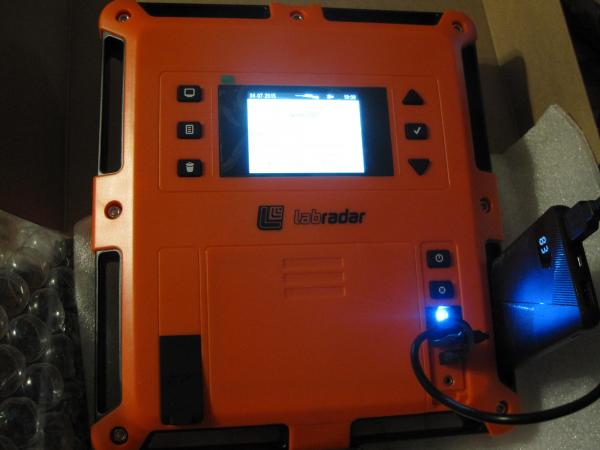
Thanks for the tip. I really did think a lot about those magneto speed units; the Sporter version is now about the same price I paid for the useless RCBS (but I'm not sure the cheaper magneto speed option was even available when I bought the RCBS chrono)... At the end of the day; the tech misses the mark on a few things I care about. While I would still like to know what's up with my RCBS unit, I have mostly given up hope. I would happily repurpose the optical triggers (likely photodiodes), if I had an idea what the driving voltage was supposed to be. I assume somewhere in the neighborhood of 27 volts. I presume that is the problem with my board/head unit; boots up, and otherwise acts like it should function... Since I continue to need something I can actually use; I just ordered and received a Labradar. From what I can tell, it does meet every requirement I had; and is similarly unlikely to get shot. Started reading (inside) the firmware updates they've published online. Even found some internal pictures. While it's just a hair too blurry to be sure; it looks like an NXP brand ARM cortex chip running the show. That helps a lot in terms of making sense of the firmware files. One thing I noticed right off the bat is that the radar frequency settings might be possible to modify in firmware. The version 1.00 firmware is almost completely empty; so there is some kind of base code stored on the unit; assume a full blown RTOS. The take-apart images also show a JTAG port; so that default code might not be off limits. Seems like an extensible platform to say the least. Beyond that; I find it strange they use the nomenclature "a : /" file paths for the internal storage (and OS?), and "c : /" paths for the SD card (noticed in the firmware hex as well). That will certainly help in determining what kind of operating system is behind the scenes. Not that I have a lot of NEED to know about that stuff up front, it is interesting from a technology perspective. It's pretty clear they are using a massive array of 24 GHz antennas on the receiver side. Even basic development boards for that kind of 24GHz speed tracking doppler radar are in the same price-range as the complete Labradar unit (so this wouldn't be something I could easily build myself for less). The Labradar supplied USB cable was dead as a doornail. That freaked me out at first since I was trying to power the unit with it. Swapped that out, and it's been working fine. It sure does eat batteries though. A 5Ah USB charger was down to 80% in about 20 minutes; that's without ever firing the actual radar, just changing settings in the unit. I can see how it would be almost useless with actual AA batteries. You can see in the picture; the cheap USB pack I have securely jams into the plastic body of the Labradar, so I don't have to worry about it laying around, or falling and breaking off the USB connector. They should just create an internal cavity for power packs, and the USB port is just plain awkward where it is currently located. Connected a $30 android tablet over Bluetooth, and it seems to work fine for control and review of data. Actual range report coming soon. Still interested in knowing the voltage output on the RCBS if anyone has one; but I totally understand that's a niche request that may never be fulfilled. Int-Photos-2503420.pdf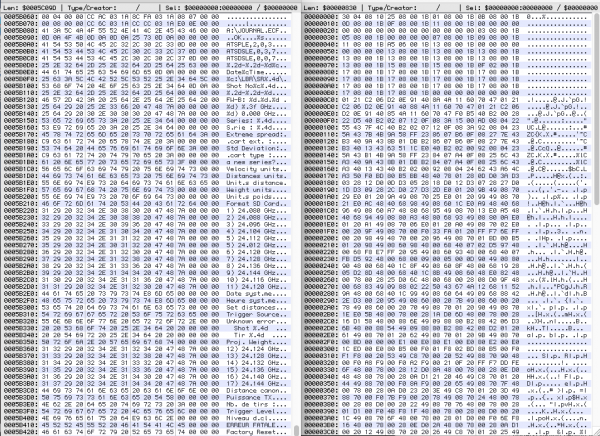
-
Signed, sealed; not yet delivered. Seriously; sealing the blanks is more difficult than dialing in the dies. A thick sealant is key; and I'd be curious to know how difficult it is to ruin a round by dripping too much enamel or varnish down inside. Quite sure I did ok this time, as I was careful to let it get gummy before application. To get a better mechanical seal, it would likely require a third die; or at least modifications to one of both of the Hornady blank dies. I'd prefer to use a sealant that burns off clean. Overall; the sealant seems to be the most important issue when making these (without being able to get a mechanical seal). Thanks for the tip; it was well worth the experimental effort... Certainly something I can improve on moving forward.
-
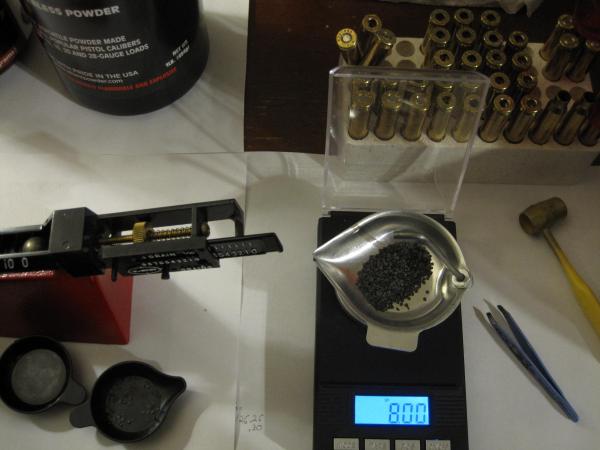
Awesome! That is some hilarious sage advice about Trail Boss. I had seen 4.0 grains listed as a load for 55 grain FMJ in a .223 (at 1074 FPS); so I started there. I did run a single blank load of Trail Boss the other day, and it was just about right on with four grains. I had another load of Trail Boss that fizzled out for some reason. Since I'm using up brass I wouldn't use for anything else; that's not a shock. A few of these had some janky looking primers the had deformed on insertion. From the looks of my fired brass; these aren't likely to reload ever again either. There are scores in the neck where it was crimped; and I'm not even sure annealing could save them for another run. Certainly not very many loads... But on the other hand; I don't see a reason the die needs razor sharp edges either. Think I found the end with Unique; but I want to repeat those loads to be sure. Seven grains of Unique seems to be fine, if not a bit hot. The final load of eight grains that I tested made a sealed can explode mid-air; which is a neat trick (and I didn't even get wet). Since the can bases were already reinforced; that might be a bit too hot for some applications. Again; I want to re-try those before I'm confident where it matches up with a standard blank. I have a pretty sweet bruise on my shoulder, so it's become more difficult to certify what a normal load is by feel. And "by feel" was probably a really bad metric to begin with... Pulled out another box with some janky primed brass; same headstamps (primed it myself, but these are my rejects). Always meant to fire them as some kind of plinking rounds. Might as well fill these with the remaining question loads; including a ladder of Clays. Starting to think this is the very last excuse I need to see a labradar is in my future; how else could I qualify these? Doubt many people would try threading wet hot loads like this through an optical chronograph.
-
I bought one "new" (I thought it was new) quite a long time ago. But it never worked at all. Not even once. I called the company and they just gave me some non-sense about how the sun needs to be bright enough; but not too bright. And they couldn't give me any technical details because it was made by another company (in China). Well. I'm mad. I could have bought a real chrono for that price... If anyone has the ability to measure the DC power output from the RCBS head unit on those 1/4" connectors it would be helpful to me. An audio cable, or electric guitar cable and a multimeter are the easy way. Taking the board out is nearly impossible since it's wired to the buttons stuck to the case shell. If you measure on a guitar cable you'll likely find the voltages are backwards (sleeve is positive, tip negative?). I suspect my unit is under voltage by a long shot; even with a new 9V battery. If I know why mine is broken, I can build a new driver circuit in the short term. Otherwise; this thing is going to be another experimental "guess and check" kind of job. The circuit board inside the RCBS unit looks like a bag of Lays. About 30 chips; all from mid-80s technology. It's horribly overbuilt; and has a mere 10MHz processor. This thing is not special in any way other than age of technology; but mine never worked at all.
-
I had considered it; but didn't think it would affect performance in the short term. Fired them off a few hours after posting that picture. Made another set already without buckling any brass. My procedure seems to be a few partial but firm rams (each a little further than the last until the pre-adjusted die hits the shell plate); that to crimp in the star, and then a few more with the finishing die to crimp the butt-hole closed. Yes. These blanks were for ballistics testing (and to work up recipes for powders I can actually buy off the shelf; but couldn't find qualified data for online). Blank reloading data appears to be pretty scarce... While Unique was mentioned a few times in other forum discussions; nobody offered even a starting weight. I'll post my results when I have some loads that compare to a standard M200 blank. I didn't want to use that specific "phrase" in my post; because there's no reason to give them ideas for banning things... But I can't find any reason to suspect it's illegal here in NY. They did ship that thing right to my door without any issue. Those first few turned out to be pretty light loads of Unique compared to regular M200 blanks. Tonights batch are considerably more likely to compare to a "normal" blank load. Then I'll work up from there until I blast through a can. I've been using a square of gorilla tape on the bottom to make cans stronger. Going to work up a load with Trail Boss next. Should be similar in performance; but I'm not sure which will be cheaper. Trail Boss is only 9 oz. in the same container that typically holds a pound of many other powders. I have Clays as well; but QuickLoad data didn't look super favorable in comparison to the burn rates of Unique, Red Dot, etc. I'm going to be extra careful when testing those loads with Clays.
-
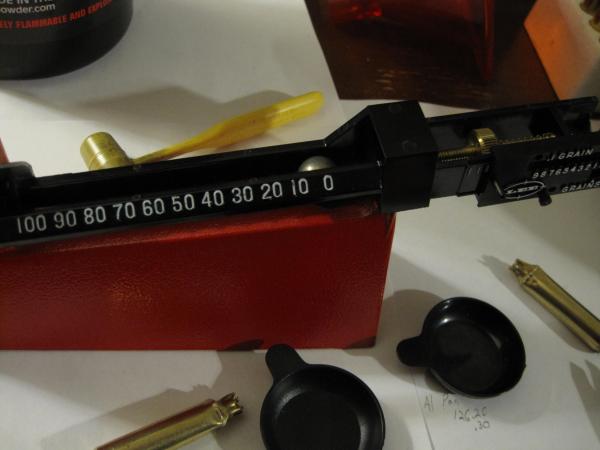
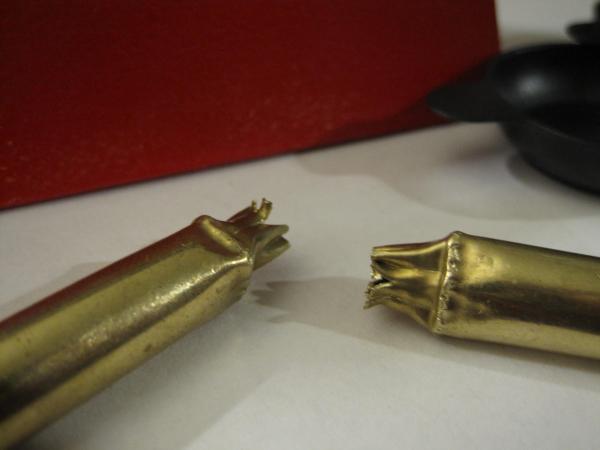
Mistakes were made in the process of trying to make blanks from once fired brass. I crushed two just a bit too hard; but might as well rescue the powder. Powder weighed the same for the re-made loads. That star crimp and close isn't easy to do. I really would like two manual presses next to each other; with both dies side-by-side if I wanted to do this more often. I can't see it ever working well in an automated or progressive setup at home. Still want to crimp those three with hand pliers after the fact... But it's a ladder load of Unique. Have a few other things to try after I see how this works out.
-
Welcome from NY.
-
That's why I mentioned a center foam cutout. I think it could really make that work at 100+. I'd be worried about anyone touching that in "baggage" as I saw it... I've often filled gaps with cut out pieces of foam, just to make sure nothing touched things that they should not. In a box that tight. I'd be stuffing in t-shirts at the very least. Maybe you don't need a suitcase. Just clothes in the gun box... Mmm; smells like CLP and Hoppe's in my pants.
-
I see a few empty spaces that might fit more ammo or magazines. A well cut foam insert would make this really interesting. When you say #60 and up; what's the upper limit? Can you get past #100?
-
I looked at the options briefly; for assembling something from off the shelf parts. Unfortunately I don't have a good way to test something like this here. I have at best 200-300 yards of semi-line-of-sight available. I might be able to test something at a park though; there are places I can get a better line of sight distance. The biggest issue I see is that there are some high angle shooting setups; that might require an antenna adjustment. Usually; to get that kind of distance you're talking about a directional antenna, which would need to be angled up towards the shooting/viewing station. Anyway; I've seen some WiFi units that advertise a 7 mile range line of sight (12,320 yards). I can't guarantee a cell phone would be enough on the receiving end; one might need two long range units to work reliably at extreme distance. That said; I'm guessing 800 yards wouldn't be a big deal at all. I've seen those long range units for about $20. That would still need a small computer, power source, and camera. I'd guess about $100 would make a pretty functional build. On the other hand; it might be a LOT easier to just put a cell phone in a plastic ammo can. Most of them have reasonably high resolution rear facing cameras. One simply needs to serve that video up somewhere; and probably add an external battery. Beyond that; just don't shoot the target camera.
-
Care to share any bread recipes? Welcome from New York state.
-
Problems with failure to feed AND failure to catch bolt
Lane replied to JWard's topic in Building a .308AR
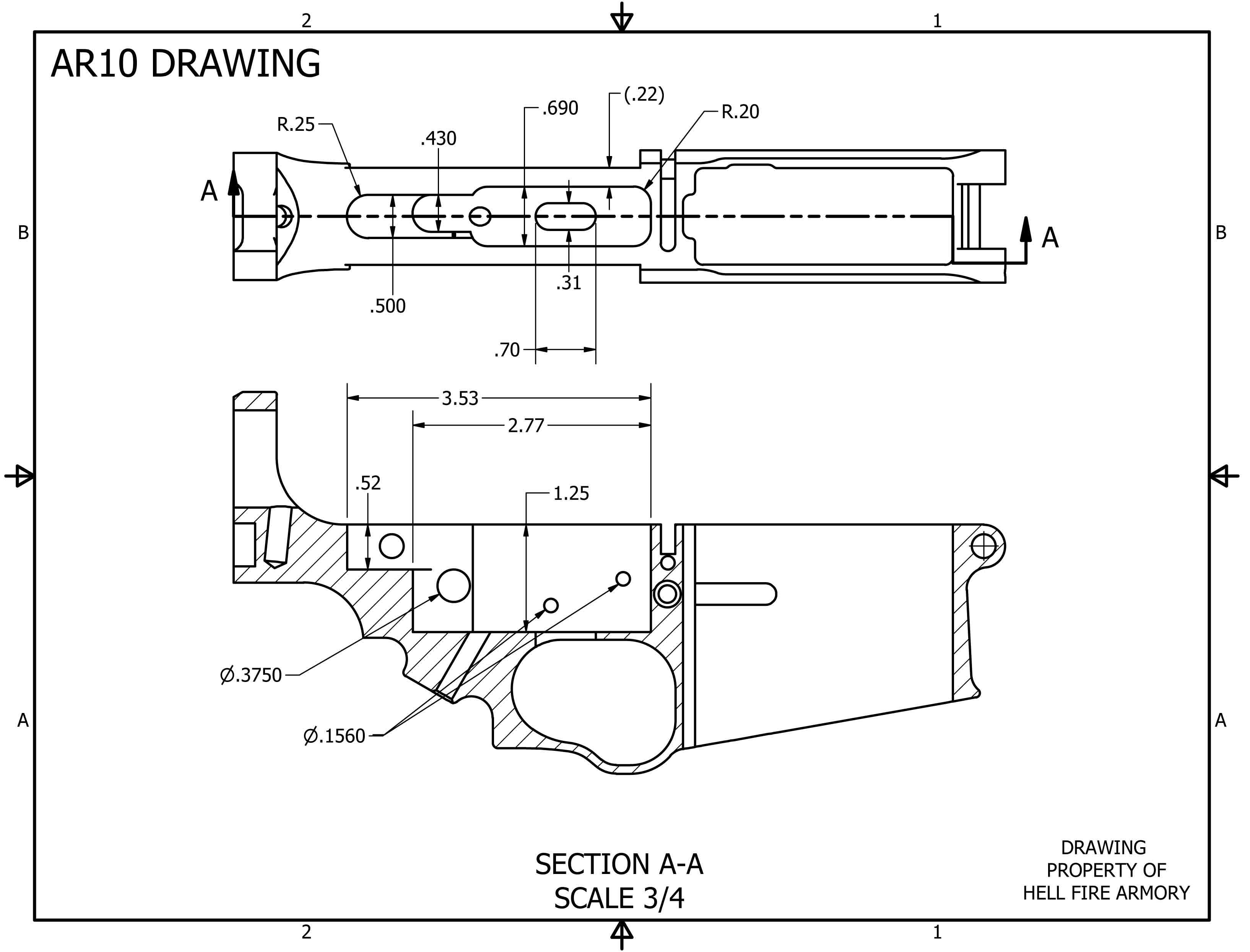
Since I can't edit the error in my post about the "weird" 80% lower cut I stumbled across; I will link that here. It was labeled "Hell Fire Armory". It's not that those FCG locations are directly related to the mag-catch issues; but they may be indicative of a larger problem in the 80% 308 world. I still don't know enough about the variations between various upper receivers' geometry to know if they were even legitimate modifications; or just oversights in "copying" a design. I've long been curious if those changes were on purpose, to protect in terms of legal liability; perhaps by not being the "same" as the original armalite pattern?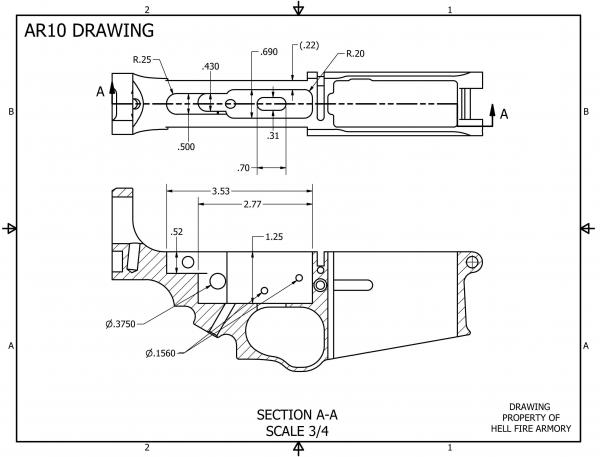
-
Problems with failure to feed AND failure to catch bolt
Lane replied to JWard's topic in Building a .308AR
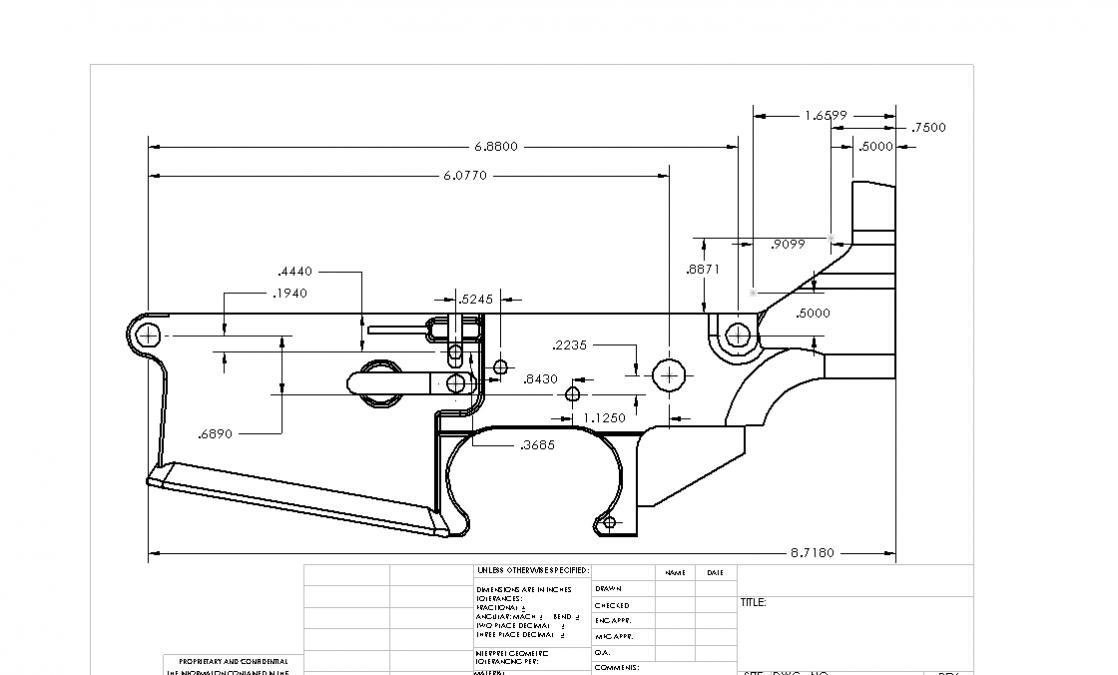
The 308Lower.pdf file is a slant style; so it may not be directly applicable to all variations... But perhaps it is? It lists the mag-catch slot as being 0.250 in height, and also contains enough references to the vertical position to compare with other files and physical lowers. The other drawings are also slant style; but the quick checks I did all matched each other in terms of those measurements. One other thing to consider. I measured my slot to be 0.250" (with the coating in the slot). There may be some slight variations in that measurement depending on the finish (sloppy machining tolerances, etc.). My actual mag-catch only measures 0.245" in height which makes complete sense; because it needs clearance to operate. If the mag-catch were in fact 0.250" tall, it would have to be hammered in, would have a serious friction fit; and be completely non-functional. 308Lower.pdf AR_10-2.pdf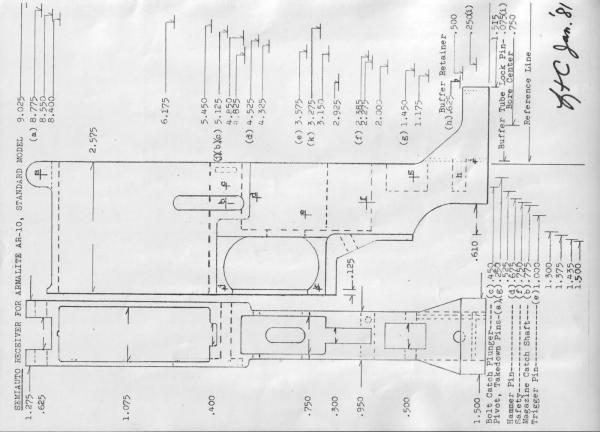
-
Problems with failure to feed AND failure to catch bolt
Lane replied to JWard's topic in Building a .308AR
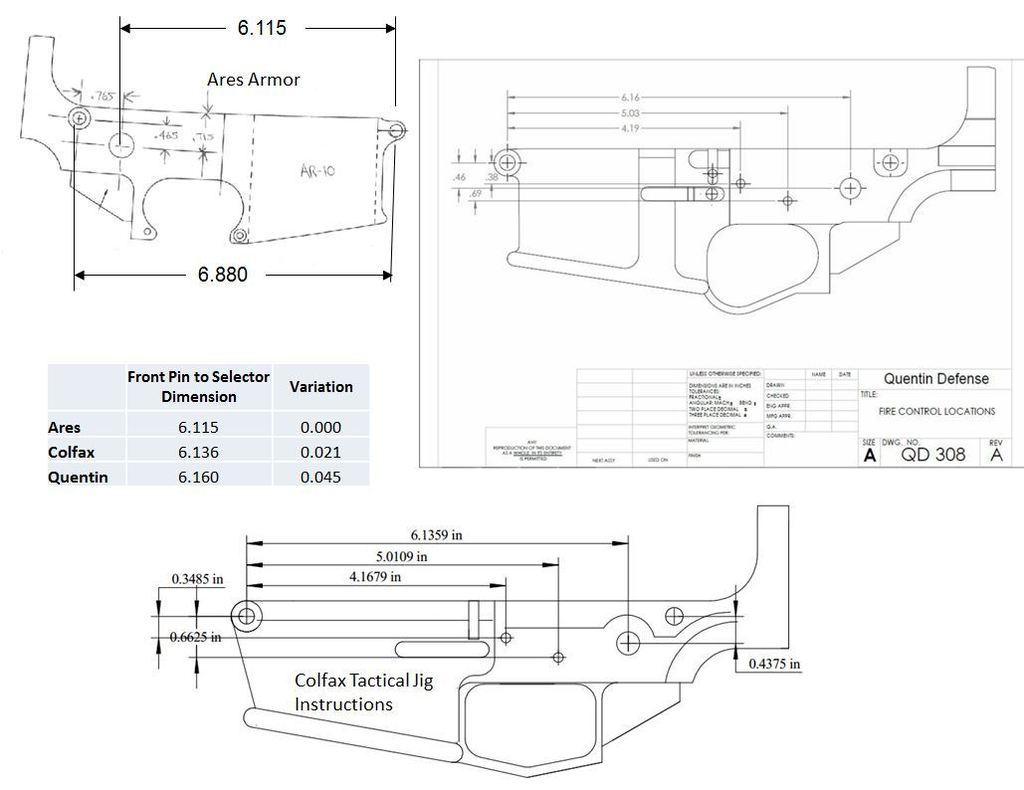
Tried to edit that last post; but it looks like I was wrong about Colfax Tactical being the weird one. I'll see what else I can dig up in terms of "strange" 308 lowers. I know I have a few sets of full prints of unknown origin; meaning, I don't know what particular brand or cut lowers they are supposed to match. -
Problems with failure to feed AND failure to catch bolt
Lane replied to JWard's topic in Building a .308AR
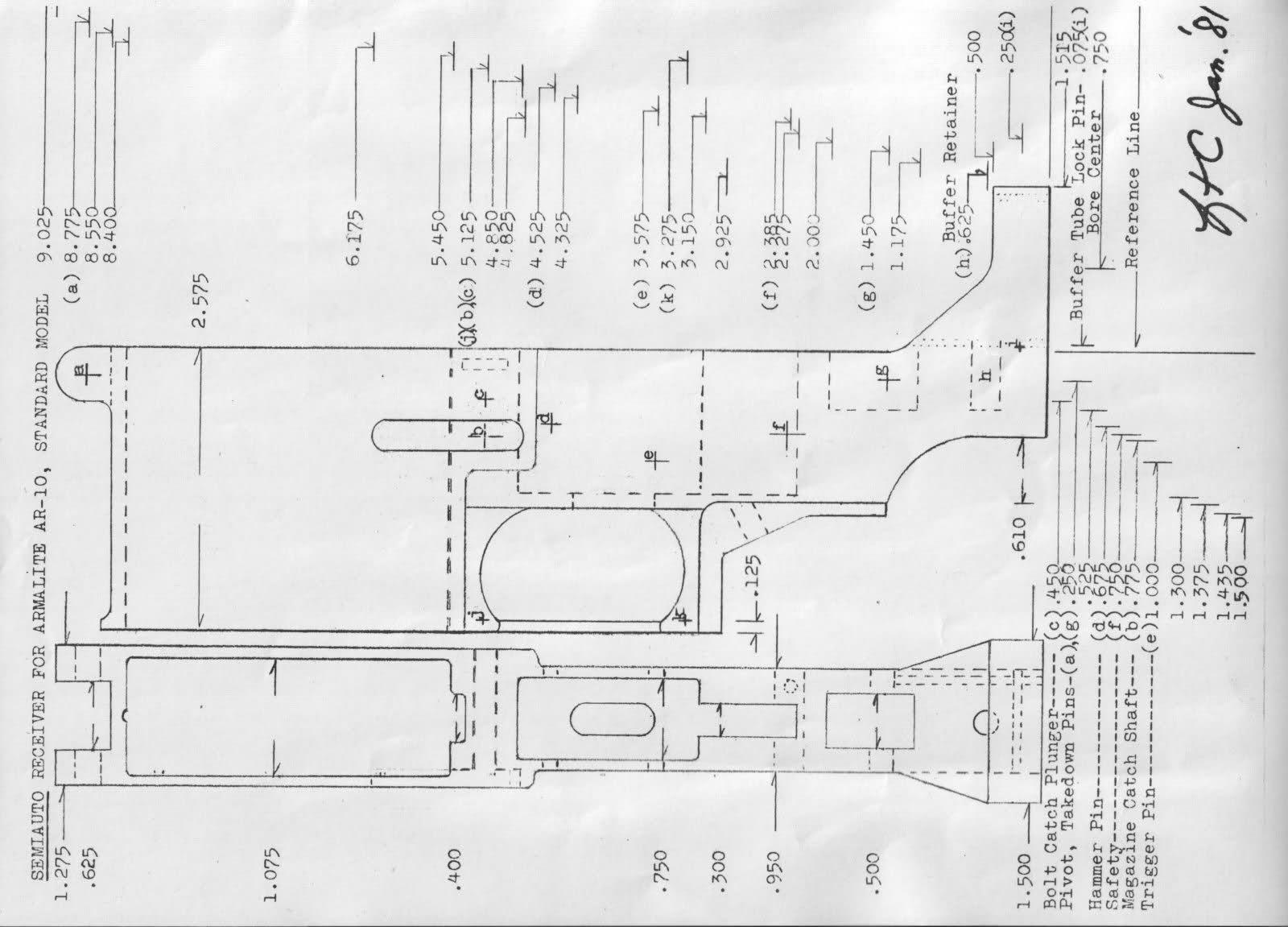
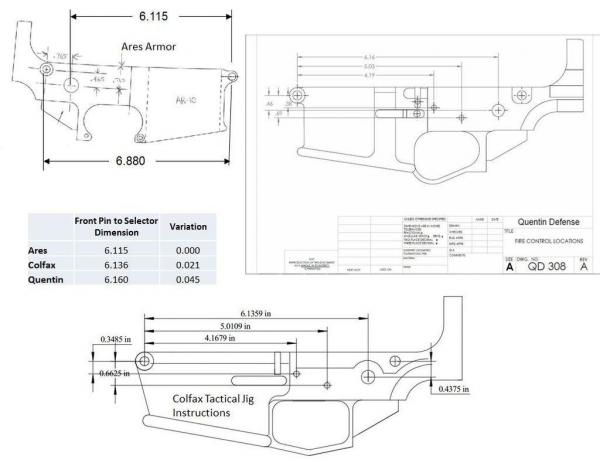
That's an interesting question; and would likely require a decent amount of leg-work calling around. Some companies might not be forthcoming with that information out of the gate, but it's worth a try moving forward. The best place I can see to start (in this forum at least), is looking for forge marks on the lowers, and also trying to identify any unique cuts in the machining process. There is a good chance that will help sort out at least some of the differences between lowers' manufacturers. I presume there will be some sub-sets that match cut and measurement between different manufacturers. I can tell you out of the gate, that Colfax Tactical had one of the most "unique" cuts in terms of FCG pocket position; that may or may not be officially related to the mag-catch issues though. When I was digging for that information (FCG pocket locations), it was rather scarce. That was considered proprietary information by some companies over the years... These blueprint images aren't "super" helpful at this point in the conversation, but here are a few semi-related files I had laying around. I don't know off hand what the first image is supposed to be (is that Armalite measurements?); but it has a slant (not radiused) buffer tower... What's interesting there, is that there is a reference to the mag catch listed. The next question is; are there different height mag catch inserts? Are all the mag catch slots the same height; or is that where everything starts to go off the rails? If the official reference point is the bottom of the slot; and some manufacturers use a non-standard height mag catch, it may have compounded the offset issue on those particular lowers. One other thing that original poll never really addressed; is if there are proprietary upper cuts as well. I never came up with a well defined way to measure that. It could possibly be done with a series of measurements; but my ultimate curiosity was: "does the BCG position vary vertically in different upper receivers". My guess is, the answer to that question is "yes"; and that those should be sorted out. There should be an upper (some uppers) that are compatible with 0.700" measured lowers, and something else that works on those in the 0.640-0.650" range... Maybe time for a new measurement poll to ask the same question about mag-catch height; but also what upper receivers are in use (mated and functional) on those particular builds?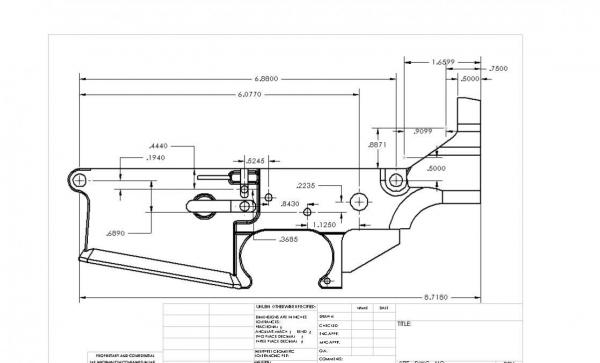
-
Problems with failure to feed AND failure to catch bolt
Lane replied to JWard's topic in Building a .308AR
I believe this is what you're looking for? The mag-catch height thread? -
Saw a bunch of fireflies earlier; but can't figure out what's up with that. I saw them early evening, and then not at all a few hours later. They were much more prolific in grassy fields nearby.... (just trying to stay "on topic") Finally dove in. Full on swan dive; belly flop. Sweet Sue's whole can of chicken for $20. None of them $5.75 deals 'round these parts...