
Lane
-
Posts
1,042 -
Joined
-
Last visited
Content Type
Profiles
Forums
Downloads
Gallery
Store
Everything posted by Lane
-
I can give you measurements off mine; but they always needed one or two 1/8" shims to make it work right. I've made lower receiver blocks from laminated 1/8" plywood on a drill press with a compound table. Cutting wood that way with a milling bit is very easy. Do you have plans or blueprints for upper blocks; I never found any myself?
-
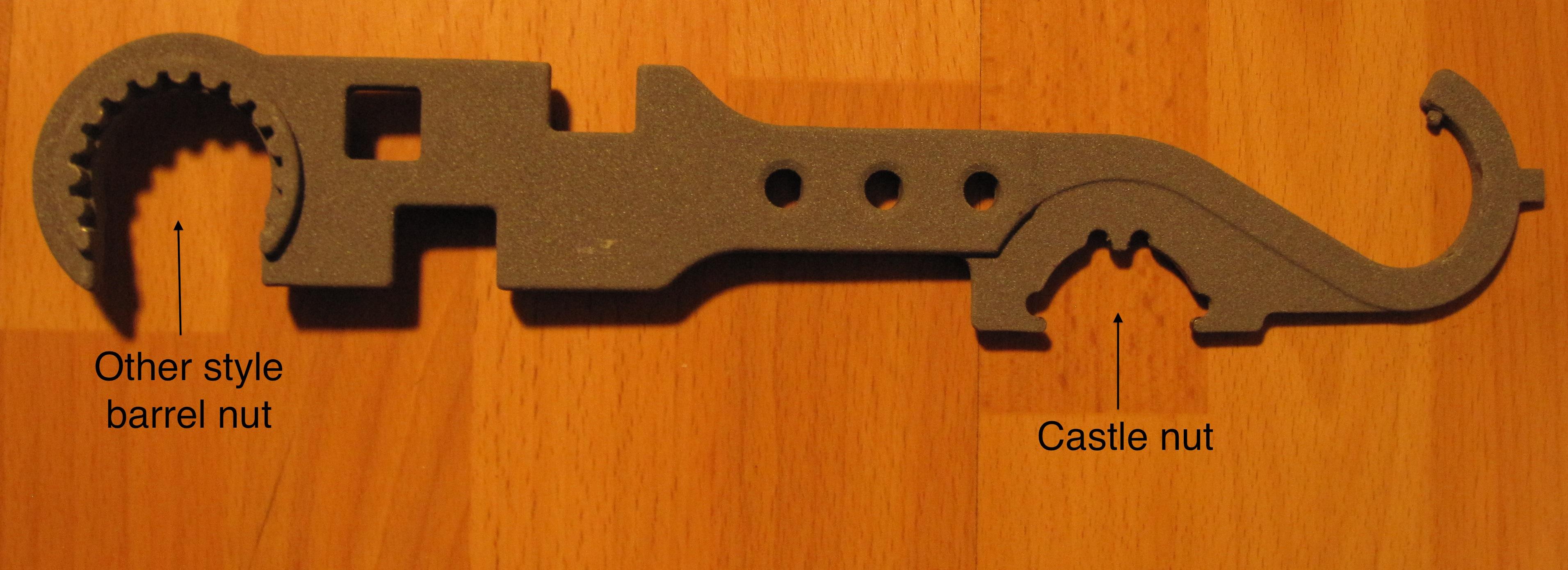
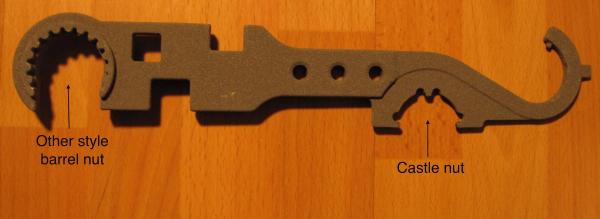
Good to hear; that will save you from any kind of estimation. As @mrraley was describing; the other type of barrel nut requires an armorers wrench (pictured), though the one I own won't tighten these types of barrel nuts (without the slots for the gas tube). What did you do about the castle nut on the receiver extension? I see you have it fit already; did you tighten that yet?
-
I'm not sure what you made this out of (or how thick it was); but have you ever tried heat treating steel? You would want to bend it back first; then heat it up beyond the curie point, and quench in cold water. I've done it with a standard propane torch more than once (might require oxy-acetelyne if it's too thick); and it's not all that difficult. The curie point can be tested for by trying to stick a magnet to the red hot steel. If it doesn't stick at all, you're hot enough, and can quench right away. You could temper it after that by heating lightly; but it's not likely to be necessary in this case.
-
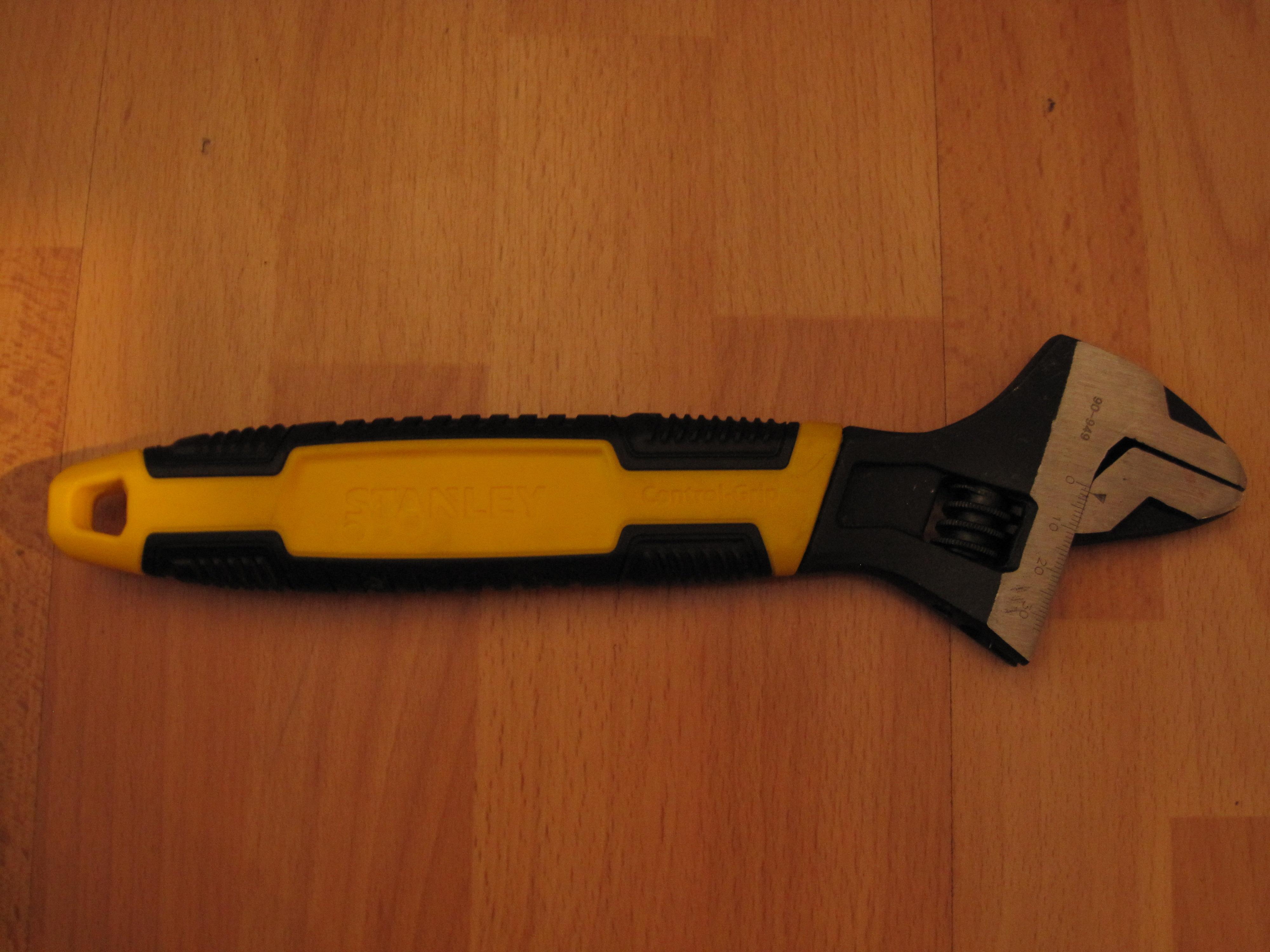
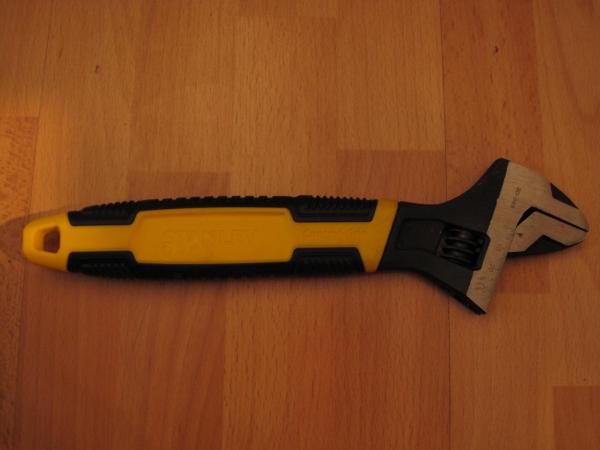
I've used a Stanley adjustable wrench for this that I found at Wal-Mart. The problem here, as you may have noticed; is that the barrel nut typically has very narrow slots for the wrench, nothing I had in the house would work on it. If you're already confident making or modifying tools; you could cut a square hole in the handle for a 1/2" drive torque wrench. Just make sure you measure and calculate the torque scale correctly based on the location of said hole. I didn't bother with this because I've done so many head gaskets and valve covers that I have a reasonably intuitive feeling of what to shoot for in those torque ranges. Be aware; especially if your barrel nut is steel, that over-torquing could harm the upper. I've also managed to bend an aluminum barrel nut at the point where the screw holes are tapped; which meant the handguard was very crooked, and thus unusable. Had to buy a replacement nut for that build; because I was chasing that perfect alignment and didn't respect the static friction when adjusting for that final alignment. I would recommend tightening once, and then trying to decide how many shims are needed (did you only get one, or are there two stuck together?). Try to get it right by the third try, or else you're going to have to do it four or five times. I typically stop a bit shy of alignment and test the handguard with two or three screws, remove it; adjust again a bit at a time until it's just perfect. If you do this; try to stay a bit shy of the max torque because it's not difficult to take it too far if you're watching alignment. I'm not sure what product everyone else recommends specifically for this; but I've always used anti-seize on barrel nuts. If you guess, and torque less than 35 ft lbs; your nut may come loose in a dangerous way after shooting a few rounds. Don't do that.
-
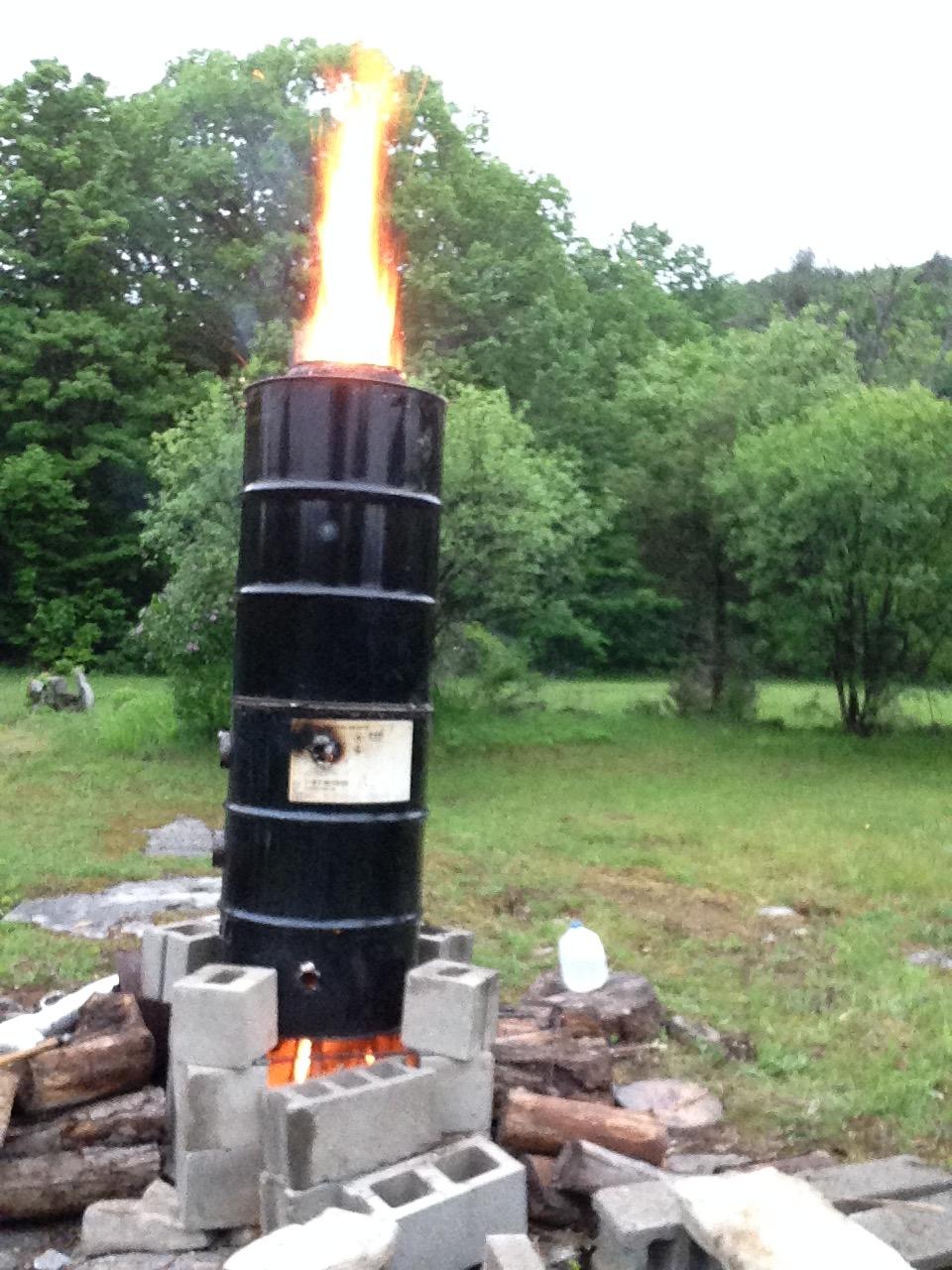
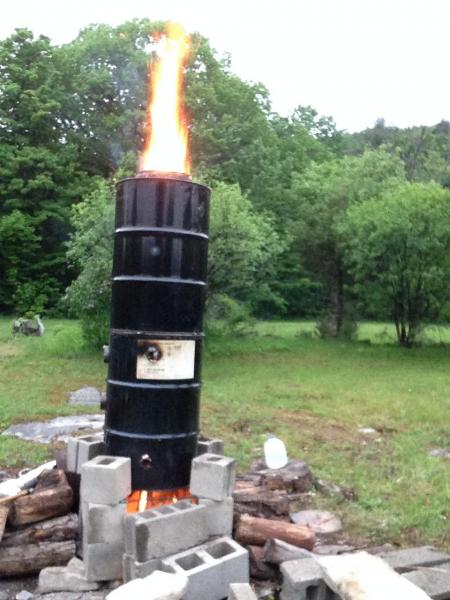
All true; I was surprised by the versatility of the design in the end. I did play with forging briefly last fall. Cast iron would require a lining and trap door; but neither would harm its ability to be used as a lime kiln. I originally looked at zirconia brick; but couldn't find it locally. Importing a pallet from china was an option, but that design wouldn't have been very portable. This contains 4" of kaowool, both the standard 2300F; and 2600F zirconia in the hot zone. I originally expected to need forced air and/or coal to hit the required temperature; but it runs fine on whatever wood I can shove through the 4" access ports. The smaller ports are usually plugged, but can be used with thermocouples if I need temperature monitoring. The first few firings (including the one shown), I tried to top load the furnace. If you couldn't tell; thats relatively dangerous, and ultimately proved inefficient in terms of fuel consumption as well. This spring I'm planning to drop it off the pedestal, since that proved unnecessary. I also want to design a new cap so I can adjust air flow; even with a full load of limestone it pulls more draft than I would like. With enough hands on deck, there is no problem cooking limestone and forging at the same time. There was even enough insulation left over to build a casting furnace as well.
-
I own one of these; and I can't recommend it to anyone. While the Primary Arms FFP scopes are heavy; I'm pretty well dead set on the Mil dot scopes for $229 in my next builds... Bought this Nikon because I have a 4x fixed magnification Buckmaster from years ago; that has the most perfect optics I've ever seen with my eye. This 4-12x scope does not compare in any way at all. Also; that generic BDC reticle is annoying. I was able to tune up some memorable numbers across loads by adjusting the software and sight in distance. That process was terribly annoying, and not something I would want to do in the field if I adjust the magnification. Furthermore; the lack of a side focus adjustment (mentioned by @Lonewolf McQuade ) makes it simply ice cold in my opinion. It really depends on your usage though; I'm fine with its performance in a specific application. It does work.
-
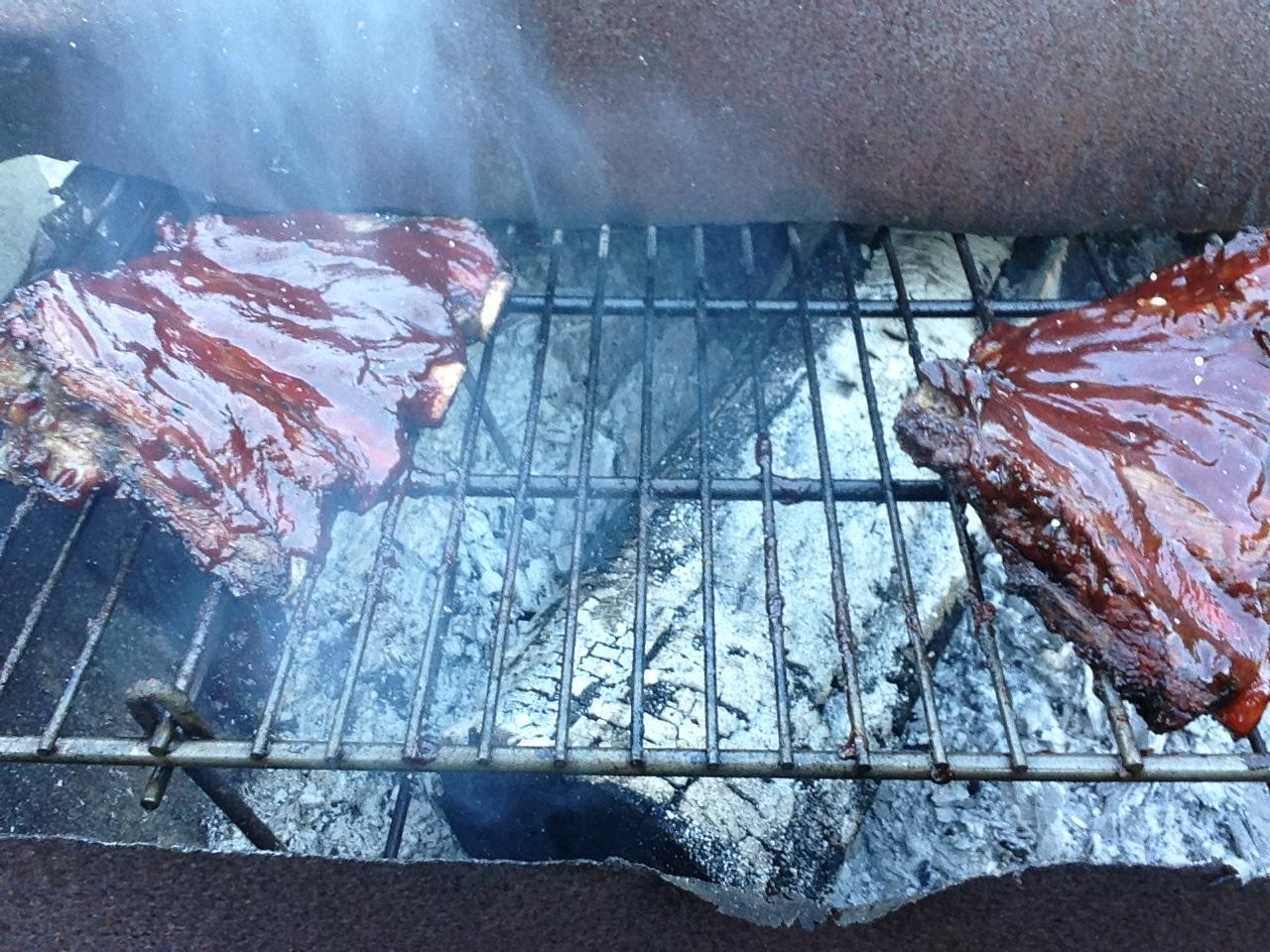
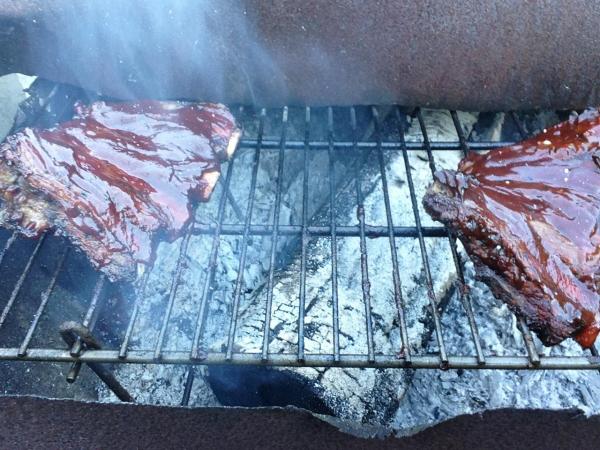
This was from last summer; during my seven days of wood fired meat binge. A little bit of wood ash never hurt anybody... That's a few year old maple log that has local history, don't remember what sauce I was using; didn't seem to matter much with a wood fire. That week ended in a bad way unfortunately. Has nothing to do with the lime kiln I built around the same time; cooks limestone at about 2000˚ F. It runs with a cap now of course... Side charger; and gets to 2100F just fine with lawn refuse; I simply don't need it to be that hot.
-
You beat me to it washguy! Here are two other threads that cover the gas tube issue for reference:
-
Looks like you have the headspace issue cleared up; just didn't want to make any assumptions there... That looks like a short gas tube to me; but I didn't see any other mentions of that in the PSA specific threads. I'll see if I can find some gas tube comparisons for you. In the mean time, here is an FTE post that sounds like the problem you think you have at least:
-
Generally speaking; your bolt should stay with the barrel. I wouldn't consider trying this without checking the headspace. I'm not a PA-10 expert, but I've read some other threads around here about it in the past. If you take out your BCG and post a picture of the gas tube protrusion into the upper; it may be helpful in diagnosing your issue.
-
Lane's: jtallen83 inspired 21.750" 300 AAC Blackouts
Lane replied to Lane's topic in 300 AAC Blackout
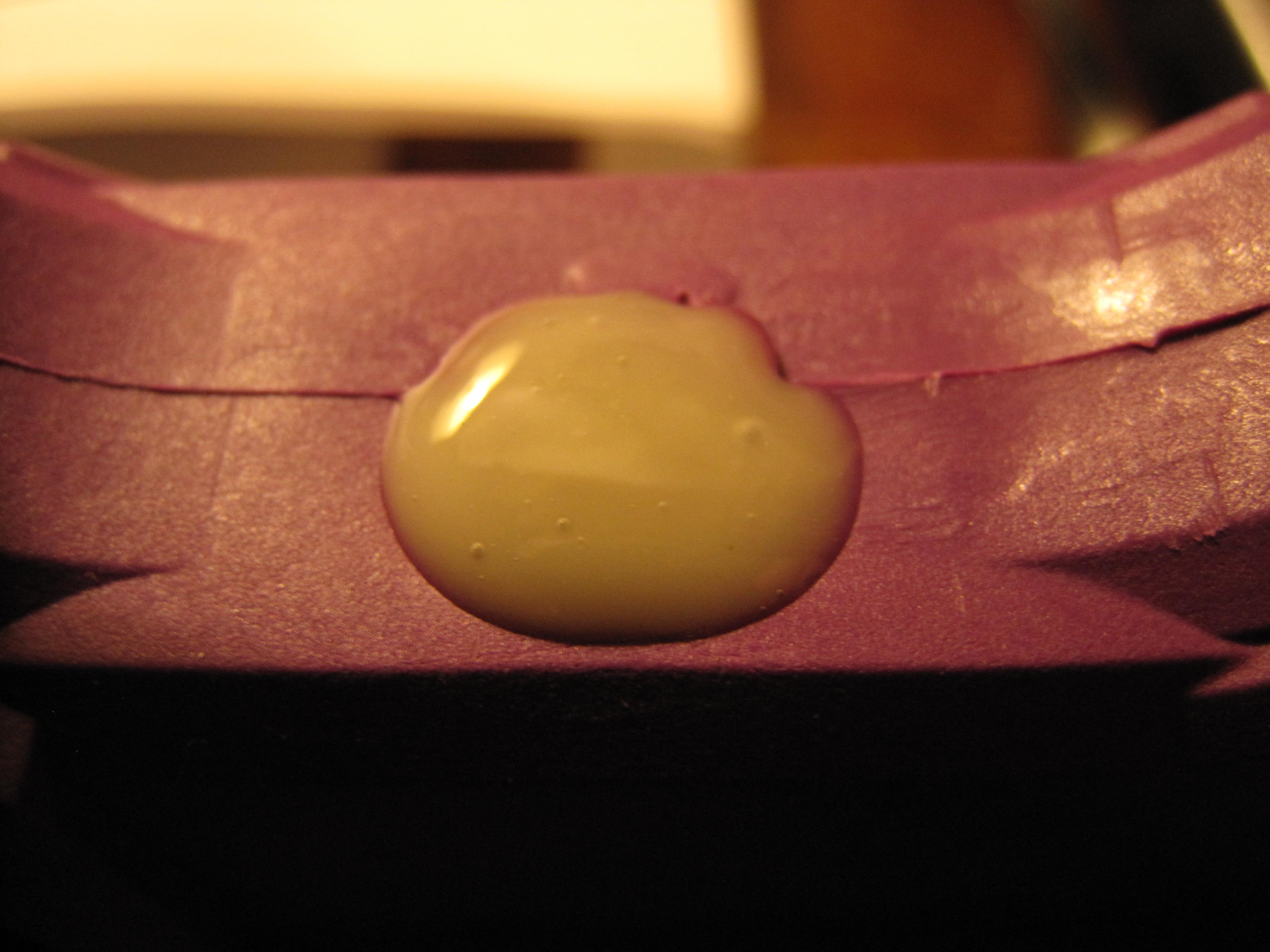
Vaughn talks about IMR powder in some depth. His understanding is all IMR powders (at that time?) are very similar, single base powder; and mostly differ in grain size. He has a nice table; and 4198 is the smallest at 0.026". He didn't list 4227, so if you ever get a chance to measure some; that would be cool. I found some redneck loads of Lil Gun in 7.62x39, so that might make the list. Someone mentioned it was a shotgun powder? Slow as pistol powders go? I can certainly work on my own data in the burn rate department... Looks like RIT dye, or RIT synthetics dye is used to color polymer80 and Magpul products. These will still be black rifles; but this particular one will be purple on the inside. -
Lane's: jtallen83 inspired 21.750" 300 AAC Blackouts
Lane replied to Lane's topic in 300 AAC Blackout
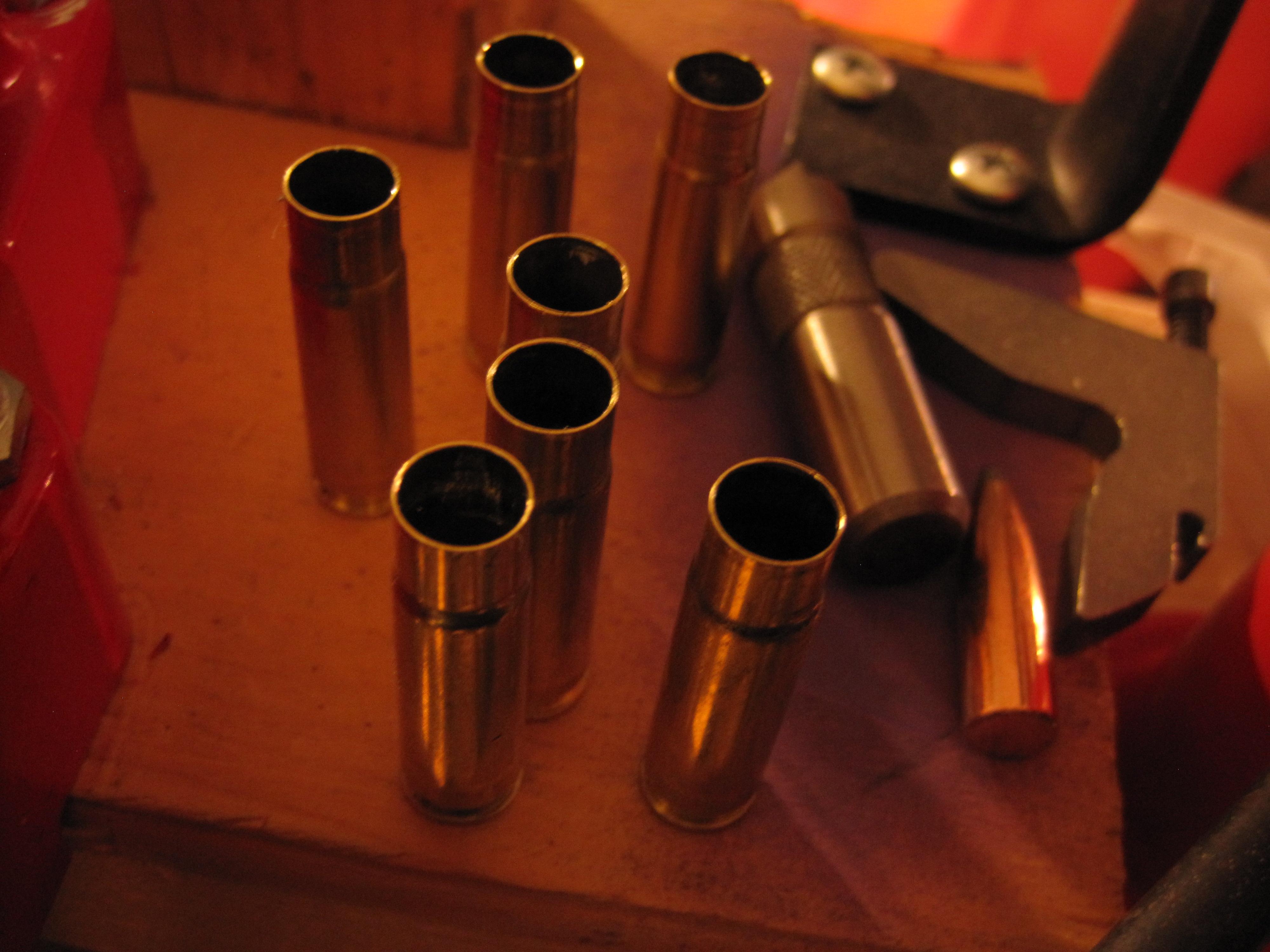
Read about half of Harold Vaughn's book "Rifle Accuracy Facts". Turns out he used a one dimensional piezo accelerometer, which would be reasonable to acquire. He also took horizontal measurements and found that movement to be about 1/3rd of vertical barrel movement. The same 3rd order harmonics were dominant; something Mallock talked about back in 1901. Vaughn actually advocates damping at the fore end of the barrel to tune out third order vertical vibrations. I have a whole list of comparisons or interesting facts from what I did read. A lot of good data regarding chamber clearances; and that he observed almost a half inch of throat erosion after a few thousand rounds. He also agrees with Long, that a full case of powder is necessary for accuracy. Some things I skipped, because they didn't apply to me (can't use a muzzle device, scopes can't rattle, etc.). Other things won't matter in these specific builds for other reasons; I'll circle back on those later. It seems like barrel bedding and nut torque are going to be serious concerns. His experience was that even permanent (red?) Loctite on threads broke after a few dozen rounds; might still be worth a try in an AR barrel nut... But honestly; he calculated recoil to be some 500g in front to back vibration (gravity units, not grams; all his measurements are imperial units); that's some serious "impact" on an aluminum upper receiver. I trimmed up the few 300 Blackout test cases I had left to max length, + 0.002 for the time being. All cases measured +/-0.001 in height between different rotations of the case, and the whole lot. These first few cases will be used to test the chambers after casting, and find the bullet seating to set overall length for each projectile I have. Vaughn argues that sizing all bullets is necessary because it can help true the base; also that sorting by weight is necessary as well. Plenty more to read; but these authors give me a very good set of constraints already. Apparently years of testing went into Vaughn's book; and it's all sound science. He was clearly a master in many fields, and difficult to ignore on these topics.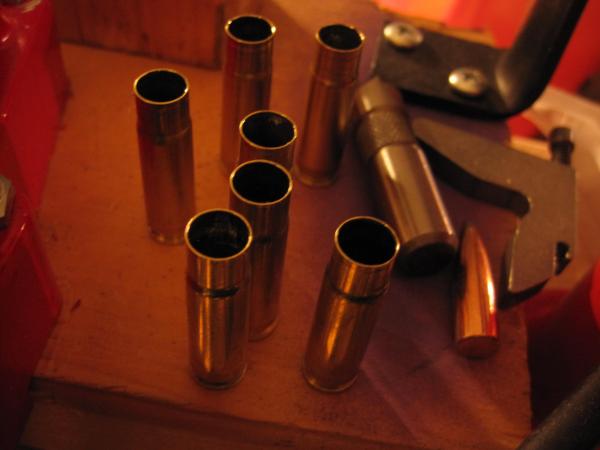
-
Lane's: jtallen83 inspired 21.750" 300 AAC Blackouts
Lane replied to Lane's topic in 300 AAC Blackout
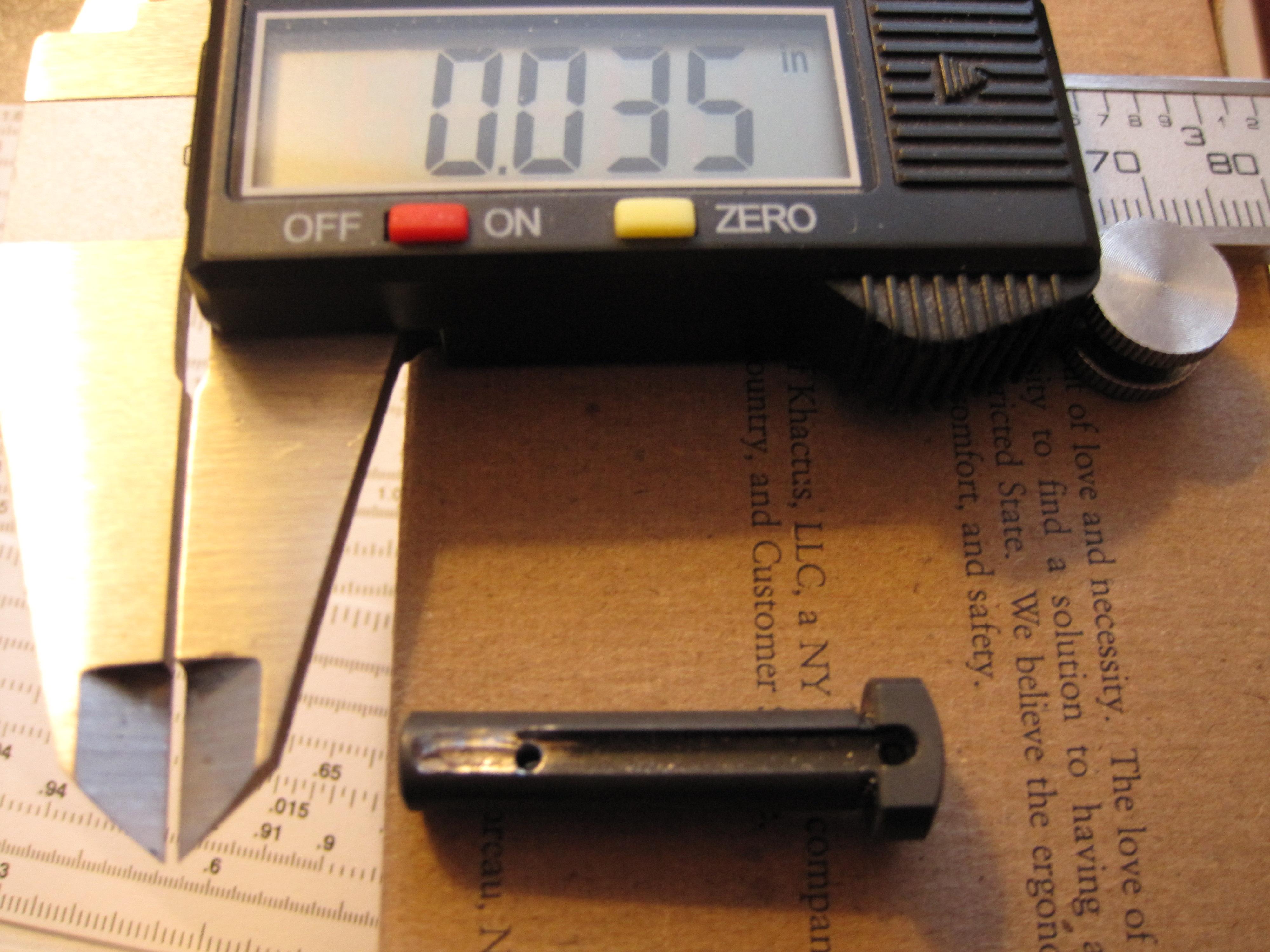
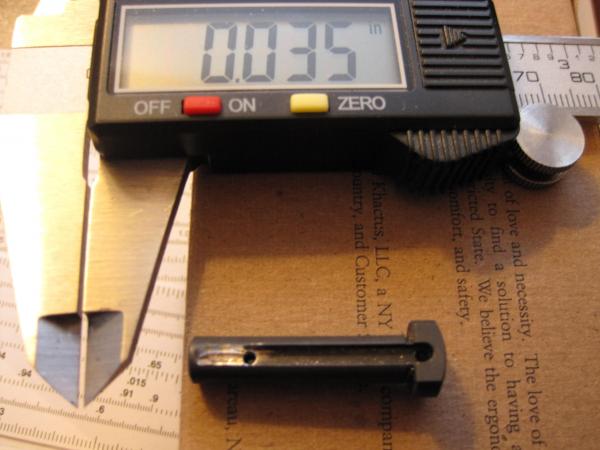
I meant to offer this data the last time I did a polymer lower; but never pulled the pin back out. This is a modified front takedown pin which is longer than a standard rear takedown pin. Because of the casting shape on the receiver, a standard rear pin wouldn't protrude at all. That makes it nearly impossible to actuate without tools. I start off milling a channel with a tiny bit; then remove it from the vise and do the final finishing by hand. I never feel like I can see well enough to hit the target with all the shavings. That's only 0.035" between the end of the pin and the channel cut. I'm going to fill that old detent with epoxy this time around so it doesn't catch in the wrong place.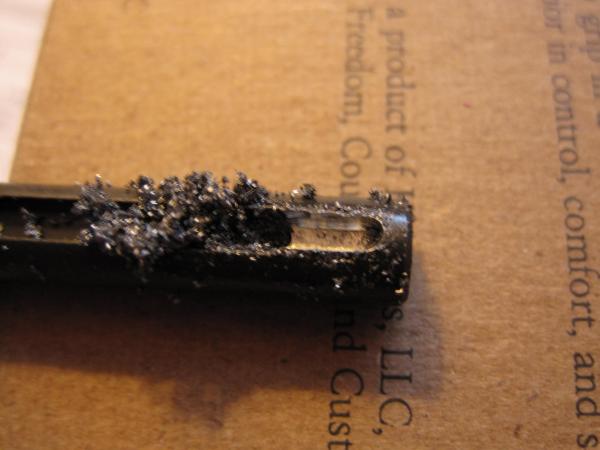
-
Lane's: jtallen83 inspired 21.750" 300 AAC Blackouts
Lane replied to Lane's topic in 300 AAC Blackout
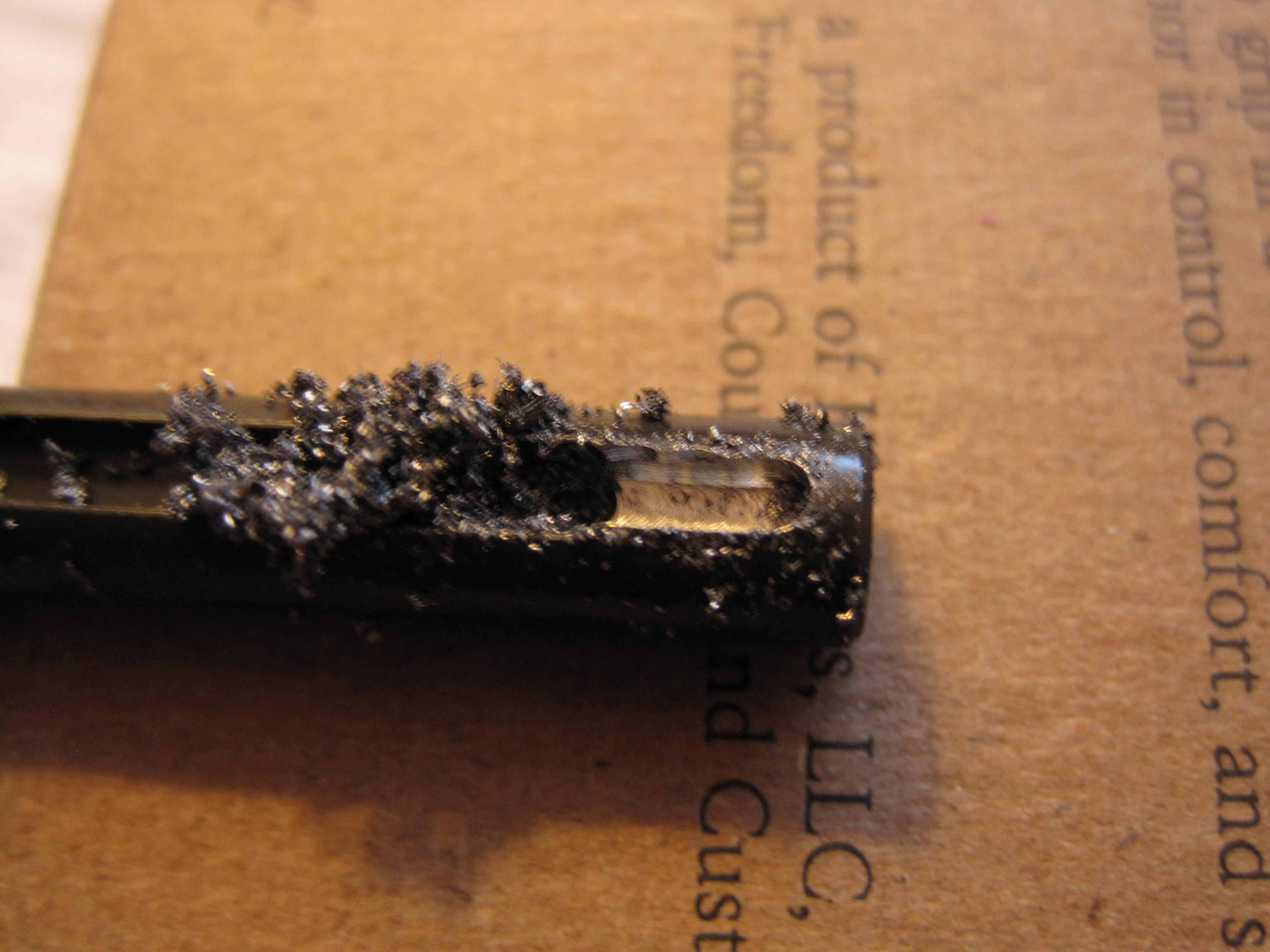
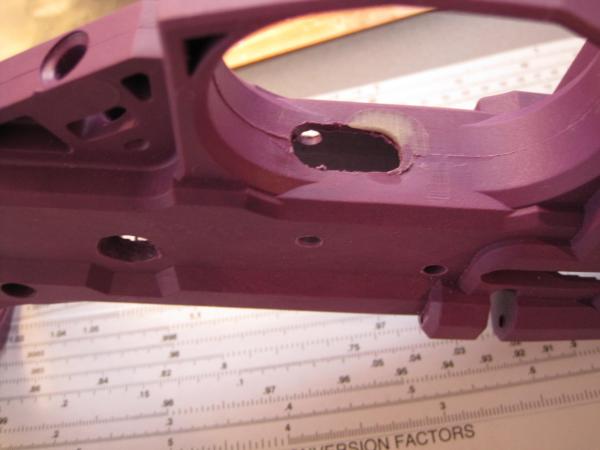
Now milled, and drilled. The plastic epoxy held up very well; though I still tool my time with a smaller bit in that area. I had the same problems drilling the selector holes; once the drill bit penetrates it gets stuck in a bow tie shaped hole. I even tried running pilot bits and had the same problems; especially on the side with the detent hole. I simply used a file for cleanup this time; until I could drill holes clean. No rush on the final assembly here; but it sure is satisfying to knock one of these out in about an hour.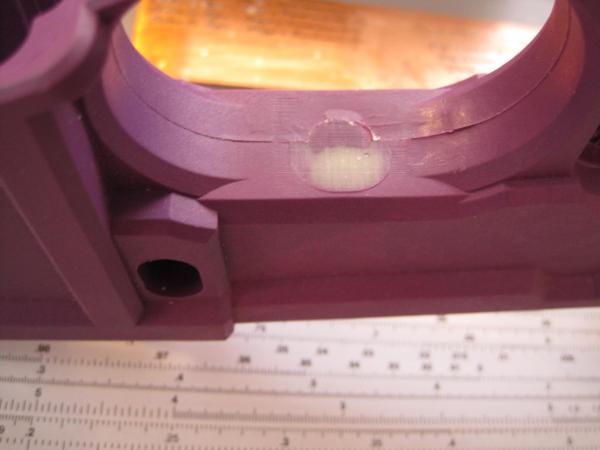
-
It's not just the selector; it's the whole FCG pocket being shifted here. The distance between the selector hole, hammer pin and trigger pin are all fixed. Moving the selector means moving the whole fire control group, and adjusting the pocket cut to make everything fit and function. If you already have hammer and trigger pin holes drilled; that's not going to work out very well. Where you'll also run into an issue is with the detent pin location that goes into the selector. There are actually at least a half dozen variations of FCG locations among the DPMS styles and generations. If you get one that's close enough in this department; you might be able to get away with a modified detent pin, or something that works without much modification. But that's still a big "if"...
-
I was pretty sure you had roots here. I have a similar background; only it was those other Hams that got me excited about things that go BOOM. When I first got my license I found a fun group of old guys on analog that loved to talk about politics and guns. They gave me quite an education about the local laws; and things to avoid in the real world. I had already begun stockpiling ammo, and this was during the great shortage of .22lr. It was actually repeated TV news stories about 3D printed guns that made me look at building my own. I have no use for an actual 3D printed gun, but 80%s are a lot of fun. And really; who doesn't want to fling chunks of metal at supersonic speeds in their backyard? Welcome from NY state!
-
Lane's: jtallen83 inspired 21.750" 300 AAC Blackouts
Lane replied to Lane's topic in 300 AAC Blackout
Apparently I only have two options (so far); but all of these powders have QuickLOAD data of course. Does anyone know if the IMR and H 4198 are technically different? I see different grain weights for them; should I use both and call that three? I probably need to get a few off the partial data list as well in terms of burn rate comparison. Crosses between 7.62x39/300 Blackout well: Accurate 1680, Both 4198s? Partial data across one or both cartridges: BL-C(2), H110, Win 296, Benchmark, IMR 4227. -
Lane's: jtallen83 inspired 21.750" 300 AAC Blackouts
Lane replied to Lane's topic in 300 AAC Blackout
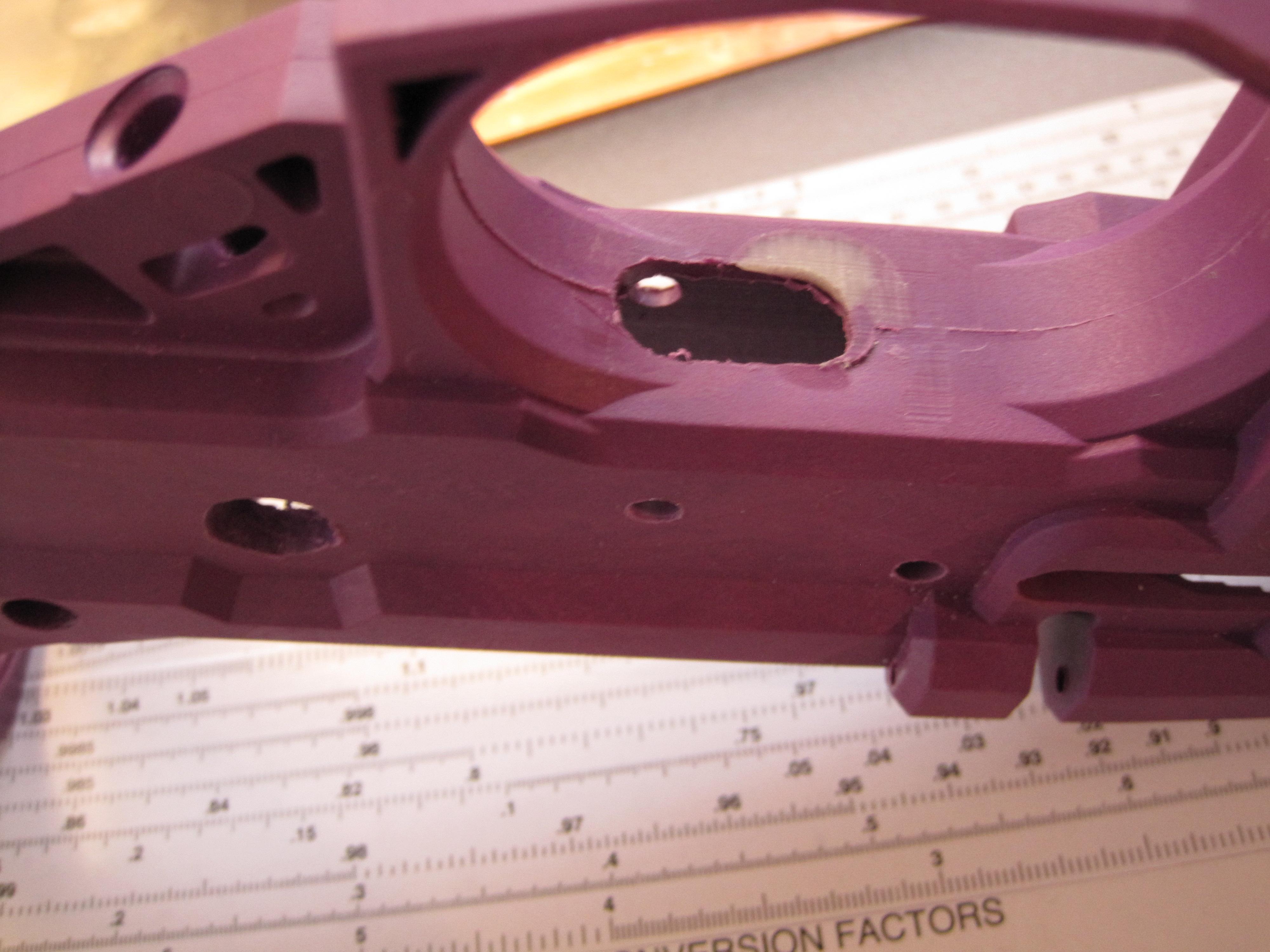
I almost bought powder while I was out today; but have decided to hold off. It would be best to start that search with the list of powders available in QuickLOAD; and the cross check everything between 7.62x39 and 300 AAC Blackout all over again. I want at least two different options that can be used in simulation, at different ends of the burn rate spectrum. This would allow me to at least briefly look at Long's theory on critical point of resonance during powder burn. He also recommends filling as much case volume with powder as possible to avoid problems there; so that's another consideration in powder choice. Been thinking about Vaughn's use of an accelerometer to measure flap in the barrel as the bullet travels down the tube. While it would have been humorous to strap an iPhone or Wiimote to the end of the barrel; neither device has a high speed accelerometer. In the high speed department Analog Devices sells a three axis chip that can be polled at 50kHz or better. The datasheet was a bit vague; but it can provide samples at least every 20 microseconds; perhaps as good as every 4.5 microseconds. If that 4.5 µs sample rate can be achieved that's close enough when looking at a bullet traveling 1 millisecond or more down the barrel. That would provide more than 222 samples during the bullet's journey. At $60 for a bare chip I'm not quite ready to order; but it's a contender. I still have to look around to see what higher speed options might be available; and what they would cost. Another polymer80 lower showed up for this project (I swear; it will be black on the outside when it's done). It was purchased as a blemished unit; and they claimed the blemish wouldn't impact performance. I beg to differ; there was a hole in the casting surrounding where the trigger should be protruding. It would have been visible in final form; and that area is quite thin to begin with on a polymer80. Got some JB Weld Plastic which was roughly what was recommended for this. I plan to mill off the lump before starting the FCG, and go slowly with the smallest bit I have when I punch the trigger hole... I suspect that epoxy will be more brittle than the polymer. I chose polymer for this project because it will be a good reference in terms of damping the system (and the takedown pins are likely to be VERY tight). I also have an aluminum lower waiting for the same reason; it will damp the vibrations a bit less (and that one is already black).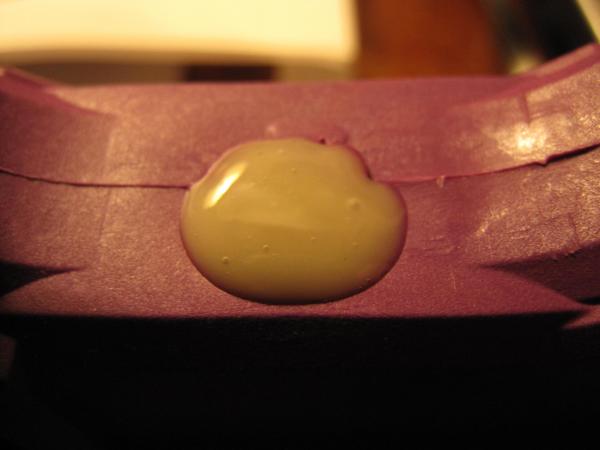
-
Don't try to apologize to me. You set me straight as an arrow.
-
That was my point early on with the extraneous """"" marks. The external ballistics in this matter; really matters. I'm just a guy that like to make stuff; this kind of accuracy makes me feel all sorts of weird.
-
I have seen nothing like this on the shelf anywhere. I have only one box of Nosler 110 for initial testing. It looks close enough to the neck spec that it will be the only thing I fire through my first barrels (so far). I should have a handful of fresh made ladder loads by the time my guns go bang. This is such an interesting cartridge that I can't even begin to understand. That's because I'm a New York resident by the way; and have no experience with pistol powder...
-
I apologize for this slightly shitty post. I do almost all math in my head with approximations, bit shifting base 10, slicing numbers for fast multiplication (and summing at the end). That is why I write in string when talking about those critical numbers in a general way. I rarely use a calculator for anything at all; outside of calculus or money. I will do my best to remember that when I post in the broader community of practitioners; I will need to press those calculator keys for accuracy (and to avoid confusion). I want to see your shooting; pretty sure you have a much wider breadth of scope and experience than I can get here at home. I see a bumper sticker around here now and then; it says: "I ain't no flat lander". I have no access to that kind of distance testing up here, or anywhere nearby. But I surmise that the bullet flight over 2+ miles is some disturbing blend of gun accuracy, shooting accuracy, and lucky and/or favorable conditions. Totally melting my brain still as I write this... Does he understand the keyhole in time to ns resolution?
-
I am so interested in this. What are you planning to shoot out of it?
-
Lane's: jtallen83 inspired 21.750" 300 AAC Blackouts
Lane replied to Lane's topic in 300 AAC Blackout
I'm kind of disappointed in this QuickLOAD issue. That is one of the many complaints about this software I've seen; it doesn't have data for newish powders. Turns out there may be a reason for it; but I can't get data for my 7.62x39 or 300 AAC Blackout right now as a result. This was posted in 2015... and talks about the issue more explicitly... "What Hartmut does in his lab is take a sample of a new powder and measured solid and bulk densities and then burn a fixed weight of the sample in a closed vivacity bomb to get a pressure vs. time curve. Dynamic vivacity is then the rate of increase (the slope of the curve) divided by the peak pressure at the end of the burn. He uses the resulting vivacity at a number of points on the curve and the final pressure reached to get the stored energy and progressivity information about the powder. Where the corners of the curve are and their slopes and total elapsed time let him deduce the other characteristics. I think deducing so many characteristics from one curve is the main innovation Herr Broemel program contributes to powder technology. Hodgon could do that if they wanted to, but they don't have a reason to spend the money, as the information would only be of interest to QuickLOAD users, AFAICT, and why should Hodgdon undertake to support the program for no return on the investment? " This information is the only way to get the data needed for simulation. Looks like Lil Gun is probably going to be an Ok powder for calculations. But somebody has to be able to measure CFE BLK for less than 50 grand; right? Who wants to build a closed vivacity bomb in their garage? That would look something like this: http://www.ozm.cz/en/burning-rate-tests/closed-vessel-rb-series/ I can easily work OBT calculations on .308 Winchester, and .223 Remington... But what's the point when those guns of mine are generic builds? ... Yes; we could talk about this OBT theory, and play around with those loads. But my target builds are not in that realm. -
Lane's: jtallen83 inspired 21.750" 300 AAC Blackouts
Lane replied to Lane's topic in 300 AAC Blackout
Can't a few of these modules also be configured in an array; and polled round robin to hit some serious resolution in terms of grabbing data as the bullet leaves the barrel? It would look like a space weapon with five mounted around the end of the barrel; not to mention wiring...