
N Jensen
-
Posts
133 -
Joined
-
Last visited
Content Type
Profiles
Forums
Downloads
Gallery
Store
Everything posted by N Jensen
-
7.5" high from center of target at 100 yd zero ant going to get you to center at 500yds. It's between 7.5 to 9 inches of drop just to 300yds with a 200yd zero. Suggest you start at 12.5 to 13.5 minutes up.
-
I just don't believe a short barrel rifle would outshoot a longer barrel rifle at distances 500yds and out. If anyone thinks a short barrel gun could win a rifle match, I suggest you head to Camp Perry and enter the long range championship. The match is fired at 600yds and 1000yds. There is also the palma match thats 800, 900, and 1000yds.
-
44.5 of 4064, pretty stiff load. What's your FPS?
-
There were guys who would drop the mag on a M1A and insert the round into the chamber and let the bolt go fwd/fly. It was not good, every so often a slam fire would occur. On my LR, I leave the mag in during single fire and place the round loosely ahead of the bolt and release it. One can still see a small mark/scratch on the primer. The mag slows the bolt down. I use rem 9 1/2 primers instead of 210M in my LR. Just seen to many slam fires. I'm just saying one needs to be conscious of the fact that bad things do happen at times. I still won't buy machine gun brass, it doesn't last from what I have seen.
-
Of all the cases I have reloaded, I find that Federal cases are the worst. The primmer pockets get big fast and may only last two reloads before the primmer will fall back out or fall out after being ejected from the chamber. Lake City Brass being the hardest, last the longest even when loaded very hot. Winchester and Remington brass are about the same, will last a good number of reloads even under hot reloads. However they do eventually wear out and just like in the opening thread. can get the primmer started with a little hand/thumb pressure. I never worried to much on a bolt gun as long as I felt some resistance in seating the primmer. With a semi auto I'm a little more picky and want to feel more resistance. When you pick up the brass and the primmer isn't there, you know next time to reject cases that the primers seat easily. Brass grows under two conditions, hot loads and resizing the case. Hot loads, high gas pressure and at the same time, the brass gets very hot so it flows in the direction of gas movement. The harder the brass less movement. Resizing, pulling the brass neck over the pair shape expander ball works to stretch the brass as well. I believe RCBS came up with a die that eliminates brass stretching during the resizing operation. Adjusting the resizing die correctly, bushing dies and turning the necks are 3 ways to make the brass last longer. Much to often the resizing die is adj for to much push back. Need to buy some case measuring tools and set the die for .001 to .002 push back for bolt guns and .002 to .004 for semi auto. Because of bolt flex under HP rounds, those case will measure a little longer than lightly load rounds. Same for the semi auto guns, more pressure, the case will stretch more. Adj the resizing die to accommodate the hottest load to make sure it will fit the chamber next time. If you buy 7.62 machine gun surplus brass at a gun show you will have problems. Usually the machine gun brass is twice as big as a normal chamber gun. You might have to resize it twice just to fit the normal chamber of your rifle, and will have a case failure within two or three reloading's. Bring a case gauge and measure them before buying them. I always trim the cases to the minimum amount recommended, but if I do it wrong and there a few thousand shorter I don't worry about it. It can blow up a rifle when you let the case grow and grow and never trim them. I know a guy blow up his M1A using a multi stage press and never checked is length of the case. The bullet was pinched into the chamber between the case and the chamber. I think over the years of shooting I have seen 2ea AR 15 blow up, about 10 M1A's blow up, more than several Garands/M1A's have slam fires. Since we talking about primers, 210M are the easiest primer to get a gun to slam fir on. Remember the firing pin is free floating and continues moving fwd before the bolt can rotate and lock. This goes for the AR 15 and DPMS LR guns. DO NOT PUT THE ROUND INTO THE CHAMBER AND LET THE BOLT FLY FWD TO SEAT THE BULLET INTO THE LANDS OF THE BARREL. You will regret it. If it can happen on a M1A it can happen with an AR style action as well. I seen this mistake a lot!
-
I wildcatted a 22-250 case into a 6OMC cartridge. Basically a 243 chamber but .250 shorter the dies were 243 dies cut off .250 at the bottom. I had to anneal the cases before pushing the shoulder back. I used a steel rod and propane torch and bucket of water. I would spin the case with the bluest part of the flame on the shoulder of the case area until a color change in the case just below the shoulder and then dropped the case into the water. Once I pushed the shoulder back so it would chamber, I then necked it up to 6mm. After firing, the case then looked like a short 243 with a longer neck. Once I had the case fire formed, I had to turn the necks. I had to do this because the old shoulder was now part of the new neck. The thickness was much more than the thickness of the original neck. If I didn't, I would have extreme neck tension that would cause vertical stringing at 600 yds, and I mean into the 7 ring. I also when turning the necks I went a little into the neck/shoulder junction area as well to prevent a doughnut effect. Annealing also relieves stress in the brass after being reworked, if not the necks will later crack after being resized. Controlling neck tension to be uniformed from case to case is a must for accuracy. If one shell release a bullet that has high neck tension, the powder charge burns more to release the bullet and thus more pressure, high FPS and strike the higher on the target. If the next shell has less neck tension, everything is lower as well: pressure, FPS, and strikes lower on the target. Anything you can do to make sure that bullet has the same neck tension and is released the same way will help in accuracy, bushing dies, neck turning, annealing. I find that a .001 interference for my semi auto match rifle is good enough to ensure the cartridge feeds through the mag over the feed lips and into the chamber without any problems. My bolt action Palma rifle, the weight of the bullet press handle is enough to seat my bullets into the 308 case, very little force is needed to seat the bullet. The interference is about .0003 .
-
LR 308 front sight and height
N Jensen replied to gnatshooter's topic in DPMS LR-308 General, Technical Discussion
Roger that, hope it goes well for you. -
LR 308 front sight and height
N Jensen replied to gnatshooter's topic in DPMS LR-308 General, Technical Discussion
gnatshooter I wanted to ask you if the photo helped. I have a good stock weld for 200 yds through to 600 yds. If I shoot 1,000yds, I lower the front sight about 21 MOA or .168. I use a veneer calipers to make the adjustment. When done I raise it back up the same amount for short range shooting. Doing this allows a good stock weld for 1000yds by making the major adj on the front sight instead of the rear sight. Thanks for the compliment on shooting. I remember shooting my M1A at 100oyds, I used to swap out the front sight with a very short post so I could keep a good stock weld. There are solutions to everything, just takes time to decide what is the best solution to what you want to do. -
LR 308 front sight and height
N Jensen replied to gnatshooter's topic in DPMS LR-308 General, Technical Discussion
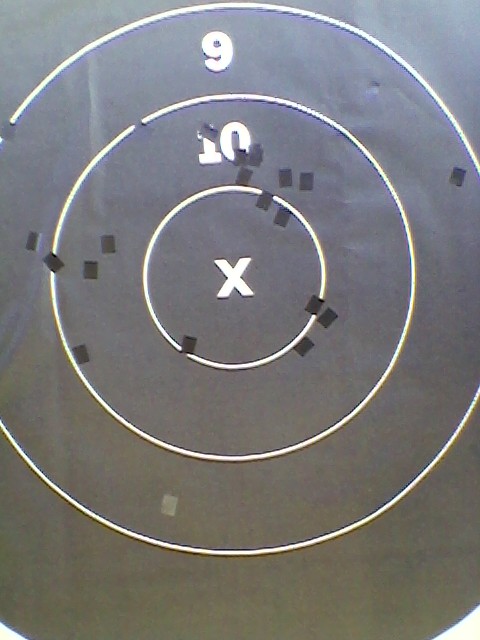
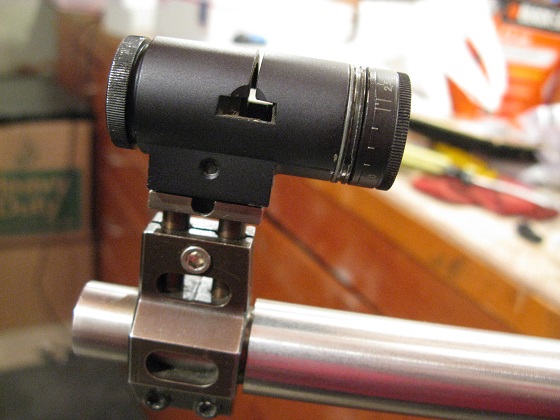
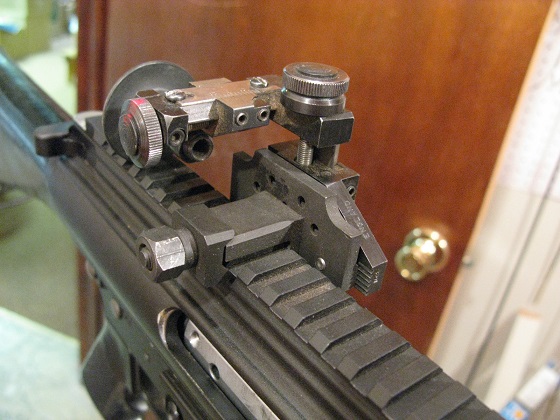
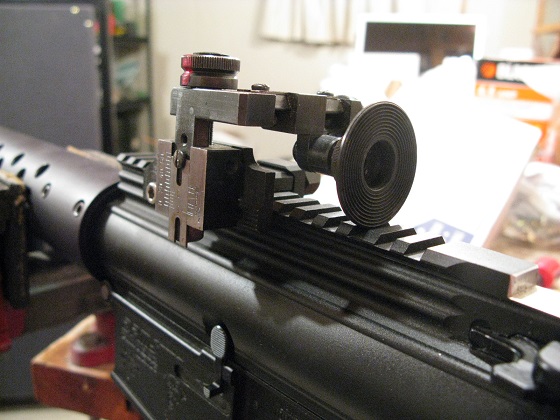
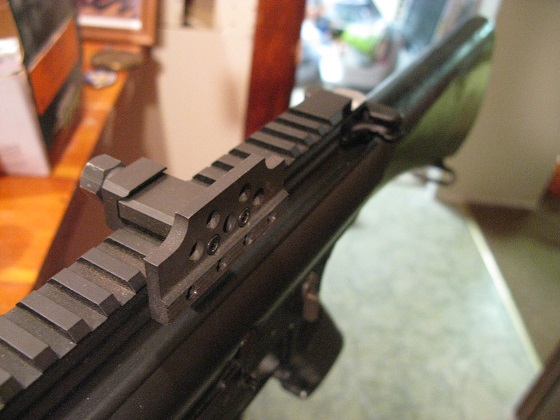
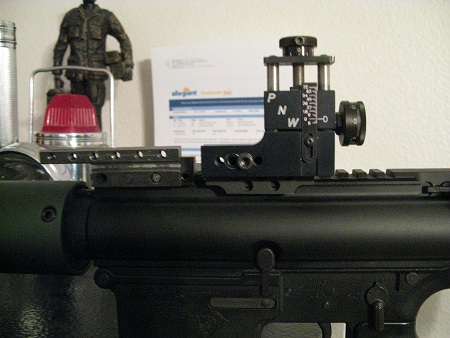
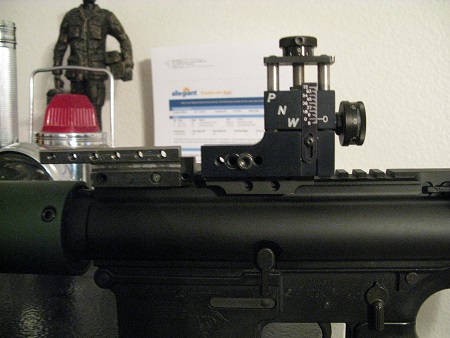
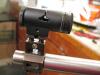
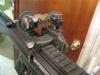
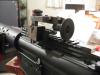
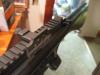
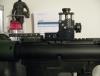
I uploaded 6 photos. The upper is an old LR receiver where the flat top is higher up for mounting a scope over a standard flat top receiver. I used a Lipski rear sight base where it is adjustable in height to either have the rear sight mounted very high or very low to the relationship of the flat top. The rear sight is an old RPA match rear sight with a merit aperture disk to allow adjustment size hole/circle to look through to the front sight and the target. The front sight is a MCS with an adjustable iris and a .03/.05 diopter on the front side of the sight. So I can adj rear sight opening and front sight size based on light conditions and size of the target. The one photo of the target is NRA Long Range target that I shot at 1,000 yds. Each paster represents a bullet hole that was pasted over as I fired my 2 sighter shots and 20 shots for record/score. The ten ring is a 20 inch circle while the xring is a 10 inch circle. The one nine at 7 o clock was after lowering my elevation one minute as I was shooting a nice group in the ten ring at 2 o clock. I was worried it might shoot low and it did, so I came back up the 1 MOA and left my elevation alone after that stupid mistake. In the vertical displacement I have 11 shots within 1 MOA or 10 inches, the remainder of the shots are within 2 MOA except for the two shots in the nine ring and the one was of my stupid mistake. Not bad for a semi auto and iron sights to boot. I mentioned modifying the bolt to work without gas rings, this rifle never shot this good before I did the mod. I know there are skeptics out there, but a picture helps once in awhile. You might say shooting iron sights at 1000yds would be hard to see the target. I use a .05 diopter in the front sight which acts like a magnifier glass. Many times I can actually see the white 6 inch spotter stuck in my last bullet hole through the sights at 1,000yds. While aiming it actually makes me work harder on the sight picture as I can see the spotter on the target. The lipski sight comes in either the RPA mounting or standard Redfield mount. Creedmoor sports, Brownells and white oak arms sell them. Match Rear sights are out there for sale, they don't make the RPA any longer, but they come up for sale on ebay or gun broker once in awhile. Brownells sells the PNW and Champion Choice as well. Hope this helps you.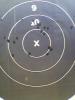
-
LR 308 front sight and height
N Jensen replied to gnatshooter's topic in DPMS LR-308 General, Technical Discussion
I have a upper that is higher than the standard flat top and had the same problem. I took a little work to figure out to lower the rear sight. But that was with a match rifle sight. Your rear sight was made for a standard flat top. Swapping out the receiver is the only to make your rear sight work. If you wanted to use your current flap top, I could send a picture of my match sight and how it mounts and get a good stock weld as well. -
I see no reason you couldn't match your score of your M1A, maybe even shoot a little better.
-
I have been shooting LR 308 and 6mm match rifles for some 5 years now. Yes the steel hand guards heat up. I have a white oaks float tube with vent holes alone the top. However, the gun gets super hot. When I lived in Vegas during the summer, even the AR 15 match rifles would get super hot. We would place wet towels over the float tube after 300 yds was over and then kept the rifle in the shade until 600yds. But after 10 rounds and with the sun beaten down, the float tube would be hot enough to give my thumb 2nd degree burns If I didn't watch it. I just deal with it, the gun gets hot and I wear glove or use a towel to pick it up after 22 rounds. When the gun gets that hot I found I have to drop the loads down as well during the hot summer months. Having a semi auto match rifle in 308 and a new 260 cal upper on the way. They are fun to shoot, good accuracy as well. I sent you a personal message as well.
-
I agree, .3 increments is a waste of time, 1/2 bump up will move the process along much quicker and get the same results.. Use Remington 9 1/2 primers, after firing they look retain a normal shape after firing. I would not use Federal 210 M because of the primer cup is softer and flattens out when the Remington will look normal.. Starting at 40.0 g and 1/2 at a time it would take 10 shots to get to 45.0g, You will see the primer change over the 1/2 g bump and stop when looks a little bad or when you hit the FPS that you want. Federal 210M also prone to slam firing as well, as the bolt hits home the firing pin will also hit the primer. Then goes off before bolt rotates and locks up. NEVER put the round into the chamber and let the bolt slam fwd, M-1 Garand would do it easily, free floating firing pins.
-
The DPMS mags should work, I did have mine for a long time. I bent the springs, made them longer and probably wrecked them in doing so. When I bought the C-products, I made small change before going crazy on it. But the first try on the spring fixed it and gun feed like a champ after that. Maybe other people are doing fine who have a 6.5 C maybe they would say what they are using.
-
I bought C-Product 10 round mags, but at first the mag wouldn't work. I ended up taking the mag apart. I bent the very bottom and very top (last coil) of spring at the same angle as the ones in between. The first and last coil were originally parallel with the follower and bottom of the mag, also the coil is only half the length of the other coils. I can't explain why it worked, but the 6.5 C rounds would feed fine. The ammo has to be loaded to 2.795 as well, ammo loaded at 2.700 don't feed, so hornday ammo 120g bullets won't work in my gun. Don't know why but I always hand load my ammo so it's no big deal.
-
Bore-sighting. Literally. Actually.
N Jensen replied to gnatshooter's topic in Accurizing the .308AR
The reason for a little distance when bore sighting is do to the height of the sight above the bore of the rifle. If the bore sight was done at say 25yds or closer, the first shot at 100 yds will be very high over the target, it would be like putting on 600yd to 800yds worth of elevation. In my older days of being in the AF we shot the M-16 qualification course at 25yds, in order for the bullet to height the aiming point on the target, the front sight had to be screwed down (elevation up) nearly to the bottom. If you have doubts about this, try shooting your AR sighted in at 100 or 200 yds at 25 feet and see how low the bullet strike on the target is below the aiming point. -
Bore-sighting. Literally. Actually.
N Jensen replied to gnatshooter's topic in Accurizing the .308AR
Bore sighting with the good old eye ball works just fine. I do it all the time. About a 100yds works the best. - Install your rear sight centered for windage and the height you want for comfortable head position at 100 or 200yds shooting. - Install the front lipski sight, as best as possible using your eye ball WAG or a small level to ensure the front sight is vertical with the rear sight. - With bolt carrier removed, place the upper in a fixture that is fairly solid. Look down the bore at a large enough object to center up on. - Move the front sight vertically up or down so when you look through the sight it is aligned on the object in the bore either 6 o'clock or center mast. - Windage, either turn your rear sight or rotate the lipski sight base left or right as needed to center up on the object.. - Like the M-14/M-1 Garand. The rifle is zeroed with the rear sight at center and the front sight is moved left or right to zero the rifle. - Go shoot the rifle on a no wind day if possible, leave the rear sight centered, shoot and adj the front sight as needed to zero the rifle. Place a piece of tape on the barrel with a pin mark on it to see how much you rotate the front sight if needed. - Last test is to shoot a ladder target, a vertical line drawn up from the center of the target to top of the target. Shoot and adj elevation several clicks. If the bullets do not stay on the line as you crank up elevation the relationship of the front sight and rear sight is not true in the vertical plane. Or the rear sight doesn't crank straight up but at an angle. - One of the reason why the front sight barrel clamp was thought up and now used on all modern target rifles is to be able to adj the front sight in relationship to the rear sight to ensure the same no wind zero at all elevation settings. The old way of drilling and tapping holes to mount a sight block on the barrel wasn't adjustable and rifles then had different zeros at different yard lines. The photo is of a match rear sight and mounting block.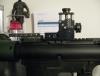
-
Yep, one could of said "I really saved 12,000 dollars, had planed on buying 4 of the dresses, then decided on one for 2,000". As the saying goes in Korea, " one can still go broke saving money on cheap knock offs". Funny.
-
It looks very nice indeed along with a good price.
-
Here is another option that has 20 MOA and allows for using standard scope rings and moves the scope fwd for proper eye relief. I have one, excellent quality. http://www.whiteoakarmament.com/xcart/product.php?productid=17529&cat=&page=1
-
I have been thinking of re-barreling one of my LR rifles to either a 7-08 or a 6.5 Creedmoor case and necking it up to 7mm. The shorter case would allow the longer bullet 168 or 175 to fit the mag and still allow room for powder. The BC of a 168 7mm is about .540 I think and the 175 is over .600 BC. Should be a good long range gun. Any thoughts on which way to go?
-
I could understand why they do it, some would bring 150g ball ammo or some over odd ball stuff. One gets bullets going crazy hitting the uprights of the target just tears up the equipment. Or they just don't understand the come ups or the right equipment to have in the first place. One of my favorite stories of a guy comes to 800agg practice match with his M-98 varmint rifle and scope. He was bragging how accurate his rifle was. Our club HP leader asked If I would watch over him. The wind was blowing 20 Mph by the time we took the 200yd line for standing. He didn't want to shoot standing but prone with a rest. At the end of the prep time, him in his prone position and Myself standing. He told me that he didn't want to take advantage of me and would set his scope to the lowest power setting. His first shot was in the 7 ring and mine was a nine in the aiming black. I went on to beat his prone score in a 20 mph wind. He didn't get any better at the 300yd and even worse at 600yds. I still remember that day and still chuckle about it.
-
Survivalshop, Curious about the range where you have to qualify for to shoot 800yds. Do have to shoot 600yds and have a certain score before moving back to 800yds? For a 308, 800yds isn't to bad to hit a target, what gets hard is after 800yds, 900 and 1000yds really puts the rifle, ammo and shooter to the test. Just don't bring a 168 MK and expect it to work past 800yds, it just ant going to work. But they do go through sideways pretty good on a calm day at 1000yds.
-
Anyone want to know how to glass or pillar bed a rifle? A mechanically minded person can do it and not pay money for something ant all that hard.
-
Shooting a 1,000yds with irons or scoped rifle is not hard, but if something goes wrong with your scope or rear sight. Just how would, or could you get back on target. A fancy bore sighter kit would be nice, but it is not going to help that much. This basic problem comes up more often than one would think. For a 308 the basic come up for a 175 at 2600FPS is 34 MOA (200yds to 600yds is about 13 MOA. 600yds to 1,000yds is another 21 MOA. Total 34 MOA, or 340 inches divide by 12 = 28 1/2 feet. The field of view looking down the bore of a 308 is pretty big at 1000yds. But its not impossible to find the target and place the target frame to the center of the barrel. While holding the rifle still, now adj the scope so the cross hairs is directly below and center of the target of aprox 28 feet. One can eye ball this. Re do each part until you are fairly confident with your WAG. Remember moving the scope knobs require turning the knob down to move cross hair up and same for windage, turning left moves cross hair right. With a target puller in the pits pulling and radio, the shooter or spotter/score can look for a bullet strike on the impact berm or in the front of the target. Adj should be in 5 MOA at a time and within a few shots be on target. With the radio, it makes it fairly easy to do. At times due to conditions, seeing a bullet strike is impossible. Then one needs to bracket the target. This procedure takes 8 shots to do. Aim 6 feet high and center and shoot, then 6 feet high and 6 feet left shoot, then 6 feet high and 6 feet right shoot. If no hit on target, do the same except 6 feet low. If no hit on the target, shoot center in height but 6 feet left, then right. In these 8 shots, one should hit paper if not sooner. Having a good spotter sitting directly behind the shooter looking fwd over the bore of the rifle. The spotter should see the supersonic shock wave through the mirage toward the target. If the shock wave is left or right of the target, make the adj and shoot again. I have helped shooters hit the 1,000yd target in as little as 2 shots. I was lucky enough to see the shock wave going off to the left, once I lost track of the shock wave I looked down range for a bullet strike in the dirt. Using the height of the target as a ruler, I determined the bullet hit 1 1/2 targets high and just over 2 target left. Target being 6 feet X 6 feet or in MOA 7 MOA. After doing the math, I gave the shooter an elevation and windage correction, 2nd shot was on paper, the next 2 shots he was centered up on the xring. It can be done, paying attention, understanding the math, and being observant helps a lot.