
Lane
-
Posts
1,042 -
Joined
-
Last visited
Content Type
Profiles
Forums
Downloads
Gallery
Store
Everything posted by Lane
-
Forgot to mention, the first hints about reloading powder I found prescribed Red Dot for blanks. I never found any Red Dot locally; so I started looking for alternatives. Unique was a fairly common substitution. I also can't swear by my Trail Boss evaluation. There may be a unique reason for that behavior; or my powder could be bad. Also didn't see a lot of reason to try a full case load of Trail Boss (there are cheaper options). You have little to lose by carefully experimenting (tough to squib a can cannon). Also; I use Gorilla tape on the back of cans to beef them up. Never gotten wet; but apparently that's the other option (can explodes and you get christened by drink of choice). Been using Sam's Cola from 24 packs; if you're loading blanks, it's probably cheaper than shooting retail .223 these days.
-
My first functional load was 6 grains of Unique; and it turned out to match speed exactly of M200 blanks under a full 12oz can. The 7 grain load pushed the can about 10 fps faster; and 8 grains made the can explode mid-air about 15 yards from the shooter. I never finished a work up with Clays. The low 3 grain loads I tried were short in terms of distance, and perhaps too slow to chrono with the labradar. I suspect 4; maybe 5 grains of Clays might work. Ultimately Trail Boss didn't work for me; but I never pushed the limits. I was able to get a nice bang with a empty barrel. But it sounded like a mouse fart and didn't move a 12oz can if I loaded one. The one thing that really bit me, was setting up the blank dies. Just a little too much crimp or seal, and the body of the cartridge would bell out such that the rounds wouldn't chamber (went in about 3/4 of the way and jammed hard). I'm embarrassed to admit how long it took me to figure that out. I ultimately ended up removing my de-capping pin and doing a full length resize on those already loaded rounds once I figured it out. They would pass in a case length gauge; but not fully chamber. There is no way to push a stuck case out either... So I ended up using an odd shaped dowel to help hammer the BCG to release those; more than once. Sadly I can't find any of those cases to take a picture of off hand.
-
Cannot pull trigger with pistol grip installed
Lane replied to 1stTimeBldr's topic in Building a .308AR
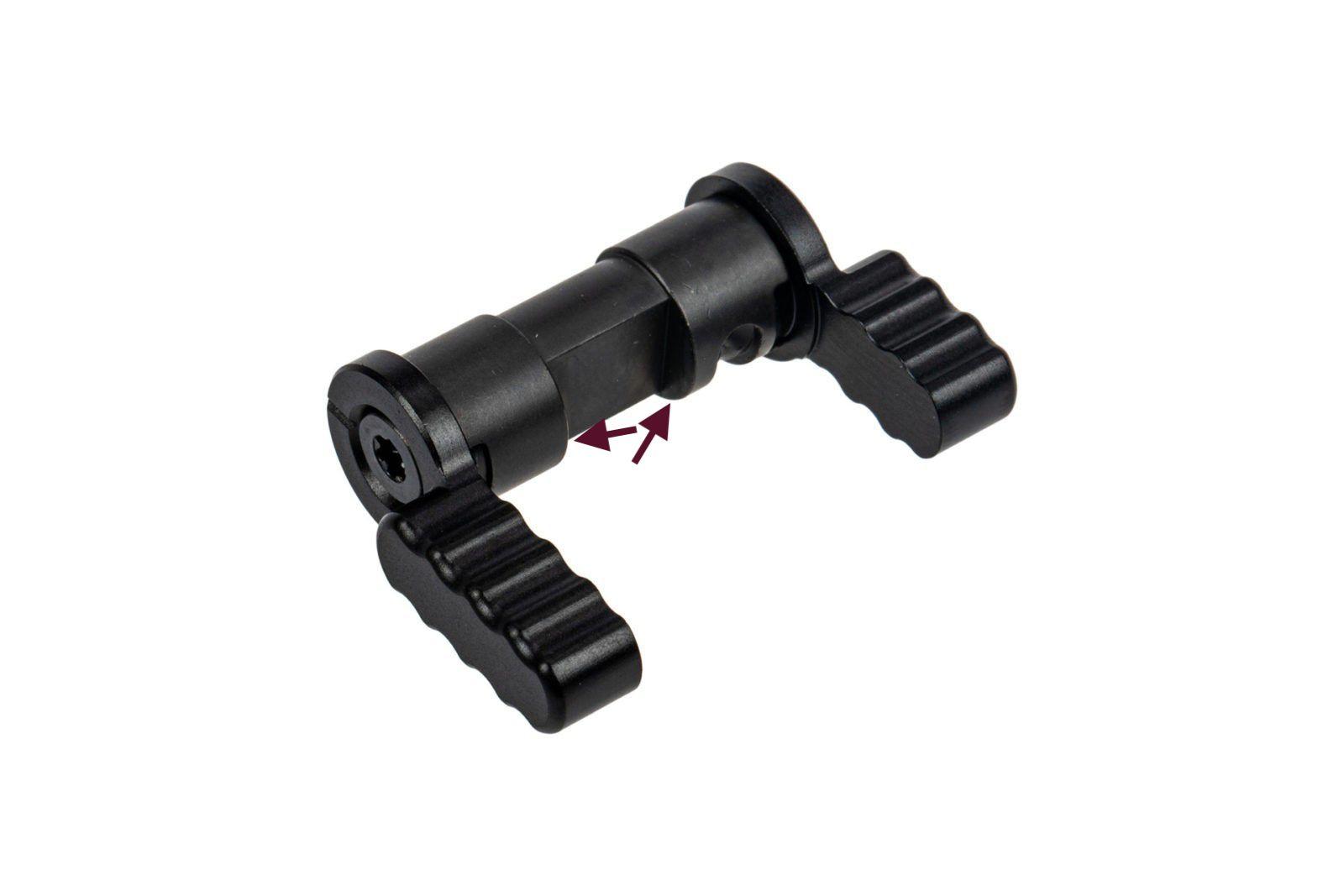
You could alternatively fix it for free if you have a file. Widen the safety selectors flat section on the side that's engaging the trigger's tail. Should take about 5 minutes at most. Pardon the random ambidextrous safety selector image; but either left or right where the purple arrows point. Be careful not to dig into the flat spot in the middle.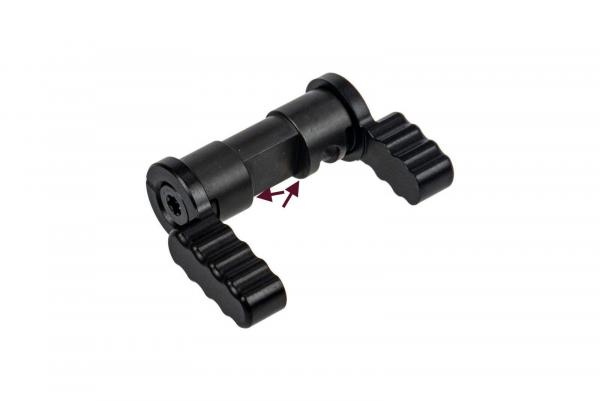
-
Welcome from New York State.
-
Can't you just capture one; and go on with your day? /s "Ride" it to work? You're in Canada already. What's the problem here? You need more straps; or food for your "vehicle"? Much Love.
-
Another sad day for law abiding citizens. It took me a while to find any significant information about this particular case. Apparently it's still up in the air where the pistol in question came from. The theory is it was one that the shooter's father built sometime before he died of a heart attack in 2017. There were other unlocked guns found in the residence where the shooter lived. They tried to float two gun charges against the mother; and the DA ultimately refused to take the case. But again. Student takes gun from home; brings it to school, and shoots kids. It was NOT like he was able to buy the polymer80 kit, and complete it himself in his bedroom undetected. Same poor parenting, and/or gun security we see time and time again. If instead the shooter used a simple revolver; it's unlikely we would be having this discussion. But because the firearm could be easily vilified; it was, and continues to be. At this rate, can't they ban every make and model of firearm within a year or so? Any gun that's been used in a crime anywhere, throughout all of recorded history? It's just not a logical conclusion to jump to. There is nothing especially dangerous about a polymer80 in comparison to any similarly designed and serialized gun. What gives this lawsuit actual merit? The father is likely to have purchased it legally. And even if he didn't; he's dead. The mother not securing firearms is apparently not a legal issue? But polymer80s are?
-
https://www.thecornellreview.org/well-regulated-polymer80-is-just-the-beginning/ Didn't see this before...
-
It is pointless and stupid. But how many more baby steps before these minor changes begin to encroach on everyone's regular business? If all the parts in one box are the concern; there are a number of others that sell packaged full kits. Though; maybe it's an SKU issue here? All the components in any way a'La carte is actually legal? It's still splitting hairs in terms of legal nonsense. Again; how long before that box of random parts from Brownell's is classified as a firearm? Is that definition of firearm is going to be fluid, that does apply to uppers or barrels down the road? It's not that much of a stretch.
-
I had a few custom barrels made by Compass Lake; from Green Mountain blanks. Not sure what the turnaround time is on custom barrels with Compass Lake these days... Not try to talk you out of your current plan one bit. But as you stated yourself; there are a few things to consider either way in terms of gas system, and chamber. Compass Lake will cut a chamber to brass you send in. Doing it yourself is also a fine option of course. Very much interested in your decisions; and progress along the way. Godspeed Sir!
-
Don't know if this is legitimate or not. A single case (anonymous source); could be confiscation from a specific target, a felon, or similarly restricted individual. https://www.thefirearmblog.com/blog/2020/12/11/polymer80-kits/
-
I am certainly interested in the papers that they seized. Especially so because NY's AG had already sent threatening letters to 14 businesses that make and/or sell 80% components; requesting they retain all purchase records related to NY residents. In that case; they seemed to be targeting 80% AR lowers; with no mention of the pistol components. This builder kits though; that is a head scratcher too. I presume those kits contained an unfinished lower (frame), along with the other component parts. But that's still not a functional firearm in any way. I'm not aware of any law that makes possession of attributes like a firearm illegal. Is this the same as suspending a student of having a toy gun at home; one that was briefly visible to his zoom class? Is this going to outlaw Nerf guns? Paper, or cardboard models of guns? Finger guns? To be fair; NY state has been pushing this issue with legislation trying to make 80%s illegal. My understanding is NJ has already done so. California requires they be serialized and registered. I recently read that PA has jumped on board banning anything that could become a lower I presume that must then include raw billets of aluminum, sheet metal, casting resins, among other ordinary things; Shovel AK anyone??. A local newspaper in upstate NY reported that someone (State Police I assumed), were seizing shipments to NY customers out of the US mail, and/or other delivery channels. I haven't tested this theory myself by ordering one; and it may only apply to specific companies (I don't imagine they are currently tracking Brownell's shipments, or anything like that). This was more than a year ago; so old news for sure... There is also reason to be skeptical, since there is no rule of law here that would technically allow it that behavior. This about an hour crap though? I have no idea where that came from. I'd certainly like to see it; and have no idea how the end result could be reliable. Crap: 80% arms advertises this in a click-baity youTube video from 2014. Of course they don't show it being done in an hour. And with aluminum in a drill press? I call BS.
-
Well stated. Still doesn't make the discussion about watching these upcoming plays carefully null and void. NY passed the SAFE Act in the middle of the night; mid-January of 2013. I fully expect further attempts to infringe; in a similar timeframe. Not just in NY state, or AZ...
-
100% sure he can not change the constitution by executive order only congress can change or amend the constitution and that has to be by 3/4 majority this is the way i understand it ... I'm of the same understanding, that the constitution can't be easily changed; but this is a nuanced approach. The agenda is written; not to cancel the whole second amendment, but to encumber almost all semi-automatic rifles as NFA items. Much like the AZ plan; you could pay a tax/fee; register, and keep your stuff. Cheap .22lr plinkers would remain legal... And they will likely make that argument; "Look you can still go to Wal-Mart and buy a .22lr, or select shotgun models; 2A still exists.". The argument also is made in NY; that the second amendment doesn't apply to "assault weapons". Something Joe Biden and other Dems seem pretty convinced of as well. That's certainly the loophole NY plays; that they are able to regulate some guns, or features that are deemed unnecessary, or more dangerous. Also requiring permitting (a may-issue registration) of handguns since the 1930s, which remains a pretty clear violation in itself. I certainly wonder how this plays out in the real world over the coming months...
-
I want to believe this a standard political posturing in the AZ legislature. But it's not a grossly different architecture than Biden's published "gun safety" plan. Biden's plan even specifically mentions using executive orders. He plans to bypass congress on gun control issues? https://joebiden.com/gunsafety/ I sure as hell don't know what NFA registration would do to the legality of keeping semi-automatic rifles in New York state.
-
Did you use a jig for the milling; if so, which one? When you say "milled perfectly"; did you work to a blueprint or published specification? Does the safety selector go in if the trigger and hammer are both installed, and then the hammer is cocked? I'm guessing the trigger's tail is blocking the insertion of the safety selector? When you refer to "handle"; do you mean the kits didn't come with a pistol grip? What information do you have on the lower parts kits? Are they designed for a different 308; or could they be AR-15 LPKs? I've ordered things like the threaded bolt catch pin individually from Brownell's before.
-
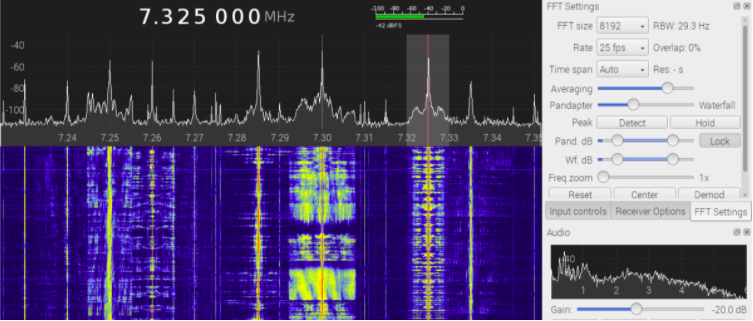
Another 30 minute video. Daaaamn. It was a good one though; here's my notes as I watched it myself. Excellent points up front: Having multiple modes, and bands available; listening more than transmitting. Great notes on the advantages of digital radios. Love that they touched on the interoperability. That is a relatively new development (linking repeaters with different digital modes together). 15 min mark: ARES and RACES. (SIRT is mentioned as an option later around the 20 minute mark). National simplex frequency; make sure you add that to your CHIRP file. And don't forget, since it simplex, there is no offset on the transmit frequency. The UV-5R also has the dual channel monitoring feature (the A/B button on the front accesses this). So you can leave something always receiving on the B channel, and set the A channel to scan, or to listen/transmit on some other frequency. Practice. General Purpose receivers... Not sure what's available standalone anymore. I found an old radio shack model that does shortwave, and also covers receiving on the HF ham bands (not all shortwave radios will do that). Certainly a worthwhile investment if you can find something like that. Practice (more); at some point you'll need to get acquainted with listening, hopefully before you decide on a much more expensive HF rig. Or; find a handheld that you like; one which also has general coverage receiver for HF. In either case, you can just throw a pile of wire on the floor (without transmitting, you don't need to worry about SWR, or fret about antenna design). You'll even receiver Ok with a single coat hanger wire. Obviously it's better if you can hang it on the wall; or from a ceiling fan or something. Solar for the smaller battery powered stuff isn't a big deal at all. And a larger HF rig can be backed by a lead acid car battery (or battery bank) which aren't difficult to solar power either. That should keep you busy for a few minutes...
-
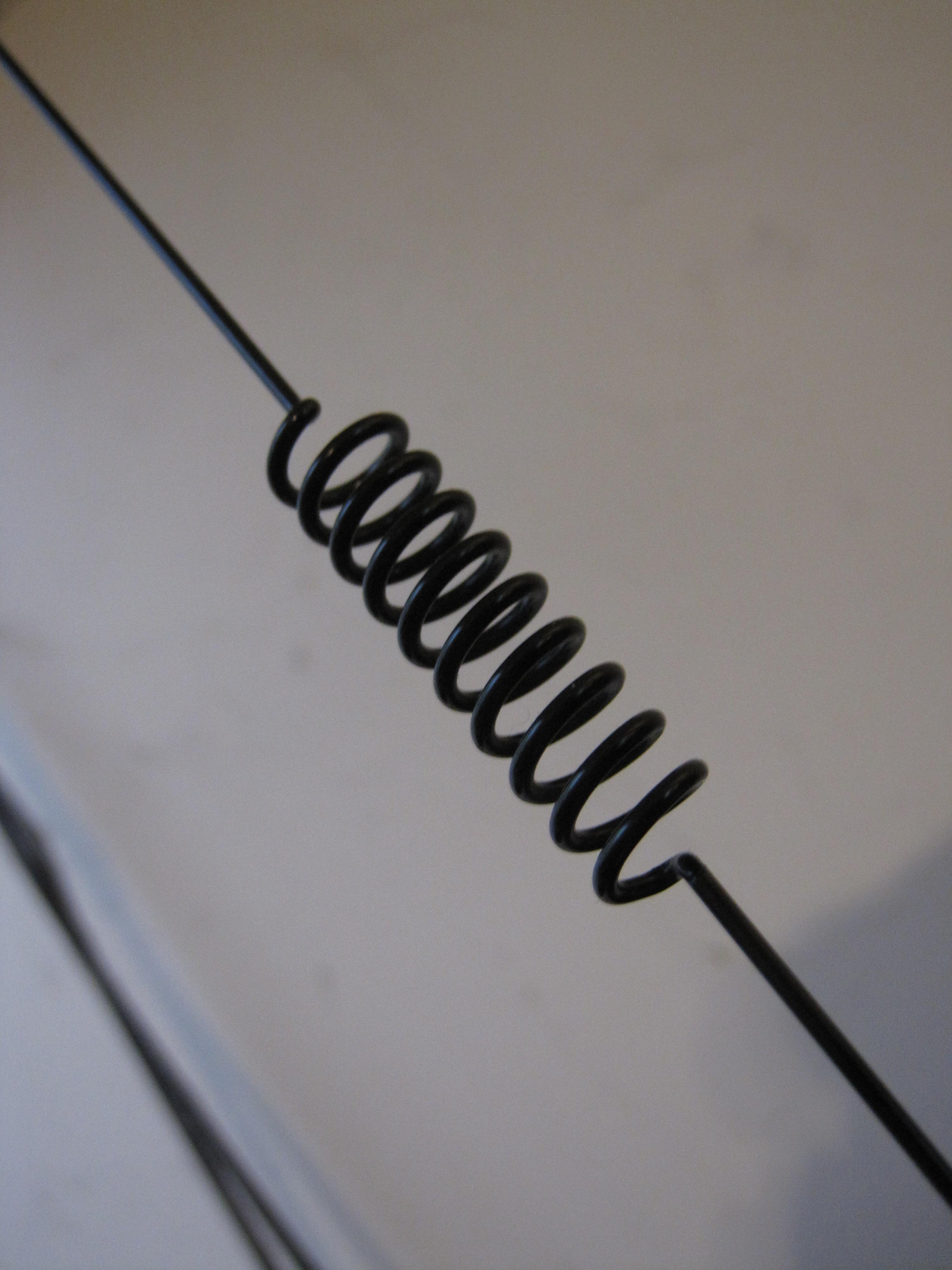
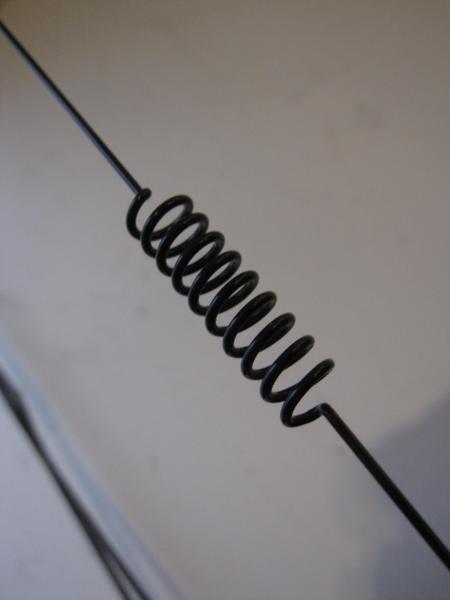
Guess it might have been a standard Norman Rockwell painting; seems to apply... My brother and I were both given pieces of plywood to contain our "mess", along with our own soldering irons. Originally we had to sit at the kitchen table to work, until we learned well enough not to pull the soldering iron by the cord onto our laps, and generally not be overly careless with the hot end. Those boards quickly became covered in burned spots, and wipes of solder mixed with burned flux. Later on, I found it more comfortable to work cross legged on the floor in my bedroom; often resting a circuit board on some part of my legs while I worked since I needed both hands too. An interesting point you make about the radio dial. I was almost annoyed when I sent my HF rig back for a tune up. The guy replaced the original knob with a larger solid aluminum piece. That was; until I used it. It was trivial to "throw" the knob in one direction or the other. It would just keep spinning, and keep tuning for a few rotations... Extremely tactically satisfying. That's just hard to find these days in modern equipment. You might be keen to look out for some ~1970s vintage HF rigs. You might appreciate how simply laid out they are; with ONLY knobs and switches (no screens, or menus, or context sensitive options). In terms of a way to shorten an antenna, and trick it into "thinking" it's longer; I believe you are referring to a loading coil. I have an antenna on my desk with one, and they are a pretty common sight. The reason it works is because of reactance; that coil in the middle is an inductor. Something that didn't intuitively stick with me right away was impedance. I'd heard the term thrown around when referring to pro audio microphone cables and such; but it didn't mean all that much to me until really digging in to ham radio concepts. So while impedance is still measured in Ohms like a plain resistor; it's representative of electrical resistance, as well as resistances caused by inductance and capacitance. In DC circuits; this really doesn't matter much, but in AC and radio; it's almost the only thing that matters. That lazy S you asked about; is the Integral Symbol. That requires calculus. But integrals really aren't that bad once you understand their purpose. There is software to do antenna calculations for you. Doing tons of calculus with a pencil and paper gets old real fast (ask me how I know this). While it's rather long (30 min), this is a great video from the bell labs archive. It does touch on impedance matching; among other things.
-
Was most curious if a few curated youTube videos might help you along with certain areas (like the radio you have, or radios you're interested in)? I personally had a decent introduction to electrical components and properties as a young child. I can't remember a time I didn't own a soldering iron, and used to strip junk equipment of usable components in my free time back then. The college level physics classes drove those concepts even deeper though. Electromagnetism was the second course in the sequence, Waves was the forth; then the fifth and sixth courses are a deeper look at electromagnetism again (mostly in terms of calculus regarding radiation of antenna shapes; flat plates, round wires, odd shapes, etc.). So; I had to learn that stuff at some point, but it wasn't while I was studying for the ham license exams. The big challenge with antennas is likely to be absolute length of the elements (or perceived length in situations you have external coupling); generally, resonance at the frequency you wish you use it. Connectors and connections can still be an issue once in a while though, especially when things are outdoors (where wind and weather might be a factor), or in a place where heat cycles might loosen them. Happy thanksgiving to you and yours as well.
-
That's what I found with a quick google search. I almost fell out of my chair; I'm willing to find out by ordering one. Looked again; and I don't see anyone saying otherwise... Are they illegal in CA? California can't have .50 cal projectiles either though; right?
-
Not here - bring that shiit down... This looks great. I have absolutely no problem around this area (and SOMEHOW it appears to actually be NY legal??!); I think I found my next adventure. Sure as hell don't want to get bored up here this winter... Fun for the whole neighborhood.
-
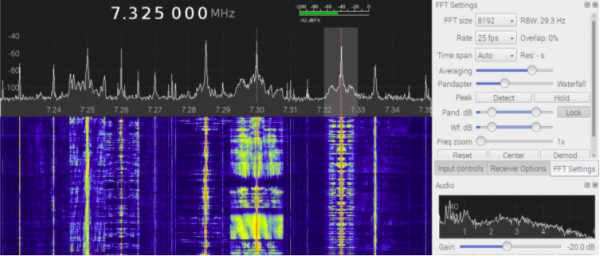
Can't hurt to relax a little. It's always an option to take the tests online with extra webcams as you mentioned. Not sure what their specific requirements are; but old (or new) cell phones can often be used as IP cameras, or sometimes even USB webcams if you absolutely need more that you don't want to purchase for a one time event. Honestly don't remember much about what they tested on in terms of electrical principals; that was one section I never had to study for. Nearly all of that is pretty basic physics. As I recall it's the second course in college physics sequence; Electromagnetism. You might consider supplementing your study that way for clarity. I can pass along a physics text if you are interested. Decided to make some pretty substantial changes to my antenna setup, as well as recheck everything from the beginning. I started off trying to calibrate my antenna analyzer; which I believe I succeeded at. It takes 3 test resistors (dummy loads); tests are: open circuit, 50 ohm, 150 ohm, and 274 ohm. Then I started messing with my 15W dummy load. I briefly got a decent SWR on 7.000 MHz, but then it went up to >10 again. After messing around with it for a bit I realized that the adapter stack can't seem to make good contact. I also want to take the cap off but haven't been able to find an Allen wrench small enough for the tiny set screw. Been reading about other indoor stealth antenna options while I work on re-designing the layout for my antenna farm upstairs. I'm interested to add on another long wire using CAT 5 cable; simply connecting all 8 wires together at the feed point. I've also seen other methods that fan out the wires, but it gets dicy because they are twisted together. The actual wire in those pairs are all different lengths because of that. Untwisting them is a nightmare, I just did close to 100 feet by hand over the last few days (a drill didn't work well for me at all, though I might be able to rig up a better system for that). I'm curious if you think you need an Elmer for the UV-5R, or you need one to get what the broader spectrum of HF radios are all about? That is a key point of finding an Elmer actually; finding someone who can both show you other equipment and techniques, as well as loan you things you'll only need once or twice (like an antenna analyzer). Beyond that, they should have the ability to check the calibration on things for you as well. Let you know how your signal looks on the receiving end, test hardware for you (since you probably won't have 10 radios up front), and the list goes on... I've had to learn to test my own equipment the "hard" way; buying all the test equipment myself which can be a slow road for sure. If you're even slightly computer inclined; there are also some cheap SDR radio options. I've got quite a number of them laying around, and they come in handy for a lot of things here and there. In short though; they'll let you mess with a totally decent radio receiver without spending a lot of money. Buying something similar that transmits too isn't all that expensive, but you have a lot of other things to worry about if you wish to go that route (like and amp, and filters). Check out this link to a brief description of the technical detail: RTL-SDR I've included a look at one piece of software that uses them. While the base radio's don't dip into the HF band, a modified version is something like $35 which can tune between 100kHz - 1.7 GHz (all of HF, VHF, and usable UHF) Definitely interested in CW. I "learned" it in about a week a few years back. There are smartphone apps that use various training methods which are a great help. Turns out the way I learned; I was fine at slow keying, but I was terrible at reading it. I could pick up a call sign by tone memory (a lot like paying the Simon game); and then slowly decode it in my head. But longer transmissions were a lost cause at normal keying speeds. And; since I haven't been using it, I've basically forgotten all I had learned. It's good to know though, and now I know that next time I dig into that; I'm going to need to train myself to read/copy harder than re-learn to key. Also; there are different types of keys, and perhaps one of them is better suited to my/your learning style; so that's something to consider as well. My HF rig actually has an auto decoder and PC keyboard for CW, though I don't cheat by sending that way (it can help me keep up with replies though).
-
How lucky? Did you miss the target at all?
-
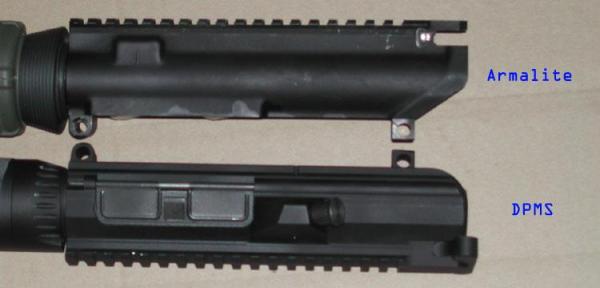
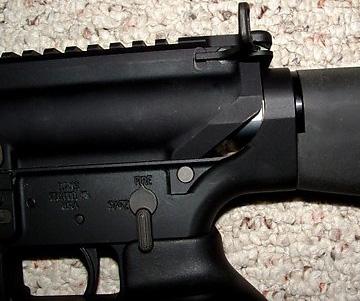
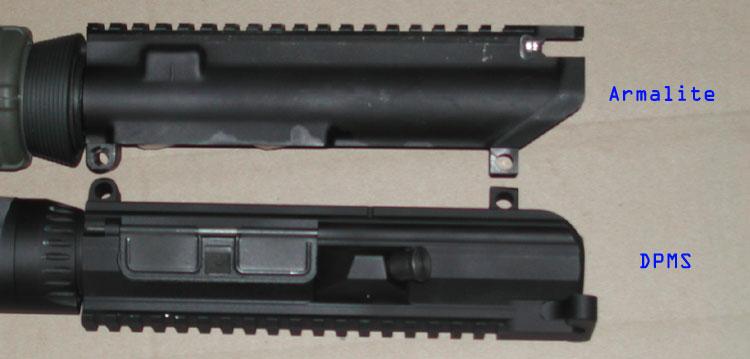
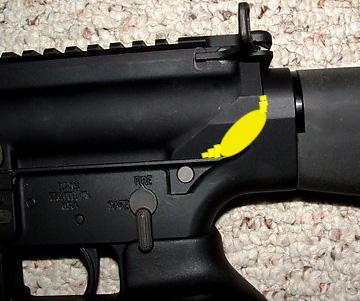
So now I have to second guess myself here.... Images were from the main 308ar.com site of course. Maybe I was first misreading the contour on the Armalite upper; and the takedown pin appears to be seated. Does this configuration function? It's obvious that the inverse can not possibly work; which is what my brain impacted first. It also points out an interesting fact of the matter. I'd much rather have an AR-10 if I ever needed to mortar the rifle. Look at the relatively massive amount of metal, bracing the tower of the AR-10 lower cut profile. Pretty sure that was intentional in terms of design. I've long wondered why these proprietary variations keep multiplying...
-
I found this recently while trying to keep up with my reading; and thought it was worth sharing. It website links to a PDF authored by W. Marshall Thompson PhD, which is attached below. While I hope nobody needs this information anytime soon; might as well get it out there. Probably not something to mess around with if you don't have some background in chemistry (it's dangerous). https://www.thetruthaboutguns.com/everything-your-ever-wanted-to-know-about-percussion-caps-and-primers/ One thing I found interesting, was the note about adding a touch of smokeless to weaker (easier to make) primers. Not sure I would have considered trying that without explicit direction. Homemade Primer Course Update.pdf
-
Look genius; not a single member has agreed with your stance here. Any random 308AR is not an AR-10. Some were nicer about it than others; and that's just the way of the world. You can be butt-hurt all you want. An AR-10 upper won't even mate up with the lower you have; much less function. Why did you show up here; if not to learn?