
Sisco
-
Posts
6,623 -
Joined
-
Last visited
Content Type
Profiles
Forums
Downloads
Gallery
Store
Everything posted by Sisco
-
Can’t take it with me, so why not?
-
My first boat.

-
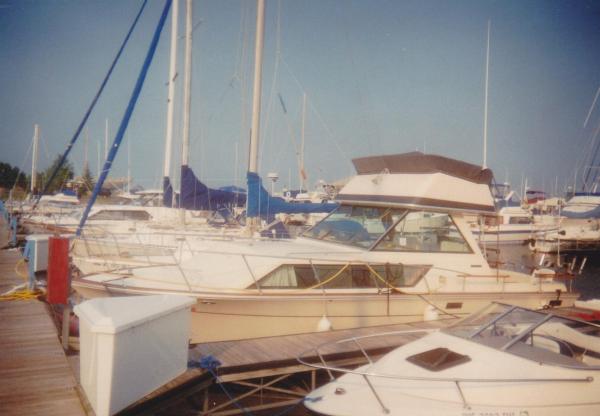
My old twin engine flybridge. Took it across Superior.
-
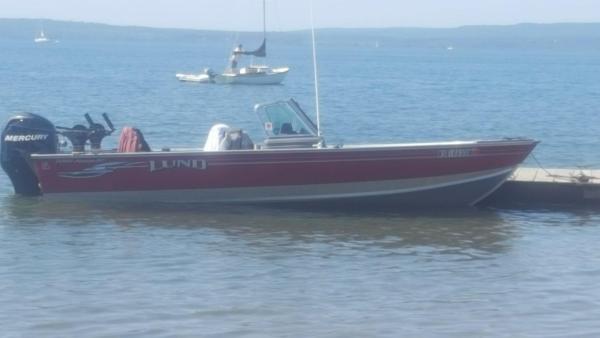
My fishing boat.
-
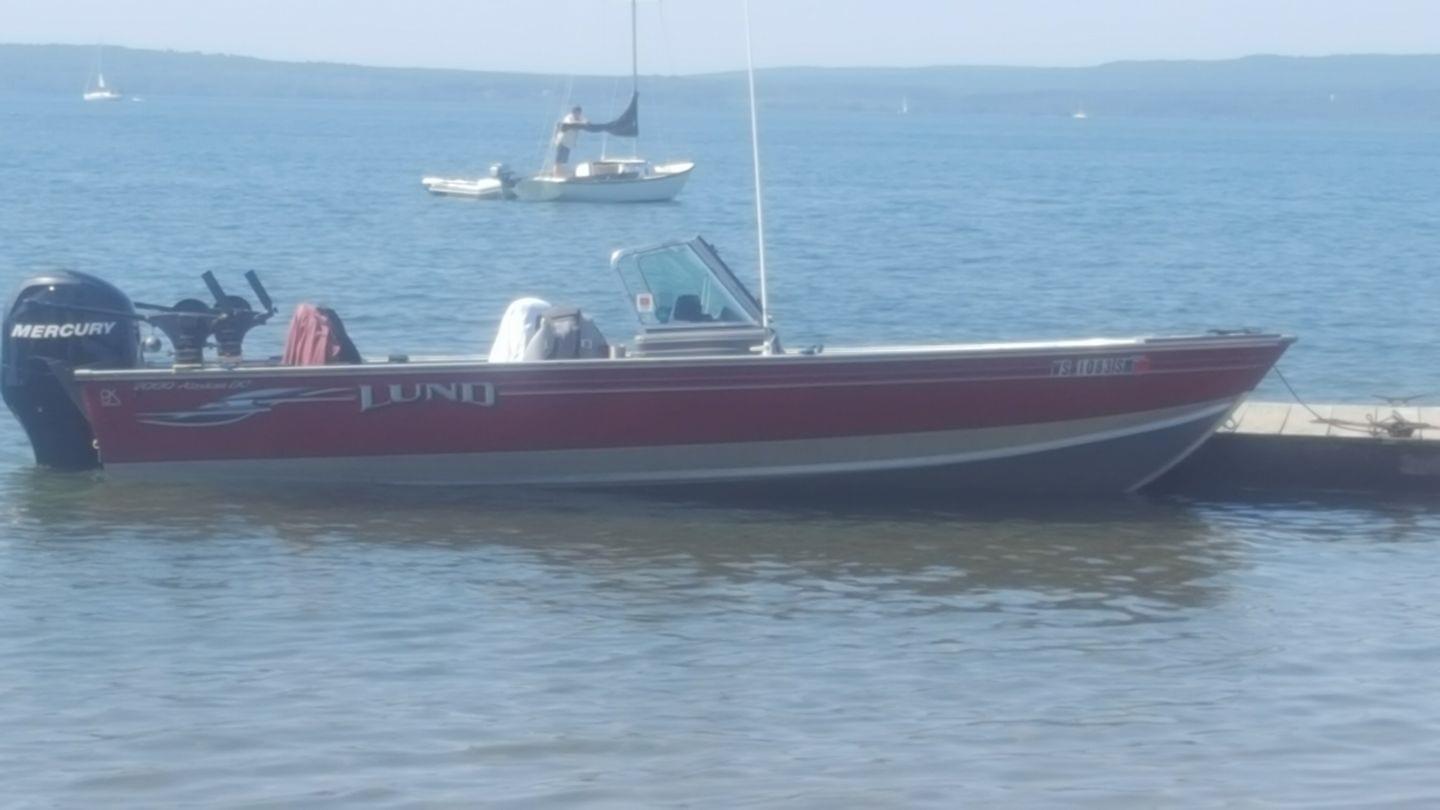
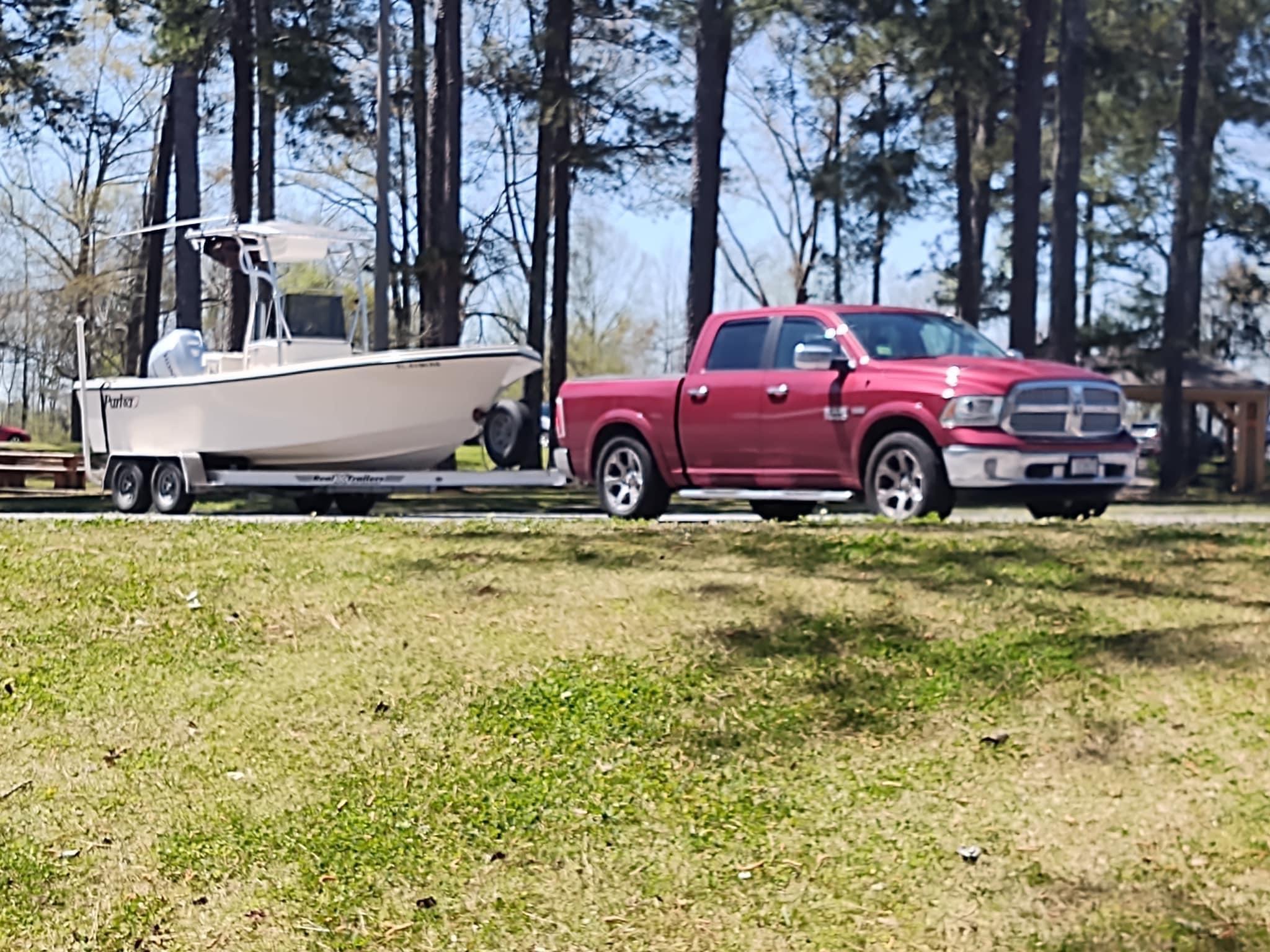
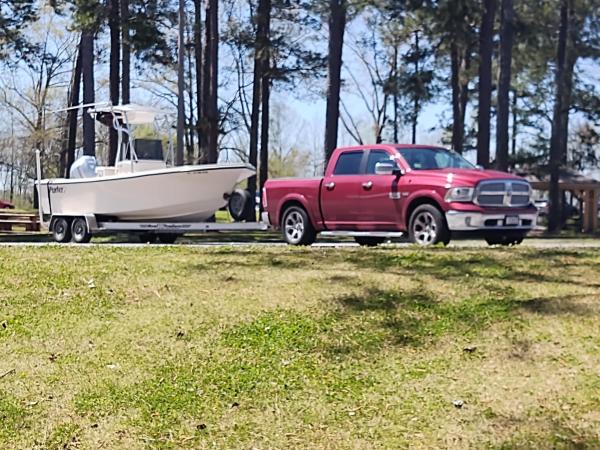
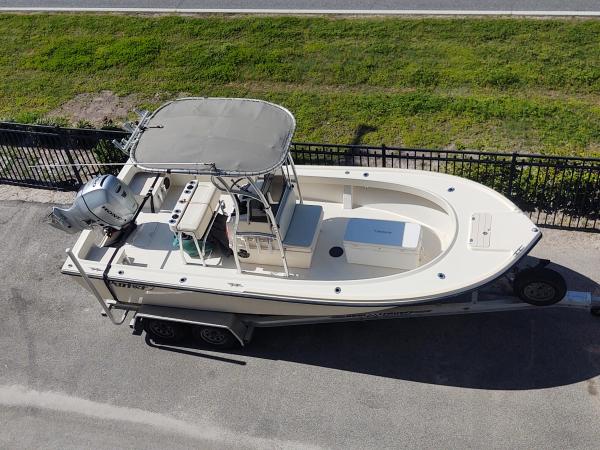
Yep, show your boats… old and new. And I have had a lot of them. Just bought this one two weeks ago and dragged it back from Florida. I am going to get familiar with it on the Great Lakes then bring it back down and use it for my Gulf of Mexico boat
-
Native Americans have made an outsized contribution to America’s armed forces. And continue to do so.
-
Yes!
-
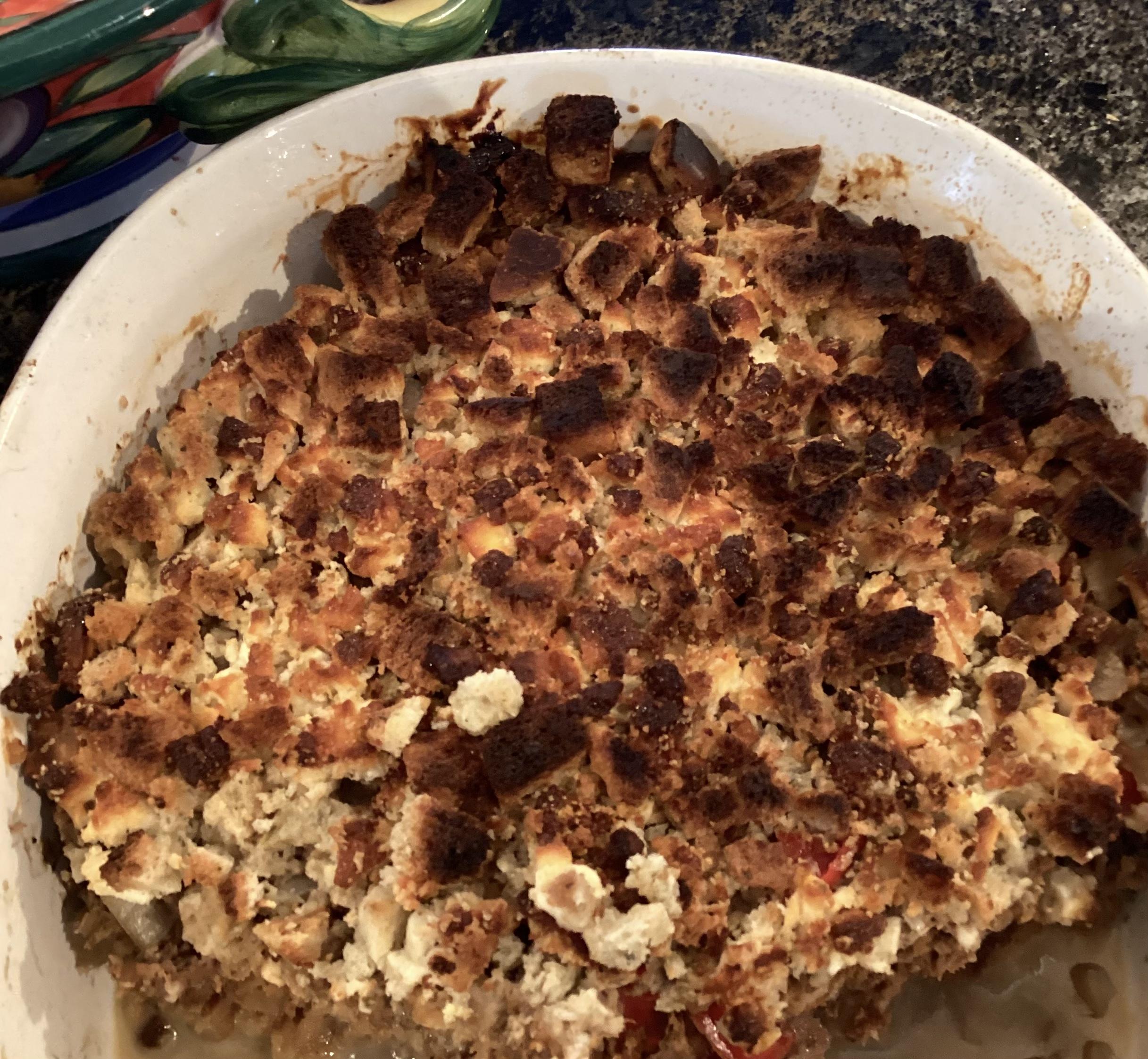
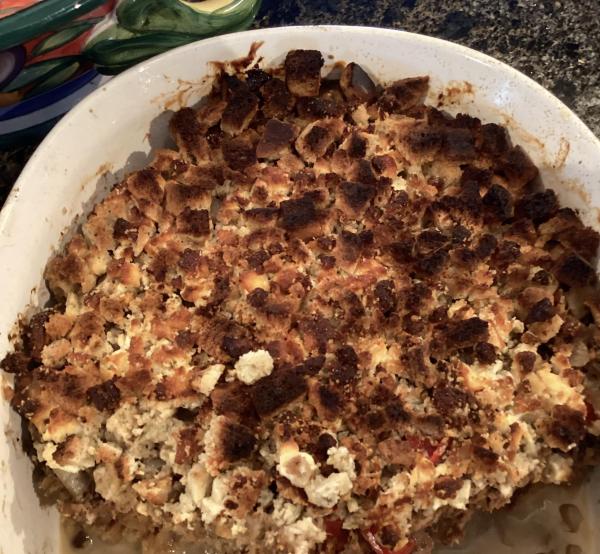
My leftover so-called “Greek Meatloaf” from last night. Hamburger, Bread cubes, Cavenders Greek seasoning, Ketchup, Worchestershire sauce, Woeber’s horseradish sauce, chopped onion and red pepper, a small shot of mustard, crumbled feta cheese mixed in, and topped with a mixture of bread crumbs and feta cheese(if out of feta, I top with parmesan). Wife loves it. And it is enough to feed us for days.
-
Put a new post about Scotty in the “An interesting Story” thread
-
Another Canadian. Beam me up Scotty. https://www.warhistoryonline.com/history/james-doohan-aka-scotty.html?ios=1&fbiosbrowser=1&Exc_TM_LessThanPoint001_p1=1
-
Mix Sweet Baby Ray 50/50 with Stubb’s regular. It is killer.
-
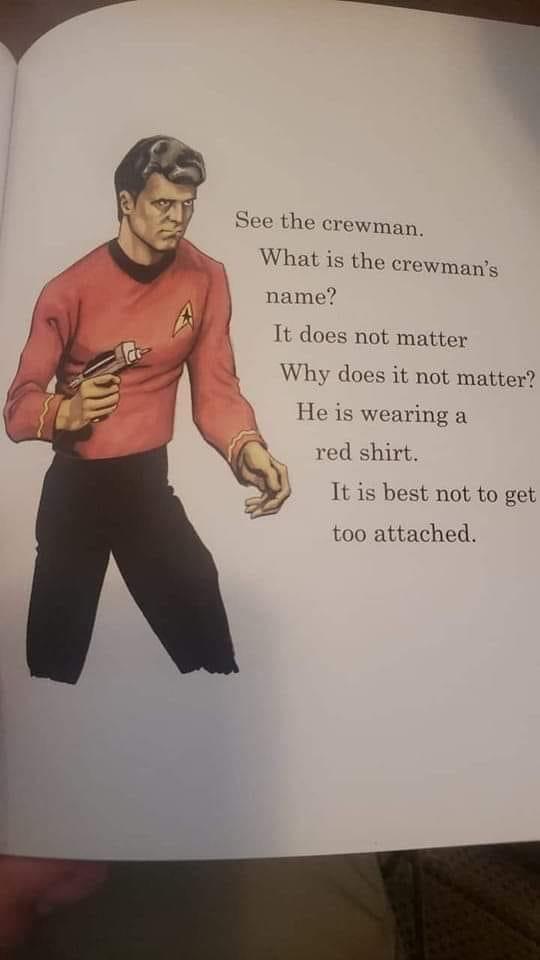
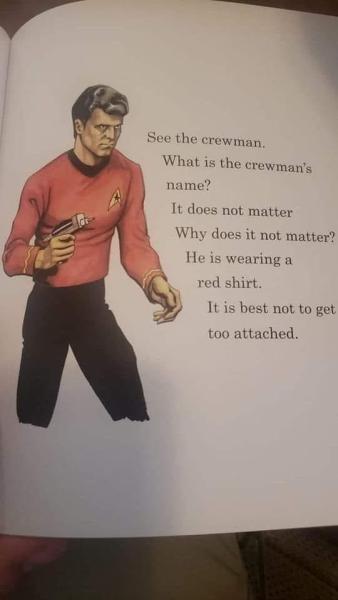
Rsquared this is for you. Any one who has watched Star Trek knows red shirted crewmen are toast.
-
All the time.
-
Like Rene said we are thankful and respectful for the sacrifices Canadians have made as our allies. Plus your snipers are totally badass.
-
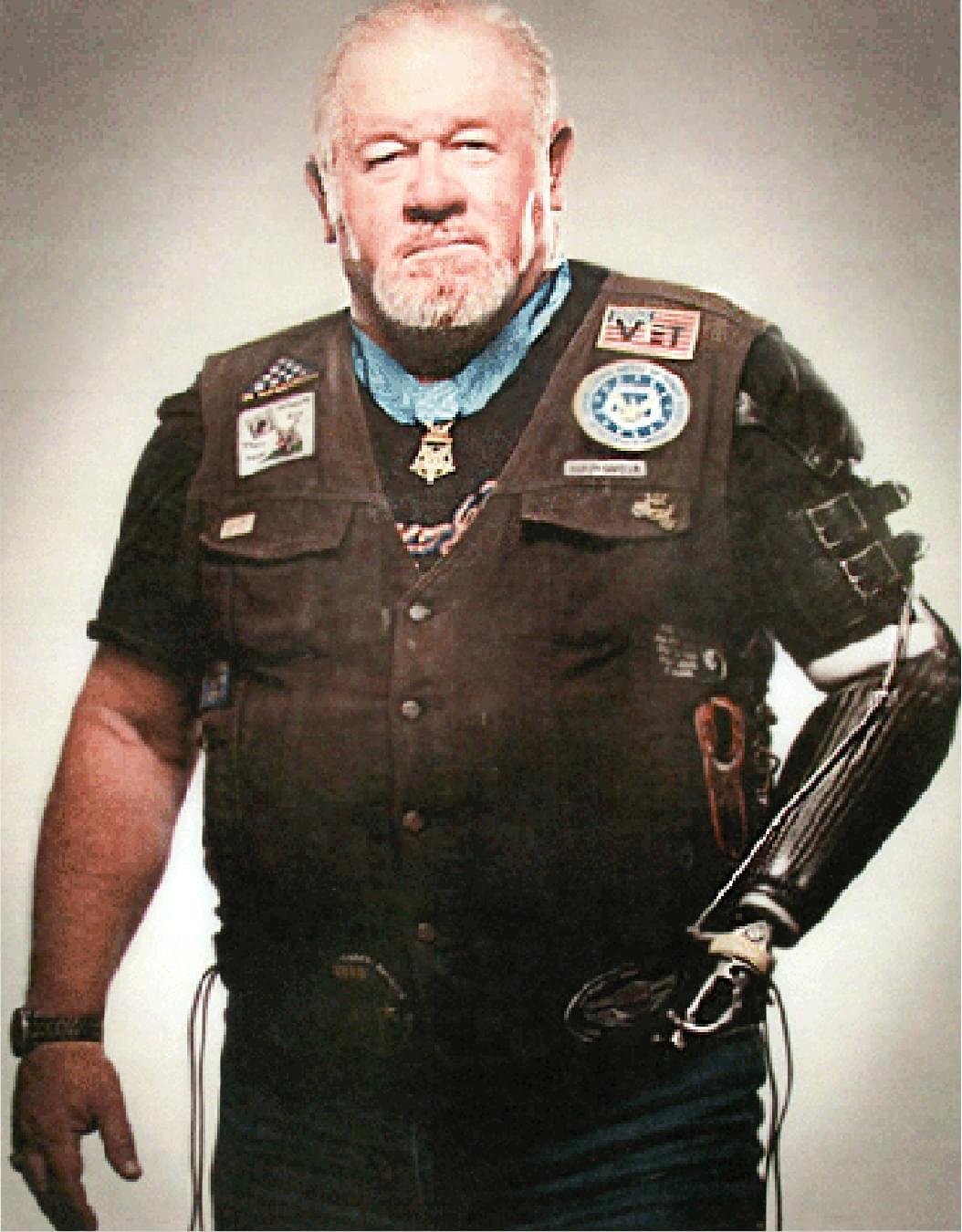
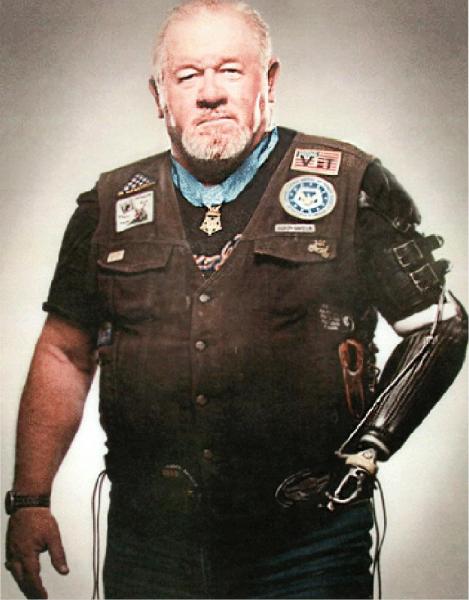
Hero: A person noted for feats of courage or nobility of purpose, especially one who has risked or sacrificed his or her life. The Medal of Honor Recipient Gary G. Wetzel: After losing his arm with severe wounds to his right arm, chest, and left leg, Wetzel returned to his gun-well and took the enemy forces under fire. His machinegun was the only weapon placing effective fire on the enemy at that time saving numerous lives! “Sp4c. Wetzel, 173d Assault Helicopter Company, distinguished himself by conspicuous gallantry and intrepidity at the risk of his life. above and beyond the call of duty. Sp4c. Wetzel was serving as door gunner aboard a helicopter which was part of an insertion force trapped in a landing zone by intense and deadly hostile fire. Sp4c. Wetzel was going to the aid of his aircraft commander when he was blown into a rice paddy and critically wounded by 2 enemy rockets that exploded just inches from his location. Although bleeding profusely due to the loss of his left arm and severe wounds in his right arm, chest, and left leg, Sp4c. Wetzel staggered back to his original position in his gun-well and took the enemy forces under fire. His machinegun was the only weapon placing effective fire on the enemy at that time. “Through a resolve that overcame the shock and intolerable pain of his injuries, Sp4c. Wetzel remained at his position until he had eliminated the automatic weapons emplacement that had been inflicting heavy casualties on the American troops and preventing them from moving against this strong enemy force. Refusing to attend his own extensive wounds, he attempted to return to the aid of his aircraft commander but passed out from loss of blood. Regaining consciousness, he persisted in his efforts to drag himself to the aid of his fellow crewman. After an agonizing effort, he came to the side of the crew chief who was attempting to drag the wounded aircraft commander to the safety of a nearby dike. “Unswerving in his devotion to his fellow man, Sp4c. Wetzel assisted his crew chief even though he lost consciousness once again during this action. Sp4c. Wetzel displayed extraordinary heroism in his efforts to aid his fellow crewmen. His gallant actions were in keeping with the highest traditions of the U.S. Army and reflect great credit upon himself and the Armed Forces of his country.” “After Wetzel and the other survivors were rescued the next morning, he spent a week on the critical list. His arm was amputated in a field hospital, but he had to undergo another surgery in a Tokyo hospital because of infection. After about five months in hospitals, Wetzel began to learn how to live a productive civilian life with a prosthetic arm. … “When asked what the medal means to him, Wetzel replied, ‘When I was in the Tokyo hospital, where the doctors took out more than four hundred stitches, some of the guys I pulled out who were recovering from their wounds found out I was there. They would walk up to my bed and ask, “Are you Gary Wetzel?” And I’d say, “Yeah,” and they would pull out pictures of their wives, kids, or girlfriends and say, “Hey, man, because of you, this is what I’ve got to go back to.” And then Wetzel would reply, “I’m not Superman. I was just a guy doing his job.”‘ GARY GEORGE WETZEL DETAILS RANK: PRIVATE FIRST CLASS (RANK AT PRESENTATION: SPECIALIST FOURTH CLASS; HIGHEST RANK: SPECIALIST FOURTH CLASS) CONFLICT/ERA: VIETNAM WAR UNIT/COMMAND: 173D ASSAULT HELICOPTER COMPANY, 11TH COMBAT AVIATION BATTALION, 1ST AVIATION BRIGADE
-
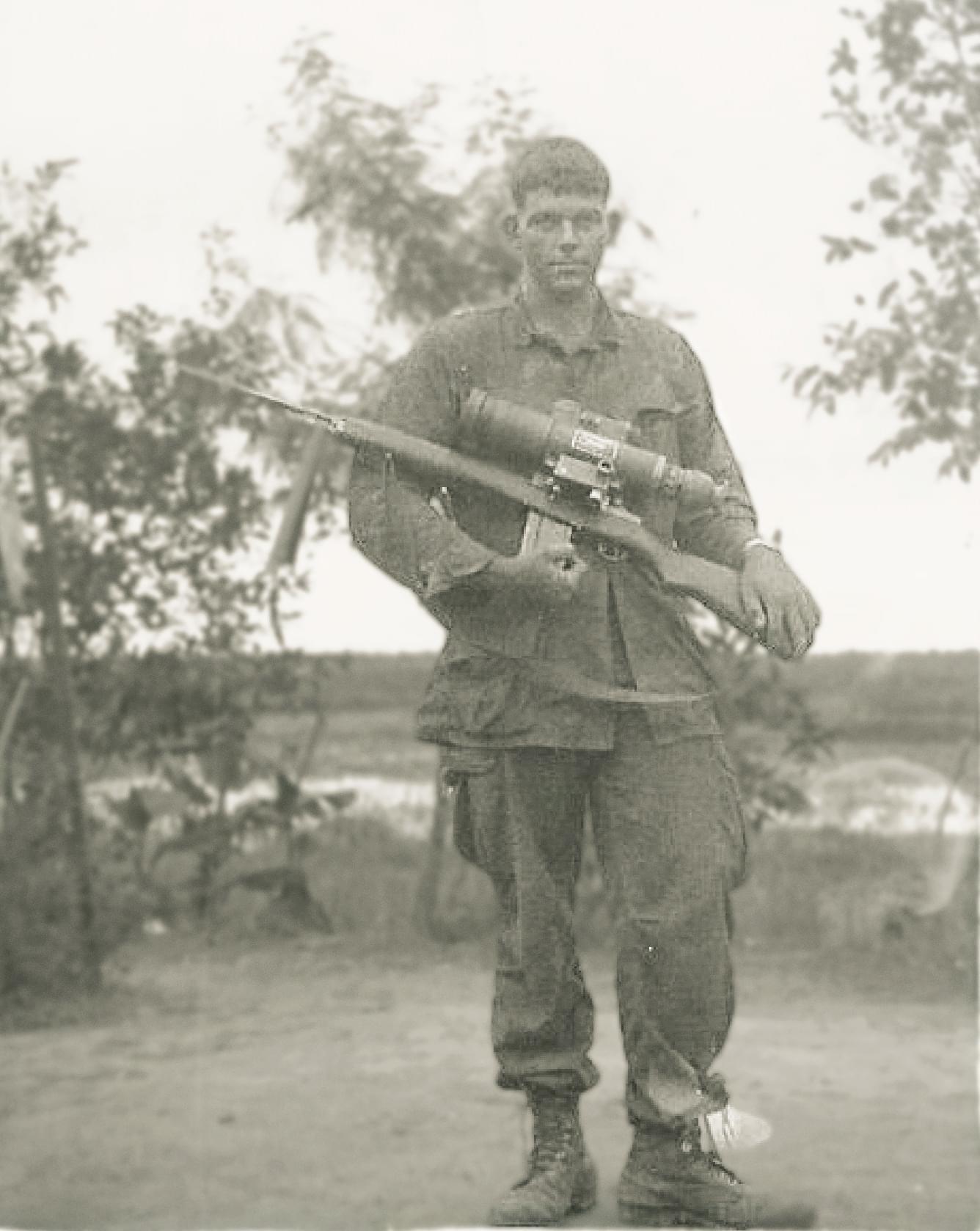
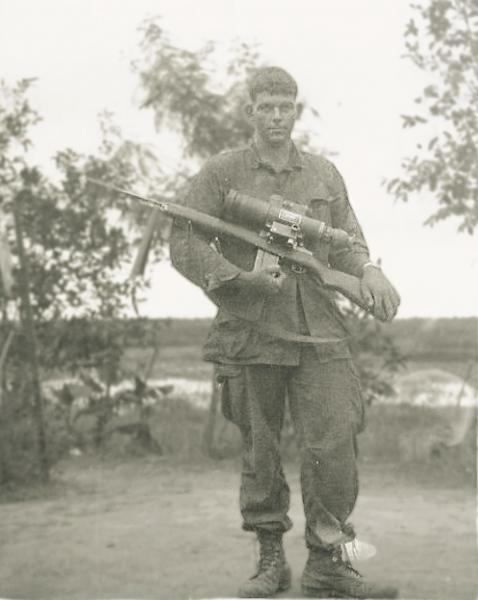
Rare photo of the man who is believed to be the deadliest sniper of the Vietnam war Adelbert Waldron: During his single deployment in Vietnam, Staff Sergeant Adelbert F. Waldron III made 109 confirmed kills in just six months, making him the most lethal sniper in the history of the U.S. Army. Adelbert Waldron preferred working in the shadows. During the Vietnam War, he became the conflict’s most prolific sniper while fighting in the dense jungle as a sergeant in the U.S. Army. And after returning home, he didn’t discuss his record-breaking 109 kills. Though snipers generally don’t brag about their records, some, like Chuck Mawhinney and Carlos Hathcock — both Marines — have become well-known for their combat records. Waldron, on the other hand, quietly returned home in 1969 and remained mum about his service for the rest of his life. But his military achievements speak for themselves. He had 109 confirmed kills, making him the deadliest sniper in the history of the U.S. Army. And he finished the war with two Distinguished Service Crosses, three Bronze Stars, one Silver Star, and a Presidential Unit Citation. And until 2011, when Navy SEAL Chris Kyle eclipsed his record, Adelbert “Bert” Waldron was the deadliest American sniper who had ever lived. Adelbert Waldron’s Path To Vietnam Adelbert F. Waldron III developed his shooting skills at a young age. Born on March 14, 1933, in Syracuse, New York, Waldron dealt with his parent’s divorce and subsequent remarriages by hunting in the woods around nearby Baldwinsville. “[Bert] always told me how lonely he was as a child,” his ex-wife, Betty, told author Paul Kirchner. “He was so unhappy in his home life that he spent all his time hunting in the woods… I’m sure that’s when he learned his marksmanship. He could mimic wild animal sounds perfectly.” But Waldron didn’t spend all his time alone. By the time he was 23, he’d married three times. And in 1953, Waldron escaped his solitary existence for good by enlisting in the U.S. Navy, where he served in the Korean War. Waldron spent 12 years with the Navy, serving in the Korean War, eventually becoming a petty officer second class before accepting a discharge in 1965. But he seemed restless in civilian life. Less than three years later — and with war brewing in Vietnam — the 35-year-old enlisted in the U.S. Army. Attached to Company B, 3rd Battalion, 60th Infantry Regiment of the 9th Infantry Division, Sgt. Adelbert Waldron trained in Fort Benning, Georgia, and shipped out for Vietnam in November 1968. How Adelbert Waldron Became Vietnam’s Deadliest Sniper Upon his arrival in Vietnam, Adelbert Waldron learned how to be a sniper at the Army Marksmanship Unit. He then accompanied his unit deep into the dangerous Mekong Delta — a labyrinth of streams, canals, and rice paddies — and quickly proved his mettle as a marksman. When Waldron and his unit came under attack by the Viet Cong on Jan. 19, 1969, the newly-trained sniper sprang into action. “While his company was being resupplied near Ap Hoa, Kien Hoa Province, approximately forty Viet Cong unleashed a heavy barrage of small arms and automatic weapons fire,” explained Waldron’s commendation for the Distinguished Service Cross award. “Courageously exposing himself to the fusillade, Sergeant Waldron killed a number of the aggressors and was instrumental in forcing them to break contact.” Three days later, on Jan. 22, Waldron dignified himself again. That night, he suddenly spotted Viet Cong activity. So Waldron aimed — and fired. “Disregarding his own safety, Specialist Waldron courageously engaged the enemy for over three hours before his position was detected and he was forced to withdraw from the area,” his commendation for the Silver Star award said. “As a result of his heroic acts, eleven enemy were mortally wounded.” Waldron shone as a sniper again and again. On Jan. 30, he took out eight Viet Cong fighters with eight shots — from 500 yards away and at night. On Feb. 3, he killed six Viet Cong who’d attempted to outflank American troops. And on Feb. 14, Viet Cong fighters shot at by Waldron withdrew in confusion, unsure how many shooters were crouched in the jungle. But Adelbert Waldron’s most famous moment as a sniper came on Feb. 26. Then, while patrolling the Mekong river in a Tango boat, Waldron and his fellow soldiers suddenly encountered sniper fire from the shore. As his commanding officer, Major General Julian Ewell, recalled it: “While everyone else on board strained to find the antagonist, who was firing from the shoreline over 900 meters away, Sergeant Waldron took up his sniper rifle and picked off the Viet Cong out of the top of a coconut tree with one shot… such was the capability of our best sniper.” His fellow soldiers soon dubbed Waldron “Daniel Boone” after the famous frontiersman. But Waldron had more advanced weaponry than Boone did. He favored an XM21 rifle that was 44 inches long, weighed about 12 pounds, and had a range of 900 yards (as Waldron proved). By the time his tour in Vietnam ended and he shipped home on July 21, 1969, Waldron had 109 confirmed kills in just eight months. That made him the deadliest American sniper of all time, a record he’d keep until the Iraq War. But Adelbert Waldron never bragged about his record as a sniper. Indeed, he rarely spoke publicly at all. He spent the next few decades of his life living as he always had – in the shadows. The Legacy Of The Deadliest Sniper In The U.S. Army Following his service in Vietnam, Adelbert Waldron returned to civilian life. But though he was honored with two Distinguished Service Crosses, three Bronze Stars, one Silver Star, and a Presidential Unit Citation, his transition from war proved rocky. “Bert was a wonderful soldier,” his ex-wife, Betty, said. “He loved his country, he would have died for this country, but he had a lot of problems as a human being.” He divorced, remarried, and divorced again. Meanwhile, Waldron worked as an instructor at the U.S. Army Marksmanship Unit before taking a job as an instructor with Mitchel WerBell III’s Cobray International school, a mercenary, firearms engineer, and former CIA operative. Waldron toiled in quiet obscurity, never seeking fame for his record-breaking service as a sniper. When he died to little fanfare of a heart attack on Oct. 18, 1995, Waldron was still the most prolific sniper in American history — besting better-known snipers like Carlos Hathcock and Chuck Mawhinney. He kept that record until 2011. Then, Iraq War veteran Chris Kyle wrote in his book American Sniper: The Autobiography of the Most Lethal Sniper in U.S. Military History, that the Navy credited him with 160 confirmed kills. That number — and Kyle allegedly had even more unconfirmed kills — broke Waldron’s decades-old record. In the end, many details of Adelbert Waldron’s service remain lost to time. He never gave interviews or wrote books. Waldron never publicly recalled how it felt to kill or how he dealt with the terror and glory of warfare. His record — his confirmed kills and awards — must speak for themselves. As his Silver Star award states: “Sergeant Waldron’s extraordinary heroism and devotion to duty were in keeping with the highest traditions of the Military Service and reflects great credit upon himself, his unit, and the United States Army.” The Giant Killer book & page honors these war heroes the book details the incredible life of the smallest soldier, Green Beret Captain Richard Flaherty along with the harrowing stories from the men of the 101st Airborne in Vietnam. The Giant Killer FB page honors these incredible war heroes making sure their stories of valor and sacrifice are never forgotten. God Bless our Vets! Available now on Amazon & Walmart. Story By Kaleena Fraga
-
https://music.youtube.com/watch?v=xPlqLHcphyw&feature=share
-
I really look forward to seeing the targets you post from this rifle
-
Day after next Christmas for me.
-
Nice Dion!
-
Deep frost. Lots of snow, but it freezes up under the driveway, where the snow plow scrapes off the snow cover. And this has been a cold winter. Not much choice where we could put the pipe in order to locate the mound system on percoable soil. Last time it froze up was in 2013.
-
Probably would work, but I have a good relationship with my excavator/honey dipper. Gave him my old wood boiler last year. We can get by until next summer when he will excavate the suspected area, check for a bow in the pipe, which we expect is the problem, then put some foam board insulation above the pipe run.
-
2000 gallon holding tank, so I have a little tinkle room
-
The sewer line from my holding tank to my mound system froze solid, which means I have to have my tanks pumped out until the ground thaws. 4 feet down under my driveway. Have to wait till Spring to fix permanently.
-

A high quality problem (and just to make you laugh at me)
Sisco replied to Rsquared's topic in General Discussion
Speaking of, RSquared, I saw this and I thought of you.