
Sisco
-
Posts
6,623 -
Joined
-
Last visited
Content Type
Profiles
Forums
Downloads
Gallery
Store
Everything posted by Sisco
-
I may do that.
-
You drink a,bottle, you go blind while holding your nuts.😫
-
Passed on deer hunting this year. Our local County Deer Committee is running our deer population into the ground, because the county forestry and conservation officials want to knock the deer herd down to nothing to keep the loggers happy so they don’t eat young trees. So they have been giving out 8,000 doe permits per year for the county the last five years! At that level of harvest the population is rock bottom. That and the overpopulation of bear harvesting fawns every spring are decimating our population. The WDNR have found bears, coyotes and bobcats are actually killing more deer, mostly fawns, then wolves. The wolves take some, mostly adults. Fukked up deal.
-
Trooper:
-
Did some Jeep trips in my International Scout in the Absarokas and Beartooths between Montana and Wyoming in the 70’s. Unforgettable.
-
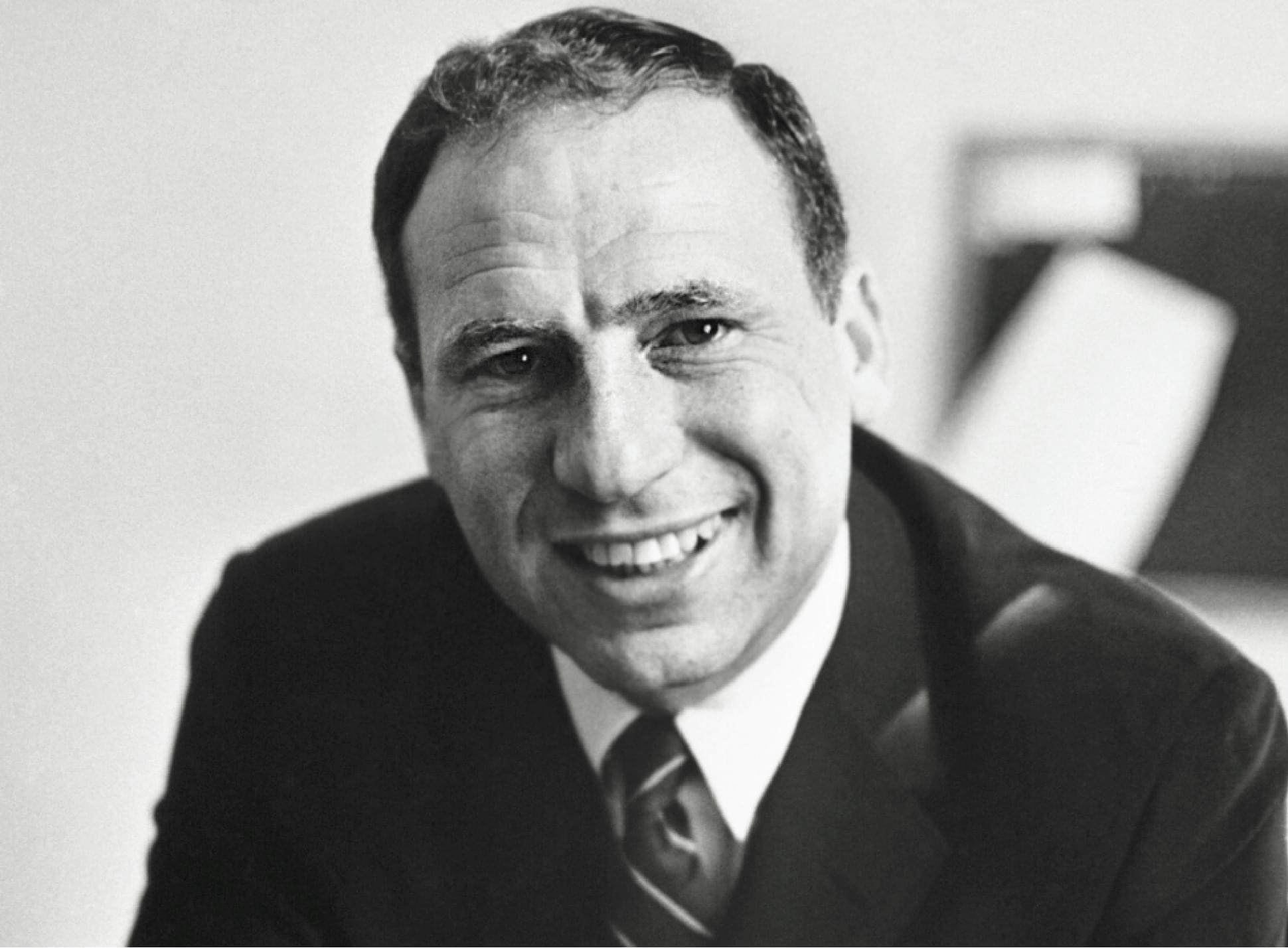
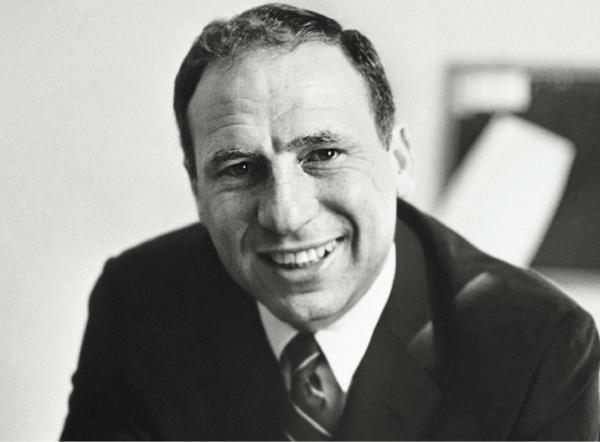
God Bless Melvin James Kaminsky AKA Mel Brooks and his three brothers for their service to our country during WWII. Mel Brooks, the Brooklyn-born funnyman best known for directing side splitting comedies such as Spaceballs, Blazing Saddles, The Producers, is not somebody most people would associate with life and death type of dangerous work. Yet, that is precisely what Mel Brooks during the Second World War, when he fought the Nazis as a combat engineer clearing minefields under enemy fire, and was in the thick of in the Battle of the Bulge. As he put it: “I was a combat engineer. Isn’t that ridiculous? The two things I hate most in the world are combat and engineering“. Born Melvin James Kaminsky in 1926, Brooks was raised in poverty after his father’s untimely death when the future comedian was only two years old. Understandably, growing up without a father was rough, and it left its mark on Brooks, as a child and into his adulthood. As he put it decades later: “There’s an outrage there. I may be angry at God, or at the world for that. And I’m sure a lot of my comedy is based on anger and hostility“. Growing up small and sickly in a borderline slum in Brooklyn, Brooks developed a sense of humor and a precocious comedic talent early on. Brooks graduated high school in 1944, with nebulous plans to go to college and study psychology, but then decided to enlist in the US Army. As he described his decision: “I enlisted to go to college, not to be in, you know, foxholes and shot at. But listen, that’s what happens in a war. Being a kid of seventeen, eighteen, I was a peacenik, I was against war, but I knew what Hitler was doing to Jews. So, I really did feel this was a proper and just war, and a war that should be fought. My mother had four stars in her window. I think the limit was three if you had children in the army – that is, I think I could have gotten out of it, but I was gung ho at being a soldier“. Mel Brooks, the Warrior Like many Americans, Brooks was extra fired up to fight the Nazis, but was also well aware of the extra risks faced by Jews if captured by the enemy. As he put it: “My brother Lenny was an engineer gunner in a B-17, and in his 35th or 36th mission, his Flying Fortress B-17 was hit, and they all bailed out, and they landed in Austria. He knew he had on his dog tags, for Hebrew and he had heard rumors that the Germans were taking Jewish troops and sending them to concentration camps. So in his way down, while still in his parachute, he ripped [his dog tags] off. ” Sent to Europe in 1944, Brooks’ qualifications that got him into ASTP marked him out as a soldier of high intelligence. So his first assignment was as a forward artillery observer – a job that requires quick thinking on the fly. He was then assigned to a combat engineer unit, the 1104th Engineer Combat Battalion (ECB), attached to the 78th Infantry Division. Combat engineers often went out ahead of the main assaults, to clear out obstacles for follow on troops. Brooks’ unit used demolitions to blast a way clear for the main forces, repaired bridges destroyed by the Germans in a bid to slow the Allied advance, built bridges from scratch, helped lay out and construct field fortifications, and otherwise offered whatever support they could. The combat engineers often did their work under the enemy’s noses, while subjected to artillery raining down on them, and German snipers doing their best to pick them off. The 1104th ECB became the first unit to throw a bridge across the Roer River, and later on, it built bridges across the Rhine. Brooks’ tasks included clearing minefields and defusing land mines. It was a hairy job, that was made even hairier when he had to do it while exposed to enemy fire. As Brooks described it to Conan O’Brien on his show: “You take a bayonet, and you look for mines – planted mines. And they could blow a tank, I mean they’re big. You find them, unearth them if it could blow up a tank, it could certainly take away a Jew in no time“. On at least five occasions, Brooks’ unit had to down their tools and pick up rifles to fight as infantrymen, and took casualties while doing so. He also fought in the Battle of the Bulge during the winter of 1944-1945. Mel Brooks, the Veteran In recalling his WWII experience decades later, Brooks observed that: “War isn’t hell. War is loud. Much too noisy. All those shells and bombs going off all around you. Never mind death. A man could lose his hearing“. He distilled his wartime experience to its essence when asked what he thought during the war about saving Europe and the world: “You thought about how you were going to stay warm that night. How you were going to get from one hedgerow to another without a German sniper taking you out. You didn’t worry about tomorrow“. Aware of the jarring contrast between his comedic persona and his serious wartime experiences, Brooks once mused to reporters: “I was a combat engineer. Isn’t that ridiculous? The two things I hate most in the world are combat and engineering“. The end of the war in Europe came while Brooks and the 1104th were carrying out a reconnaissance in the Harz Mountains of northern Germany. Brooks, by then promoted to corporal, had survived the war, healthy and hale, and had grown up and matured real fast from the teenager who’d enlisted just a year earlier. He closed his days in Europe by taking part in organizing shows and entertainments for American soldiers, as well as for Germans. Finally, the time came for Brooks to return to civilian life, and resume his quest to become a professional funnyman. After the war, Brooks was discharged from the Army, and he went back to entertainment. Like most WWII veterans, Brooks never viewed himself as a hero, and went out of his way to downplay his wartime experience. He simply saw himself as one of the many millions from his generation who had answered their country’s call, donned uniform and did their part, then returned home, happy to be alive. The Giant Killer book & page honors these incredible war heroes making sure their stories of valor and sacrifice are never forgotten. God Bless our Vets! Story source Khalid Elhassan
-
Yep
-
Fago de Chao? It’s death by meat.
-
Great story!
-
I believe that. I would need a bigger SUV and a bigger truck!
-
Spoke to him. He is doing good, but extremely busy.
-
Not really. She did as a puppy, though. Her fur is amazingly self cleaning. She will be covered with dirt and it is gone an housr later. She is. She is the definition of a “sheep dog” My wife is walking for her rehab on the driveway, she gets on a boulder for overwatch and watches her until she is done. Four times a day she does a circumference patrol around our house. Last one right before we go to bed. I am really impressed with this breed. Thought about a second one that is up for rehoming at the local animal shelter, but we really like our relationship with this one and a second one might upset that apple cart, so we are going to stick with just her. Just gotta watch the balls in the drain.
-
Just a guess until her next vet visit, but maybe 100 pounds. 9 1/2 months

-
He reminds me of someone.
-
Well Man's best friend struck again. My pooch loves balls and loves to crunch and shred them.A baseball takes 10 minutes. So I got her a couple of heavy duty 4 inch gum rubber balls with a cover from Tractor Supply. I checked to see if they would go down the storm drain under our house. Nope too big. All was good, right? Yes, until she learned to tear the cover off one and drop it down the drain. With the cover off it is precisely 3 and 7/8 in diameter. Just the size you need to completely plug a 4 " PVC drain pipe. It rolled down about 6 feet in and settled there. No amount of suction, grappling or leverage could dislodge it. With reports of up to 1 inch of rain coming last week I had visions of a flooded driveway and possibly house. Fortunately our plumber brought over a heavy duty roto for tree roots that was able to shred it up in about half an hour. Nothing came out the bottom end but pieces of rubber. You will notice in the picture of the drain a screen in there now. Lesson learned.


-
Thank you.
-
I eat two a day, along with preservative free sausage and bacon for breakfast. No carbs except for a little from the bacon sugar cure. I feel good and my A1C is back to normal.
-
Interesting! The good news is we still don’t know everything, because I would hate to live in a world if we did. There are already enough know it alls, we need more know it lesses
-
Mind blowing thought of the day: Dark Matter, which Physicists postulate makes up 75% of the Universe, may be formed when fermion particles are pushed through portals into a fifth dimension. And yes, this is an actual theory of Physics. https://www.popularmechanics.com/science/a35471480/dark-matter-fermion-portal-fifth-dimension/?source=nl&utm_source=nl_pop&utm_medium=email&date=111221&utm_campaign=nl25627801&utm_term=AAA -- High Minus Dormant and 90 Day Non Openers

-
Amen well said by all.
-
Great Story!
-
You will remember that for the rest of your life. An amazing story.
-
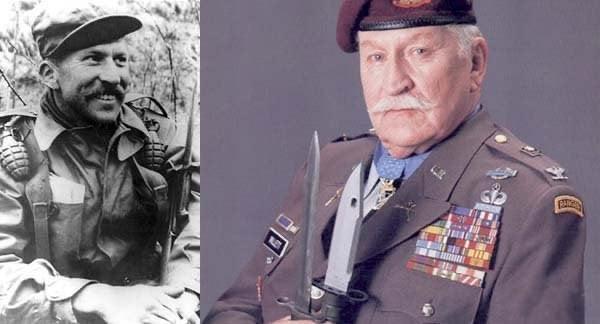
Medal of Honor recipient Colonel Lewis Millett "In the fierce charge Capt. Millett bayoneted 2 enemy soldiers and boldly continued on, throwing grenades, clubbing and bayoneting the enemy, while urging his men forward by shouting encouragement. Despite vicious opposing fire, the whirlwind hand-to-hand assault carried to the crest of the hill." Millet the recipient of the Medal of Honor, Distinguished Service Cross, Silver Star, 3 Legion of Merit's, 3 Bronze Stars, 4 Purple Hearts, and 2 Air Medals. Lewis Millett really hated Nazis. I know that most of you think that Indiana Jones cornered the market on hating those guys, but Millett really took it to a whole new level. This guy was so cheesed off at Hitler and his goose-stepping morons that in early 1940 he dropped out of high school as a junior to go enlist in the Army and help the world teach Der Führer that messing with freedom and democracy was like the political equivalent of sending up a giant Bat-Signal with the words "Please Come Kick My Ass" engraved on there instead of a bat. Well, this was great and all, but back in 1940 the United States had a pretty strict policy of not intervening in Europe's bullpoopy, and President Roosevelt kept coming out on the radio being all like, "whatever we're not going to go to war with the Nazis (even though they really deserve it)." However, unfortunately for Uncle Adolf, Lewis Millett held no such isolationist policies – when it looked like the U.S. wasn't going to get in on the Fascist-pummeling annihilation, he deserted the Army, hitchhiked up to Canada, and joined the Canadian Army instead. The Canadians were like, "eh, whatever," and trained him in gunnery, anti-aircraft warfare, and radar system operation, before shipping him off to London to help their British buddies deal with the annoying stream of V-2 rockets and aircraft bombs that were constantly pummeling the English countryside during the Blitz. Well in 1941 a few thousand pounds of Japanese torpedoes finally convinced the U.S. that beating the crap out of the Axis Powers was a pretty decent idea, and it turns out that it wasn't that big of a deal for Millet to transfer over to the United States Army. He was sent to North Africa with the 1st Armored Division, where he spent six months fighting Rommel'sAfrikakorps and having the pleasure of watching the 37mm rounds from his anti-tank cannon bounce off the ultra-thick armor of the German Panzers. It's not like that stopped this insane Jackhammer of Democracy from pneumatically ramming his foot up the Fascists', however – not long into his deployment he received a Bronze Star for shooting down a German fighter plane that was coming in low for a strafing run. The Me-109 was zooming in low over the desert, so Millet jumped into the back of a half-track and used the truck-mounted machine gun to shoot the driver in the face, somehow putting a round through the cockpit of an airplane going 300 miles per hour and depositing it into the ocular cavity of the pilot. Just in case this didn't sound quite enough like the sort of insanity that you generally don't see outside of completely balls-out cheesy 1980's action movies, Millet earned a Silver Star for running up to a burning half-track, jumping in the driver's seat, hauling ass away from his men, and then leaping out of the moving vehicle seconds before it exploded. Millet was a Sergeant kicking asses in Italy when his superiors finally figured out that he had at one point deserted the Army. He was court-martialed and convicted of desertion, but because this crazy bastard was such a face-rending hardass, he was just fined fifty-two dollars and told to "please never let it happen again." Then, just to show that there were no hard feelings, they promoted him to Lieutenant a couple weeks later. Millett would later claim that he was probably the only man to make Colonel after being court-martialed for desertion, which is probably true. Then again, when you leave the armed forces of your country because they aren't kicking enough asses for your liking, I guess it's kind of hard to argue with your qualifications as a badass. Apparently the Second World War wasn't enough carnage for Millett, because when the Korean Conflict rolled around in the 1950s he still had quite a bit of fuel left in his Asskicking Tank. It was while serving as Captain of Company E of the 27th Infantry Regiment that Lewis Millett commanded the actions that earned him the Medal of Honor. One day, while fighting in Korea, Millett and his men came across a note talking about how the Chinese thought the Americans were pussies who were afraid of cold steel and hand-to-hand combat. Obviously this made Lewis Millett so pissed off that he bit his own rifle in half, and he resolved then and there to provide the enemy with a first-hand demonstration of just how frightened he was of punching people with the broken-off remnants of a combat knife. It wasn't long before he had his chance. During the fighting for Hill 180, the 1st Platoon of Company E was pinned down by heavy fire from North Korean and Chinese machine guns, anti-tank rifles, and small arms. Millett immediately told his men to fix bayonets and prepare for some neck-stabbing. He personally ran out in front of his men, and led 2nd and 3rd Platoon on a charge across an exposed rice paddy, up a 200-foot high snow-covered hill, and straight into enemy bunkers packed with 200 entrenched enemy soldiers. Millett, leading from the front, personally bayoneted two enemy soldiers, clubbed a couple more into submission with the stock of his rifle, threw a bunch of grenades all over the place, and shouted words of encouragement to his men. He was wounded by a grenade, but obviously it would take more than a gaping slash caused by a red-hot piece of metal shrapnel to slow this crazy badass down. He refused to be evacuated until the hill was captured, urging his men to fight on and kick asses. 47 of the 200 defenders of Hill 180 were killed (18 by bayonet), the rest retreated, and 1st Platoon was saved with minimal casualties. If this seems completely crazy to you, that's because it is. To Lewis Millett, however, that was so nice he had to do it twice – later that same month he received the Distinguished Service Cross for leading ANOTHER goddamned bayonet charge, this one with similar results. It would be what is now referred to as the last bayonet charge in American military history, which is pretty understandable if you ask me. There really aren't too many people out there crazy enough to order fixed bayonets against a row of automatic weapons, but that was pretty much par for the course for Lewis Millett and His Awesome 'Stache. After Korea, Lewis Millett completed Ranger training and founded the famous Recondo School to train reconnaissance commandos in Vietnam. He served throughout the Vietnam War, and retired a Colonel in the Army. He died of CHF on November 14th, a veteran of three wars, and hellacious kicker of Commie-Nazi asses, and a hell of a tough guy.
-
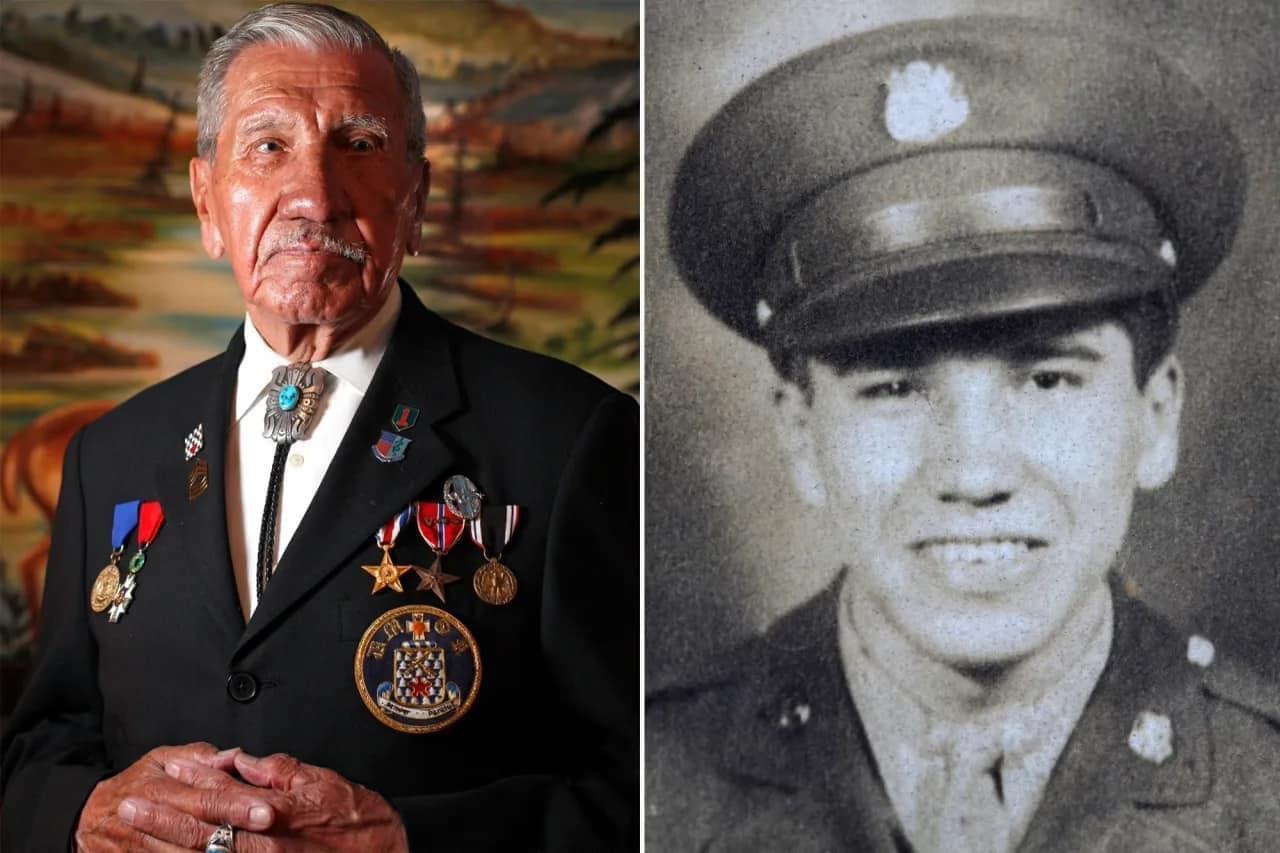
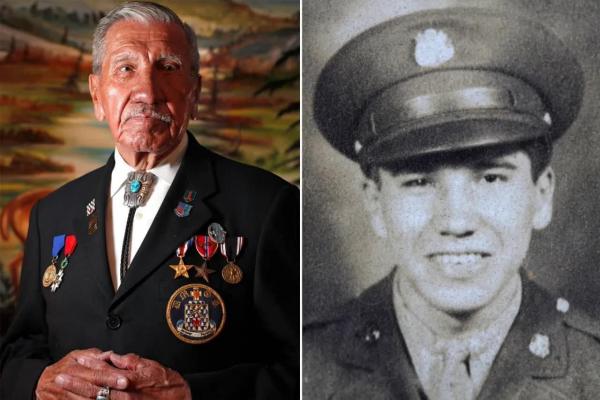
Charles Shay, Army Medic, 97, Normandy, France When Shay, a Penobscot Native American, was drafted at 19, he had scarcely left Indian Island, Maine. “I never knew at that time what I was destined to experience.” He recalls his mother traveling to New York to wave to him as his ship, the RMS Queen Elizabeth, set sail for England. “My father had to work, so he stayed in Maine, but he was there in spirit.” A freshly trained medic, Shay landed with the first wave at Omaha Beach on D-Day, the largest seaborne invasion in history, credited with hastening Nazi Germany’s defeat. Coming ashore from landing boats weighed down by machine guns and ammunition, many men drowned. Others made it to the beach and were killed in a hail of gunfire. Using obstacles, the Germans had placed as protection from gunfire in water to his chest, Shay scrambled up the beach with his medic’s bag and began treating the injured. “I found myself a place to work on higher ground.” Administering morphine and applying antiseptic and bandages, he noticed wounded men piling up along the shore, rising tide. “I saw . . . they would drown.” Running back to the beach, he turned them on their backs and dragged them to higher ground. Bullets whizzed past; he was untouched. He still wonders why. Among the wounded was friend and fellow medic Edward Morozewicz, whose injuries were past help. “We said goodbye.” For his bravery that day, Shay received the Silver Star and the Bronze Star. Shay pursued a career as an Air Force medic, and in 2009, successfully lobbied the state of Maine to establish Native American Veterans Day. Affinity for the French and deep connection to Normandy, wherein 2007 he received the Legion d’Honneur, where he still conducts ceremonies to honor the dead, prompted him to retire there.
-
A good article from Military Times: https://www.militarytimes.com/news/your-army/2020/09/01/what-war-with-china-could-look-like/