
Sisco
-
Posts
6,623 -
Joined
-
Last visited
Content Type
Profiles
Forums
Downloads
Gallery
Store
Everything posted by Sisco
-
Depends on the methodology. If demand was needed there are plans and techniques for utilizing solar arrays and using seawater as a base to separate the oxygen and hydrogen molecules. Still less energy and heavy metal contamination then large scale lithium battery production for electric cars. In addition fewer rare earth metals needed, which are a Chinese near monopoly right now. Plus the platinum and precious metals now for catalytic converters would be eliminated. There will be no perfect solution to this issue.
-
Big mistake. From a pollution and precious metal standpoint, Hydrogen power makes more sense. Produces nothing but water vapor.
-
Your odds are better!🤣
-
Then I will be keeping my current Hemi truck for 300,000 miles.
-
Hit the nail on the head. And it will stay that way until we lose a war because of it. they bungled the F22 acquisition. The F35 was supposed to be the “cheap” F16 replacement. So much for that. If an F35 gets into a dogfight with a Su35 it is allover. We will see what happens.
-
https://www.armytimes.com/news/your-army/2022/01/07/army-finally-picks-an-optic-for-next-generation-squad-weapon/?utm_medium=social&utm_source=facebook.com&utm_campaign=Socialflow+DFN&fbclid=IwAR1T2Br-GIQFlfUIVOiw7uLgq8OA-U-SqRBiPexSXT31tCXf7FuTfmwCutw
-
First, you might have had a previous variant and simply been a carrier. At this point there is absolutely no way of knowing. But if you have mild symptoms there is a very high chance that is the case. Two: In the reporting network up here, only 5% of the hospitalized patients were vaccinated, and that includes elderly, obese, and immunosuppressed patients who are all at high risk of vaccine breakthroughs. Interestingly, most the hospitalized patients are in their 30’s and 40’s and 50’s since in Bayfield County, 94% of residents 60 and above are vaccinated. My friend who is a health care nurse and another friend who is a physician are not the type of people to get railroaded. They are the type of people who will work themselves to exhaustion to save lives. And that is what they are doing nonstop right now. So I call BS to your railroaded comment. The local hospital has patients in beds in the hallways right now. We just got back from Mayo for followup appointments for my wife’s heart procedure. Her cardiologist said they have suspended ablation and noncritical procedures because of no beds available at the Rochester hospitals due to Covid. The fact is even with the Omicron variant you carry fewer viruses to give to others if you have been vaccinated and boosted. And even if you have caught it you will only have a fraction of the antibodies that a person with three doses of the vaccine has. Now if you get vaccinated AND have contracted Covid, your antibody levels are what is called “Superimmunity” which is as close to being bulletproof as you can get. To again be blunt, I think the lower vaccination rates among younger populations is a response to the fact the younger you are, the less chance you have of getting seriously ill, especially with the less pathogenic Omicron variant. If it is passed on to someone older or compromised, there is no accountability or collective responsibility. After all old people die anyway, so it is every man or woman for themselves. But that is the way the whole country is going so it is what it is. I have pretty much accepted that and just work to minimize my family’s odds. So far I have been successful. If you choose to skip vaccinations fine. Just skip the rationalizations, they aren’t needed.
-
The good news is the at risk population to Covid is below 20% and dropping fast. That is, the “naive” population, that hasn’t been exposed to it before, or hasn’t been vaccinated and/or boosted is less then 20% of the nation’s population, and the way Omicron is spreading, it will be below 10% before long. Those are the people at greatest risk of a severe infection from Covid. Our hospitals up here are jam packed, 95% unvaccinated, but I am betting that it is over fast. With a little luck, this is the last big spike.
-
They don’t get weaker, they trade virulence for survival. If the hosts dies, the virus die. If the host survives, the virus survives and replicates. Your right though. That consistently happens with viruses.
-
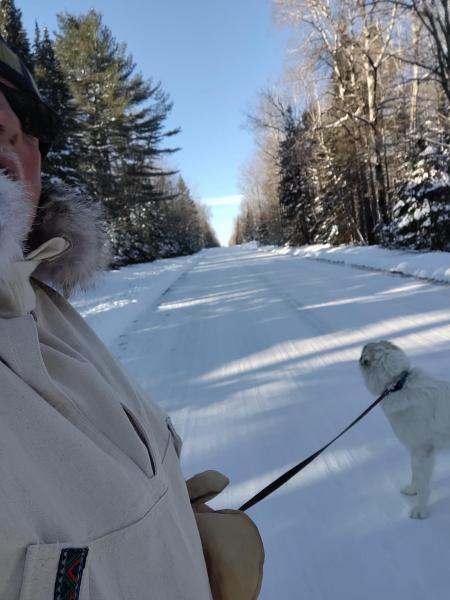
Damn that is nice and balmy, the dog and I took our three mile walk today at -5F.
-
Good news is the Omicron strain is less an infection of the lungs and more an infection of the sinuses. Seems less severe, but more resistant to vaccines and immunity from previous infections. Seems to be following the traditional viral pathway of mutating to be less fatal to the host in return for being more resistant to eradication. Cloth masks by the way are pretty much useless now. N95s and KN95’sand KF94’s are really the only masks offering any protection. Glad she isn’t severe. We just got back from Mayo but apparently didn’t pick up any infection. Incubation time on the Omicron is down to 2 days.
-
A late happy New Year to everyone. I made it to 10:30 last night. Hemi that sucks. I have an alarm system and video surveillance. Money well spent. Will probably upgrade soon in that technology keeps improving.
-
I decided to take Social Security at 62, since I had been sucker punched by my employer and downsized 2 days short of my 60th birthday after 32 years on the job. With a then 16 year old I needed the money ASAP. After I applied, I got a call from a Social Security agent who informed me that because I had a child under 19, I was eligible for an additional $1,200 a month benefit until he turned 19. I had not been aware of that. Because of that, I actually came out ahead by applying at 62 rather then waiting. And with a kid at home, I needed it. What really saved my bacon though was after downsizing I took my 401K money, transferred it to my IRA and took control of the investments myself, rather then have an investment house make the choices. I ended up doubling my money in two years, and tripling it by the time I got to 65. Which made the difference from a tight retirement to a comfortable one.
-
Yes he does. I really like that horse blanket coat. My go-to under my anorak is a two layered thick wool coat made by Johnson Woolen Mills in Vermont. Today on my dog walk I was too dam warm at -4F.
-
Congrats now its time to enjoy life to the fullest
-
Nice gear Mike. Like the trash bag idea Gaucho.
-
Once shot a buck from 20 feet with a 12 gauge slug. It went down. it died. That’s it. End of story.
-
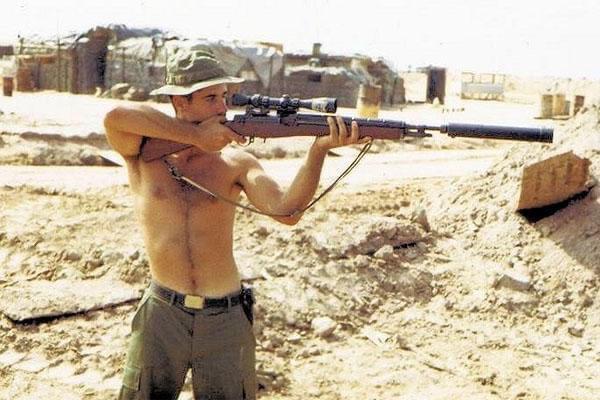
This Man needs no intro The Sniper Legend known as "Whitefeather." US Marine Sergeant Carlos Norman Hathcock II Stories of exploits in Vietnam by legendary Marines are commonplace, but few Marines have had as many stories told about them as the sniper Carlos Hathcock. Though he held records for the most number of kills as well as the longest successful shot, he did not see these as important. Gunny Hathcock enjoyed the hunt rather than the killing. The hunts that Gunny Hathcock undertook are the stuff of legends and movies. Hathcock was an uncannily successful marksman that showed his ability at a very young age. He was deployed to Vietnam in the military police but soon transferred to take up duty as a sniper. It was quickly apparent that he had found his niche in the Military. His trade-mark white feather worn in his gear was a taunt to the enemy to come and find him, which they never did. Gunny Hancock died of multiple sclerosis in 1999, but he gave a series of candid interviews about his time as a sniper in Vietnam before he died. Gunny Hathcock reminisced about the time he and his observer ran into an NVA infantry unit. The NVA were crossing an open rice paddy, and it was apparent that they were very new, with shiny new uniforms. The sniper noted that they had no means of communication. Working in conjunction with his observer, he shot the officer at the front of the platoon, while his observer shot the rear officer. The snipers then shot four platoon members before the last remaining officer started running back across the paddy to the cover of trees on the side. Gunny Hathcock stopped him from reaching the safety of the trees. The platoon hunkered down in the paddy with no leadership, so the sniper team decided to stay and fight rather than melt into the surrounding jungle. For the next five days, the sniper team would harry the platoon during the day and call in artillery support at night. The sniper team would then move under cover of darkness, and the next morning the platoon would attack the position they held on the day before. An NVA Sniper – ‘The Cobra’ Once a person assumes legendary status, many takers always want to wrestle the crown from your head, and Gunny Hathcock was no exception. The NVA were well aware of Gunny Hathcock and were determined to remove him from the field, so they sent their counter-sniper, The Cobra, to undertake the task of killing Hathcock. The Cobra made the mistake of shooting a Marine Corps Gunnery Sergeant outside Hathcock’s quarters on the base. The man died in front of Hathcock, which made it personal for Hathcock to kill The Cobra. Hathcock had come to the end of his first tour in Vietnam and had accumulated 86 confirmed kills with a mountain of probable kills. Returning for his next tour, he and his observer took their kit and prepared to trail The Cobra. Hathcock stumbled over a decaying tree, allowing The Cobra to take a shot. The shot missed Hathcock but hit his observer’s water canteen. The Cobra ran off, and Hathcock followed. Eventually, the two teams had switched places. This played into Hathcock’s hands as The Cobra now faced into the sun. Hathcock remembers how he saw the sun glint off The Cobra’s scope, and he fired at that position. When Hathcock went to check that he had killed his man, he found that his shot had passed cleanly through his opponent’s telescopic sight, without touching the sides. VC Sniper – Apache The one story that Hathcock was reluctant to speak of concerned a Viet Cong (VC) sniper named The Apache. The Apache was a sadistic woman who had served in the war long before Hathcock went to Vietnam. When Hathcock arrived with his platoon, they were told of The Apache and how she liked to torture Marines within earshot of the base to undermine the American soldiers’ morale. Hathcock recalled how The Apache had skinned one young Marine alive for a day and a half until she let him go. He died in the wire, an act that made Hathcock determined to put an end to this sadistic person. While out on a regular patrol, he came across a group of VC. He recognized one of the group as The Apache. When she stopped to urinate, much to the troops’ concern with her, Hathcock shot her. Not content with killing her with his first shot, he sent a second down just to make sure that she was dead. One sniper against an entire NVA base Gunny Hathcock took his fellow Marines’ safety very seriously and often took on the most dangerous missions himself. One of these dangerous missions was to eliminate a high-ranking NVA officer, but it also meant that he had to infiltrate an NVA base. Rather than undertaking the two-mile trek through hostile territory on his belly, he instead opted to use a sniper-crawl on his side as this minimized the trail left behind. He had to avoid patrols and slide around two machine-gun nests during his crawl to enter the base. The NVA did not expect a single man to invade the base, and when NVA soldiers strolled past him, he knew that he had entered undetected. Ensuring that his escape route was clear, he set up a firing position around 700 yards from where he expected to see his target. He took the shot, eliminated the officer, and made his escape, as the soldiers on the base did not run toward him but rather to the surrounding jungle to seek cover. He did not need a sniper rifle to take a shot. A story attributed to Gunny Hathcock concerned a VC sniper that was harassing Hathcock’s base. Hathcock was determined to end this sniper’s rule of terror. One of the golden rules of sniping is that the sniper should never fire more than three shots from any one position before moving to a new post. Hathcock noticed that the VC sniper seemed to prefer one specific position and took many shots from it. He did not have his sniper rifle, but that did not stop him from patiently zeroing in on that position using the base’s 105mm M40 Recoilless Rifle. Another Article From Us: Spy gadgets made for WW2 secret agents up for auction – and they display British ingenuity When the sniper took his next shot, Hathcock fired back, and the sniping stopped. Silver Star Citation: CITATION: The President of the United States of America takes pleasure in presenting the Silver Star to Staff Sergeant Carlos N. Hathcock, II (MCSN: 1873109), United States Marine Corps, for conspicuous gallantry and intrepidity in action while serving as a Sniper, Seventh Marines, FIRST Marine Division, in connection with military operations against the enemy in the Republic of Vietnam on 16 September 1969. Staff Sergeant Hathcock was riding on an Assault Amphibious Vehicle which ran over and detonated an enemy anti-tank mine, disabling the vehicle which was immediately engulfed in flames. He and other Marines who were riding on top of the vehicle were sprayed with flaming gasoline caused by the explosion. Although suffering from severe burns to his face, trunk, and arms and legs, Staff Sergeant Hathcock assisted the injured Marines in exiting the burning vehicle and moving to a place of relative safety. With complete disregard for his own safety and while suffering excruciating pain from his burns, he bravely ran back through the flames and exploding ammunition to ensure that no Marines had been left behind in the burning vehicle. His heroic actions were instrumental in saving the lives of several Marines. By his courage, aggressive leadership, and total devotion to duty in the face of extreme personal danger, Staff Sergeant Hathcock reflected great credit upon himself and the Marine Corps and upheld the highest traditions of the United States Naval Service. Story by Erik Mustermann
-
The guy in the video is lucky. There are some videos around of guys getting gored and injured seriously pulling that stunt. Shoot em and eat em, don’t wrestle em.
-
Yeah you were bragging. And “You” is a singular and you are lambasting a number of people on this thread. Clean up your syntax if you can comprehend that. Interesting you didn’t respond to my comment your PSA is most likely a safe queen that has only used a single type of ammo. Unless told otherwise I will assume that is the case. Which is fine if you don’t what to get the best performance out of your PA 10, and would fit with your comments and lack of knowledge on the issues.
-
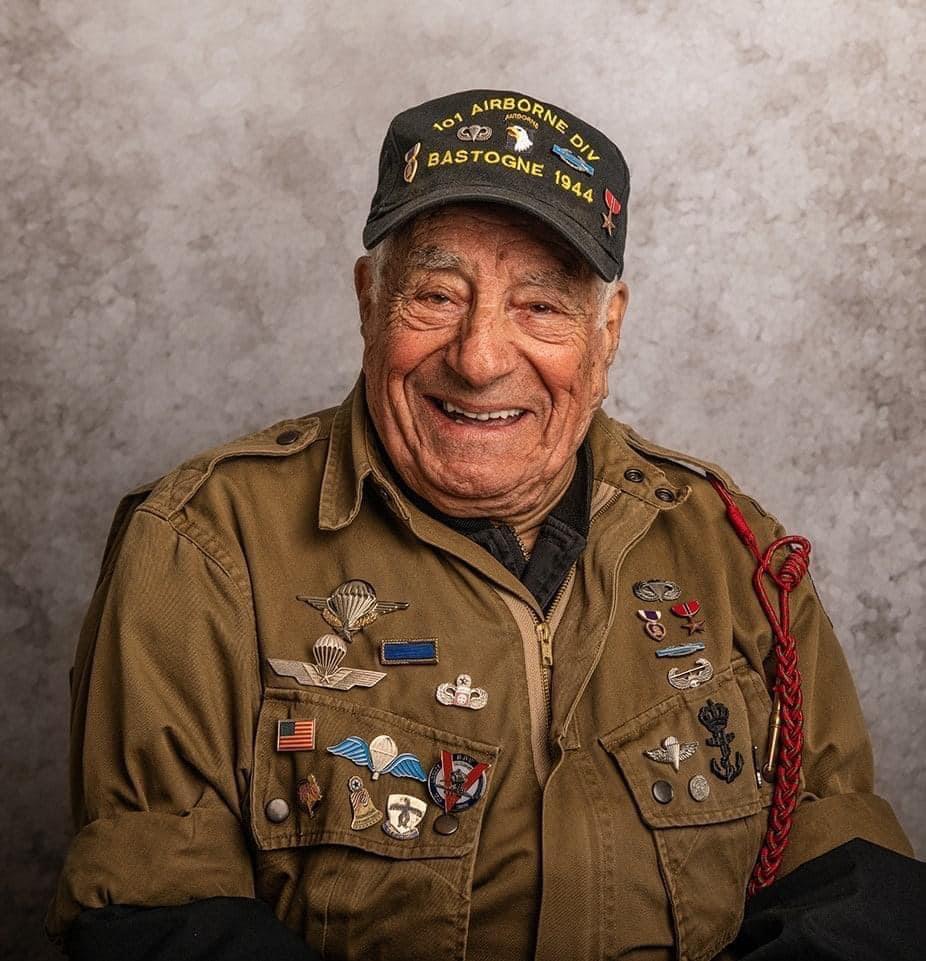
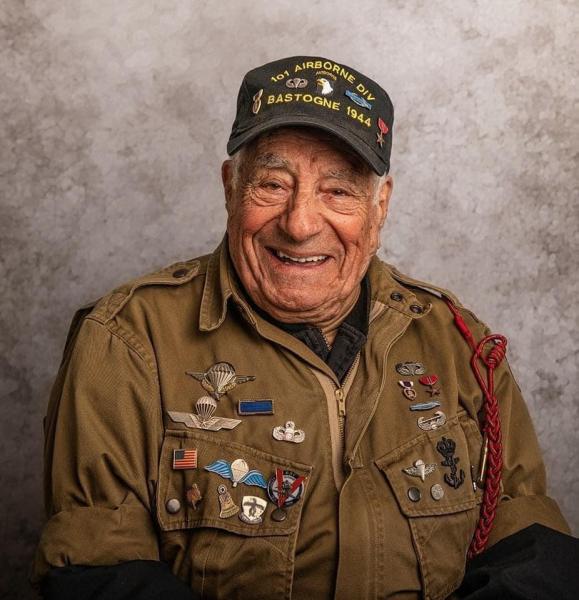
Today… “It was 77 years ago today. I was 19 years old. What a day that was. After a brief tank battle in the morning, tanks of Patton’s 4th Armoured Division entered Bastogne. McAuliffe's simple greeting of "Gee I'm awful glad to see you guys" set the tone. The serious work of mopping up the German forces in the area was still the job of "we Battered Bastards of Bastogne." Twenty two ambulances took our wounded out to hospitals. The weather was still nasty, but we were now out of the foxholes at last, eager to go on the offensive. The seige of Bastogne ( which, according to Patton was "The outstanding achievment of this war" ) was over!” - Vincent Speranza, author of NUTS, A 101st Airborne Division Machine Gunner of Bastogne
-
If you have to brag about your intelligence or your aptitude, you have already proved it is deficient. Just guessing your PAC-10 is a safe queen that “maybe” has 40 rounds of M-80 147 gr. ball through it if that much. After analyzing your comments and having a 40 year history in corporations myself 98’s comment about you being a part of the problem at any corporation you worked at is probably pretty spot on. In a large portion of the corporate world, followers who ignore or rationalize problems so as not to make waves outnumber problem solvers about 100 to 1. After solving a specific problem, those corporations shunt them aside so they don’t make any more waves. The fact is, when the same problem continues to crop up in generation after generation of PAC-10, in even a substantial minority of the rifles, it is a flaw of the corporate organization that a responsible and competent corporation would fix. Period. Enjoy your rifle. I sincerely hope it continues to operate well for you. If it does, I might suggest buying a lottery ticket as well. That would be more productive then arguing with the people above who know these 308AR systems inside and,out.
-
Anyone who has ever watched “A Christmas Story” at Christmas time will get this.

-
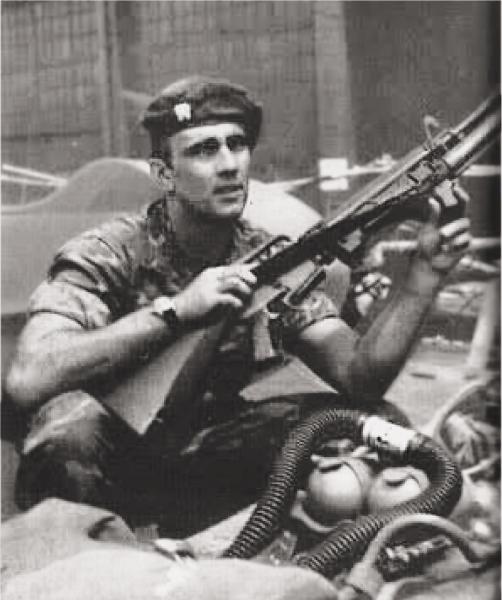
Lost a legend Christmas Night. RIP Rogue Warrior... November 21, 1940 – December 25, 2021 Richard Marcinko, the rough and tumble first commander of the Navy’s storied SEAL Team 6, passed away Saturday at his home in Virginia, the National Navy SEAL Museum announced on social media. He was 81 years old. Already a highly decorated officer with more than a decade of service in the SEALs, in 1979 Marcinko was one of two Navy representatives on a Joint Chiefs of Staff task force assembled to help develop a rescue plan during the Iranian hostage crisis. The subsequent mission, Operation Eagle Claw, was disastrous, leaving 12 casualties and seven aircraft and helicopters destroyed or abandoned in Iran. It’s aftermath, however, would see Marcinko at the forefront of an emerging mission for America’s special operations personnel. In 1980, Marcinko was selected by the Chief of Naval Operations, Adm. Thomas B. Hayward, to build a new SEAL unit dedicated to rapid response, hostage rescue, and counter-terrorism operations. While special operations have grown immensely in the decades since, at the time it was an underutilized and undermanned aspect of the military. The now iconic name – SEAL Team 6 – started as a bit of Cold War-era deception. At the time, there were only two active SEAL Teams. Marcinko designated his new unit “six,” hoping that the Soviet Union and other nations would greatly overestimate the size of the Navy’s special operations community. Marcinko led the unit from 1980-1983, hand picking new members from across the Navy’s existing SEAL Teams and Underwater Demolition Teams. As commander, Marcinko helped establish the aggressive, hard-charging culture of his new unit, and made little effort to conceal its maverick nature, openly flaunting rules and regulations. In his autobiography, “Rogue Warrior,” Marcinko wrote of the importance of drinking together and often as a fixture in building Team 6’s solidarity. Marcinko’s personality and the nature of the unit weren’t for everyone. Adm. William McRaven, who would later go on to lead Special Operations Command and oversee SEAL Team 6 during its famous raid against Osama bin Laden’s compound in Abbottabad, Pakistan, was drummed out of the unit after disagreeing with Marcinko over what he perceived as a culture of recklessness. Over the ensuing decades, SEAL Team 6, nowadays known as the Naval Special Warfare Development Group, or DEVGRU, would continue to live up to Marcinko’s rogue reputation, taking on some of the nation’s most dangerous and secretive missions. From Operation Anaconda, to the MV Maersk Alabama hijacking, to the aforementioned bin Laden raid, the unit’s exploits have been recounted again and again, and made the focus of dozens of movies and books. Marcinko retired from the Navy as a commander in 1989, going on to become a best-selling author and motivational speaker and military consultant. His 1992 autobiography “Rogue Warrior,” as well as its subsequent sequel “Rogue Warrior: Green Team” sold millions of copies and are filled with countless exploits from a lifetime spent at the forefront of the special operations fight. Marcinko later used the Rogue Warrior brand for a series of eight bestselling novels, co-written with Jonathan Weisman, according to Marcinko’s Amazon author profile. How SEAL Team 6 founder Richard Marcinko shaped America’s modern-day special operations forces Author and former U.S. Navy SEAL Richard Marcinko arrives at Sapphire Pool & Day Club on August 1, 2014 in Las Vegas, Nevada. (Photo by Gabe Ginsberg/FilmMagic) Marcinko’s career was also not without its troubles. In 1990, he was convicted of defrauding the government over acquisition prices for hand grenades and sentenced to 21 months in prison, eventually serving 15. Marcinko was born on Nov. 21, 1940, in the small, eastern Pennsylvania town of Lansford. Enlisting in the Navy in 1958, he would rise through the ranks and eventually make his way to a SEAL team in 1966. In 1967, Marcinko deployed to Vietnam with SEAL Team 2, participating in a raid at Ilo Ilo Island which the Navy described as one of its most successful operations in the Mekong Delta. During a second deployment, which came during the Tet Offensive in 1968, Marcinko led his SEAL platoon in house-to-house fighting, later rescuing several American nurses and schoolteachers trapped in a nearby hospital. Marcinko would go on to be awarded four Bronze Stars, a Silver Star and a Vietnamese Cross for Gallantry, according to the National Navy SEAL Museum. Last night, Christmas evening, we lost a hero, who’s also known as The Rogue Warrior, the retired Navy SEAL commander AND the creator of SEAL Team Six. Story by Task & Purpose
-
Merry Christmas to all of you. Never in a hundred years would I have thought I would find friends like this on an Internet Forum. Bless you all and many more Holiday Seasons to everyone here.