
survivalshop
-
Posts
11,250 -
Joined
-
Last visited
Content Type
Profiles
Forums
Downloads
Gallery
Store
Everything posted by survivalshop
-
Is PTFE mean it has Teflon in it ?
-
Well, at least I continue my record breaking losing streak on raffles .
-
I like my 9mm Shield & shoots good for a little piece .
-
my homemade .308 AR - only technical discussion please
survivalshop replied to freeminder's topic in Building a .308AR
See how he gets when you mention that four letter manufacturer ! I have a new fondness for my **** Lower ( didn't want to mention the four letters , don't want to upset him more ), its working pretty good now that Magpul came out with the Gen.3 Mags . -
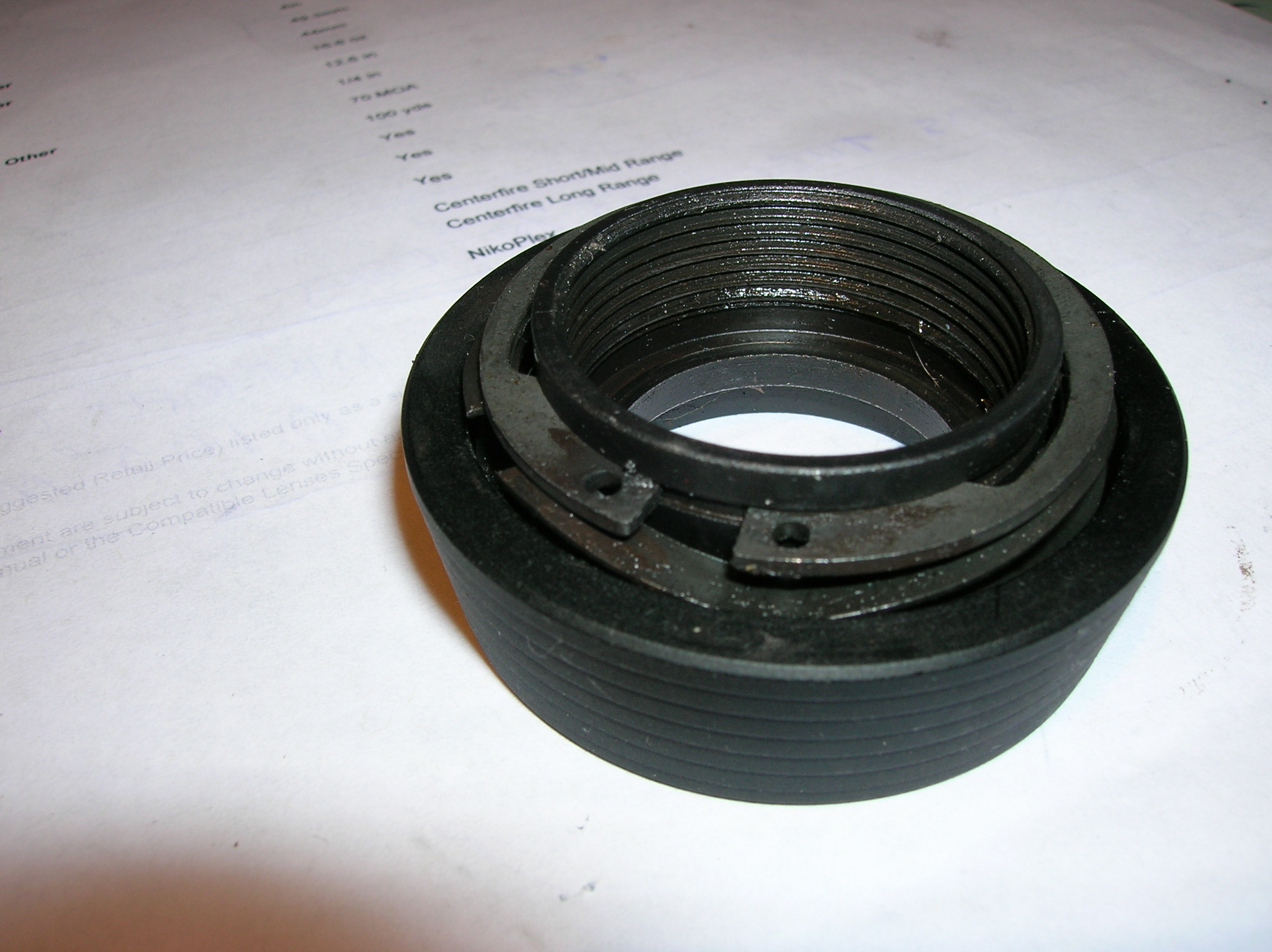
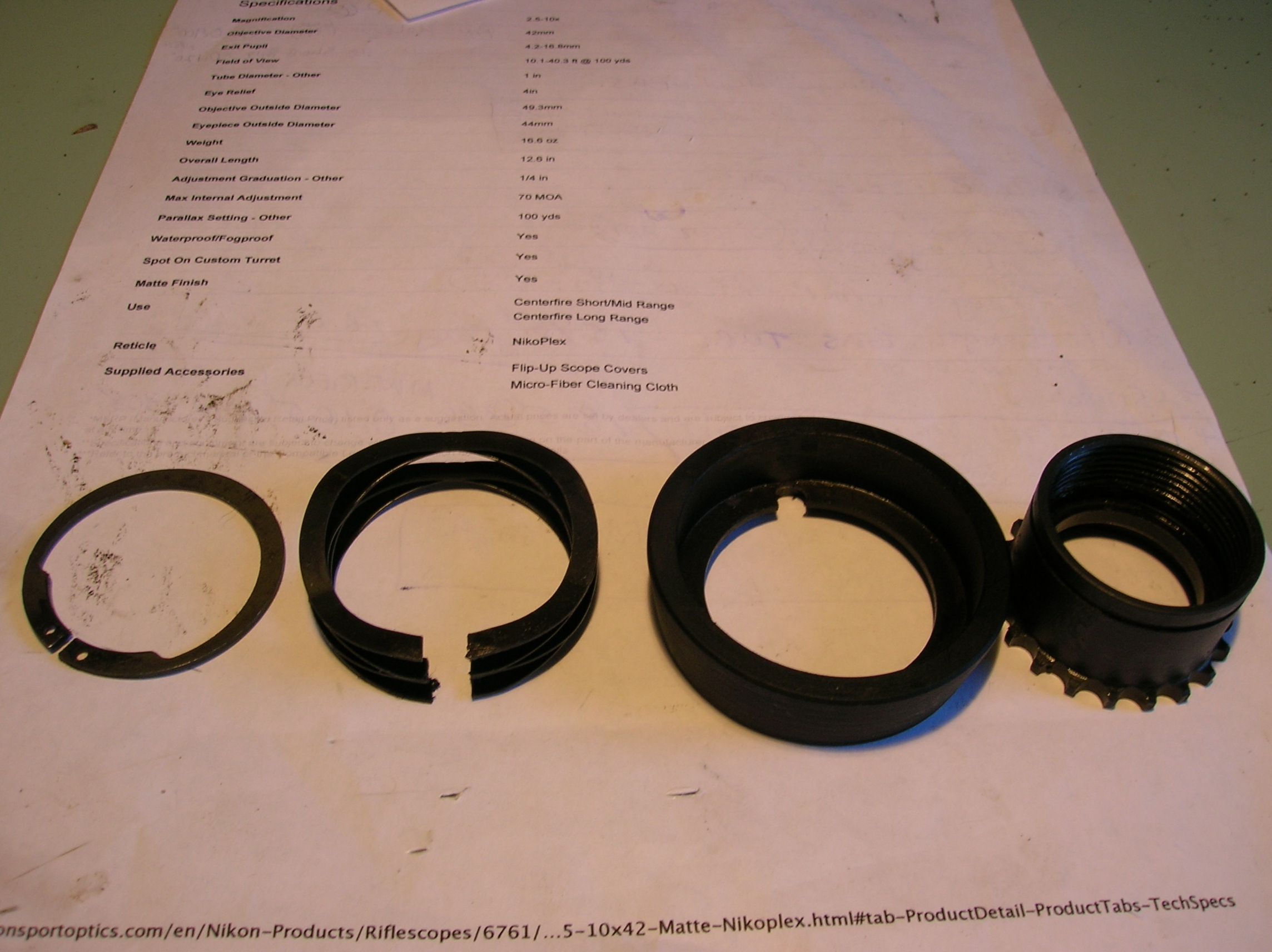
The Delta ring shouldn't matter , as far as removing the Barrel Nut . The Delta Ring & Weld Spring are held on the Barrel nut with a Spring clip ., which you have to remove the Barrel Nut to get it off . You push the Delta Ring Back with the wrench to engage the slots for the wrench . These are photo's of an AR 15 , but should not be much different than 308LR . DPMS 308LR Barrel Nut
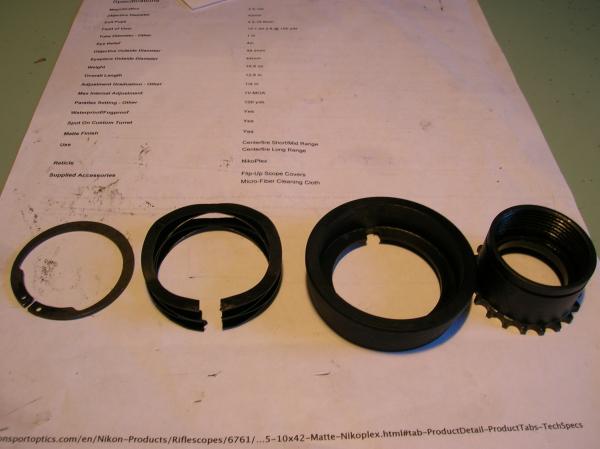
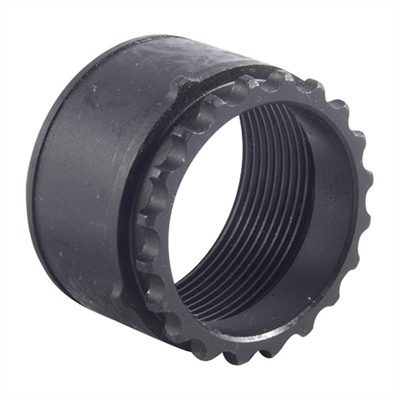
-
This guy posted this on a SKS forum , I copied & pasted this , these are his facts . I pretty much use only CCI primers , no magnums & I have no problems . Frisco Pete Global Moderator SKS Guru Posts: 8444 PRIMER CHART & REFERENCE GUIDE Small Handgun Standard .017" cup thickness CCI 500 Federal 100 - Has a soft cup - good to use if hammer strike is light. Federal 100M - Match version of above Magtech PR-SP Magtech PR-SPC - Lead-free "Clean Range" primer for indoor ranges etc. Remington 1 ½ RWS 4031 Winchester WSP Wolf/Tula Small Pistol SP #KVB-9 - brass cup - "For Standard Pistol loads" Wolf/Tula Small Pistol #KVB-9SP - "For 9×19 NATO cartridges" Wolf/Tula Small Pistol #KVB-9S - "For Sporting Pistol loads" Small Handgun Magnum .017" cup thickness CCI 550 See Note 1 at the bottom of page Federal 200 Federal 200M - Match version of above Magtech PR-SPM Remington 5 ½ RWS 4047 Winchester WSPM Wolf/Tula Small Pistol Magnum SPM #KVB-9M - brass cup - "For Magnum Pistol loads" Large Handgun Standard .020" cup thickness CCI 300 Federal 150 - Has a thinner cup Magtech PR-LP Remington 2 ½ RWS 5337 Winchester WLP Wolf/Tula Large Pistol LP #KVB-45 - brass cup - "For Standard Pistol loads" Large Handgun Magnum .020" cup thickness CCI 350 Federal 155 Wolf/Tula Large Pistol Magnum LPM #KVB-45M - brass cup - For Magnum Pistol loads Small Rifle Standard CCI 400 -thin .020" cup, not recommended for AR15 use by CCI/Speer. Good for .22 Hornet, .30 Carbine. See Note 1 at the bottom of the page CCI BR4 - match primer with a thicker .025" cup. Federal 205 - Mil-Spec cup thickness according to Federal - okay for 5.56mm. .0225" cup thickness. Federal 205M - same as the 205 but the match version. Magtech PR-SR - .025" cup thickness (not much feedback yet on this new primer as to AR15 suitability but with the same cup thickness as the Rem 7 1/2 it looks good so far) Remington 6 ½ - thin .020" cup, intended for older, lower pressure rounds Remington says do not use for the .223 Rem or other similar pressure rounds. Good for .22 Hornet, .30 Carbine. Remington 7 ½ BR - A match or "bench rest" primer. Lyman & Nosler classify this primer as a Standard. Remington says the compound is the same as the 6 1/2 but with a thicker .025" cup. RWS 4033 Winchester WSR - some piercing issues noted when changed from silver to brass cup. Cup thickness is a bit thinner at .021". Most say they are good to go for the AR15 despite that, probably because of the hardness of the cup. Some feel they are less resistant to higher pressures. Wolf/Tula Small Rifle SR #KVB-223 - soft, sensitive copper cup, not recommended for AR15/military rifle use or high pressure rounds. Small Rifle Magnum CCI 450 - same thicker .025" cup as the BR4 and #41. CCI #41 - commercial version of the fully-qualified DOD primer for use in U.S. military ammo. With this primer there is more 'distance' between the tip of the anvil and the bottom of the cup than with other CCI SR primers. .025" thick cup. Same primer mix as CCI 450. Remington 7 ½ BR - A match or "bench rest" primer. Hornady, Handloads.com, and Chuck Hawks classify this primer as a Magnum, differing from other sources that classify it as a Standard. .025" cup thickness. Wolf/Tula Small Rifle Magnum SRM - hard, less sensitive brass cup intended for AR15/military rifle and high pressure rounds - #KVВ-5,56M. Wolf/Tula Small Rifle 223 SR223 - #KVB-223M "This is the newest primer available in the Wolf line. It is ever so slightly hotter than the small rifle magnum primer and it comes with a brass colored thick cup. This primer can be used in place of the SRM primer or used when a different powder is used that is hard to ignite." Large Rifle Standard CCI 200 - mild in brisance. Hard enough for use in semi-automatics. CCI BR2 - same as the 200 but the match version. Hard enough for use in semi-automatics. Federal 210 - medium brisance between CCI/Remington & Winchester. Do not use in semi-automatics. Federal 210M - match version of the above primer. Do not use in semi-automatics. Magtech PR-LR Remington 9 ½ - mild in brisance. RWS 5341 Winchester WLR - the hottest standard primer. Hard enough for use in semi-automatics. Wolf/Tula Large Rifle LR #KVB-7 - all brass - "For Standard Rifle loads". Wolf/Tula Large Rifle #KVB-7,62 - "For 7,62 NATO cartridges" Wolf/Tula primers are used by noted match shooter David Tubbs who says: "Be sure they are seated into the case - if not they can be hard to ignite. Russian primers use a different sinoxide compound (closer to the European type), which, in my testing, consistently delivers better extreme spreads over Federal..." Hard enough for use in semi-automatics. Large Rifle Magnum CCI 250 CCI #34 - commercial version of the fully-qualified DOD primer for use in U.S. military ammo. Federal 215 - original magnum primer Remington 9 ½ M - mildest magnum primer. RWS 5333 Winchester WLRM Wolf/Tula Large Rifle Magnum LRM #KVB-7M - all brass - "For Magnum Rifle loads". 50 BMG CCI #35 - commercial version of the fully-qualified DOD primer for use in U.S. military ammo. Winchester 8312 Wolf/Tula 50 Cal Machine Gun #KVB-50 - For 50 Browning Machine Gun Primers recommended for use in .223 Rem/5.56 semiautomatic rifle loads: CCI #41, 450, BR4 (#41 & 450 good with ball powder) Federal 205, 205M Remington 7 1/2 BR (good with ball powder) Winchester WSR (good with ball powder) Wolf SRM (good with ball powder) Wolf SR223 (hotter than SRM - great with ball powder) Primers recommended for use in .308 Win/7.62x51/7.62x39 semiautomatic rifle loads: CCI #34, 200, BR2, CCI 250 Winchester WLR, WLRM (good with ball powder) Wolf LR WOLF/TULA PRIMER APPLICATION CHART FOR ALL PRIMERS - http://www.mpzflame.ru/production/primers/ Wolf and Tula are two of the common U.S. marketing names of primers made by Murom (OJSC «Murom Apparatus Producing plant» "For many years, our constant partners are «The Tula Cartridge Works», «Barnaul Cartridge Plant» and others."). ################################################################################## NOTE 1: According to Speer/CCI Technical Services - Both the CCI 550 Small Pistol Magnum and CCI 400 Small Rifle primers are identical in size. Both primers use the same cup metal and share the same cup thickness. Both primers use the same primer compound formula and same amount of primer compound. They can be used interchangeably. « Last Edit: February 12, 2013, 02:09:00 PM by Frisco Pete » Logged
-
my homemade .308 AR - only technical discussion please
survivalshop replied to freeminder's topic in Building a .308AR
Looks just like an FAL's with out the sight What is the poster asking for again ?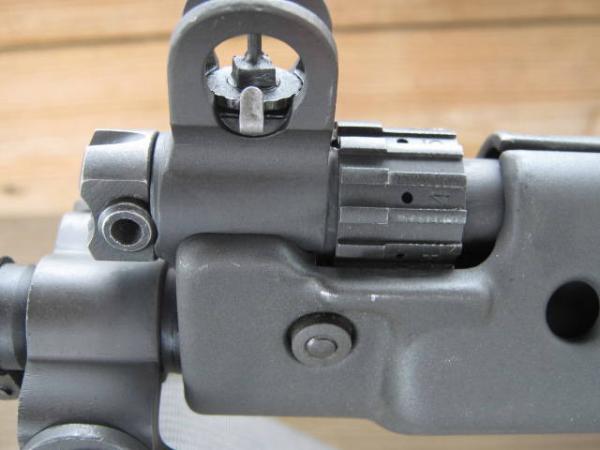
-
my homemade .308 AR - only technical discussion please
survivalshop replied to freeminder's topic in Building a .308AR
Is this a complete & functioning rifle ? Looks like FAL Gas Piston assembly . -
Brings back the old days when I had a boat up there , born & raised around Lake Erie . I docked my boat in Huron , east of Sandusky.Ohio . Some nice hogs you caught there .
-
Interesting stuff, adj. weight for the end of the Barrel ? I would guess ,Brakes or Compensators do somewhat the same thing by directing Muzzle Blast , instead of weight , just not as tunable .
-
Welcome from Florida , I'm in the St Augustine area .
-
What distance do you sight your 308AR rifles in at?
survivalshop replied to Deuce's topic in General Discussion
Nope , didn't notice it . I can tell you its sight plane is still much lower then those Burris Rings above , that I use . Everyones natural is different -
What distance do you sight your 308AR rifles in at?
survivalshop replied to Deuce's topic in General Discussion
My neck hurts thinking about sighting through that low of scope on an AR . -
Try Faxon Firearms for a bbl.. http://faxonfirearms.com
-
Good deal , its good to hear any Co. stand behind their products . I'm going to continue my testing with the BCG I have , it worked very good the last time out .
-
308/7.62x51 ammunition dimensional spec's are the same, its the Chambers that are slightly different, with the 7.62 Nato chamber made with a little more room for a Combat rifle that will likely see cleaning less frequently , so it can function ( in Combat ) with a slightly dirtier Chamber & continue to function reliably . Try different ammo to see what the rifle & you shoot the best with ,308 & or 7.62x51 .
-
Nice .
-
Hay, cold is cold & someone's cold may not be as another's
-
Check this sight out . http://forums.thecmp.org/showthread.php?t=146769
-
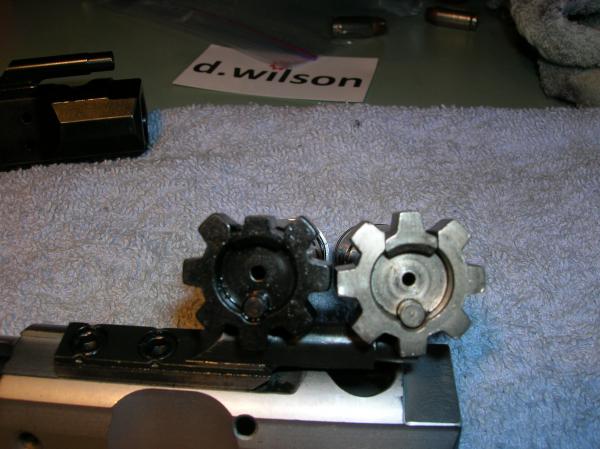
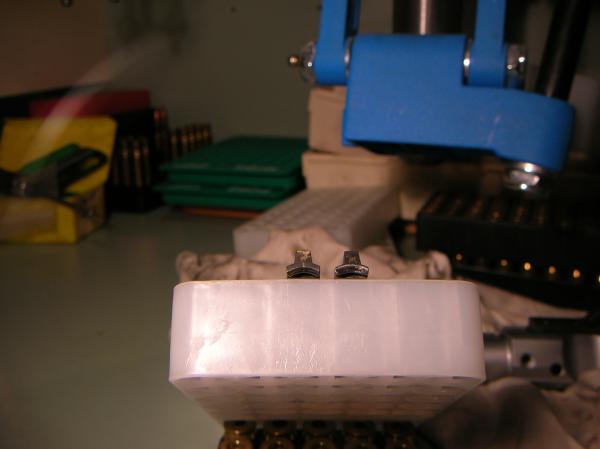
Look closely at the Extractors, DPMS on the right & D.Wilson on the left . This may be hard to see the D.Wilson because its so dark colored , but the Shadow Ops bolt on the right, has the same Extractor as the DPMS compared to the D.Wilson . D.Wilson on the left & a well used DPMS on the right . these two Extractors are configured differently & since I have two D.Wilson Bolts ( one with a BC ) & they both work fine with the DPMS Extractor installed , I don't need any more testing to figure out its got something to do with the Extractor & its configuration, iMO . This may sound strange , but wonder if the NIB Bolt acts the same way . I may have to order one to see , just for curiosity .
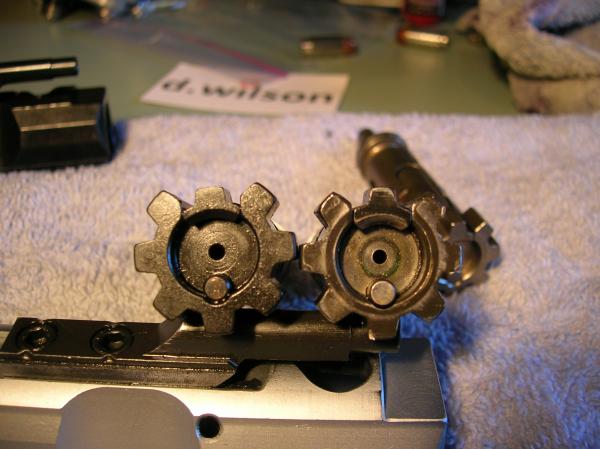
-
Welcome from Florida There are few Piston system AR type rifles available , you will find that ( at this time ) there is not an after market system available , complete Upper assembly or complete rifle , may be the only way to acquire one . POF , PWS , Adams Arms , LWRC are a few & none that I know of sell the individual Piston system components , like they do for the AR 15 . Adams Arms may come out with a kit in the near future , since they make a system for the AR 15 , but you never know .Absolutely nothing wrong with the DI Gas system . Good luck & keep us posted on your progress & don't forget photo's if you can .
-
Been riding & building HD's for over forty six years , rode to work every day , rain, shine & cold ( yes it gets into the twenties here in Florida , a day or two ) just don't have the spark in me I used to . The last two years ,it seemed I worked on these two Panheads none stop . One gone , one to go & I might even sell my 03 Ultra Classic when this one sells.
-
What distance do you sight your 308AR rifles in at?
survivalshop replied to Deuce's topic in General Discussion
Same rings I use , they are solid as a Tank . I even have a set on my 12 ga. Slug Gun with its Cantilever mount. -
What distance do you sight your 308AR rifles in at?
survivalshop replied to Deuce's topic in General Discussion
100 yards . I think your scope should be fine , but you will only know by shooting the rifle with it . How about some photo's -
This is another good read. SEGREGATING CASES BY WEIGHT MAY 13, 2016 MIDSOUTH SHOOTERS LEAVE A COMMENT This is a specially-adapted excerpt from the forthcoming book, “Top Grade Ammo,” by author Glen Zediker, owner of Zediker Publishing. Click here to order from Midsouth. by Glen Zediker Weight is another common means of case segregation. I can’t imagine doing this job without an electronic scale, because I have done this job without an electronic scale. A bag full of new brass is a wonderful thing. Sorting is optional, but worthwhile to get the very most from it. Most set a percentage tolerance for weight, not so much seeking identical weights. Otherwise, you’ll have to sort a lot of cases. The physically larger something is, the more variation can exist. 1% is pretty harsh; 1.5% is more reasonable; 2% is commonly used. You’ll figure out the viability of your segregation criteria after you go through a few dozen cases. If you have 10 piles, then the criteria might be too harsh. If you use a percentage, certainly then larger caliber cases will have a greater overall weight tolerance/variance than smaller ones. Think of it as: 1% in a 90-grain .223 is 0.90 grains, and in a .308 Win., it’s 1.7 grains, or about double. No doubt — cost is the first segregation criteria. The author says components from Europe are better than domestically produced items. But at what cost. The author has used a lot of Norma and Lapua brass, and it’s extra-high-quality, which means low-tolerance/variance. It’s also soft and heavy. I’d be willing to spend for it, but I prefer to sort other brands that are more suitable for use in a repeating action of any type. Hours and hours of doing this showed me that Norma, for example, gives about 5% more “really good” cases compared to the domestic brand I favor. This segregation method or means is nearly universally adhered to by NRA Long Range competitors. The belief is that weight reflects on case capacity: heavier cases, lower capacity; lighter cases, higher capacity; and, mostly, same-weight cases, same capacity. Most are not looking for “light” or “heavy,” just “the same.” There’s a correlation between wall thickness consistency and weight consistency, I’m sure, but it’s not direct. Don’t confuse the ultimate results from an exercise in segregation. We will get what we look for, but that’s all we know for sure. No doubt, the combination of segregation by weight and wall thickness should result in the best of the best, but, dang, that might also result in a very small pile. Important: Fully prep all the cases prior to weight segregation! The reason is a matter of reliability in the result. Primer pocket uniforming, length trimming, chamfering, and inside flash hole deburring all require removal of brass. The amounts will vary in each instance. I’ve collected and weighed enough shavings from prepping before and can tell you that, if you’re segregating by fine increments, you’re kidding yourself if you don’t follow this advice. The amount of brass removed does not at all directly reflect on the quality of a case because the areas where the weight is originating don’t influence the “overall” quality. But it can influence the scale. Which is the criteria, right? Weight segregation is easy, but tedious. Establishing criteria limits (defining the contents of each pile) comes mostly from experience in checking examples of the stock being used. Just weigh as you go and label as you learn. Get some plastic containers and label them, after deciding on the range you’re sorting by, and toss the case into the appropriate bin when you pick it from the scale pan. Keep in mind that the goal is to find “light” “heavy” and “okay.” Most shooters I know who weight-segregate are looking for three piles and, of course, the occasional culls. The procedure used by most winning 1000-yard shooters is to segregate by weight and then outside-turn the case necks to make the neck walls consistent. Again, it ultimately will be a better test if the neck turning is done prior to weight segregation. At this point, however, we have done a lot of work. So, looking back on the last article, which was segregating by neck wall thickness variations, here’s what I think: If most of your shooting is under 300 yards, go with neck-wall thickness. If you’re covering more real estate, I’d suggest sorting by weight. No doubt, a combination is the ultimate. Since I focus on concentricity both before and after bullet seating, I can’t say any weight-segregated cases have outperformed my concentricity-selected ammo at 600 yards. I also know, from experience, that the cases I favor are demonstrably low in weight variation. For me, segregating by wall thickness makes more sense. I use the same brand/lot for 200, 300, and 600 yards; the difference is the load. I am pretty much looking for a good, better, best to coincide with my needs for accuracy at 200, 300, and 600 yards. This might sound contradictory, but it seems that when firing on targets at short range, where weather conditions aren’t overly influential and bullet limits are not nearly being approached, it’s superior concentricity that prints the best groups. Further on down the pike, though, concentricity is important, certainly and always, but it’s really the consistency of bullet velocities that gets “10s.” A good long-range shooter (who can keep a handle on condition-influenced corrections) will lose more points to elevation shots than to wind. High-low shots are, for a Master or High Master, pretty much the fault of the ammo. The reason velocity deviations are just not that important to short-range groups is solely a time-of-flight answer. The longer a bullet is in the air, and the slower it’s moving, the farther and farther it flies, the more initial velocity consistency factors in. The preceding is specially-adapted from material in the forthcoming book “Top Grade Ammo” coming (very soon) from Zediker Publishing. Check BuyZedikerBooks.com and ZedikerPublishing.com for more. Related