
survivalshop
-
Posts
11,250 -
Joined
-
Last visited
Content Type
Profiles
Forums
Downloads
Gallery
Store
Everything posted by survivalshop
-
What kind of Hand Guard & are they on an AR 15 ? Ya, a photo would probably help a great deal .
-
With all due respect , I did say possibly , a realistic combat course should put the weapon through more than you will ever see out in the field . If we take your approach to a weapons reliability or its use , you wouldn't take any firearm out in the field ,because you never know when they can fail. Putting a shooter & his carried weapon through a combat course also helps in any or some of the normal possibilities of issues that happen in real life or in the field & issues do happen even with the most expensive firearms out there , but I don't have to tell you that , you already know it . Its overcoming the sociological aspect of using said weapon , because any firearm can & probably will fail at some point in its life , if used regularly . It may only be a stove pipe jam , easy clear or it could be a component failure, in which case the weapon could be useless afterward . Sometimes a confidence boost is needed to trust a weapon in the field & repeated use of said weapon in a live fire course , may be all that is needed to build trust again.
-
The only way to possibly overcome that is trigger time on a combat course , after repair . I can see your reasoning & understand it .
-
One or two manufacturers make a 308AR BC like the AR 15/16 & have the FA lower & farther back then a DPMS type . Aero maybe ? Mega ?
-
Seriously , that Pistol can be fixed , what makes me wonder is ,why Sig couldn't do it , I find that odd . I don't know how the feed ramp configuration is ,not familiar with Sig at all , but the old 1911's ( along with a bunch of other types ) would do the same with Hollow Points , till you altered the feed ramp & ported & polished them . This Sig shouldn't be any different . I have three XDM's ( 2-9mm & 1 45ACP ) & an XD ( 45ACP ) & they work flawlessly . I like my M&P Shield , 9mm ( my carrie gun ), even though it had to go back a week after I bought it because of a recall . My friend has an M&P 9 mm that came apart inside with the first shot , so I personally would think twice before buying another S&W .
-
Some after market ones do , depends on the Manufacturer . I know MagPul does .
-
Ya , He would not be treated this way , they would given him a lung transplant already & had no Hospital bill's .
-
There's motorcycle around with one in it also.
-
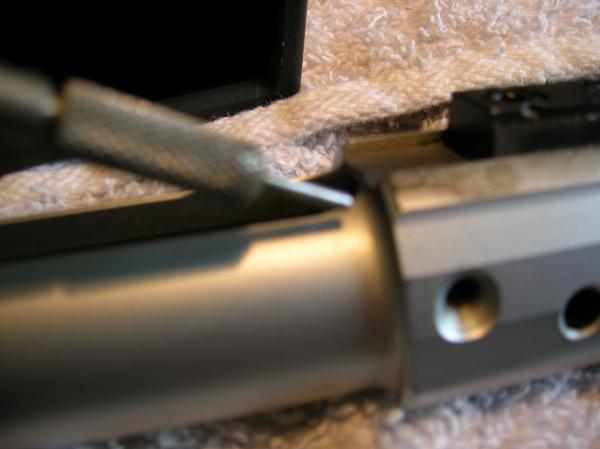
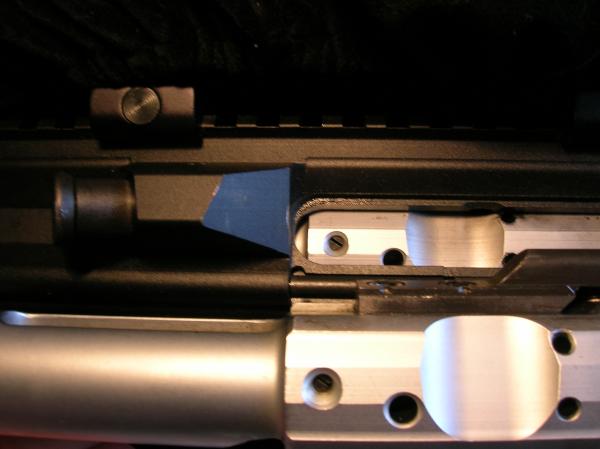
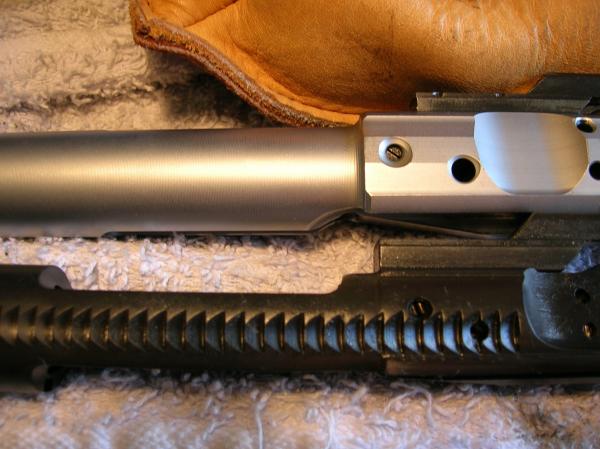
You will find that where the FA is on the Upper, it will engage on a lip on the Bolt Carrier, just barely enough to do anything , but it does push the BCG some . If you had a BC with FA serration like an M16/15 , the FA placement , as on your Upper receiver , would not contact them . its set too high .
-
You know a good gun smitter could fix that .
-
The Rule ! We will enjoy your review , thanks .
-
Is there some way we can help ?
-
We can thank O'Butthead for his death , he is tossing our best into the fire with no or little support . RIP??
-
Thats too funny , I see your new car is a proper color also. I think all you need to do is put her to work in a Coal Mine .They do think they are royalty .
-
Since we had a post here about MilSpec reloaded brass no being able to Extract a Chambered round , may or may not had anything to do with it , but I thought this was a good read CASE SEGREGATION: NECK-WALL THICKNESS APRIL 29, 2016 MIDSOUTH SHOOTERS 2 COMMENTS This is a specially-adapted excerpt from the forthcoming book, “Top Grade Ammo,” by author Glen Zediker, owner of Zediker Publishing. Click here to order from Midsouth. by Glen Zediker “Segregation” is sorting and separating. If someone is looking for the best performance, which, in my mind, is the most consistent performance, from stock-on-hand, then it’s a worthwhile chore. However, it is a chore. Keeping that in mind, the item below hopes to help a handloader decide how to proceed when there are 100 new pieces of brass set out on the workbench. I segregate new brass for my tournament rounds. The “tournament” is NRA High Power Rifle. That’s fired at 200, 300, 600 yards. Clearly, the “best” of my brass goes to the 600-yard-line. I do this with new brass because, as I said in an earlier installment, cases should be kept with the same load, and I want to know my best cases before I fire-form with my 600-yard load. Keep same for same. The questions are: How many piles do you want? and What criteria do you use? This is an old photo of my segregation results on 100 WW-brand .223 cases. These sized cases were checked using a runout indicator. Here’s how it broke down, left to right: 7 were “flatliners,” under 0.0005; 32 were under 0.0010; 37 were at 0.0010; 18 were up to 0.0015; 6 were over 0.0015; none were more than 0.0020. That’s pretty good, as far as I know. Seems good. I need a total of 88 rounds for a tournament, so I had confidence in this brass. Tip to make your sorting easy: Go to a discount store and get a few small containers, something suitable to contain several cases. Get some masking tape and write the criteria or content (after you sort enough to get a range) and mark the containers. Then just pitch each case into the suitable container as each is measured. In sorting cases, the finer the increments that define what you assess are Grade A, B, C (and possibly D, E, and F) cases, the greater the range encountered, and the fewer single examples that will occupy each group. Establishing criteria limits (defining the contents of each pile) comes mostly from experience in checking examples of the stock. One thing you will learn from segregation is what the component is “supposed to be.” You’ll see a pattern. The more you measure, the more you’ll learn, and it will help to establish the criteria you end up banking on. For me, I sort by wall-thickness variation, specifically, case-neck-wall-thickness variation. All other things being the same, and the tooling being what it should be, consistent case-neck walls result in bullets looking into the dead center of the rifle bore. Some call it “concentric,” and I do too. You’ll need either an “inside” micrometer (which has a ball-end, made for tubing measurement) or, way faster and easier, a specialty fixture that incorporates a dial indicator. The micrometer will be more precise because it will provide a number in the 0.0001’s, but that gets back to the realism of the criteria. A quality dial indicator still shows less than 0.0010 variations, just look at the needle position between whole marks. Measure at 4 points around the neck. My expectation is “0” for my 600-yard brass: no variation, which really means I accept anything that’s under 0.0010. I end up with piles in 0.0005 increments: less than 0.0010, 0.0010, 0.0015, 0.0020, and any larger doesn’t get fired in competition. I do this because it’s direct and fast, and because I am looking for good, better, and best case groupings to coincide with my needs for 200, 300, and 600 yards. This appliance is from Forster and is pretty versatile. Purpose-built, single-station tools are a little better to use, but, all around, something like this serves most well. Here’s how to use the tool to check wall thickness. Zero the indicator against the pilot/spindle and then read the dial with the case neck over the spindle; position the indicator about halfway down the neck. I read it at 12, 3, 6, 9 on the clock face. Understand that wall thickness variation and runout are related, but not directly. If I get lazy, which is more common now than not, I size all the cases (to get the necks shaped up) and then check runout at the neck on another specialty tool: a concentricity fixture (some call it a “spinner”). The system I’ve been using here of late serves both duties. Make sure to have run some sort of inside-neck sizing appliance, either an expander in the sizing die or a mandrel after the fact. If not, the results will not be viable. This explanation isn’t too detailed, but the variations get “pushed” either inside or outside depending on the last tooling the case neck was treated to, and it needs to be pushed to the outside. Does it really matter? Yes. There have been tests done by many trying to establish the point where wall variations or runout influenced group size. Since this point varies in different tests I’ve seen, I have to believe that the rifle/ammo combo has a mighty influence. It’s very likely that the better the package, the more sensitive it will be to showing up variations. I do know that when Hornady tested this at 200 yards (on their indoor range), they found that variation in wall thickness of 13% had a significant influence on group sizes; in this instance, that equated to about 0.0015 inches variation. Reposition the hardware to check runout. This is not as precise as measuring thickness, but, in another way to look at it, provides more of a “what you get” evaluation. A 0.001 wall variance does not directly equal 0.001 measured runout. The basics of segregation: you can only find what you’re looking for. One tip: I get my most consistent, most accurate results by lifting and re-seating the indicator at each point I want to check rather than actually spinning the case and watching the indicator needle movement. It’s easy to check loaded rounds too, as shown. There’s a good deal of wobble in many factory loads, and if you rely on it for important shots (like on a big hunting trip) sometimes it’s good to know that you have the best-of-the-box in your pocket. There is another popular and viable means of segregation and I’ll work that one next time. How you choose to segregate brass does have something to do with what the ammo is ultimately used for. Related
-
Looks interesting Panter, can't wait for your review !
-
175 HPBT/VLD Sierra/Berger 71,0 2.795 N140 2,29 35.3 664 2177 2,68 41.4 762 2501 N150 2,39 36.8 681 2236 2,82 43.5 784 2573 N540 2,44 37.7 687 2253 2,79 43.1 788 2586 N550 2,57 39.6 698 2290 2,97 45.8 802 2631 Got this off the Vihtavuori sight & as with any loading , you should start with the low side of loading data & work up to what works best in YOUR rifle . Where someone's loading data may help with a safe load ( or not, max loads seldom work the best ) your rifle will be different on how it shoots with this powder , with how you want to use it ( range ). You have to test it , only way to know for sure . What bullet is best for your GII , You have to build a load that works for what you plan on using it for. Can't argue with the 175 gr, match for long range , just need to find the right Powder ,Primer , Bullet , that your rifle shoots the best with ,Not to mention C.O.L. that will work the best with it , among other things . Your GII will show cratered Primers , expect it , I believe they made the Firing Pin Hole in the Bolt a little loose & unless they have changed that with newer ones , it will show up in your rifle . Too bad , because its one sign we look for with a high pressure loading .
-

Reloading DPMS G2 Recon with Vihtavuori 150 powder
survivalshop replied to Ocean's topic in General Discussion
No doubt you have a reloading manual & this is right from Vihtavuari sight. 175 HPBT/VLD Sierra/Berger 71,0 2.795 N140 2,29 35.3 664 2177 2,68 41.4 762 2501 N150 2,39 36.8 681 2236 2,82 43.5 784 2573 N540 2,44 37.7 687 2253 2,79 43.1 788 2586 N550 2,57 39.6 698 2290 2,97 45.8 802 2631 You will have to shoot this load or any loading to see how it performs in your particular rifle , just like any other powder , they all shoot some what differently in different rifles .As with any Powder , you should start some what on the low charge wt. & work up to what shoots best in your rifle . Your rifle may or may not like this Powder , as far as what is it you are looking for from you loadings . No doubt the 175 gr. is a good one for long range , but as I said , its all about testing in "your" rifle . We have a reloading section under the Ammunition section & may get more responses there . Just remember , many say the GII is hard on brass . -
Fine Gobbler !
-
Congrats
-
The one in my hand , at the time .
-
Nice , what color is that Hang Guard ?
-
Mortering the stock ( as described by Unforgiven )would have been faster , but you got er done . A lot of new AR rifles have this issue at first , even factory rifles . Most of the calls I get , there is a live round in the chamber , I tell them to keep their fingers away from the Trigger & go outside or to the range ( if they are not there already ) .
-
That's one bad A$$ plane , no matter what they use it for .
-
I use a lot of TM uppers & Lowers, I have one of their Upper Receivers on a DPMS Lower on my 16" 308AR, they fit like it was made for it . TX380 , that's a good price for an Upper , we need a review, please